Beneath your home and property lies a critical piece of infrastructure you rarely think about until something goes wrong: your sewer line. For property owners across Monterey, Santa Cruz, and San Benito counties, this unseen system is getting old. Many of the region's original clay and cast iron sewer pipes are now over 50 years old. This makes them likely to crack, get clogged by tree roots, or wear away from corrosion. As 2026 approaches, knowing the warning signs from your plumbing is key to preventing a costly, messy failure.
What starts as a slow drain can quickly turn into a major backup. This can cause serious property damage and health risks. This guide will show you the three most important signs that it’s time to replace your sewer line. By spotting these signs early, you can plan for an upgrade using modern methods instead of dealing with an emergency. To be proactive, it's also good to know other key signs of sewer line problems that might mean your system is in trouble.
1. Sign #1: Constant Sewage Backups and Clogs That Keep Coming Back
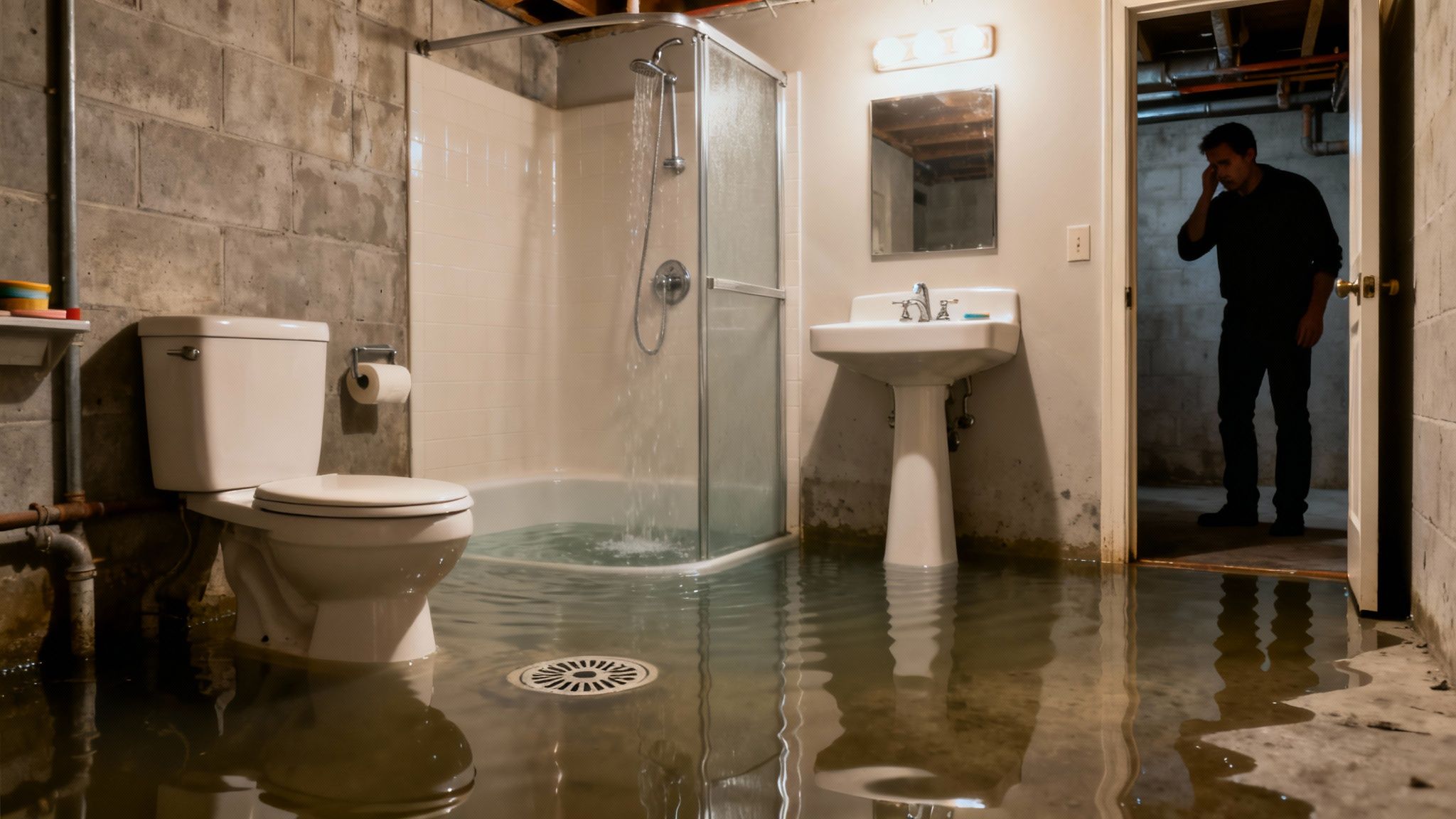
Of all the warning signs, none are more direct than sewage backups that happen over and over. When wastewater can't leave your property, it has only one place to go: back into your home. This usually shows up at the lowest drains, like in basements, showers, and ground-floor toilets.
A single clog is usually an easy fix. But when several drains back up at the same time, it’s a clear sign of a problem in your main sewer line. This isn't just an inconvenience; raw sewage is a major health risk. In areas like Monterey, Santa Cruz, and San Benito counties, many older homes still have their original clay or cast iron pipes. For these homes, constant backups are often the first sign that the system is failing.
What Causes These Backups?
Constant backups are symptoms of serious issues in your main sewer line. The most common causes include:
- Tree Root Intrusion: Tree roots look for water and can easily get into tiny cracks in old pipes. They form a thick net that catches waste and causes blockages.
- Pipe Collapse or Large Cracks: Old pipes can become brittle and break under the pressure of shifting soil. This can block the flow of waste.
- "Belly" in the Line: Sometimes, a section of the pipe can sink into the ground, creating a low spot or "belly." This area collects waste and causes clogs that can't be fixed for good with a snake.
For example, a homeowner in an older Santa Cruz neighborhood might have backups every spring. The large trees in their yard have roots that grow into their aging clay sewer pipes, and eventually, the pipe will need to be replaced.
What to Do
If you have clogs that keep coming back, it's time to stop using temporary fixes. Start by keeping a log of when and where backups happen. This information is very helpful for a professional diagnosis. Don't use chemical drain cleaners. They rarely fix main line clogs and can damage old pipes, making the problem worse.
Some serious blockages can be cleared with hydro-jetting. Professionals use tools like advanced water jetting to spray high-pressure water that cuts through roots and washes away debris. But if the pipe is damaged, this is only a temporary solution.
Key Insight: If you have more than one drain backing up, or a clog that returns soon after being cleared, it’s time for a professional camera inspection. This is the only way to see the real condition of your pipe. It helps you make a smart decision and avoid paying for endless temporary repairs.
Constant backups are a clear sign it's time to replace your sewer line. A NASSCO-certified video inspection can find the exact cause and help you figure out the next steps. To explore your options for sewer or water pipeline issues, it's best to talk to certified professionals.
2. Slow Drains All Over the House
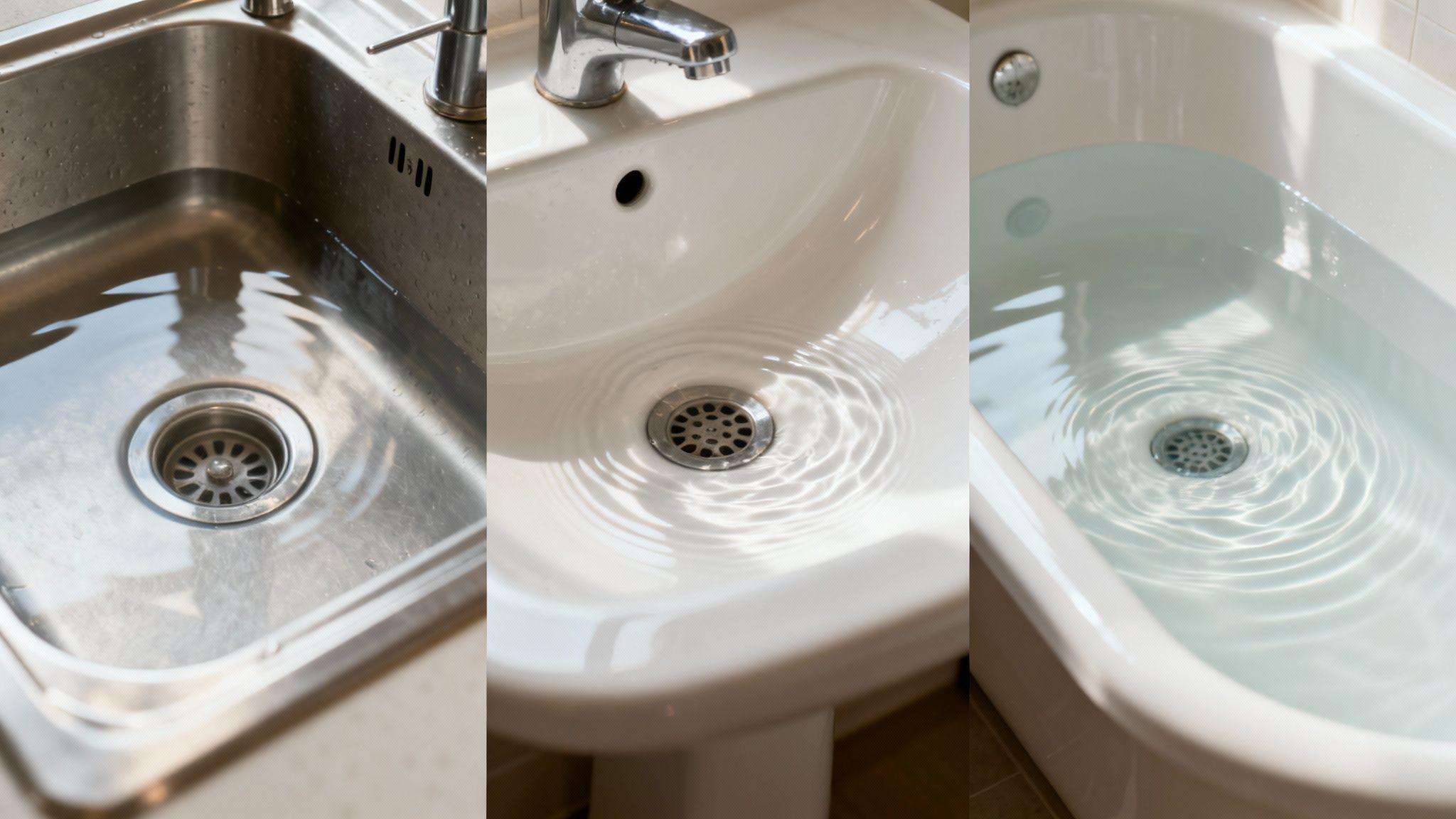
A single slow drain is usually a local problem. But when you notice that drains all over your property are slow, it’s a strong sign that the problem is in your main sewer line. This widespread slowdown is a classic symptom of a major blockage or damage in the main pipe connecting your home to the city sewer.
This isn't just a small annoyance; it’s a problem that will get worse. The flow will become more restricted as grease, debris, and waste build up. In places like Monterey and Santa Cruz, many older homes still have their original cast iron pipes. For these homes, a gradual slowdown is often a warning before a complete and messy sewage backup. Ignoring it can lead to more expensive emergency repairs later.
What Causes Widespread Slow Drains?
Unlike a simple clog from hair, slow drains everywhere point to serious issues in the sewer line itself. The most common reasons include:
- Grease and Debris Buildup: Over the years, grease, soap, and waste can build up inside the pipe. This narrows the passage and slows down water flow.
- Early-Stage Root Intrusion: Before roots cause a complete blockage, they form a web inside the pipe that catches debris. This slows drainage long before a backup happens.
- Pipe Sagging: In areas with settling soil, pipes can sag and create low spots. Water and solids pool in these spots, which disrupts proper drainage.
A property owner in a San Benito neighborhood with large trees might notice their downstairs bathroom drains slower than the upstairs one. This is a tell-tale sign of a mainline issue, as wastewater struggles to get past a blockage deep in the system.
What to Do
If you notice drains slowing down across your property, it's time to act. Start by timing how long it takes for a full sink or tub to drain. If it takes longer over time, the problem is getting worse. Don't use chemical drain cleaners, as they won't work on mainline blockages and can damage old pipes.
The best next step is a professional camera inspection. A certified technician can use a camera to see the exact condition of your pipe's interior. This will show the cause and location of the problem. An inspection is a smart investment, as it provides the data needed to make an informed decision and can save you thousands in the long run. To better understand the options available, it's helpful to research the cost of trenchless sewer line repair.
Key Insight: Widespread slow drainage is your sewer line's early warning system. It's the stage before a complete backup occurs. Acting on this sign with a video inspection allows you to plan a replacement on your own terms, avoiding the cost and stress of an emergency sewer failure.
Slow drains all over your house are a clear sign that your sewer line is struggling. A proactive replacement, especially with modern trenchless methods, protects your property and gives you peace of mind.
3. Wet Spots, Sinkholes, or Extra Green Patches in Your Yard
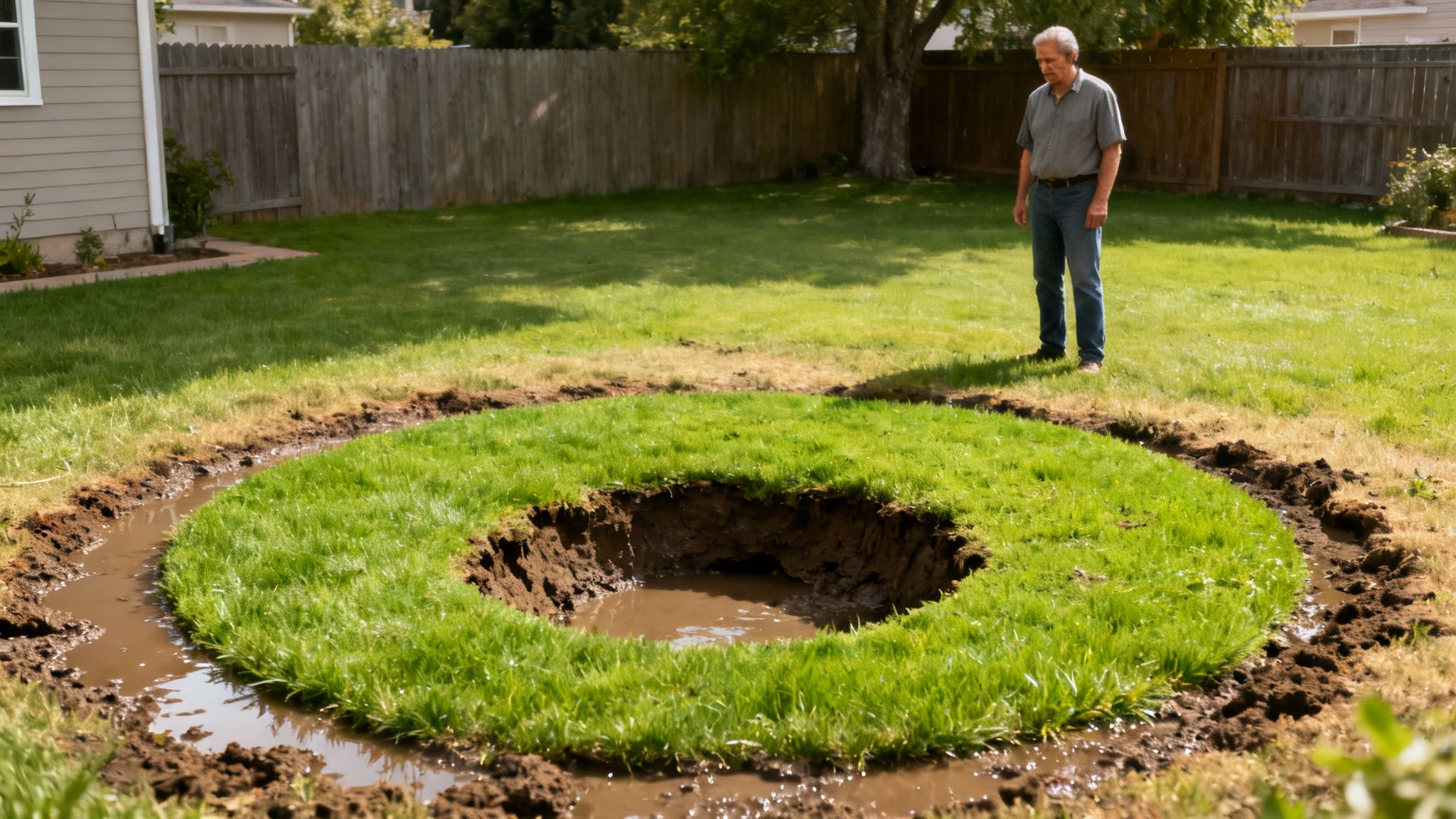
Some sewer line problems stay hidden, but others show clear signs on the surface. If you notice soggy areas, dips in the ground, or patches of grass that are much greener than the rest of your lawn, your sewer line may be leaking. This isn't just a weird landscaping issue; it's a direct sign of a broken pipe.
A broken sewer line releases water and waste, which acts as a fertilizer. This makes the grass right above the leak grow thick and green. More importantly, the constant wetness can wash away the soil that supports the ground. This can lead to dangerous sinkholes under driveways, walkways, or even your home's foundation. In the clay-heavy soils found in Monterey, Santa Cruz, and San Benito counties, this can happen quickly.
What Causes These Signs on the Surface?
Changes in your yard are proof that your sewer line is no longer sealed. These leaks are usually caused by serious damage that requires more than a simple cleaning. The main causes include:
- Pipe Separation: The joints in old clay or cast iron pipes can come apart because of shifting ground. This allows a lot of sewage to escape.
- Long Cracks: Old age, pressure from above, or large tree roots can cause pipes to split along their length, creating a constant leak.
- Pipe Corrosion: Metal pipes that are decades old can rust away, leaving large holes that release wastewater directly into the soil.
For example, a property owner in San Benito County might notice a sunken area forming in their driveway. This could be caused by an old, rusted pipe underneath that has finally collapsed. The leak washed away the soil base, creating a hole just below the asphalt.
What to Do
If you see any of these warning signs, you need to act fast to prevent more damage. Keep children and pets away from these areas, as the soil is likely contaminated with sewage. Take pictures of the spots and mark their location to see if they get bigger.
Before any digging starts, it's important to know where all underground utilities are. A professional contractor can help you learn more about how to locate underground utilities. This is a critical first step to ensure safety.
Key Insight: A lush patch of grass or a new dip in your yard is your sewer line's final cry for help. It means the pipe is broken. You should schedule an immediate camera inspection to find the break's location and see how bad it is. This lets you choose the right replacement method before the pipe collapses completely.
These surface signs are one of the most urgent reasons it’s time to replace your sewer line. Ignoring them risks damage to your foundation, contamination of your yard, and a possible sinkhole. A proactive replacement, often done with trenchless technology, prevents a costly emergency and protects your property.
Take Proactive Steps for a Secure System in 2026
Ignoring the early warnings of a failing sewer line is a big risk. It can lead to major property damage, expensive emergency repairs, and a lot of disruption. The signs discussed here—from constant clogs to soggy spots in your yard—are clear indicators that your underground pipes are damaged and need professional attention. Waiting for a complete collapse is never the right move. Emergency failures can cause flooding, road closures, and much higher repair costs. Proactive replacements are a much better way to avoid a crisis.
The good news is that fixing these issues in 2026 is easier and less disruptive than ever. For property owners in Monterey, Santa Cruz, and San Benito counties, where many sewer systems are over 50 years old, replacing pipes before they fail is a smart investment. Understanding the 3 signs it’s time to replace your sewer line in 2026 helps you plan ahead instead of reacting to a disaster.
Key Takeaways for Proactive Sewer Management
You have powerful tools to help you make smart decisions. Modern sewer management is no longer about guesswork.
- Get a Diagnosis First: A NASSCO-certified video camera inspection is the best first step. This "diagnostic-first" approach gives you a clear look at the condition of your pipes. It pinpoints the exact location of cracks, roots, or corrosion. This information helps you choose the right solution instead of paying for unnecessary repairs.
- Use Modern Technology: Trenchless methods like pipe bursting and pipe lining are game-changers. These techniques allow for a full sewer line replacement without digging up your driveway, landscaping, or street. This results in a faster, cleaner, and often cheaper project with minimal disruption.
- Focus on Strong, Compliant Materials: Cities are now focusing on building stronger infrastructure. Choosing durable, code-compliant materials like HDPE ensures your new sewer line meets current standards for leak prevention and long life. A professional contractor like Coastal will handle all permits and make sure your new system passes all local inspections.
By taking these steps, you are not just fixing a plumbing problem. You are protecting your property’s value, keeping wastewater from leaking into the environment, and making sure your system is ready for the future. The peace of mind that comes from knowing your sewer line is new and professionally installed is priceless.
Don't wait for a small problem to become a messy and expensive disaster. If you recognize any of the warning signs, let the experts at Coastal Pipeline Inc. provide a clear diagnosis and a modern, trenchless solution tailored to your property. Visit Coastal Pipeline Inc. to schedule your NASSCO-certified inspection and secure your home’s infrastructure for decades to come.