
When you're thinking about a new asphalt driveway for your Monterey home, it's easy to focus on the price. People often ask about this when they're budgeting for a replacement, buying a home, or starting a renovation. They want to know if it's a good investment, what it will cost, and how to make it last.
The secret to a driveway that lasts for decades isn't just about the blacktop—it's about treating the project like important infrastructure. It all comes down to a strong foundation, smart drainage, and the right materials for our coastal area. If you get those right, you're building an asset that will serve you well for years.
Why Smart Planning Is The Key To Driveway Longevity
A new driveway is a big investment. The biggest mistake homeowners make is focusing only on the cost per square foot of the asphalt. That misses the most important part: everything that happens underneath the surface.
Homeowners often focus only on the surface price per square foot. But skipping site prep, like proper grading or base compaction, leads to early cracking, drainage issues, and expensive fixes within a few years—especially in Monterey’s coastal and hillside terrain.
A properly installed asphalt driveway can last 20 to 30 years. But that life span depends almost entirely on how well the base was prepared. Skimp on site prep, and you’ll be looking at cracks, puddles, and expensive repairs in just a few years.
Thinking Beyond The Surface
To get this right, you have to change how you think. Your driveway isn't just a flat, black surface; it's a multi-layered system built to handle heavy cars and all kinds of weather.
Smart planning means asking the right questions before the paving crew shows up. This is especially true when you're trying to figure out the overall https://coastalpipelineinc.com/asphalt-driveways-cost/, because the foundation work is a big part of the budget. Treat your driveway like infrastructure, not just a surface.
A driveway that lasts starts with a good plan. For a wider view on outdoor projects, learning how to design landscape plans is a great place to start, as site analysis is key to both.
What Your Driveway Plan Must Include
Your main focus should be on creating a stable foundation that drains well. That means getting the subgrade (the soil), the base, and the slope right.
Here’s a quick breakdown of what a solid plan covers:
- Subgrade Stability: Is the soil underneath packed down tight? If not, the ground will settle, and your driveway will sink and crack. Ask about subgrade compaction.
- Drainage and Slope: Is the driveway sloped correctly? It needs to send rainwater away from your house and stop it from pooling under the asphalt.
- Material Quality: Are you using a modern, strong asphalt mix? Paving is evolving. Today, 95% of all asphalt is recycled, and agencies like Caltrans allow up to 40% recycled asphalt in public projects. You can ask for eco-friendly options like warm mix or recycled asphalt.
Putting these key elements first is the only way to build a driveway that can handle Monterey’s unique challenges.
Key Planning Factors for Driveway Longevity in Monterey
This table breaks down the essential planning stages and explains why each one is critical for a driveway that lasts.
| Planning Stage | Why It Matters in Monterey | Impact on Driveway Lifespan |
|---|---|---|
| Site Evaluation | Identifies soil type (sandy, clay), slope, and drainage issues on your property. | Prevents foundation failure from unstable soil and poor water management. |
| Drainage & Grading | Ensures water flows away from the driveway and home, which is vital with Monterey's coastal moisture. | Stops water from getting under the asphalt, which causes cracking and potholes. |
| Base Preparation | Creates a stable, compacted stone base that spreads out the weight of vehicles. | A strong base is the #1 factor in preventing early cracking and settling. |
| Asphalt Mix & Thickness | Matches the asphalt type and depth to the traffic (cars, RVs) and local climate. | The right mix resists wear and tear, making the surface last longer. |
By focusing on these foundational steps, you make sure your investment is built to last. Coastal Pipeline Inc. takes a full-scope approach: we assess subgrade stability, install driveways to code, and use Caltrans-grade recycled mixes that perform better and last longer. Our Monterey-based team understands how elevation, weather, and local permitting impact driveway performance.
Building a Bulletproof Foundation Before You Pave
The real secret to an asphalt driveway that lasts for decades in Monterey isn't the smooth black surface you see—it's the carefully built foundation you don't. So many people focus on the cost per square foot of the asphalt, but skipping the prep work underneath is a recipe for disaster. It leads to ugly cracks, drainage problems, and expensive repairs just a few years later.
Think of your driveway as a piece of infrastructure, not just a patch of blacktop. Here in Monterey, we deal with tricky ground conditions, from loose coastal sand to heavy clay. Without the right preparation, those soils will shift and settle, taking your new driveway with them.
A solid plan always starts with a site evaluation. This tells us everything we need to know and guides the whole project, from how we handle drainage to what permits are needed.
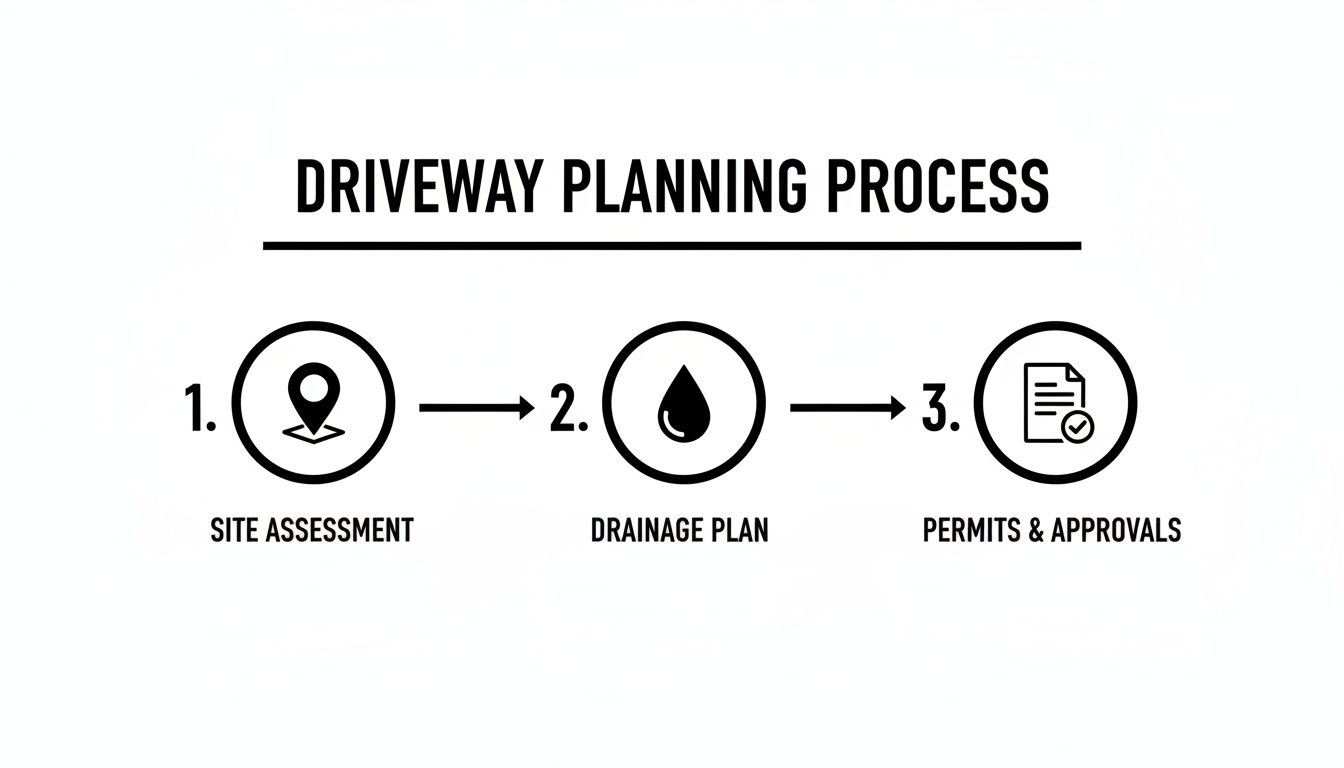
This isn't just a checklist; it's a proven process. You have to start with the site, figure out the water, and get the paperwork handled before a single paving machine shows up.
Why Subgrade and Drainage Are Non-Negotiable
If you want to know what kills an asphalt driveway, it’s two things: an unstable base and water. It’s that simple. When water gets trapped underneath the pavement, it turns the soil foundation to mush. That's where you get the potholes and "alligator" cracks that ruin poorly built driveways. Proper site prep is all about stopping those two threats from day one.
The whole process comes down to two key stages:
- Subgrade Compaction: This is where we take the native soil—your ground—and pack it into a dense, stable platform. With the sandy and clay-heavy soils common around here, this step is vital to stop the driveway from sinking later on.
- Aggregate Base Installation: Once the subgrade is solid, we lay down and compact a thick layer of crushed stone, or aggregate. This base does the heavy lifting, providing support and helping drain away any moisture.
Key Takeaway: Poor subgrades and water are the top causes of early asphalt failure. A driveway built on a solid foundation can easily last twice as long as one built on a weak base.
The difference this makes is huge. A properly prepared subgrade can push a driveway's life from 10-12 years to a full 20-year design life, sometimes even longer. For more information, sources like The Asphalt Institute have detailed studies on pavement performance.
Mastering Water Runoff With Proper Grading
Once the foundation is solid, the next job is to tell water where to go. That's what grading is all about. We're not just flattening the area; we're shaping the land to create a specific slope. For a driveway, that usually means a gentle 2% grade—just enough to guide rainwater away from your house and off the pavement, but not so steep that you'd notice.
A professional uses special equipment to get this slope perfect. If it's off, you get puddles. Those puddles sit and slowly seep into the asphalt, weakening the whole structure. If you want to see how we handle this, our guide on grading and paving services breaks down the technical side of the process.
Monterey properties often face tricky slope or soil conditions—don’t trust a low bid that cuts corners. Coastal Pipeline can evaluate your property, recommend the right install method, and help you build a driveway that lasts decades, not just years.
Choosing the Right Asphalt Mix and Thickness for Your Needs
With a solid, well-drained foundation in place, we can turn to the star of the show: the asphalt itself. It’s a common mistake to think all blacktop is the same, but getting this part right is critical for a driveway that lasts. The specific mix and thickness you choose will determine how well your driveway handles everything from a small car to an RV, all while standing up to Monterey's coastal climate.
What kind of traffic will your driveway see? That’s the first question to ask. A family driveway has different needs than one that will regularly hold heavy delivery trucks or a motorhome. Matching the pavement design to the load is the only way to ensure it will last.
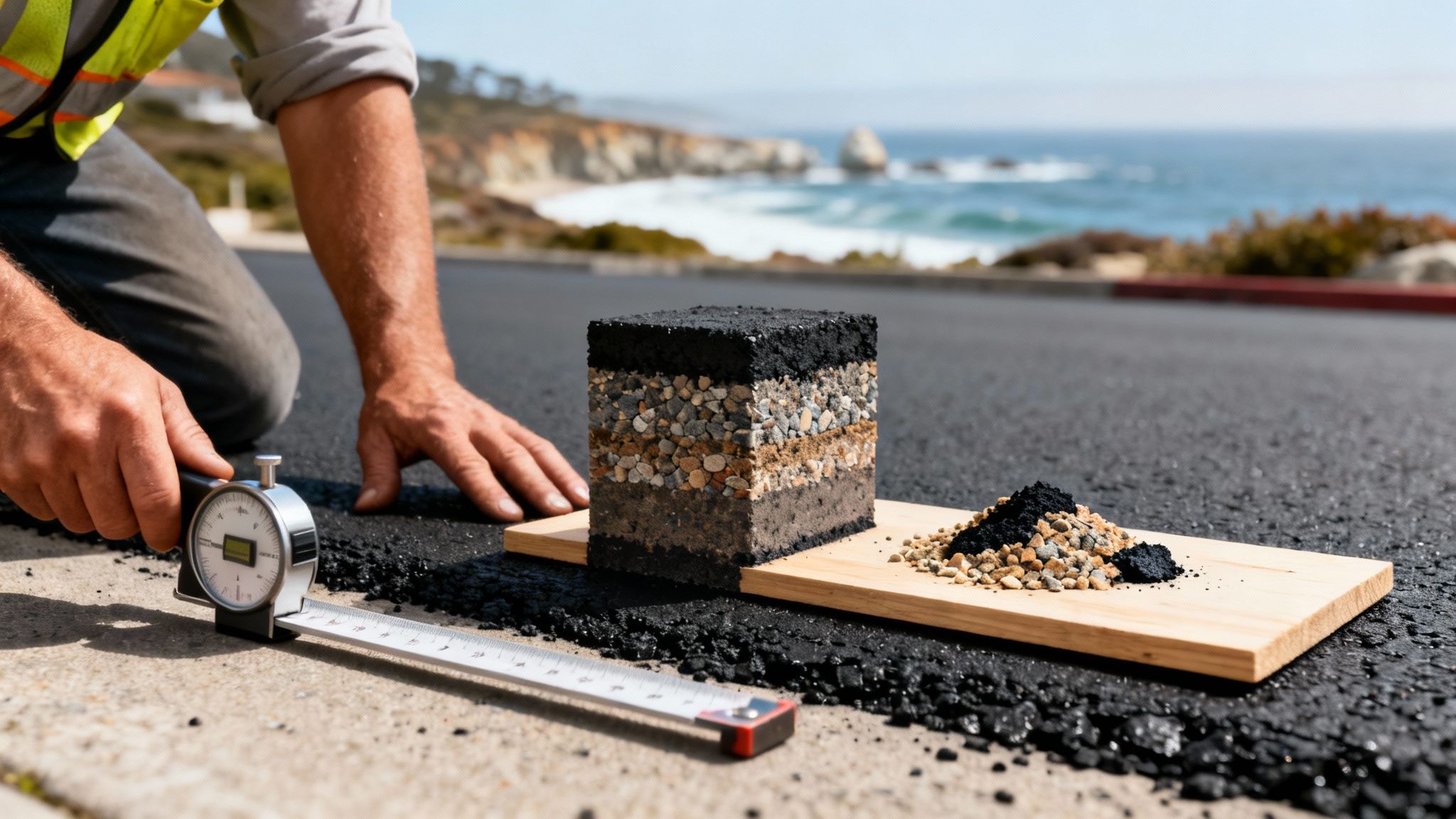
Matching Thickness to Traffic
Here’s the golden rule: heavier loads require a thicker, stronger driveway. That strength comes from both the compacted stone base below and the asphalt surface on top. If you cut corners on either one, you're setting yourself up for ruts and cracks.
For a standard residential driveway that only handles cars, a compacted hot-mix asphalt (HMA) thickness of 2–3 inches over a 6–8 inch stone base usually works well.
But what if you own an RV or get heavy deliveries? You’ll need to make it stronger. In those cases, we’re looking at 3–4 inches of HMA over an 8–12 inch base to spread out that weight and prevent damage.
To give you a clearer picture, here’s a quick guide to help you figure out what your property needs.
Asphalt Thickness and Base Layer Recommendations
| Driveway Load Type | Recommended Compacted Asphalt Thickness | Recommended Aggregate Base Depth |
|---|---|---|
| Light Duty (Cars, SUVs, Minivans) | 2 – 3 inches | 6 – 8 inches |
| Medium Duty (Pickup Trucks, Occasional Deliveries) | 3 inches | 8 – 10 inches |
| Heavy Duty (RVs, Motorhomes, Frequent Heavy Trucks) | 3 – 4 inches | 8 – 12 inches |
This table provides a great starting point for discussions with your contractor, ensuring your driveway is built to handle its specific job.
Sustainable and Stronger Asphalt Mixes
Modern paving offers some great options that are better for the environment and also perform better. It might surprise you to learn that today, about 95% of all asphalt is recycled. This isn't just to save money; it's a proven way to create stronger pavement. In fact, Caltrans allows up to 40% recycled asphalt in its own road projects because these mixes are so durable.
When talking to your contractor, be sure to ask about options like:
- Recycled Asphalt Pavement (RAP): Using reclaimed asphalt strengthens the new mix and reduces the environmental impact of your project.
- Warm-Mix Asphalt (WMA): This type is made at lower temperatures, which cuts down on energy use and emissions. Our guide on asphalt paving temperature requirements explains how this works.
Think of your driveway as a piece of infrastructure, not just a cosmetic surface. Insisting on a high-quality, Caltrans-grade mix means you’re investing in performance and longevity, not just settling for the lowest upfront cost.
Of course, asphalt isn't the only option. It's always smart to explore different driveway material options like pavers to see how they compare in cost, durability, and looks for your home.
Here at Coastal Pipeline Inc., we look at the whole picture. Our Monterey team will walk you through selecting the right thickness and mix for your exact needs. We specialize in using Caltrans-grade recycled materials that are proven to perform better and last longer in our unique coastal environment, building driveways designed to stand the test of time.
Protecting Your Investment with Proactive Maintenance
Putting in a high-quality asphalt driveway is a big investment in your Monterey property. But the job isn’t done when the paving crew leaves. If you want that driveway to last its full 20 to 30 years, you need a simple maintenance plan.
Think of it as sunscreen for your pavement. A little protection now prevents major problems later.
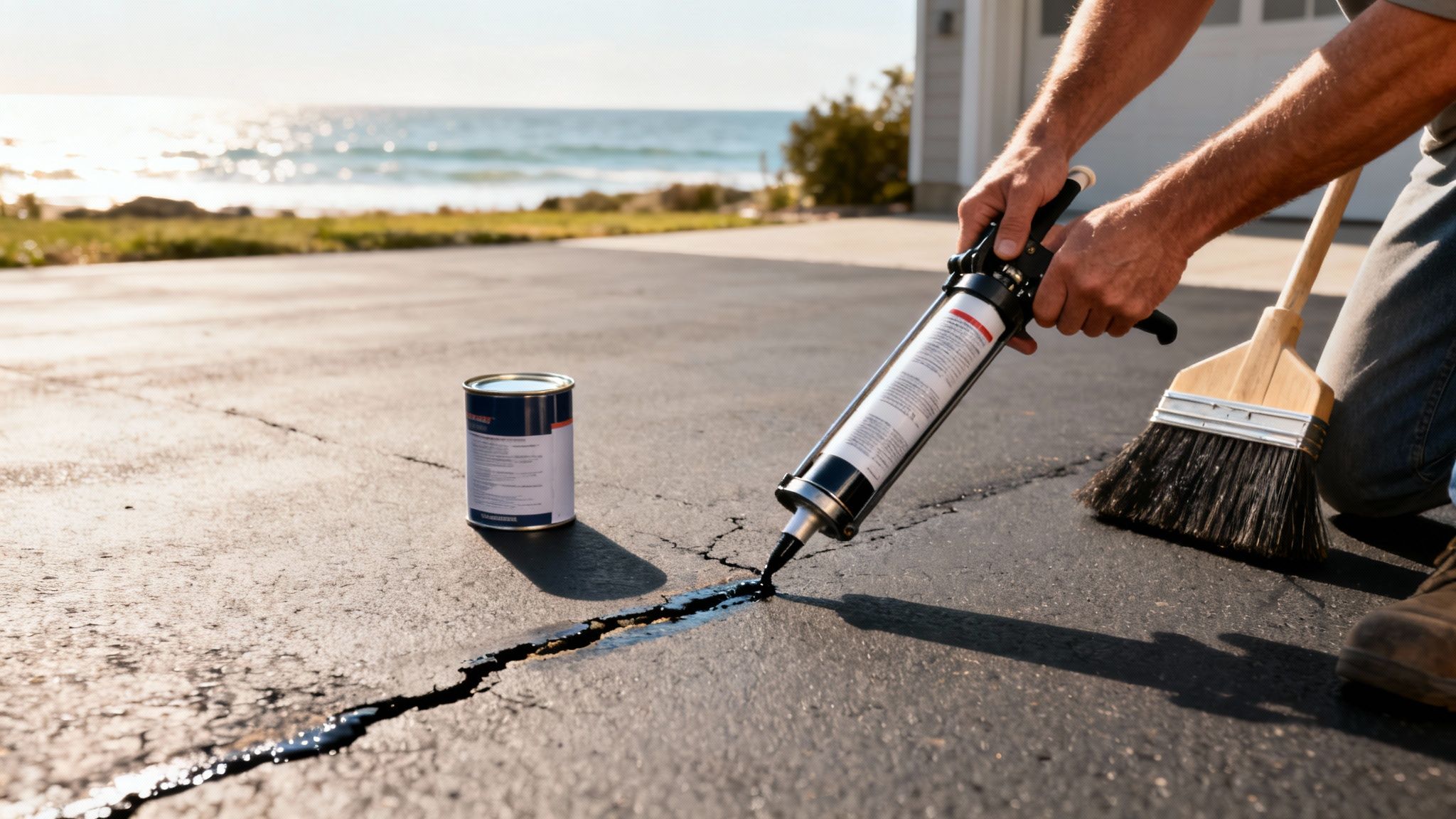
Asphalt's two biggest enemies are water and sun. Over time, sunlight breaks down the binder that holds the pavement together, making it brittle and causing it to crack. Water then seeps into those tiny cracks, gets into the base layer, and causes the damage that leads to potholes.
A simple maintenance routine stops these issues before they become expensive headaches.
Your Driveway Maintenance Timeline
A regular maintenance schedule is the most cost-effective way to get the most life out of your driveway. The data from the Asphalt Institute backs this up, showing that routine care can add 5–10+ years to your pavement's life. It’s all about catching small problems early.
Your plan should focus on two main services:
- Crack Sealing: The moment you see a crack, it’s time to seal it. Filling these openings stops water from getting into the foundation. This is your best defense against potholes.
- Sealcoating: Think of this as a protective treatment. Applying a quality sealcoat every 3–5 years creates a barrier on the surface. It shields the asphalt from UV rays, blocks water, and brings back that deep, rich black color.
Key Insight: The cost of proactive care is a tiny fraction of what you'll pay for major repairs. Filling a few cracks might cost a few hundred dollars. Rebuilding a driveway with a failed base can easily cost thousands.
Making Maintenance Easy
The goal is to keep your driveway in top shape without it feeling like a burden.
A simple trick is to set a calendar reminder to check your driveway for new cracks after the rainy season ends. Better yet, partner with a local expert who understands the challenges our coastal climate creates for pavement.
For Monterey homeowners, we can help develop a maintenance schedule that makes sense for your property. If you need a hand with these tasks, our local team specializes in sealcoating and crack filling services in Monterey and can help protect your investment for the long haul. A few simple steps will ensure your driveway not only looks great but also gives you decades of reliable service.
Finding a Monterey Contractor Who Builds for the Long Haul
Let's be direct: choosing the right paving contractor is the most important decision you'll make for your new asphalt driveway. It’s tempting to get a few bids and pick the cheapest one, but that's a classic mistake. A low price often means corners are being cut where it matters most—the foundation.
You're not just hiring a crew to lay down blacktop. You're hiring a partner who knows a driveway is a piece of infrastructure. A real pro knows the project's success starts with a stable base, smart drainage, and the right materials, long before any asphalt is laid.
Moving Beyond Price to Assess True Value
I've seen it many times: homeowners focus only on the final paving cost. A cheap bid almost always means essential prep work is getting skipped, like properly packing the soil or getting the slope right for runoff. Here in Monterey, with our coastal fog and hillside properties, that's a recipe for disaster. It leads to cracks, puddles, and expensive repairs in just a few years.
To avoid that headache, you need to check contractors on their process and knowledge. A good contractor will be happy to walk you through their entire plan.
Your goal isn't just to pave a driveway; it's to build a system that can handle Monterey's unique soil and weather for decades. This requires a contractor with deep local knowledge.
Questions to Ask Every Paving Contractor
Before you sign anything, have a few key questions ready. This will help you separate the experienced pros from the salespeople.
- About the Groundwork: "How will you check my soil? What are your methods for compacting the sandy or clay-heavy soils around here?"
- About Water Management: "Can you explain your grading and slope plan? How will you make sure water flows away from my house?"
- About the Asphalt Itself: "What kind of asphalt mix do you recommend, and why? Do you use Caltrans-grade recycled mixes?"
- About Local Experience: "Can you show me some projects you've done nearby on properties with similar challenges, like steep slopes or tricky soil?"
Hiring the right team is a skill. For more advice, our guide on how to hire subcontractors offers some great tips for any construction project.
At Coastal Pipeline Inc., we expect these questions. Our Monterey-based team looks at the whole picture, from subgrade stability to using durable, Caltrans-grade recycled mixes that are designed to perform better and last longer. We know how local elevation, weather, and permits affect a driveway's lifespan. We build driveways to last for decades, not just a few seasons. Don't let a low bid that cuts corners end up costing you more in the long run.
Your Top Driveway Planning Questions, Answered
Planning a new driveway for your Monterey home is a big deal, and it’s smart to have questions. You're making a big investment. Whether you're trying to figure out a budget, planning a renovation, or just looking at options, getting straight answers is the first step. Let's cover the questions we hear most often.
How Long Should a New Asphalt Driveway Really Last?
A well-built asphalt driveway should give you 20 to 30 years of service. But that long life isn't automatic—it's earned through careful planning and construction. The real secret to a lasting driveway is hidden under the surface in its foundation. If the ground isn't properly prepared and compacted, or the base layer is too thin, you're going to see problems much sooner.
Here in Monterey, things like sandy coastal soils or water runoff on a hillside can shorten a driveway's life if they aren't managed from the start.
Why Is the Lowest Bid Almost Always a Bad Idea?
It's tempting to look at the price per square foot, but picking the lowest bid is probably the biggest mistake a homeowner can make. A rock-bottom price is usually a huge red flag. It almost always means the contractor is cutting corners on the most critical part of the job: the site preparation.
They save money by skimping on proper grading, failing to compact the soil, or laying a flimsy base. This guarantees you'll be dealing with expensive cracks, potholes, and drainage problems in just a few years. A cheap bid that ignores your Monterey property’s challenges isn't a bargain—it's a future headache.
Are There Greener, More Eco-Friendly Options?
Yes. The asphalt industry is much more sustainable today. An incredible 95% of all asphalt pavement is recycled, making it one of the most reused materials in the country. Even big agencies like Caltrans use mixes with up to 40% recycled asphalt on public highways because the performance is so good.
Treat your driveway project like you're building a piece of vital infrastructure, not just paving a surface. Ask your contractor about using high-performance, eco-friendly options like warm-mix asphalt or a Caltrans-spec recycled mix. These materials are not only sustainable but are often tougher and more durable.
What Should I Ask a Contractor (Besides "How Much?")
To find a pro who will build you a driveway that lasts, you need to ask more than just the price. Asking the right questions shifts the focus from cost to quality and long-term value.
Here are a few great starters:
- On the Foundation: "How will you evaluate my property’s soil and subgrade to ensure it’s stable?"
- On Drainage: "What's your plan for grading the area and sloping the driveway to handle water runoff correctly?"
- On Materials: "What specific asphalt mix are you recommending for my situation, and will it include any recycled content?"
Questions like these quickly separate the true experts from the rest. You'll find out who really understands how to build for Monterey's unique coastal environment.
At Coastal Pipeline Inc., we know a driveway is a long-term investment in your home. Our Monterey team has the local know-how to size up your property's specific challenges and build a durable, high-performance driveway from the ground up. Reach out to us today to start planning a driveway that's built to last.