
No, you almost certainly cannot install a new water main yourself. While the DIY spirit is great for many home projects, this isn't one of them. Replacing a water main is not simple plumbing like fixing a leaky faucet—it's regulated underground infrastructure, putting it in a completely different category.
Why a DIY Water Main Installation Is a Bad Idea
Many homeowners wonder if they can save money by replacing a main water line themselves. But this job is in a different league than interior plumbing. Your water main is the critical link between your home and the public water supply, making it a piece of regulated infrastructure. This isn't just a pipe; it's a key part of public health and safety.
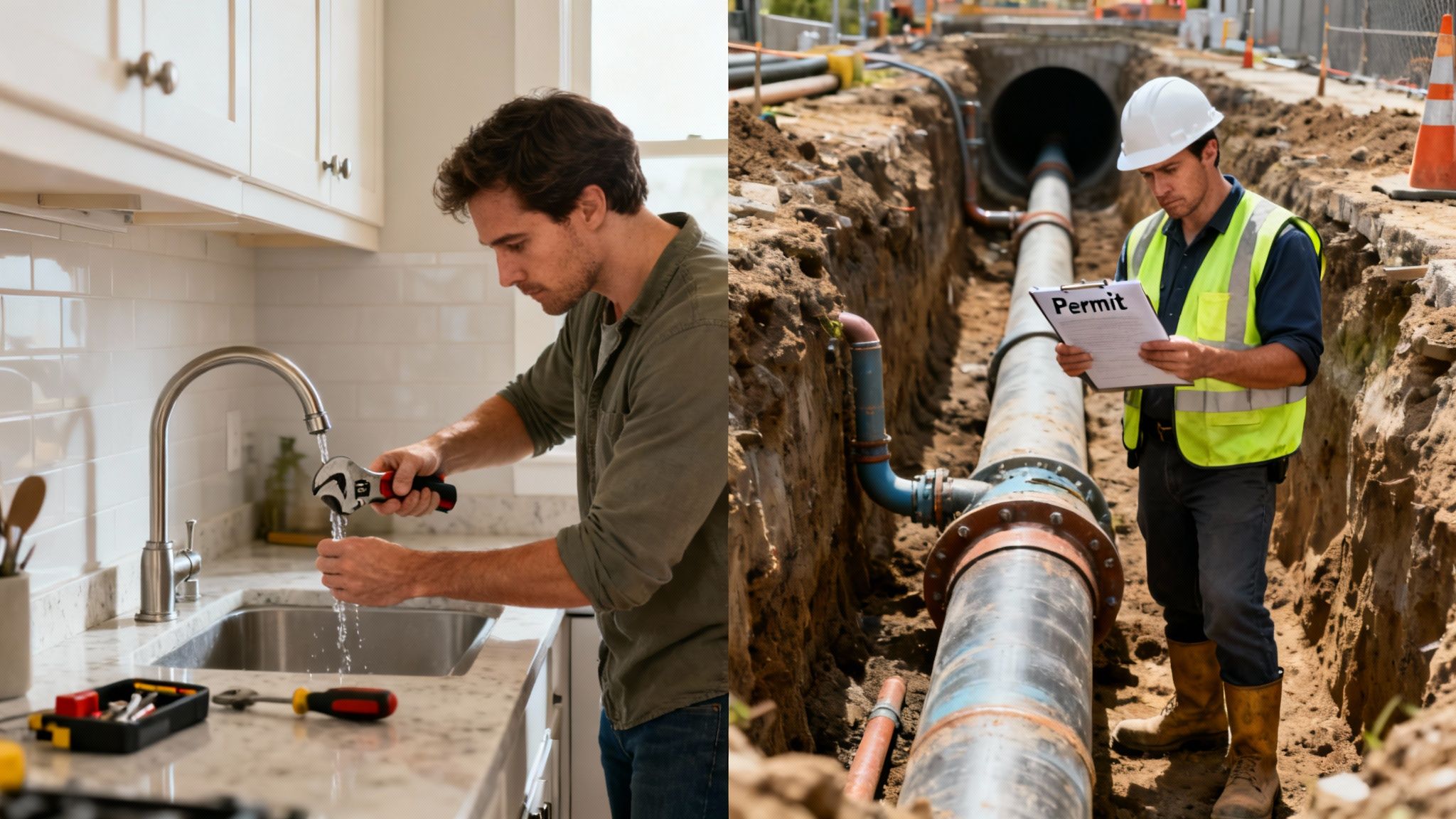
Our country's water system is aging. The American Society of Civil Engineers reports that nearly 20% of water mains are past their service life. This leads to over 260,000 water main breaks each year in North America. Because of this, cities are tightening their rules. They now require permits, inspections, and licensed contractors for replacements to make sure the work is safe and up to code.
The Common (and Costly) DIY Misstep
The biggest mistake people make is thinking this job is easy. It’s not just digging a trench and laying pipe. The work often involves challenges that only a licensed professional can legally handle:
- Crossing Property Lines: Digging often goes into public areas, like a sidewalk or street, which needs special permits.
- Tapping a Municipal System: Cutting into the city's main water line is a skilled task. It's illegal for an unlicensed person to do this. A mistake could cut off water for your neighbors or contaminate the public water supply.
- Navigating Complex Codes: The project must follow many rules, from health codes to trenching laws from groups like OSHA. Calling 811 to mark utility lines is just the first step.
A DIY attempt can lead to failed inspections, big fines, or even legal trouble. The city could force you to pay a licensed contractor to dig up your work and do it again—the right way.
To see the risks clearly, let's compare the two approaches.
DIY vs Professional Water Main Installation at a Glance
| Aspect | DIY Attempt | Professional Installation |
|---|---|---|
| Permits & Legality | Homeowner is responsible; often denied without a license. High risk of fines and stop-work orders. | Contractor handles all permitting and ensures full legal compliance. |
| Safety | High risk of trench collapse, utility strikes (gas, electric), or personal injury. Lacks proper safety gear. | Professionals use certified trenching equipment and follow strict OSHA safety protocols. |
| Equipment | Requires renting expensive, heavy machinery (excavator, tamper) that you may not know how to operate. | Owns and operates all necessary specialized equipment safely and efficiently. |
| Code Compliance | Unlikely to know all local codes for pipe depth, materials, backflow prevention, and testing. | Deep knowledge of all municipal and state codes ensures the project passes inspection the first time. |
| Liability | You are 100% financially responsible for any damage to public property, utilities, or neighbor's property. | Fully insured and bonded, protecting you from any accidental damages. |
| Inspections | DIY work is often scrutinized more heavily and is more likely to fail, causing costly delays. | Long-standing relationships with local inspectors help streamline the inspection process. |
| Cost | Perceived savings can evaporate with equipment rental, fines, failed inspections, and rework costs. | Upfront, predictable cost. The job is done correctly once, avoiding expensive surprises. |
The possible savings from a DIY attempt are rarely worth the huge financial and legal risks.
The Right Way to Replace Your Water Main
The only safe and legal way forward is to hire a licensed underground utility contractor. A professional knows the whole process. They will manage the permits, schedule inspections, and meet the standards for connecting to the city's water system.
A certified contractor also handles other key tasks, including:
- Pressure Testing to ensure the new line won't burst under pressure.
- Backflow Compliance to install devices that stop dirty water from entering the public supply.
- Surface Restoration to fix any roads, sidewalks, or landscaping that was disturbed.
At Coastal Pipeline Inc., we bring full-service water line expertise to every project. Our certified team handles everything from trenching to tie-ins and is certified to install and test backflow prevention systems. We coordinate directly with city inspectors and utility providers, making the process simple and safe for you.
If you’re in Monterey, Santa Cruz, or San Benito County, let us help you avoid code violations and costly re-digs. Contact us for a free consultation on what’s legally required in your area.
Why a Water Main Is More Than Just a Pipe
It’s a common question I hear from property owners: "Can I save a few bucks and just replace the water main myself?" On the surface, it seems like a straightforward plumbing job. But this is a critical mistake in thinking. A water main isn't just a pipe; it's a piece of regulated underground infrastructure, and that puts it in a whole different league.
Let’s put it this way: the plumbing inside your house is like the network of small veins in your body, carrying water exactly where it needs to go. The water main, on the other hand, is the major artery connecting your entire property to the heart of the city's water grid. It’s under incredible, constant pressure and serves a vital public health role.
This is exactly why the materials are so different. Inside your walls, you'll see things like copper or flexible PEX tubing. But for a water main, local codes mandate materials built to withstand decades of high pressure, shifting soil, and corrosion.
A World of Difference in Materials and Pressure
The pipes in your home deal with a fairly tame water pressure, usually somewhere between 40 and 80 PSI (pounds per square inch). A municipal water main? That can easily surge to well over 100 PSI. That kind of force demands specialized materials you simply won't find on the shelf at your local hardware store.
Code-compliant materials typically include:
- C900 PVC: This isn't your standard white PVC pipe. It's a heavy-duty, thick-walled material specifically engineered to handle the intense pressures of a municipal water system.
- Ductile Iron Pipe: For major water lines, this is often the material of choice. It’s incredibly strong and can take a serious beating, resisting physical damage and extreme pressure.
Working with these materials is a craft in itself. It requires specialized cutting tools, unique joining methods, and the know-how to create a permanent seal that will hold for decades. One weak joint can spell disaster, leading to a catastrophic blowout, massive flooding, and eye-watering emergency repair bills.
The choice of material is non-negotiable for the safety and longevity of our public water infrastructure. In fact, in the U.S. and Canada, 90% of installed water mains are made from materials where PVC accounts for 29% and ductile iron 27%. Professionals are trained to work with these materials, from proper installation and pressure testing to connecting safely to the city's system.
You've Gone From Plumber to Engineer
The second your shovel hits the dirt to replace a water main, your role changes. You're no longer a homeowner doing a repair; you're performing a complex engineering task that’s governed by strict rules designed to protect public health.
A licensed contractor lives and breathes this complex world. They know the required burial depth to prevent freezing in our climate, the right type of bedding material (like sand or gravel) to cradle the pipe and prevent shifting, and the exact procedures for tapping into the city's main without causing contamination or shutting down the whole block.
This isn't just about connecting Point A to Point B. It’s about installing a critical piece of infrastructure that must meet the same engineering standards as the public utility lines running under your street. A failed installation doesn't just flood your yard; it can compromise water quality for your neighbors.
A professional job is far more than just digging a trench. It requires precise residential excavation services to ensure the trench is stable and won't collapse. It also involves mandatory pressure testing, disinfection procedures to make the water safe for drinking from day one, and coordinating with city inspectors who need to sign off on every critical step of the project.
Thinking of your water main as just another pipe is the first—and most expensive—mistake you can make. The moment you see it for what it truly is—regulated, high-pressure, public-facing infrastructure—it becomes crystal clear why tackling this job without a licensed contractor is a gamble you can't afford to take.
The Hidden Dangers and Legal Hurdles of a DIY Job
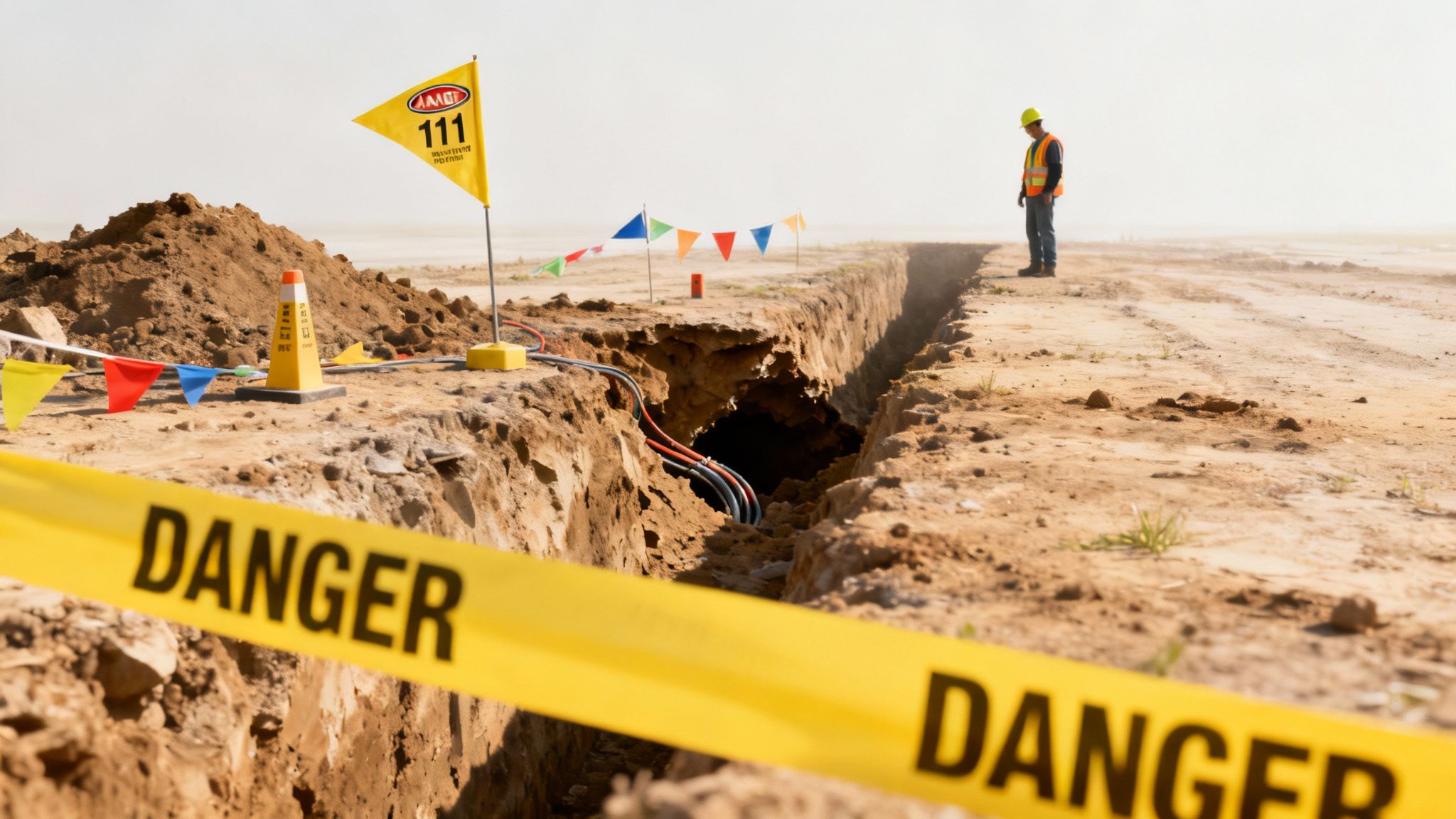
Thinking you can install a new water main yourself is a serious gamble, and the stakes are incredibly high. The risks go far beyond a simple leak—we're talking about life-threatening safety hazards on one hand, and significant legal and financial penalties on the other. It's easy to mistakenly believe this is just a bigger version of a weekend plumbing project, but it's much more like performing surgery on a public utility system.
The American Society of Civil Engineers paints a pretty stark picture: nearly 20% of water mains are already past their service life. This contributes to over 260,000 water main breaks every single year in North America. With infrastructure that fragile, it’s no wonder cities are tightening their oversight. Professional installation isn't just a suggestion; it's a requirement to protect public safety and the entire water grid.
Life and Limb: The Physical Dangers of DIY Excavation
The most immediate danger is the excavation itself. Digging a trench deep enough for a water line creates an incredibly unstable environment where the walls can collapse without any warning. A single cubic yard of soil can weigh as much as a small car, making a trench collapse a truly life-threatening event. Professionals rely on specialized gear like trench boxes and shoring systems to prevent this—equipment that’s expensive to rent and requires training to use safely.
Then you have the risk of striking other underground utilities. Sure, calling 811 is a mandatory first step, but that’s just the beginning. The paint on the ground gives you an approximate location, not a precise depth or path. One wrong move with an excavator and you could hit a high-pressure gas line, a high-voltage electrical conduit, or a fiber-optic cable. The result? Explosions, electrocution, or knocking out services for your entire neighborhood. A deep dive into how to locate underground utilities shows just how complex this process is, even for seasoned pros.
https://coastalpipelineinc.com/how-to-locate-underground-utilities-a-contractors-guide/
Finally, there’s the critical risk of contaminating the public water supply. A professional contractor follows strict, non-negotiable disinfection and flushing procedures before connecting a new line to the city’s system. A DIY job that introduces dirt or bacteria can trigger a public health crisis, leaving you liable for a widespread problem.
The Legal Minefield: Unpermitted and Unlicensed Work
Beyond the physical dangers, you're stepping into a legal and financial minefield. You cannot legally connect anything to a municipal water system without permits, inspections, and a licensed contractor. This isn't optional red tape; it's the law, plain and simple.
Attempting to bypass the official process can lead to severe consequences, including hefty fines, a stop-work order from the city, and a legal mandate to tear out everything you installed—at your own expense—and hire a licensed professional to do it correctly.
Furthermore, a DIY installation leaves you completely exposed from a liability standpoint. If your unpermitted work causes a main break that floods a neighbor's property or damages the street, you are personally responsible for all the repair costs. The protections professionals have are significant; for a clear picture, it’s worth understanding contractor liability insurance to see the financial shield you're missing when you go it alone.
Here’s a quick breakdown of the legal and financial risks you’re taking on:
- Heavy Fines: Cities impose huge financial penalties for unpermitted work that taps into public utilities.
- Costly Rework: If your work fails inspection, you'll be paying to have the line dug up and reinstalled correctly by a certified contractor.
- Property Damage Liability: You are on the hook financially for any damage to public infrastructure (like roads and sidewalks) or your neighbors' property.
- Home Sale Complications: Unpermitted work creates major headaches when you try to sell your home, often requiring expensive, retroactive permitting and repairs.
If you’re a property owner in Monterey, Santa Cruz, or San Benito County, the only way to avoid these severe risks is to work with a licensed professional from the start. At Coastal Pipeline Inc., we manage the entire process—from pulling permits to coordinating with city inspectors—to ensure your project is safe, legal, and built to last. Reach out for a free consultation to understand what’s required in your area and avoid the costly trap of a DIY job.
Understanding the True Cost: DIY vs. Professional
When your water main goes, one of the first things you'll think about is the cost. It's completely natural to look at a professional quote and wonder, "Couldn't I save a fortune by doing this myself?" On the surface, it seems logical. But when it comes to a project this critical, the "savings" of a DIY job are often an illusion, and the real financial risks are staggering.
This isn't like fixing a leaky faucet. A DIY water main replacement means you're not just avoiding a labor bill; you're personally taking on every single risk that a professional contractor is trained, licensed, and insured to manage.
A Look at the Numbers
Let's get down to brass tacks. A professional installation typically runs somewhere between $50 to $150 per linear foot, though a really complex job could climb as high as $250 per foot. For a standard residential home, the total project cost often lands around $1,710, with a general range of $647 to $2,828.
Now, you might see stories online from ambitious DIYers who claim they did the job for $490 in PEX piping and rentals. That number is dangerously misleading. It conveniently leaves out a whole host of hidden costs and, more importantly, the enormous liabilities you inherit the moment you break ground.
The Hidden Expenses of a DIY Water Main Job
That initial low materials cost for a DIY project starts to balloon pretty quickly. The real expenses aren't just the pipe itself; they're all the necessary extras you probably haven't accounted for.
Think about what a real job entails:
- Heavy Equipment Rental: You’re not digging a ten-foot trench with a garden spade. You’ll need to rent a mini-excavator, a plate compactor for backfilling properly, and other specialty tools. Those rental fees add up fast, often costing hundreds of dollars a day.
- Code-Compliant Materials: This is another big one. You can't just grab any pipe from the big-box store. Municipal codes require specific materials, like heavy-duty C900 pipe and specialized fittings, which cost far more than standard plumbing supplies.
- Permit Fees: First, you have to see if your city will even issue a permit for this kind of work to a homeowner—most won't. If they do, the fees can be steep, covering everything from the excavation itself to the connection to the city's main line.
- Disposal Fees: When you're done, you’ll have a huge pile of dirt and old, busted pipe. You can't just leave it on the curb. You'll have to pay to haul it away and dispose of it at a proper facility.
The Financial Nightmare of a Failed DIY Installation
The biggest risk isn't overspending on rentals; it's the long-term cost of getting something wrong. A single mistake during installation can set off a chain reaction of expenses that will make that initial professional quote look like a bargain.
A failed DIY job isn't just about a soggy lawn. It can mean paying for an emergency city crew to fix the municipal line you just broke, covering the cost to repair your neighbor's flooded basement, or being ordered by an inspector to dig the entire thing up and pay a pro to do it right from scratch.
These aren't hypotheticals; they are real, and financially devastating, possibilities:
- Failed Inspections: If your pipe isn't at the right depth, laid in the right bedding material, or connected with the right fittings, it will fail inspection. You’ll be on the hook for digging it all up and starting over.
- Damage to Public Property: Crack a public sidewalk or damage the street while digging? The city will repair it, and you can bet they’ll be sending you the bill.
- Third-Party Property Damage: If your work causes a flood that damages a neighbor's foundation, your standard homeowner's insurance likely won't cover it because the work was unpermitted and unlicensed. That means you're personally liable for what could be tens of thousands in repairs.
- Future Problems: An improperly installed line is a ticking time bomb. It could lead to years of low water pressure, chronic leaks, or a catastrophic failure long after you've forgotten about the project. A quick look into the official water meter installation requirements shows just how precise this work needs to be.
Hiring a licensed, insured professional isn't just paying for labor. It's an investment in peace of mind. You're shielding yourself from unpredictable, potentially life-altering expenses and turning a high-stakes gamble into a guaranteed, properly executed project.
The Professional Process: What a Licensed Contractor Really Does
To get a handle on why you can't just install a new water main yourself, it helps to pull back the curtain on what a professional actually manages. This isn't just about digging a trench and laying some pipe. It's a complex, multi-stage operation where every single move is dictated by strict codes and requires years of specialized experience. A licensed contractor doesn't just do the work—they navigate a labyrinth of regulations to make sure your project is safe, legal, and built to last.
The whole thing is far more involved than most people imagine. Think of it like conducting an orchestra of logistics, legal paperwork, and heavy machinery. Each phase has its own rulebook, and a single mistake at any point can bring the entire project to a screeching halt, leading to failed inspections and expensive do-overs.
From Initial Survey to Final Tie-In
A licensed underground utility contractor follows a proven, systematic approach. There's no guesswork or corner-cutting because they've seen firsthand what happens when things go wrong. The process is designed from the ground up to protect both your property and the public water supply.
Here’s a look at the critical stages a professional handles:
- Site Assessment and Utility Coordination: It all starts with a thorough evaluation of your property. The contractor figures out the best path for the new line, checks the soil conditions, and plans around any obstacles. This is also when they kick off serious utility coordination—which is way more than a simple 811 call—to precisely map every existing underground line, from gas and electric to sewer.
- Handling All the Red Tape (Permits): The contractor manages the entire permitting process with the city or county. This is a huge hurdle that a homeowner often can’t clear alone, as most municipalities require a licensed professional to even apply for a permit to work on public utility infrastructure.
- Safe and Compliant Excavation: With permits in hand, the team gets to digging. They use the right equipment and mandatory safety measures, like trench shoring, to prevent a dangerous collapse. They also ensure the trench is dug to the exact depth and grade required by local codes—no exceptions.
- Professional Installation and Bedding: The new water main, typically made from a code-approved material like C900 PVC, is carefully laid in a bed of specific aggregate (like sand or gravel). This bedding is crucial; it protects the pipe from sharp rocks and ground movement, giving it the stability it needs to last for decades.
Testing, Inspections, and Putting It All Back Together
Once the pipe is in the ground, some of the most critical work begins. This is where a professional’s expertise becomes non-negotiable, because these next steps are what guarantee the new installation is safe and compliant.
Getting the pipe installed is only half the battle. The other half is a series of mandatory tests and inspections that prove the new line is sterile, leak-proof, and ready to connect to the municipal grid. Skipping these steps isn't just a bad idea—it's illegal and puts public health at risk.
The final phases of the project include:
- Pressure Testing and Disinfection: The new line is filled with water and pressurized to a level far higher than it will ever experience in normal use. This test confirms that every single joint and fitting is perfectly sealed. After that, the line is flushed and disinfected according to strict public health protocols to eliminate any potential contaminants.
- Passing Multiple City Inspections: An inspector will visit the site at several key points—like when the trench is open, after the pipe is laid, and during the pressure test. A professional contractor knows exactly what inspectors are looking for and makes sure every detail is up to code before they even show up.
- Backflow Prevention: A certified contractor installs and tests a backflow prevention device. This is a critical safety component that physically stops contaminated water from your property from ever flowing backward into the city’s clean water supply.
- Final Tie-In and Full Site Restoration: Only after passing all inspections can the contractor make the final, legal connection to the municipal water main. Once that's done, they restore your property, which includes repairing any disturbed sidewalks, driveways, or landscaping to get things back to normal.
At Coastal Pipeline Inc., we manage this entire process for you. Our expertise in full-service utility systems construction means we coordinate directly with city inspectors and handle every requirement, from the first shovel in the ground to the final tie-in. If you’re in Monterey, Santa Cruz, or San Benito County, give us a call for a free consultation to avoid the headaches, code violations, and stress of a complex project.
How to Choose the Right Contractor for Your Project
Okay, so you've realized that installing a new water main is a job for the pros. That's a smart call. But now comes the critical part: finding the right professional. This isn't a task for your average handyman or even a standard residential plumber. You need someone who lives and breathes underground infrastructure.
Making the right choice here is about more than just getting the job done; it's about protecting your property and ensuring the work is done safely, legally, and to last.
To get started, it's helpful to understand how to choose the right plumbing professional for your home. For a water main project, you’re specifically looking for a licensed General Engineering Contractor who specializes in underground utilities. Think of it this way: an interior plumber works on the veins of your house, while a general engineering contractor works on the arteries connecting it to the city's system. It’s a completely different scale of work.
Key Qualifications to Verify
Before you even think about signing a contract, you need to do a little vetting. Any legitimate, experienced contractor will have this information ready and will be happy to share it.
Here’s your checklist:
- A Specialty License: Ask to see their General Engineering Contractor license. This is non-negotiable and proves they have the state-mandated expertise for this kind of heavy-duty work.
- Proof of Insurance: They must have both general liability and workers' compensation insurance. This is your shield. Without it, you could be on the hook financially if an accident happens or property gets damaged.
- Local Experience: This one is huge. Ask them about their recent projects in your specific city or county. A contractor who regularly works in Monterey, Santa Cruz, or San Benito County already knows the local inspectors, the unique code requirements, and the permit office's quirks, which can save you from a world of headaches and delays.
Why Experience with Local Regulations Matters
Here’s a little perspective: across the United States and Canada, there are a staggering 260,000 water main breaks annually. On top of that, nearly 20% of all our installed water mains are living on borrowed time, well past their intended lifespan. Because of this aging infrastructure crisis, cities and counties are cracking down and enforcing their regulations more strictly than ever.
A professional contractor doesn't just dig a trench; they navigate a complex, multi-step process designed to meet these stringent local standards.
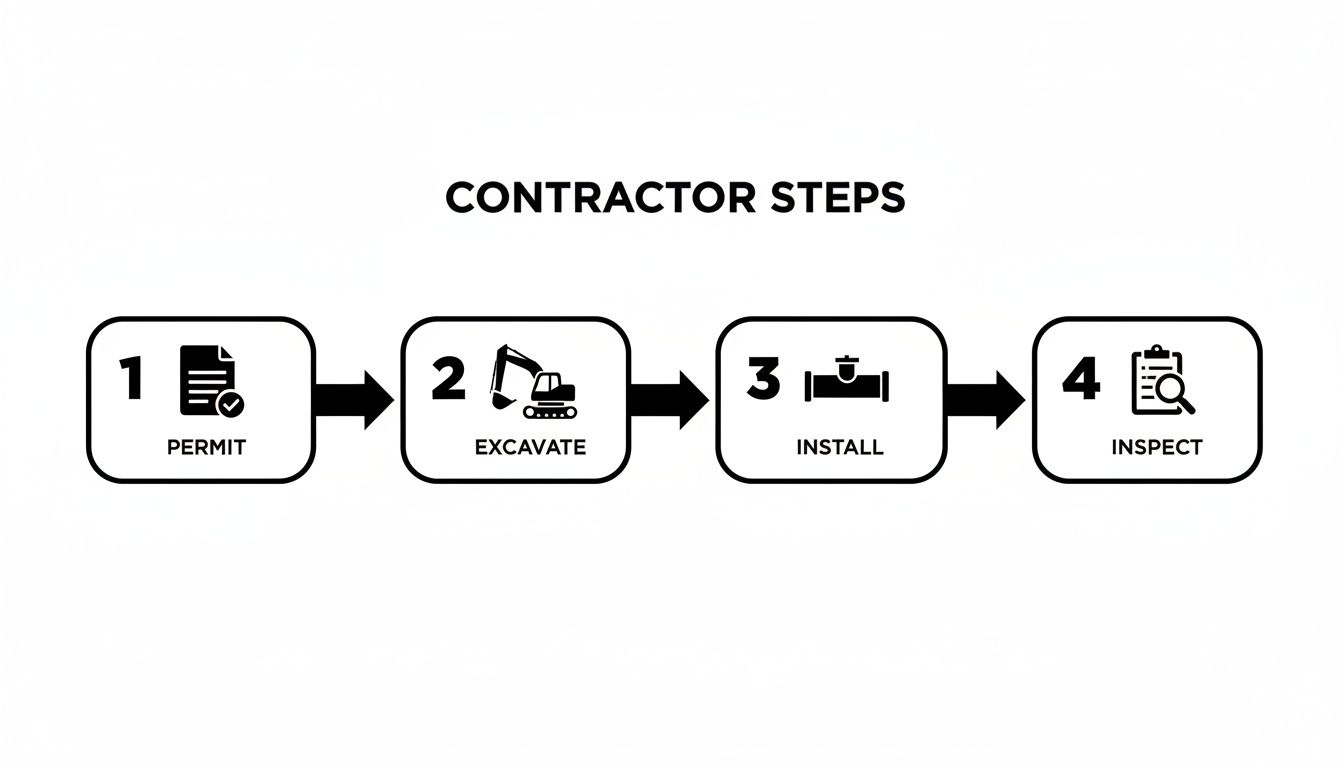
As you can see, from pulling the right permits to passing that final, crucial inspection, a qualified contractor manages the entire workflow. This process is your guarantee against future legal trouble or having to pay for the job to be done twice.
At Coastal Pipeline Inc., this is exactly what we do. We’re not just installers; we’re project managers. Our team handles everything from the initial trenching and installation to the final paving and site restoration. We’ve spent years building relationships and navigating the specific permit processes in Monterey, Santa Cruz, and San Benito Counties. We speak directly with city officials, so your project moves along without a hitch.
Check out our full range of underground utility services to see our expertise in action. If you’re dealing with a water main issue, give us a call. We'll give you a free, no-nonsense consultation, explain what the law requires in your area, and map out a professional plan to get it done right.
Your Top Questions About Water Main Installation, Answered
When you find out your main water line needs to be replaced, a lot of questions pop up. It’s a big job, and you want to get it right. Here are some straightforward answers to the questions we hear most often.
Can I Just Install a New Water Main Myself and Skip the Contractor?
This is the most common question, and the answer is a firm no. Many homeowners wonder if they can save money by replacing a main water line themselves. But water mains are regulated underground infrastructure, not just plumbing—it’s a whole different category. Tapping into the city's water system without the proper license is illegal and puts public health and safety at risk.
What Makes This So Different From Other Plumbing Jobs?
People think it’s like fixing a leaky faucet. It’s not. Replacing a water main usually involves digging across property lines, cutting into a municipal system, and complying with strict health codes and trenching laws. You also have to coordinate with every utility provider (calling 811 is just the beginning).
The American Society of Civil Engineers reports that nearly 20% of water mains are past their service life, and over 260,000 water main breaks happen annually in North America. That’s why cities are tightening oversight and requiring permits, inspections, and licensed contractors for any replacements.
So, What’s the Right Way to Handle This?
The only safe and legal path is to work with a licensed underground utility contractor. A professional knows the full permitting process, inspection schedule, and tie-in standards. They don't just dig a trench; they manage the entire complex process from start to finish.
This includes:
- Handling all required permits from the city or county.
- Scheduling and passing multiple inspections to prove the work meets code.
- Performing critical pressure testing and ensuring backflow compliance.
- Properly handling traffic control and surface restoration if the line crosses roads or sidewalks.
Going this route saves you from the nightmare of failed inspections, potential fines, and the massive expense of having to dig everything up and do it all over again.
How Does Coastal Pipeline Inc. Handle This Process?
At Coastal Pipeline Inc., we bring full-service water line expertise—from trenching to tie-ins. We are certified to install and test backflow prevention systems. We coordinate directly with city inspectors and utility providers, making the process simple and safe for you. If you’re in Monterey, Santa Cruz, or San Benito County, let us help you avoid code violations and costly re-digs.
If you're a homeowner in Monterey, Santa Cruz, or San Benito County, let us help you navigate the requirements and get your project done right the first time. Contact Coastal Pipeline Inc. for a free consultation to understand exactly what’s needed in your area.
Learn more about our water main services at coastalpipelineinc.com