Getting a Central Coast property ready for heavy rain is about being prepared. This means upgrading your storm drains and utility lines before winter storms arrive.
This is more than just fixing problems as they happen. It means taking smart steps to make sure your property's drainage—from pipes under your driveway to drains on your street—can handle the heavy rain we've been getting. For property owners, this means moving from quick fixes to long-term upgrades to protect their investment and keep everyone safe.
Why Winter Storm Prep Is a Must for Central Coast Properties
Each winter, the Central Coast experiences seasonal storms that bring heavy rainfall. These storms can cause flooding and erosion, especially in coastal and hillside areas. In recent years, these storms have become stronger, and our local drainage systems are often pushed to their limits during big weather events. As the rainy season gets closer, cities and property owners need to make sure their drains and utilities are ready to handle heavy runoff and prevent damage.
This increased rainfall puts a lot of strain on our local infrastructure. Blocked storm drains, aging pipes, and damaged sewer lines can quickly become emergencies during winter storms. Property owners who wait to get inspections or repairs often end up with flooded streets, damaged driveways, and expensive cleanup work.
The Rising Stakes for Property Owners
For municipal clients, HOAs, and commercial property managers, the stakes are even higher. A failing drainage system isn't just about property damage; it's a huge liability risk if systems aren't maintained and up to code. Preparing for the season is no longer optional—it’s a critical part of keeping properties safe and compliant.
Weather forecasts suggest that the upcoming 2025–2026 winter season may have above-average rainfall, making the need to act even more urgent. A single major storm can drop inches of rain in just a few hours, leading to the kind of widespread flooding we've seen more often in recent years.
Many properties, especially older homes and developments, still rely on undersized or outdated stormwater systems. This gap between the existing infrastructure and today's weather patterns is a major risk for the entire Central Coast region.
Taking Proactive Steps This Season
Now is the ideal time to schedule a storm drain inspection and check your utility lines. It’s also a good time to review your property's drainage layout for potential upgrades. Being proactive helps you avoid emergency costs and makes the process of getting permits and inspections much smoother.
Coastal Pipeline Inc. specializes in engineered drainage upgrades, storm drain inspections, and emergency underground utility repairs throughout the Central Coast. With certified trenching crews and experience in erosion control, we are uniquely positioned to help residential, commercial, and municipal clients protect their systems before the first major storm hits. Understanding how drainage infrastructure is evolving can give you a better sense of what modern, effective solutions look like.
If you're looking at your property and wondering if it can handle what's coming this winter, give us a call. Our team can evaluate your site and recommend smart, lasting solutions that will let you sleep a little easier when the rain starts falling.
How to Assess Your Property’s Flood Risk
Before the first big winter storm arrives on the Central Coast, it's important to understand where your property's weak spots are. The best way to do this is to get outside and look around. A hands-on inspection can help you spot drainage problems before they turn into expensive emergencies. This is about being proactive—finding the warning signs now so you can make smart choices for the rainy season.
The best time to check your property is right after a light rain. This lets you see how water flows (or doesn't flow) across your land. Walk your entire property and look for low spots in the yard or near your foundation where water starts to pool. Those puddles are your first clue that you have poor drainage.
Conducting a Visual Surface Inspection
You might be surprised by what you can find just by walking around. Pay close attention to any slopes or hillsides. Do you see signs of erosion, like bare patches of soil or small channels carved by runoff? That’s a clear sign that water is moving too fast and could damage your landscaping or even your buildings.
While you're at it, check all your visible drainage hardware:
- Downspouts: Make sure they are firmly attached and that they release water at least four to six feet away from your foundation.
- Drain Grates and Catch Basins: Clear out any leaves, dirt, or trash. A simple blockage here can cause a big backup very quickly.
- Visible Culverts: Check the ends of any pipes under your driveway or paths. Look for rust, cracks, or debris clogging the entrance or exit.
This whole process is about understanding how your property handles a storm, where your systems might fail, and what that could mean for potential damage.
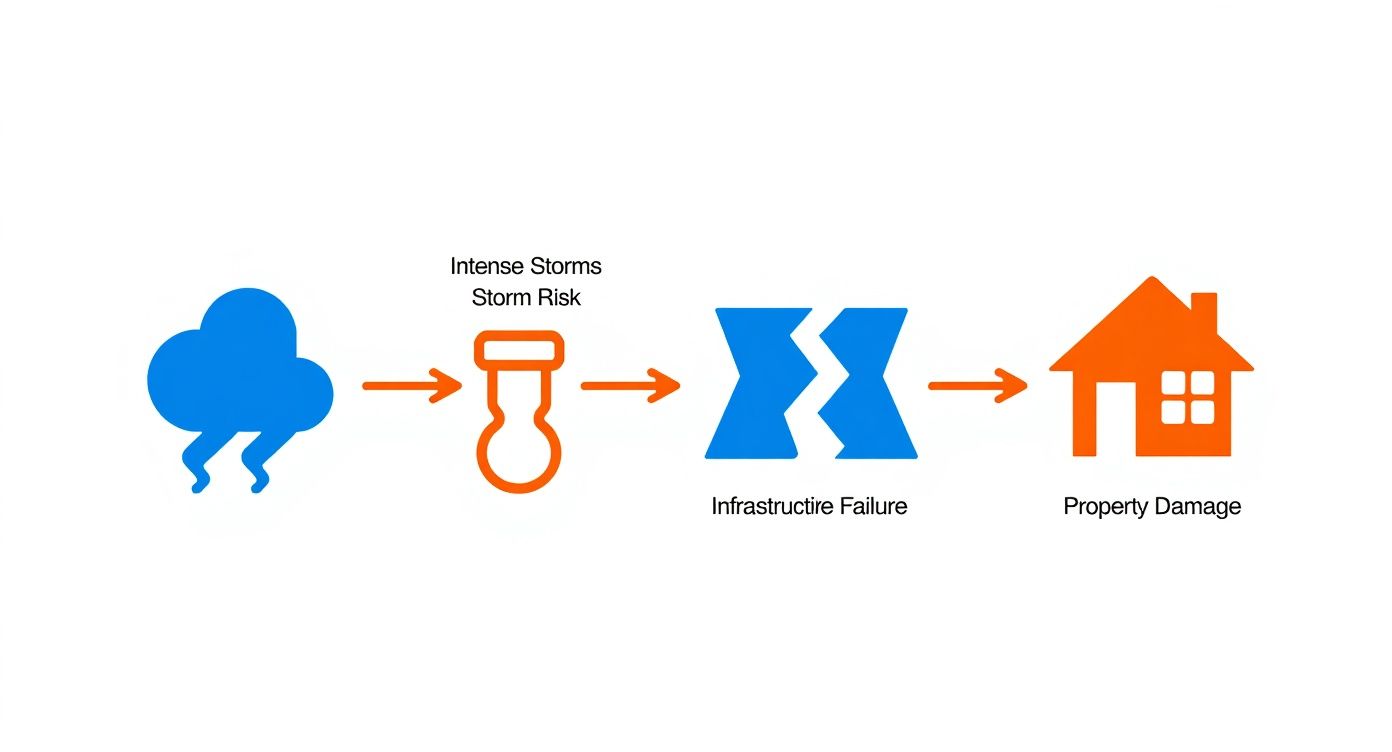
As the infographic shows, it doesn’t take long for heavy rain to overwhelm weak systems, leading to serious property damage. This is why getting ahead of it is so important.
When to Look Deeper Underground
A surface inspection is a great start, but the most serious failures are usually the ones you can't see. Problems like tree roots crushing a pipe, cracks from shifting soil, or a collapsed pipe are silent threats hiding underground. These issues often cause a total system failure during a major storm.
If you see soggy patches in your yard that never dry, outdoor drains that drain very slowly, or small sinkholes starting to form, those are major warning signs. These aren't just minor issues; they point to a damaged underground pipe that can’t handle the amount of water it’s supposed to.
A professional CCTV video pipe inspection is the only way to get a clear look inside your storm drain lines. This technology uses a high-resolution camera to travel through your pipes, identifying cracks, blockages, and weak spots without digging.
Bringing in a professional for an inspection is a necessary step in truly preparing for heavy rain. It gives you the information you need to plan effective storm drain upgrades. Here at Coastal Pipeline Inc., we offer detailed inspections as part of our complete stormwater management systems for properties all over the Central Coast.
Winter Storm Readiness Checklist
To help you get started, here is a simple checklist. Use this to walk your property and identify common problems before they become major headaches.
| Area of Inspection | What to Look For | Risk Level (Low/Medium/High) |
|---|---|---|
| Foundation & Perimeter | Pooling water, damp spots on walls, soil washing away from the base | High |
| Yard & Landscaping | Low spots where water collects, signs of soil erosion on slopes | Medium |
| Downspouts & Gutters | Clogged with debris, disconnected sections, draining too close to the house | High |
| Driveways & Pavement | Cracks, sinking areas, water flowing toward buildings instead of drains | Medium |
| Drain Grates & Catch Basins | Covered in leaves, silt, or trash; slow to drain after rain | High |
| Visible Pipes & Culverts | Corrosion, cracks, blockages at either end | High |
| Subsurface Indicators | Persistent soggy ground, slow-draining areas, unexplained sinkholes | High |
This checklist is your starting point. Finding these hidden issues now allows you to schedule repairs on your own time and budget, rather than making a frantic, costly emergency call in the middle of a winter flood.
Key Storm Drain and Utility Upgrades That Work
Once you've found the trouble spots on your property, it's time to talk about real, lasting solutions. Preparing for the heavy rains on the Central Coast often means doing more than just cleaning out gutters. It’s about making smart upgrades to your storm drains and utilities so they can handle large amounts of water.
These aren't just patches; they're systems designed to manage massive water flow, stop erosion, and protect your foundation and landscaping from being washed away.
Many older properties in our area still use corrugated metal pipes (CMPs) for drainage. The problem is, with our salty coastal air, they rust and eventually collapse. A crushed or undersized pipe under a driveway is just waiting for one big storm to cause a complete washout.
Upgrading Your Core Drainage Infrastructure
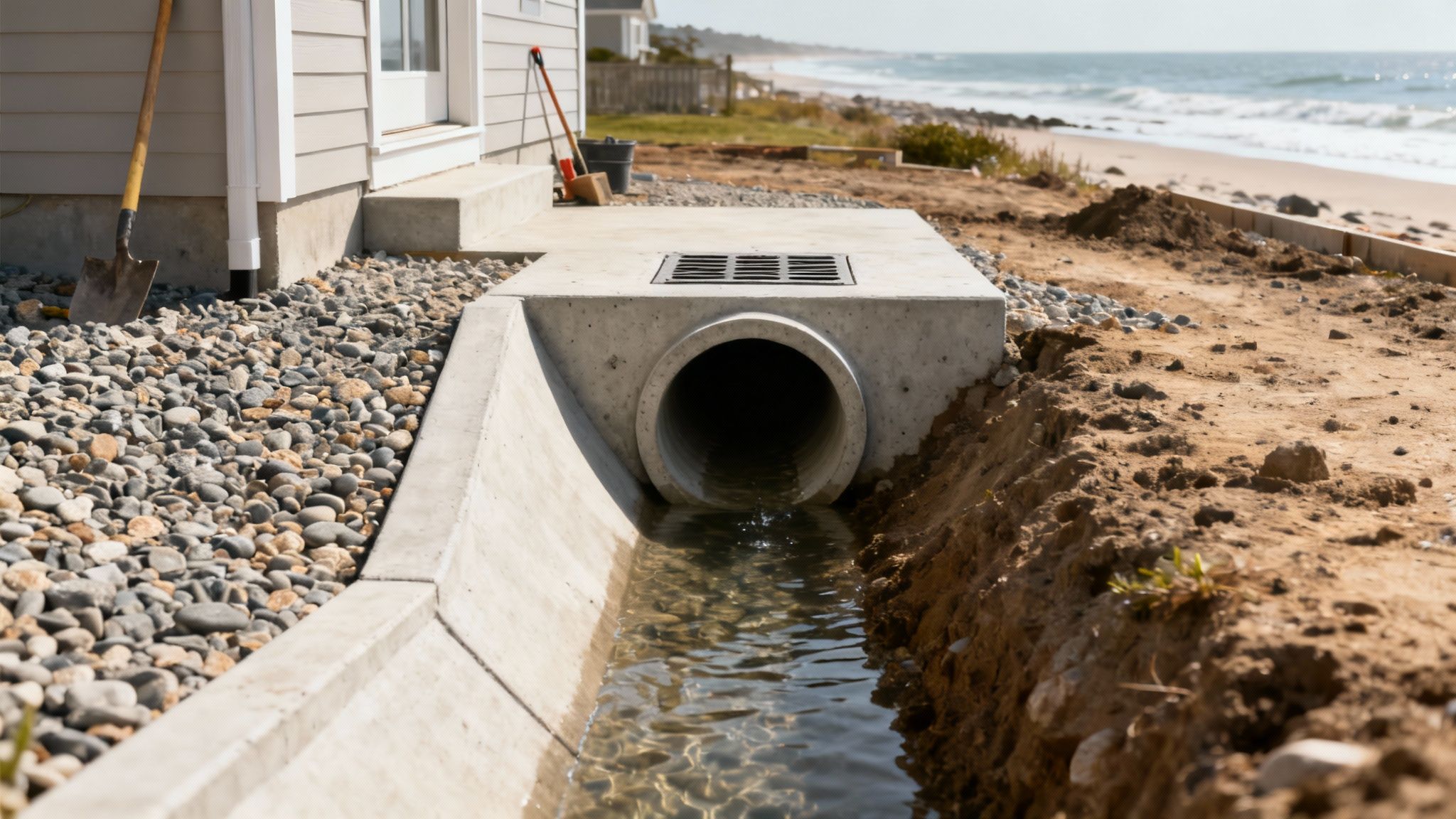
The most effective upgrades involve replacing old, failing materials with modern, heavy-duty ones. High-density polyethylene (HDPE) and polyvinyl chloride (PVC) pipes are much better options. They last longer and handle more water than old metal or clay pipes. They also resist rust and are less likely to be damaged by roots, making them a solid long-term investment.
Another important upgrade is a well-placed catch basin. These are the concrete boxes with grated tops you see in parking lots and low areas. They are your first line of defense, catching surface water—and all the leaves and debris with it—before it can clog your main drain lines. If you have a spot on your property that floods every time it rains, a new catch basin connected to your storm drain system is usually the best solution.
A few of the most common and effective upgrades we handle are:
- Culvert Replacement: Removing a rusted, undersized metal pipe and installing a properly sized HDPE pipe to prevent a driveway from washing out.
- Pipeline Capacity Increase: Upgrading a main drain line from a 6-inch pipe to a 12-inch or larger one to handle more runoff from new pavement or stronger storms.
- Modern Catch Basins: Installing new catch basins in parking lots, driveways, or soggy landscape areas to control surface water quickly.
These upgrades are about more than just replacing parts. They are about redesigning your property's entire water management system to handle today's weather.
The Role of Professional Grading and Paving
Sometimes, the pipes aren't the only problem—the ground itself is. Professional grading can reshape the land to direct water away from foundations and toward your new, high-capacity drains. This is very important for hillside properties in Santa Cruz and Monterey counties, where uncontrolled runoff can lead to serious erosion.
Properly sloped asphalt and concrete are also important. A well-paved driveway should not just be flat; it should act as a channel, guiding water where you want it to go. When you combine smart grading with new paving, you create a complete water management strategy. While you're at it, investing in a 250 gallon water tank for rainwater harvesting can be a practical addition to your property's utility upgrades.
Even our local cities are taking this seriously. Many Central Coast communities are working on large storm drain projects to prevent flooding. Some of these projects involve laying hundreds of feet of new 42-inch diameter HDPE pipe deep underground to keep streets from turning into rivers.
Here at Coastal Pipeline Inc., we specialize in these kinds of essential upgrades. Our teams have the experience to find the right fix for your property, whether it's a simple pipe replacement or a complete system overhaul. We provide the professional storm drain installation services near you needed to protect your property from the toughest Central Coast winters.
Getting Your Project on the Books: Timelines, Permits, and Costs
A major drainage upgrade is a real construction project. Understanding the timeline, local permits, and costs from the start is key to a smooth, on-budget job.
The biggest factor affecting your project's timeline is the weather. On the Central Coast, the dry season—from late spring through fall—is the best time for this work. You need dry, stable ground for digging and grading. Trying to do this kind of work in the middle of a wet winter can lead to delays, safety issues, and higher costs. You want to get this done long before the first big storm arrives.
The Paperwork Hurdle: Navigating Permits and Approvals
For any construction project, getting permits can be a challenge. Every area, from Santa Cruz County to Monterey, has its own rules for grading, digging, and connecting to public utilities. It can be a slow and confusing process, which is another reason to start well before winter.
This is where a good local contractor can be very helpful. They have experience with the process and know the specific requirements for your city. They can handle the paperwork, submit the plans, and work with local officials, helping you avoid common mistakes that can delay a project for weeks.
How to Budget and Prioritize Your Upgrades
It's not always possible to afford a complete system overhaul all at once. The smart approach is to identify the biggest problems and fix them based on the risk they pose to your property.
Here's how I suggest clients prioritize the work:
- Handle Emergencies First: A collapsed pipe under your main driveway or a seriously damaged sewer line is a critical failure that needs immediate attention to prevent a disaster.
- Secure High-Risk Zones: Next, focus on upgrades that protect your most valuable assets, like your home's foundation or unstable hillsides. This could mean installing a new catch basin in a low spot or re-grading a slope that's sending water toward your house.
- Plan for Long-Term Resilience: Things like replacing undersized drain lines or adding a French drain can often be done in phases over time. These improvements make your property more durable for years to come.
This risk-based approach lets you make smart financial choices while still taking real steps in preparing for heavy rain. And don't forget, managing debris and old materials is part of the budget. It's always a good idea to factor in creating a comprehensive construction waste management plan to keep things efficient and compliant.
Weather forecasts are already calling for a wetter-than-average winter, and we're seeing a huge spike in calls for drainage work. That demand, plus new stormwater regulations, means contractor schedules are filling up fast. Now is the time to get on the calendar.
Finding the Right Contractor for Your Drainage Project
The success of any storm readiness project depends on the team you hire. Choosing a qualified and reliable contractor is the most important decision you'll make. It ensures your investment actually protects your property for years to come. This is not a job for a general handyman—you need a specialist.
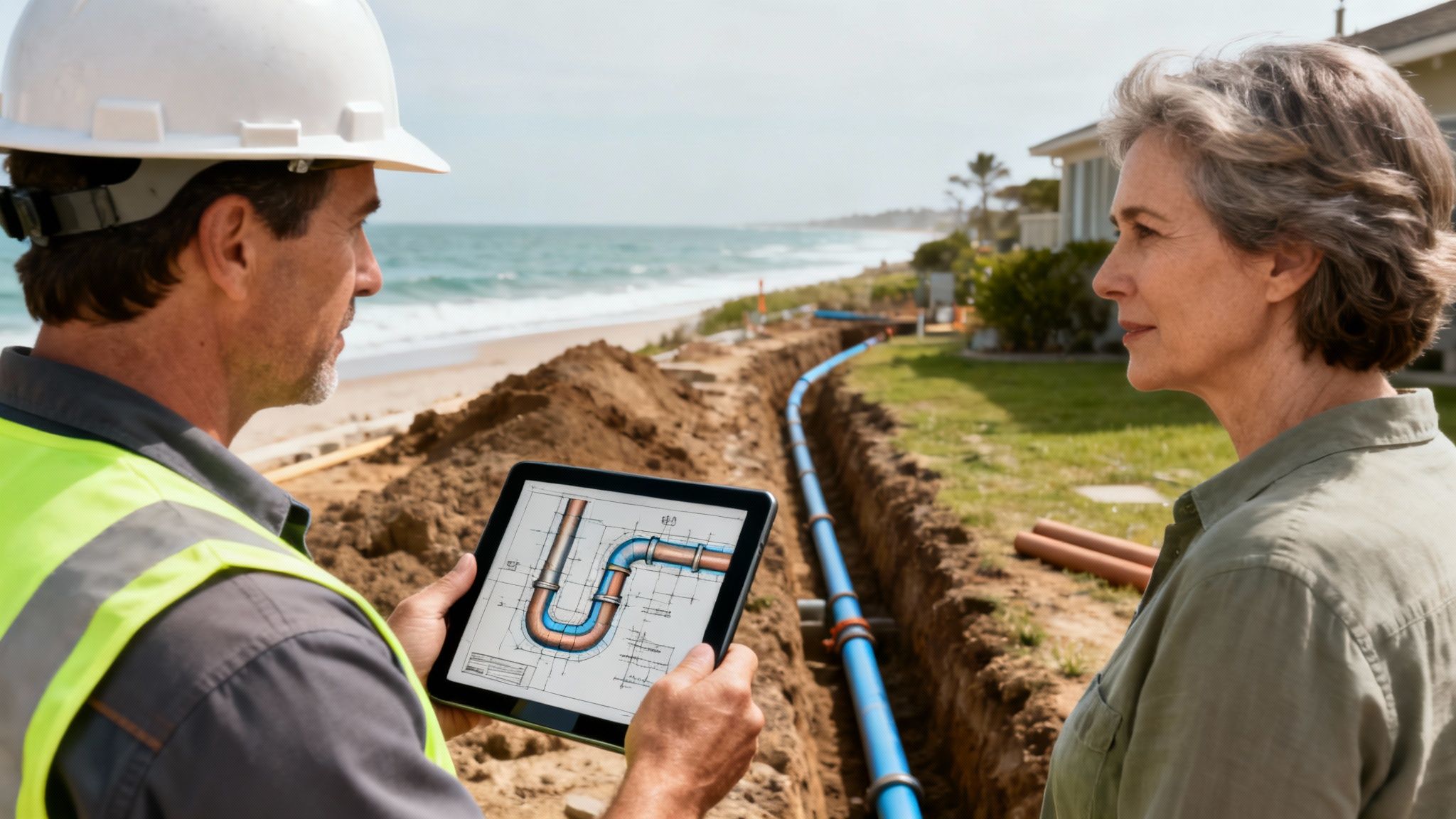
On the Central Coast, this means finding a contractor with real experience in underground utilities. They need to understand our unique coastal and hillside challenges. Preparing for heavy rain is more than just digging a ditch; it requires engineering, knowledge of local rules, and good planning.
Key Credentials to Look For
The first thing you need to check is their license. For this type of work in California, a C-34 Pipeline Contractor license is required. This license confirms they have the specialized knowledge needed to install and repair storm drains, water lines, and sewer systems.
After checking their license, look at their past work. You want to find a company that specializes in the exact services you need. Their expertise should include:
- Certified Trenching: Safe, code-compliant digging is the foundation of any underground utility project.
- Erosion Control: This is essential for properties in the hilly areas of Santa Cruz and Monterey counties.
- Winter-Prep Projects: Ask to see their history of completing storm drain upgrades before the rainy season hits.
A contractor with this specific background knows the entire process, from the first video pipe inspection to the final site restoration, including paving. This all-in-one approach saves you the headache of coordinating multiple companies.
Questions to Ask Potential Contractors
Before you sign a contract, you must research your options. A true professional will be happy to answer your questions. Asking the right questions can help you avoid costly mistakes and find a contractor who will be a real partner in the project.
Be direct about their experience with local regulations. Ask them, "How many projects have you successfully permitted in Santa Cruz?" or whatever your specific city is. A contractor who knows the local planning department can save you months of delays.
Here are a few essential questions to ask:
- Are you fully licensed (C-34) and insured for this kind of underground utility work?
- Can you show me examples of similar drainage projects you've completed here on the Central Coast?
- Who will be responsible for managing the entire permitting process with the local authorities?
- How do you handle site restoration, like landscaping and paving, once the main work is done?
- What's your typical project timeline for a job this size, especially with winter approaching?
At Coastal Pipeline Inc., we specialize in engineered drainage upgrades, storm drain inspections, and emergency underground utility repairs across the Central Coast. Our certified trenching crews, extensive erosion control experience, and long history of winter-readiness projects make us uniquely equipped to help residential, commercial, and municipal clients protect their properties before the first big storm.
Researching contractors can feel like a lot of work, but it’s a step you can't skip. For more guidance, take a look at our guide on how to hire subcontractors; many of the tips in there apply to finding your main contractor, too. Putting in the time now to find an expert is what ensures your property is truly ready for whatever this winter brings.
Your Top Questions About Getting Ready for Heavy Rain
When the forecast starts calling for big winter storms on the Central Coast, property owners have questions. They want to know about costs, timelines, and the real warning signs they should look for. Let's go through some of the most common questions we get.
People often ask about the cost of a video pipe inspection. The good news is that a professional CCTV inspection for a home is a surprisingly affordable way to diagnose problems. Think of it as an x-ray for your property; it’s the only way to get a clear picture of hidden issues like tree roots, pipe cracks, or blockages before they cause a flood.
How to Spot a Failing Storm Drain
One of the biggest concerns people have is, "How do I know if my system is about to fail?" The truth is, the signs are usually there long before a major failure, but they start small.
You need to pay close attention if you see any of these red flags:
- Persistent Puddles: Are there low spots on your lawn or driveway that stay wet for days after it rains? That's a classic sign that water isn't draining properly.
- Slow Draining: When water pools around drain grates or takes a long time to disappear, your system is struggling.
- Sinkholes or Depressions: This is a big one. If you see small dips or holes forming in the ground above your pipes, it could mean a pipe has collapsed underneath.
These aren't just minor problems. They are clear signals that your system is already overwhelmed, and a major winter storm will only make things worse. For more on keeping things flowing, it's worth looking into professional residential storm drain cleaning as a first step.
Pipe Lifespans and What to Do in an Emergency
Another common question is how long different pipes last. It depends on what's in the ground. Many older homes on the Central Coast have corrugated metal or clay pipes, which can rust or crack after just 30-50 years. Modern materials like high-density polyethylene (HDPE) or PVC are built to last much longer, often 75-100 years or more. Upgrading is a smart investment.
But what if it's too late and your property is already flooding? First, get everyone to a safe place and stay out of the floodwater—it can be dangerous. If you can do it safely, shut off the power to the flooded areas. Then, take pictures to document the damage and call an emergency utility contractor immediately.
Being proactive is always the best defense when preparing for heavy rain. When you take care of storm drain and utility upgrades before the season hits, you are in control. You avoid the chaos, stress, and high costs that come with a winter emergency.
If your property is in Monterey, Santa Cruz, or San Benito County and you’re unsure whether your infrastructure can handle this winter’s storms, contact Coastal Pipeline Inc. today. Our team can evaluate your site and recommend smart, lasting solutions before the next rainfall hits. Learn more at https://coastalpipelineinc.com.