When a sewer line fails, the big question is simple: does trenchless sewer repair actually last, or is it just a temporary patch?
The short answer is yes, it absolutely lasts. Modern trenchless repairs are not a quick fix. They are designed to give an old pipe a new life that can last 50 years or more, often just as long as a brand-new pipe.
Busting the "Temporary Fix" Myth
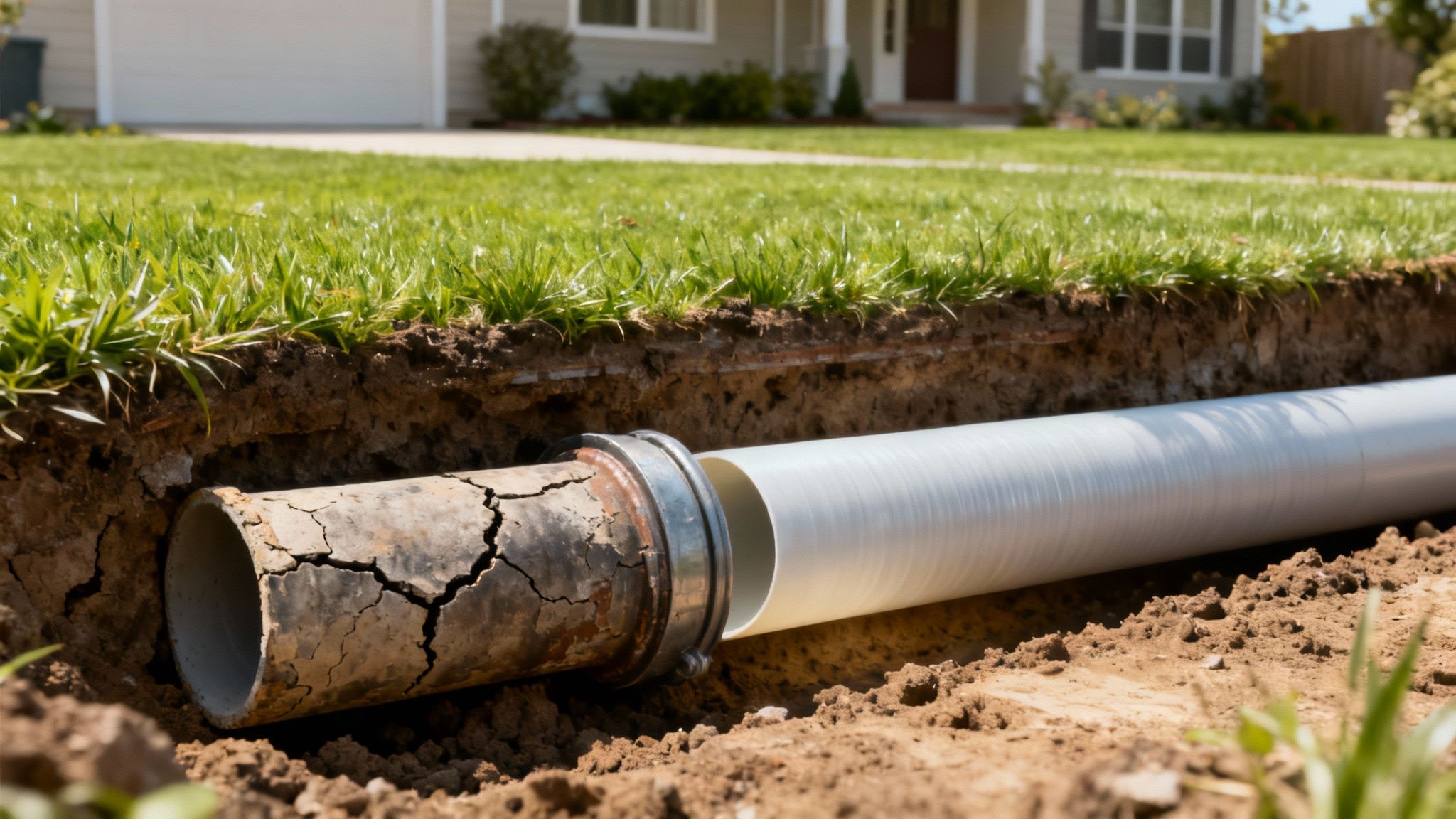
It's easy to see why some people are skeptical. The idea of fixing a pipe from the inside sounds almost too good to be true. But the technology has come a long way. This isn't just a patch job. We're talking about creating a completely new, strong pipe right inside the shell of the old one.
When a trenchless repair fails, it's rarely because the technology is flawed. Almost every time, it comes down to one of two things: the wrong method was chosen for the problem, or the installation was done poorly. When an experienced crew does the job right, the result is a permanent, reliable fix that's built to last.
The Two Powerhouse Trenchless Techniques
To understand why these repairs are so durable, you have to look at how they work. Two methods are the most common in the industry.
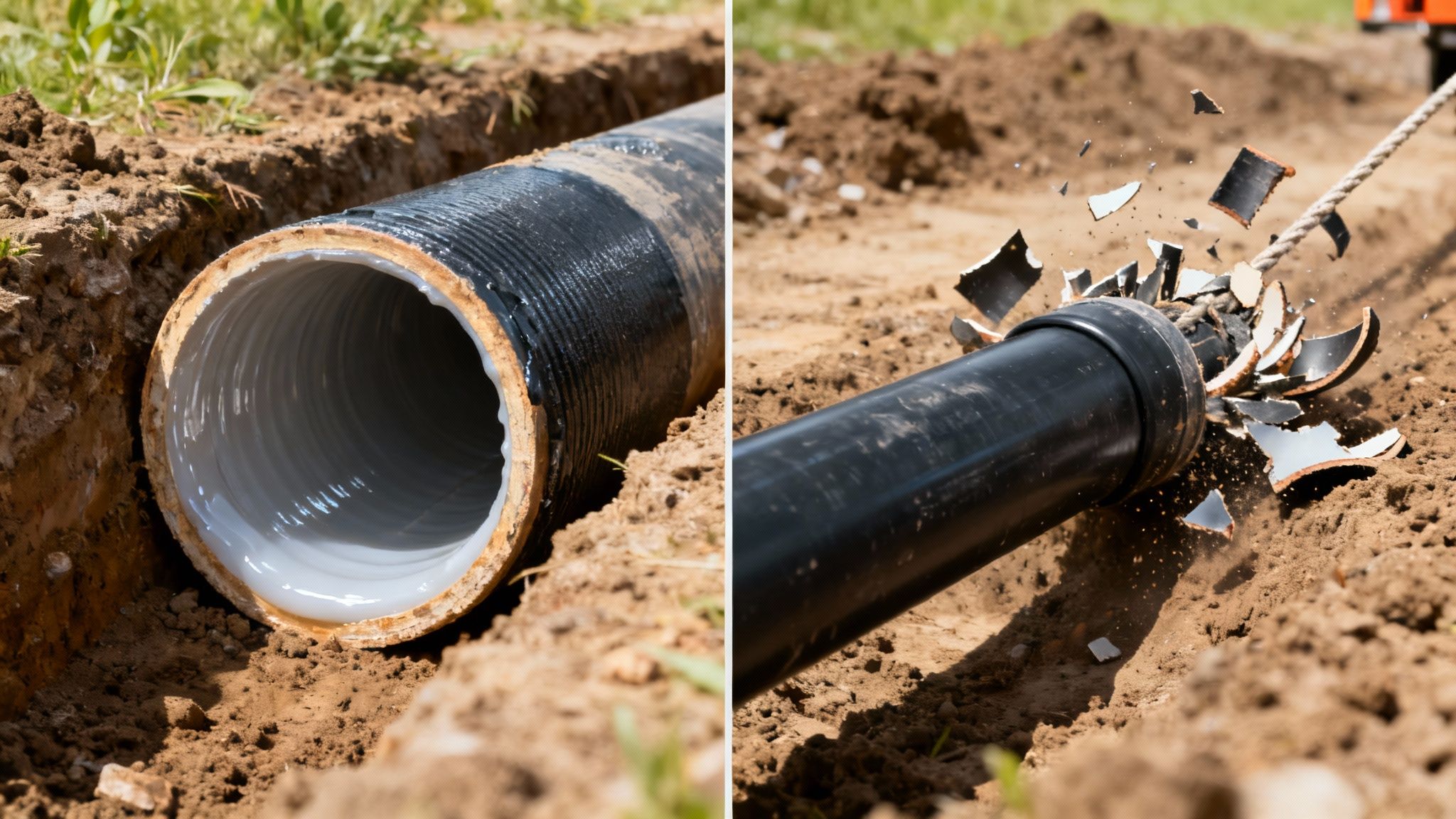
- Cured-In-Place Pipe (CIPP) Lining: This is a popular approach. We insert a flexible liner soaked in a strong resin into the damaged pipe. Once it's in place, we use heat or UV light to "cure" it, which makes the resin rock-hard. What's left is a seamless, tough new pipe. It seals cracks, stops leaks, and blocks tree roots.
- Pipe Bursting: When a pipe has collapsed or is too damaged for a liner, we use pipe bursting. A powerful tool is pulled through the old pipe, breaking it apart into the soil. At the same time, it pulls a brand-new pipe made of high-density polyethylene (HDPE) into its place. You get a full replacement without digging a long trench.
Both are very effective, long-term solutions. CIPP liners have been proven to last 50+ years. Once cured, they create a new, strong pipe that can handle pressure and ground movement.
To put it all into perspective, here's a quick side-by-side look at how trenchless methods stack up against the old way of doing things.
Trenchless vs Traditional Sewer Repair Lifespan at a Glance
| Attribute | Trenchless Repair (CIPP & Pipe Bursting) | Traditional Open-Cut Replacement |
|---|---|---|
| Expected Lifespan | 50+ years, often designed to match or exceed new pipe standards. | 50-100 years, depending on material (PVC, cast iron, clay). |
| Common Failure Points | Poor installation, using the wrong method, or not cleaning the old pipe. | Joint failure, root intrusion at connections, shifting ground. |
| Ideal Applications | Under buildings, landscaping, driveways, or historic areas. | Open areas or when the old pipe is completely collapsed. |
As you can see, the service life is very similar. The real difference is in the process and what can go wrong.
The longevity of trenchless sewer repair isn't really up for debate anymore—the technology has proven itself over decades. The real variable is the team doing the work. A qualified contractor who knows how to properly diagnose the problem and execute the installation is the key to a successful, long-lasting project.
If you're trying to figure out the financial side of things, our guide on sewer line replacement costs can help you put together a realistic budget.
How Trenchless Methods Create a 50-Year Pipe
Contractors and property owners often ask: “Is trenchless just a fast fix that’ll fail in a few years?” It’s a fair question, but recent insights show that's not the case. CIPP liners are now expected to last 50+ years, and pipe bursting is used by cities nationwide for long-term repairs.
The real issue is poor application—not the method itself. Let’s break down how trenchless sewer repair actually delivers on its promise of a 50-year lifespan without the massive disruption of digging a trench.
CIPP Lining: A New Pipe Within The Old
The most common trenchless method we use is Cured-In-Place Pipe (CIPP) lining. The best way to think about it is that we’re building a brand-new, strong pipe directly inside the old, damaged one. We start by inserting a flexible liner saturated with a powerful epoxy resin into the host pipe.
Once it's in place, we inflate the liner, pressing it tightly against the inner walls. From there, we cure it using hot water, steam, or UV light, which hardens the resin into a solid, rock-hard structure.
The result is a seamless, joint-free structural pipe that is often stronger than the original. This new pipe is corrosion-proof, chemical-resistant, and completely impenetrable to tree roots—one of the biggest culprits in sewer line failures.
Because it has no joints, the CIPP liner gets rid of the weak points where leaks and root intrusion usually start. That seamless design is a huge factor in its long-term reliability.
Pipe Bursting: A Full Replacement Without The Trench
What if a pipe is too damaged for a liner? If it’s partially collapsed or has severely misaligned joints, we often turn to pipe bursting. This method is exactly what it sounds like: we break the old pipe outward while pulling a brand-new one right into its place.
A powerful, cone-shaped bursting head is pulled through the old pipeline, breaking it apart and pushing the pieces safely into the surrounding soil. Towed directly behind the bursting head is a new, continuous pipe, typically made of high-density polyethylene (HDPE).
This leaves you with a completely new pipeline that often has better flow capacity. In fact, cities across the country rely on pipe bursting for infrastructure projects because HDPE is considered a 100-year pipe—it's tough, corrosion-proof, and stands up to anything from abrasion to aggressive tree roots. To see how this fits into the bigger picture, our guide on how to install sewer lines details both traditional and modern approaches.
It's Not the Technology, It's the Application
After decades in the field, it's clear the technology itself is solid. What this means for contractors is: method selection matters. If the existing line is collapsed or misaligned, trenchless might not be a good choice. But when it is, it can cut restoration costs and speed up turnaround dramatically—especially in developed sites or under asphalt.
The data backs this up. CIPP installations have a 50-year design life, supported by over 30 years of proven field performance. Engineering reports show that pipe lining cuts down on re-repair rates by 70-80% compared to traditional spot repairs. It's a long-term solution, not a temporary patch.
What Really Makes a Trenchless Repair Last?
A 50-year lifespan for a trenchless repair doesn’t just happen. It’s the result of smart planning, careful work, and using the right materials. While the technology is very reliable, a few key things can make the difference between a repair that lasts for generations and one that fails too soon.
Knowing what these factors are helps you ask the right questions and make sure your project is set up for success from day one.
The single most important factor is the condition of the original pipe—what we call the "host" pipe. Trenchless methods are great for fixing pipes that are cracked, corroded, or full of roots, but they have their limits. The best situation is a pipe that's damaged but still holding its shape.
This is where choosing the right method is critical. If the old pipe has completely collapsed or has a serious "belly" or sag, a simple liner won't fix the problem. A liner follows the path of the old pipe; it can't fix a major dip that causes waste and water to pool.
That’s why a thorough camera inspection before any work begins is an absolute must. Working underground without seeing the problem is a recipe for a failed repair.
The Installer’s Skill is Everything
You could have the perfect host pipe, but if the installation crew doesn't know what they're doing, it's all for nothing. The durability of a CIPP liner or a pipe bursting job comes down to the contractor's skill and commitment to doing things by the book. This is not a place to cut corners with an inexperienced team.
We've seen a few common mistakes that can completely ruin a 50-year design life:
- Not Cleaning the Pipe Properly: This is a huge mistake. If you don't get every last bit of root and gunk out of the host pipe, the new liner won't stick correctly. Any debris left behind creates a weak spot, which can cause problems later.
- Mixing the Resin Incorrectly: The epoxy resins used in CIPP lining are a precise science. Getting the mixing ratios wrong means it will never cure properly. You end up with a liner that's soft, weak, and can't stand up to stress.
- Rushing the Curing Process: Whether it’s cured with hot water, steam, or UV light, this step can't be rushed. An under-cured liner never reaches its full strength, and that dramatically cuts its lifespan short.
A professional crew follows a strict process on every job. Their expertise is your best guarantee against a repair that fails long before it should.
Materials, Ground Conditions, and What’s Happening Up Top
Beyond the pipe and the installer, the surrounding environment plays a huge part. The quality of the materials themselves is huge. Reputable contractors only use high-grade liners and resins that are engineered to last for decades. Using cheap materials is a fast track to a repair that falls apart in just a few years.
The soil also makes a difference. Shifting or unstable soil puts extra stress on any pipeline. A good project assessment will always look at the local soil conditions to make sure the repair method is up to the challenge. If you want to learn more about how modern contractors approach these challenges, check out our guide on building resilient underground utilities with sustainable practices.
Finally, you have to think about the load from above. A sewer line running under a busy parking lot is under constant stress. The repair has to be designed to handle that. In these situations, using a thicker, structural CIPP liner or choosing pipe bursting with tough HDPE pipe is the only way to ensure it will hold up for the long haul.
Why Trenchless Repairs Fail When Installation Goes Wrong
When a trenchless sewer repair doesn't last, it's easy to blame the technology. But the truth is, the methods are sound. The real reason behind almost every failed trenchless project is a mistake that could have been prevented—a shortcut taken by an inexperienced installer.
Understanding where things go wrong is key. It helps you focus on choosing a good contractor instead of doubting the technology. The skill of the crew is what determines if you get a repair that lasts for decades.
Common But Critical Installation Errors
A successful trenchless project is all about following a strict, step-by-step process. Skipping a single step or cutting a corner can lead to an early and expensive failure. Here are some of the most common mistakes we see:
- Trying to line a collapsed pipe. CIPP lining is a great tool for fixing a pipe that's damaged but still has its shape. But if a pipe is already crushed, the new liner will just take on that damaged shape, doing nothing to fix the flow.
- Not cleaning the pipe enough. This is a step you can't skip. If you don't remove every bit of root, grease, and debris, the new liner can't bond correctly to the old pipe. Over time, this can cause the liner to peel away or even collapse.
- Using the wrong resin or mixing it badly. The epoxy resin is the backbone of a CIPP liner. Using the wrong formula or messing up the mix ratio creates a liner that never fully cures. It's left weak and vulnerable from day one.
The core message is simple: Method selection and execution matter profoundly. If the existing line is collapsed or severely misaligned, trenchless might not be the right choice. But when it is, it can dramatically cut restoration costs and project timelines.
The Proven Track Record of Professional Installation
When it's done right by a skilled crew, trenchless sewer repair is a remarkably durable solution. Just look at the historical data. With over 2 million feet of CIPP installed globally since the 1990s, an incredible 92% are still structurally sound after 20-30 years.
This technology directly addresses the weak points of traditional repairs. It creates a seamless pipe that resists root intrusion—the very issue that causes 60% of excavated pipe repairs to fail within just 15 years. You can review more details about trenchless sewer repair's long-term success on Sewer Flow LLC.
The key is working with a contractor who knows how to assess the entire site, not just the pipe. This means checking soil conditions and existing utilities, a process that requires a deep understanding of what's happening underground. For more on this, check out our guide on how to locate underground utilities, which details the complexities involved.
The Right Contractor Makes All the Difference
A truly qualified contractor will never try to push a one-size-fits-all solution. Their first step should always be a thorough video inspection, ideally following NASSCO PACP standards, to get a crystal-clear picture of the pipe's condition, soil stability, and available access points.
Armed with that data, they should be able to walk you through the pros and cons of both trenchless and traditional open-cut methods for your specific situation. If you’re evaluating a project in Monterey, Santa Cruz, or San Benito County, Coastal Pipeline offers both. We provide recommendations based on sound infrastructure planning—not a sales pitch.
The NASSCO Inspection Your Project Cannot Skip
So, how do you make sure your trenchless sewer repair will last for decades? It all starts with a professional sewer video inspection before any work begins. This isn't just a quick look down the pipe; it's a detailed diagnostic for your underground pipes.
A surgeon wouldn't operate without first looking at X-rays. A qualified contractor should treat your sewer line with the same care. Trying a trenchless repair without a clear, data-driven picture of the pipe’s condition is simply flying blind, and that’s a recipe for failure.
This is exactly why the industry has a gold standard: a NASSCO PACP-certified inspection.
What Is a NASSCO PACP Inspection?
NASSCO (National Association of Sewer Service Companies) sets the standards for checking underground pipes in North America. Their Pipeline Assessment Certification Program (PACP) trains technicians how to find, grade, and record every single defect inside a sewer line.
When a contractor sends out a PACP-certified technician, they are sending an expert trained to perform a systematic analysis that uncovers everything you need to know.
This detailed report documents key factors, including:
- Structural Defects: It pinpoints the severity of cracks and holes that could damage a new liner.
- Misaligned Joints: The camera finds offsets between pipe sections that might prevent a liner from fitting correctly.
- Blockages and Debris: It reveals the true extent of root intrusion or buildup that has to be completely removed.
- Pipe Shape and Integrity: The inspection confirms if the pipe has lost its shape, developed a sag, or is totally collapsed—all major red flags for certain trenchless methods.
This report is your project's blueprint for success. It removes guesswork and provides the hard data a trustworthy contractor will use to justify their recommendation. You should never move forward with a trenchless project without reviewing this report first.
From Data to Decision-Making
With the NASSCO inspection complete, a qualified contractor can sit down with you and explain the findings in plain English. They should be able to clearly explain the pipe’s structural condition, discuss any concerns about soil stability, and map out the best access points.
This data-first approach lets them give you an honest recommendation. They can explain why trenchless is a good long-term solution or, just as importantly, why it isn’t. A true professional will lay out both open-cut and trenchless options, explaining the pros and cons of each for your situation. This level of care is the mark of a contractor who delivers results that last. The need for this kind of professional evaluation applies to all major infrastructure; for instance, a Specialist Engineering Assessment for Water Assets is often required to verify the long-term integrity of city systems.
Always request a NASSCO PACP-certified sewer video inspection before approving trenchless. A qualified contractor should explain the structural condition, soil stability, and access points—and offer both open-cut and trenchless options, not just one.
Making the Right Sewer Repair Choice on the Central Coast
For property owners and contractors in Monterey, Santa Cruz, and San Benito County, the question is always the same: is trenchless sewer repair a smart investment, or just a temporary patch? The answer is yes, it's a smart investment—but only if the method is right for the problem and the installer is an expert. A successful repair that lasts for decades comes from an honest, expert assessment of the situation.
Contractors and property owners often ask: “Is trenchless just a fast fix that’ll fail in a few years?” However, recent insights show that CIPP liners are now expected to last 50+ years and pipe bursting methods are used by cities nationwide for long-term infrastructure rehab. The real issue is poor application—not the method itself.
This decision-making process is a critical path for any project manager. This visual guide shows the simplified steps from inspection to a successful project.
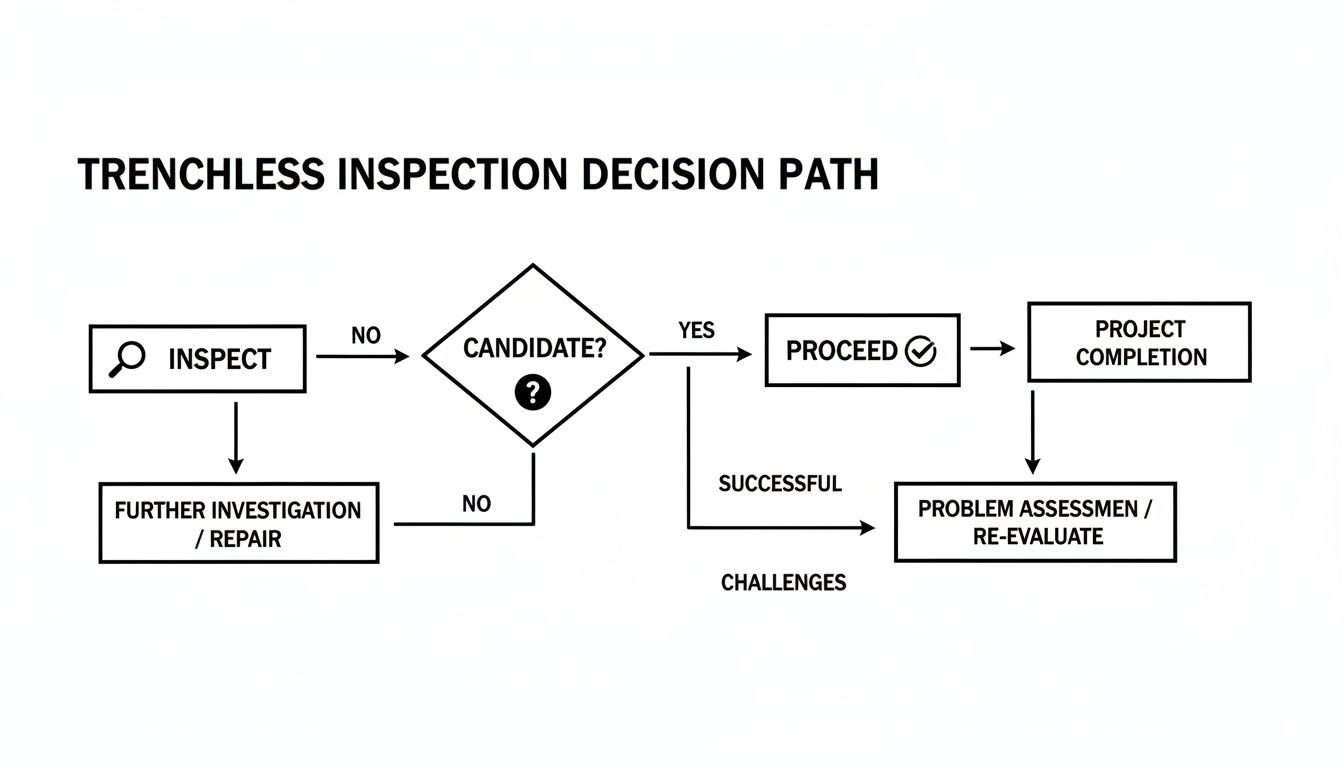
As you can see, everything depends on that first camera inspection and deciding if the old pipe is a good candidate for a no-dig solution.
How to Make the Right Call
What this means for contractors is: method selection matters. If the existing line is collapsed or misaligned, trenchless might not be viable. But when it is, it can cut restoration costs and speed up turnaround dramatically—especially in developed sites or under asphalt.
To really grasp the savings, it helps to understand what traditional repair involves. It's a major operation that requires a lot of groundwork. You can get a better sense of what is groundwork in construction and see just how much disruption can be avoided. Choosing trenchless can prevent thousands of dollars in secondary repairs by leaving driveways, hardscaping, and parking lots untouched.
The single most important step you can take is to always request a NASSCO PACP-certified sewer video inspection before signing off on any trenchless project. This isn't just a good idea—it's essential for a repair that lasts.
A qualified contractor will use that video inspection to walk you through the pipe's structural condition and assess the stability of the surrounding soil. Most importantly, they should be able to offer both open-cut and trenchless options, not just steer you toward the one they happen to sell. The recommendation should be driven by hard data, not a sales pitch.
The Coastal Pipeline Difference: No Sales Pitch, Just Smart Planning
This is exactly where Coastal Pipeline Inc. is different. We are experts in both trenchless technologies and traditional open-cut digging. This means our recommendation is based on what’s genuinely best for your project and budget—not limited by the tools we have. Our goal is to provide smart infrastructure planning that ensures your repair will hold up for decades.
If you’re evaluating trenchless for a property in Monterey, Santa Cruz, or San Benito County, Coastal Pipeline offers both trenchless and traditional sewer line replacement—and we’ll explain exactly why we recommend one over the other. No sales pitch—just smart planning. Trenchless can also reduce the need for costly Asphalt Paving and Sealcoating restoration after sewer work.
Answering Your Questions About Trenchless Longevity
One of the first questions we hear is, “Is trenchless just a quick patch that’s going to fail in a few years?” It’s a fair question, especially when you're talking about a major investment.
But the data tells a different story. Based on decades of real-world use, modern CIPP liners are now engineered to last 50+ years. Likewise, cities across the country rely on pipe bursting as a permanent solution for fixing their aging pipes. When failures do happen, it’s almost always because of a poor installation or choosing the wrong method for the pipe’s condition—not a weakness in the technology itself.
The Right Tool for the Right Job
This shows how important a proper assessment is. A trenchless solution isn't a silver bullet for every problem. If a sewer line is completely caved in or has a severe "belly" (a sag that traps water), you can't line it or pull a new pipe through it.
But for pipes that are still in decent shape, trenchless methods can be a game-changer. They dramatically slash the time and cost spent on fixing the landscape, which is a huge advantage on developed properties or under existing pavement. This alone can save you thousands by avoiding extensive Asphalt Paving and Sealcoating work once the pipe repair is finished.
Before you sign off on any trenchless project, the most critical step is to insist on a NASSCO PACP-certified sewer camera inspection. A qualified contractor will use the video footage to walk you through the pipe's condition, explain any potential issues, and map out the best plan of attack.
A true professional won’t push just one method. They’ll be equipped to offer both open-cut and trenchless repairs, and they'll give you a clear, fact-based recommendation. That data-driven approach is the only way to be confident your sewer repair is built to last.
If you’re evaluating trenchless for a property in Monterey, Santa Cruz, or San Benito County, Coastal Pipeline offers both trenchless and traditional sewer line replacement—and we’ll explain exactly why we recommend one over the other. No sales pitch—just smart planning. Find out more at https://coastalpipelineinc.com.