
The short answer? A lot of existing stormwater systems were built for yesterday's weather. As drainage infrastructure is evolving, any system built decades ago might not be up to code, leaving your property open to flooding and expensive damage.
Why Old Drainage Systems Can’t Handle Modern Storms
Imagine trying to empty a large swimming pool with a small garden hose. For years, that hose might have been enough to handle a light sprinkle. But the storms we see today are much bigger, turning a simple task into an impossible one.
Many storm drains in Monterey and Santa Cruz counties were built for lower amounts of rainfall. Older systems worked fine back then. But two big changes are making these systems outdated and dangerous.
The Impact of More Pavement
First, new buildings and parking lots have created more hard surfaces. Every new rooftop and paved road acts like a shield, stopping rainwater from soaking into the ground. Instead, a large amount of water flows straight into the storm drains.
This sudden rush of water is often more than the original pipes were designed to handle, which causes backups and flooding.
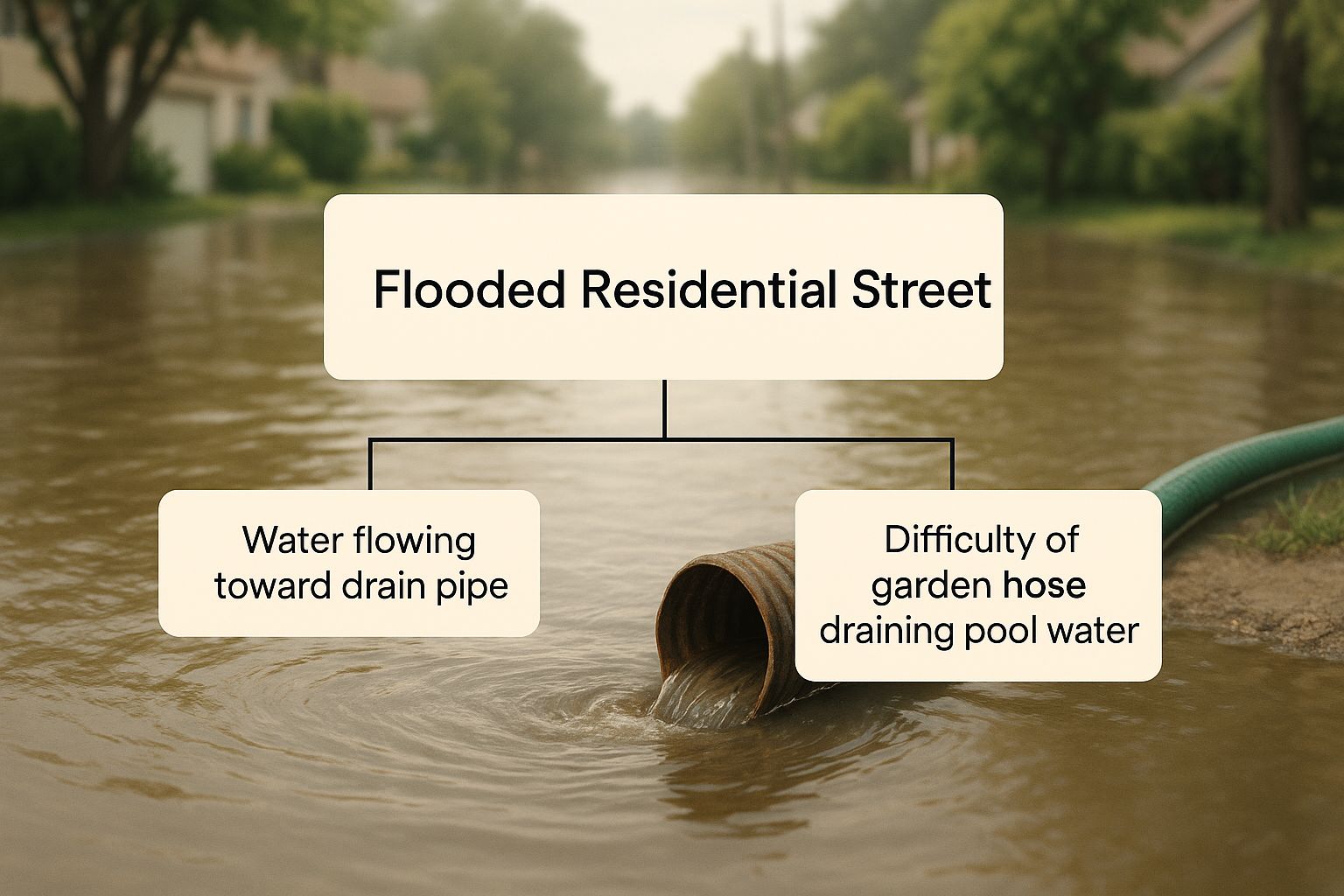
As you can see, a small system is easily overwhelmed. This causes the street flooding and property damage that modern codes are designed to prevent.
More Intense Storms
Second, our weather is changing. We are getting stronger, more focused rainstorms that drop a huge amount of water in a short time. This is like trying to drain that same swimming pool with the same small hose, but now someone is also filling it with a fire hydrant.
The mix of more runoff from hard surfaces and stronger storms puts a lot of pressure on old pipes. This is not a small problem; it leads to street flooding, soil washing away, and serious damage to buildings.
Comparing Old and New Drainage Systems
The difference between old and new systems is huge. This table shows the main differences between the drainage systems of the past and the stronger systems needed today.
| System Feature | Outdated System | Modern Code-Compliant System |
|---|---|---|
| Design Focus | Quickly remove water | Manage water flow, amount, and quality |
| Capacity | Sized for older, less intense rain | Built to handle major storms and future weather |
| Materials | Clay or concrete pipes that can crack | Strong plastic (HDPE) or reinforced concrete |
| Goal | Move water away as fast as possible | Slow, filter, and absorb water to reduce problems |
| Maintenance | Fix things after they break | Check and maintain systems to prevent problems |
Modern systems are built to be strong and forward-thinking, not just to get rid of water.
Because of these new challenges, city rules have changed. The old "patch it up" method is no longer enough. Cities are now focused on being ready for climate change. They require drainage systems that are built for the future, not the past.
This makes upgrading to professional storm water management systems a necessary step to protect your property. For private property owners, keeping up with these public projects is very important.
How Cities Are Modernizing for Climate Resilience
Cities across the Central Coast are making big investments to prepare for the future. We're seeing a major shift in public projects—it’s no longer just about fixing old pipes. The new focus is on adapting to the climate to build a stronger and more capable regional drainage network.
This means a full update of city drainage systems. Old, small metal culverts that rust and collapse are being replaced. In their place, crews are installing larger, stronger materials like Reinforced Concrete Pipe (RCP) and High-Density Polyethylene (HDPE), which can handle more water and last for decades.
Upgrading Key Drainage Parts
You’ve probably seen work being done on catch basins, the grated drains along the curb. Cities are making them bigger and adding more of them. This allows the system to take in a lot more runoff before it has a chance to flood our streets.
This isn't just busy work; it's a smart investment. A Q4 2025 report shows a clear move toward eco-conscious and future-proof projects. Cities that once focused on basic repairs are now prioritizing drainage systems that align with climate adaptation strategies.
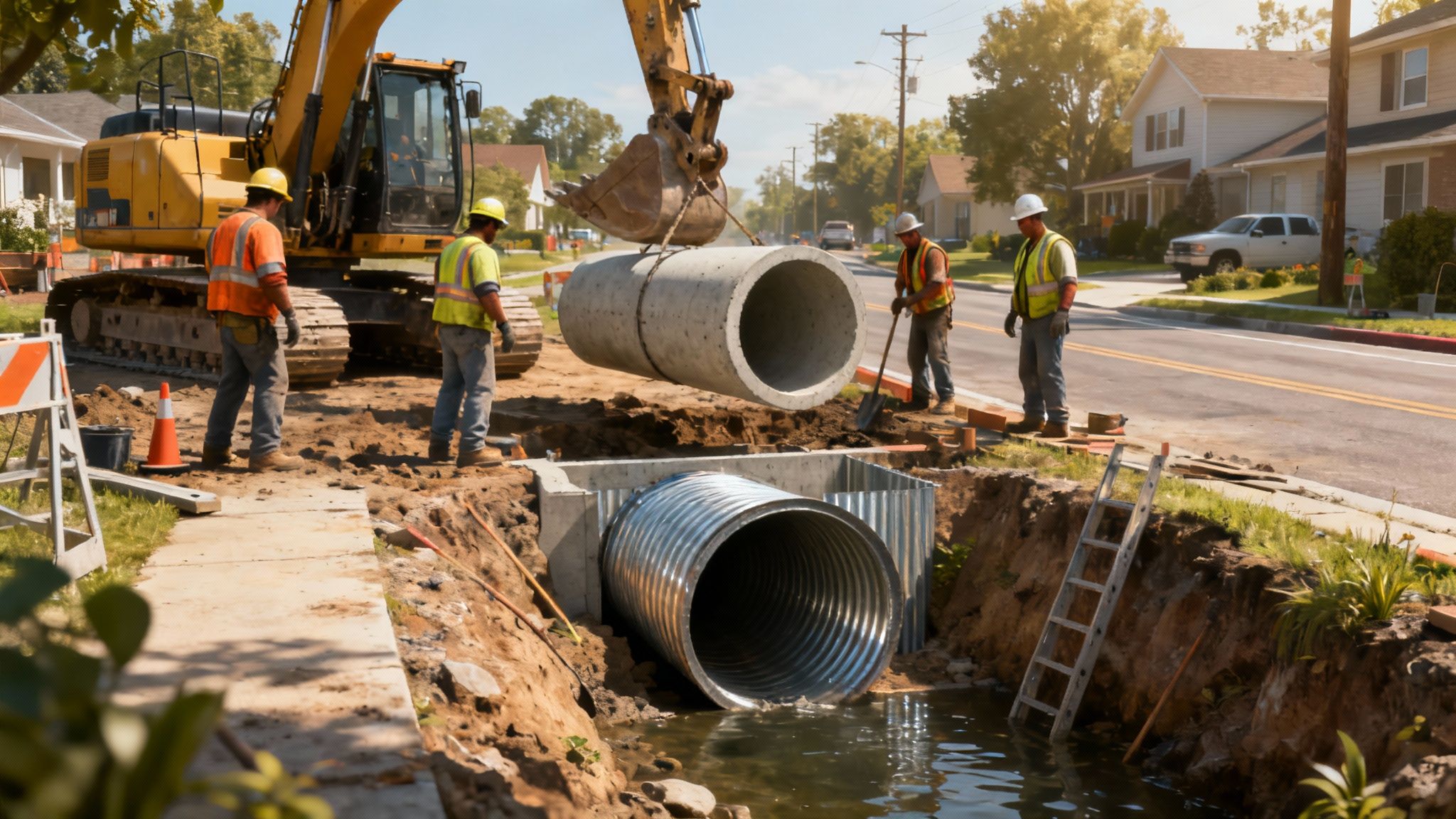
These public upgrades are setting a new, higher standard for managing stormwater in our area. As weather becomes less predictable, public agencies are also using real-time weather data to guide their plans. This gives them a head start on major rain events.
The New Standard for Public Projects
What we're seeing is a powerful, connected system built for today’s climate. These upgrades often include:
- Replacing Outdated Pipes: Swapping old metal pipes for modern RCP or HDPE systems that won’t get overwhelmed.
- Enlarging Catch Basins: Increasing the size of storm drain inlets to prevent backups during heavy rain.
- Stricter Development Codes: Making sure new projects are built with strong systems that don’t add more stress to the public network.
These city investments are key to protecting our communities. They create a more reliable public drainage system, but they also show an urgent fact: private property systems must be able to connect and keep up.
Think about it—if a city upgrades its main drainage lines but a commercial property is still connected with old, small pipes, the problem doesn't go away. It just moves onto private land. This is why property managers and HOAs need to understand local public works projects. The public system is getting a major upgrade, and your property needs to be ready.
The Building Blocks of a Resilient Stormwater System
So, what is in a modern drainage system that makes it work so well? It comes down to a few key parts designed for toughness and high performance. These are the parts that make sure your property can handle today's heavy rains without flooding.
The goal has changed. We're no longer just trying to get rid of water. We're managing it smartly for the long term.
Think of your stormwater system like an underground highway. The pipes are the main roads, and the catch basins are the on-ramps. If either one is too small or breaks, you get a traffic jam—or in this case, a flood. This is why drainage infrastructure is evolving with better materials and smarter designs.
Modern Materials for Lasting Performance
Older systems often used corrugated metal pipes. They were okay at first, but they were known for rusting and caving in. The new standard is much tougher, focusing on two main materials.
- Reinforced Concrete Pipe (RCP): This is the strongest choice. Known for its strength and long life, RCP is used for major public and commercial projects. It can handle heavy loads and will not rust.
- High-Density Polyethylene (HDPE): A strong plastic, HDPE is light, flexible, and has very smooth inside walls. That smoothness means water flows through easily. It’s also resistant to chemicals, making it a great low-maintenance option.
These materials are the wide, smooth highways of your drainage network, built to stop backups and move huge amounts of water easily.
The Role of Catch Basins and Proper Design
Catch basins are the on-ramps in our highway example. They are the grated drains you see on streets and in parking lots. A modern, code-compliant system has inlets large enough to handle heavy runoff before it can cause problems.
Proper design and installation are just as important as the materials. A well-designed system prevents soil from washing away around pipes, makes sure the pipes have the right slope for water flow, and protects your property for years to come.
This is where experience makes all the difference. Coastal Pipeline specializes in storm drain installation and upgrades—including RCP and HDPE pipeline systems, catch basin construction, and erosion control. Their work meets local hydrology standards and supports city goals for strong, long-lasting infrastructure. To make sure your property is ready, it helps to understand the ideas behind a modern storm water drainage system design.
Why Your Private Property Needs to Keep Pace
A city can build a new, six-lane highway, but it won't help if your driveway is a washed-out mess. The same is true for stormwater drainage. While our cities are upgrading public systems, your own property is a key link in that chain. If your pipes can't handle the flow, the whole system fails right at your property.
Think of it this way: the city’s large storm drain is the main river, and the pipes on your property are the smaller streams feeding into it. If your streams are clogged or too small, water will back up and flood your land. It doesn't matter how well the main river is flowing.
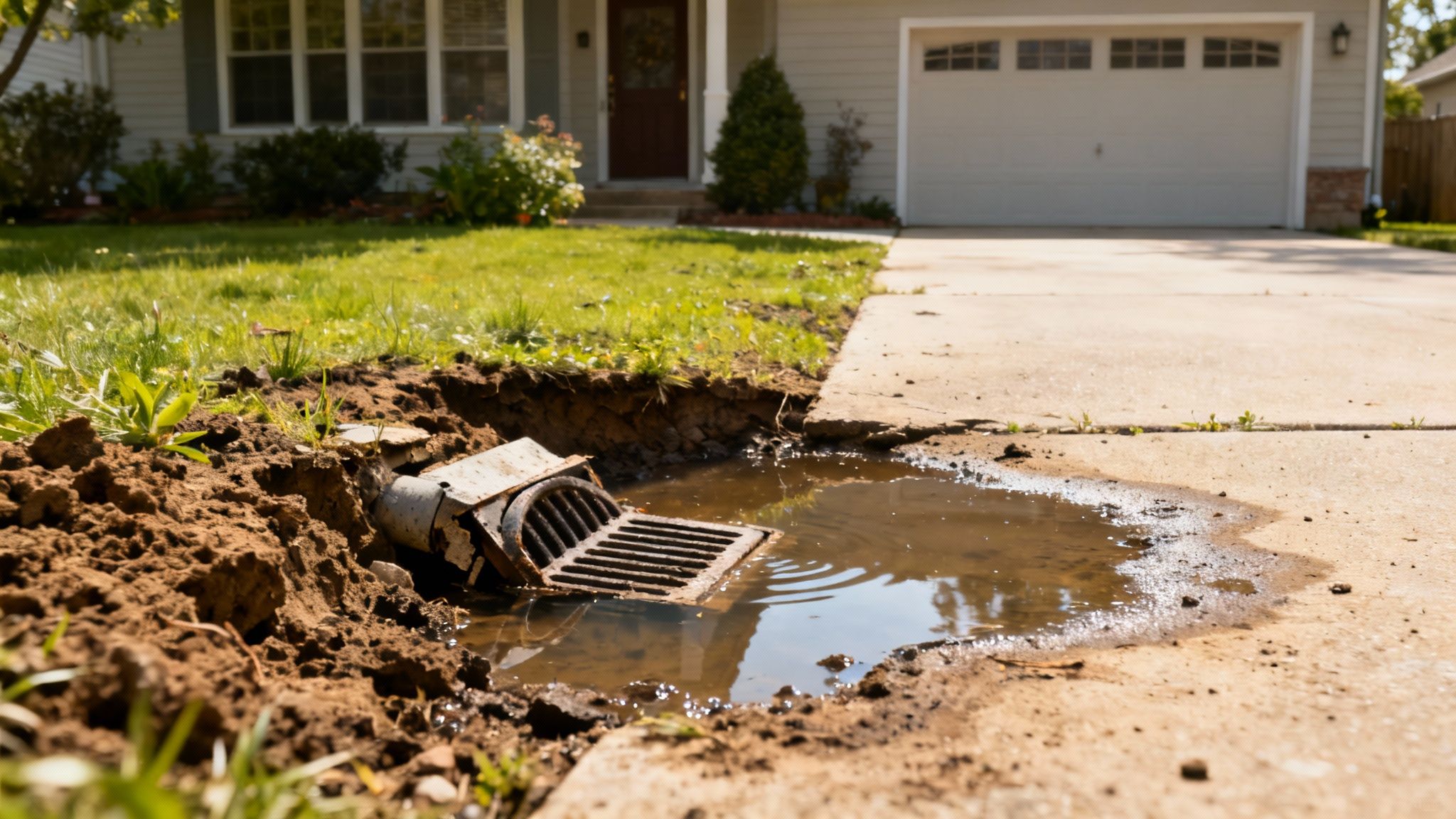
When the drains on your property can't keep up, the city's upgraded system is useless to you. This is how you end up with local flooding, soil washing away, and even serious risks to your building's foundation.
The Connection Between Public and Private Systems
For anyone managing a commercial property, HOA, or apartment complex, this connection is very important. An old or failing drainage system on your property is not just a problem—it's a big risk that can lead to costly emergency repairs.
This is why a professional drainage review is a smart, proactive choice. It's about protecting your property by finding weak spots before they turn into a disaster. A full review will find undersized pipes, failing catch basins, and hidden areas at risk of washing away.
Aligning your private system with public projects isn't just about following rules; it's about protecting your investment. A modern, efficient drainage system protects your property value and prevents expensive water damage.
Taking Steps to Protect Your Property
The best time to deal with drainage issues is now, before the heavy winter rains arrive. Commercial sites, HOAs, and large residential properties should evaluate their drainage systems now. Coastal can assess current conditions, identify undersized systems, and recommend upgrades that align with municipal improvements.
A huge part of this is making sure your system is clean and clear of leaves and dirt. You can see how important professional maintenance is by looking into options for residential storm drain cleaning. Taking these steps ensures your property remains a strong link in our region's evolving drainage infrastructure.
Spotting the Warning Signs of a Failing System
How can you tell if your drainage system is about to fail before the next big storm? A struggling system usually gives clues long before it causes a major flood. Catching these early signs is the key to avoiding serious damage and expensive emergency calls.
The biggest clues often appear right after it rains. If you see large puddles of standing water in your parking lot or yard that don't go away for hours or even days, that's a clear sign. Your system can't handle the water. The ground is soaked because the underground pipes are either clogged, damaged, or too small.
Common Red Flags on Your Property
But it’s not just about standing water. A failing drainage system leaves other signs. Look for these clues:
- Visible Soil Erosion: Do you see washed-out dirt or deep channels forming near your storm drains? This is a classic sign that water is moving too fast and with too much force, tearing your landscape apart.
- Sunken Ground or Cracks: Sudden dips, sinkholes, or new cracks in your pavement often point to a problem underground. A broken pipe can wash away the soil that supports the pavement, causing it to sink and crack.
- Water Pooling Near Foundations: If water is always collecting against your building, your drainage system is not doing its job. This can lead to serious foundation damage, mold, and flooding.
Seeing a soggy lawn and learning how to fix yard drainage are good first steps. But these are often signs of a bigger, hidden issue with your underground pipes.
What a Professional Assessment Involves
It may be tempting to try a quick fix, but stormwater systems are complex. The real problem is almost always buried out of sight, which is why hiring a professional is so important. An expert can find the root cause, making sure you get a lasting solution instead of a temporary patch.
An expert review isn't just about looking at a clogged drain; it's about understanding the entire system. From checking site plans to inspecting pipes, the goal is to get a complete picture of your property's drainage health.
A pro doesn’t guess—they investigate. They'll look at the original site plans, use special cameras to inspect your underground pipes for blockages or breaks, and measure your catch basins. This gives them the data they need to find undersized parts and plan a fix to get your system up to code.
This information helps you make an informed decision about what to do next. It's especially important for preventing the slow damage caused by erosion, which you can learn more about by reading up on the best ways to prevent soil erosion on construction sites developed properties.
What to Expect When Upgrading Your Drainage System
Starting a big project can sound like a lot, but it doesn't have to be. Breaking it down into clear steps makes it easier to manage and helps you know what’s happening along the way. Think of it as a map from finding a problem to getting a permanent fix.
The whole process is designed to bring your property's drainage up to modern standards, so you can stop worrying every time it rains.
Step 1: Kicking Things Off with a Site Assessment
Everything starts with a close look at what’s going on. The first step is a meeting and a detailed site review—like a check-up for your property.
This is where an expert finds the real source of your drainage problems. Are the pipes too small? Have the catch basins failed? This deep look gives a clear picture of the situation underground.
Step 2: From Diagnosis to a Custom-Fit Design
Once we know why there's a problem, we can figure out how to fix it. The next step is all about careful planning and smart design. This is never a one-size-fits-all job.
Instead, a custom plan is made that fits your property's unique needs while making sure everything meets current local codes. This design is the official blueprint for a reliable, long-term solution.
Step 3: Professional Installation That's Built to Last
With a solid plan ready, it's time to build it. In the final stage, skilled crews get to work, using the right materials and methods to complete the design perfectly.
The goal is to build a system that works great from day one and is tough enough to last for decades. This is how you make sure your property is truly ready for today's weather.
Don't wait for the water to start rising. Taking action before the next storm season is the best way to protect your property, prevent expensive emergency repairs, and protect your investment from flooding and erosion.
From Watsonville to Seaside, we’re seeing how drainage infrastructure is evolving, and at Coastal Pipeline, we help local properties upgrade drainage infrastructure to meet today’s climate demands. The smartest way to find out if your stormwater system is ready is to schedule a professional review before the next major rain event.
Common Questions About Stormwater Upgrades
As stormwater rules get stricter, it's normal to have questions about what it means for your property. Let's look at some of the most common concerns and get you clear answers.
Do My Drains Connect to the City's System?
In most cases, yes. The drainage systems on commercial properties and large housing developments are almost always required to connect to the main city storm drain system. This is an important link. If your system gets flooded, the backup doesn't just flood your parking lot—it can also put pressure on the public system.
So, how can you be sure? The only way to know for certain is to have a professional take a look. An expert can check your property’s site plans and do a physical inspection to confirm everything is connected and working as it should.
What's the Price Tag on a Commercial Drainage Upgrade?
This is a big question, and the honest answer is: it depends. The final cost comes down to the size of your property, the condition of your current drainage system, and the specific work needed to bring it up to modern standards.
You can think of it in a few levels:
- Minor Repairs: Things like making a catch basin bigger or fixing a cracked pipe are smaller, focused investments.
- Major Overhauls: A full replacement of an old, undersized pipe system is a much bigger project, but it provides a permanent, long-term fix.
A full professional review is the key to getting a real number. You'll get a detailed report explaining the issues and an exact price for the fix. This lets you budget for the cost of being prepared versus the much higher cost of cleaning up after a flood.
Think of a drainage upgrade less as a cost and more as an investment. It’s a key step in protecting your property's value from the growing threat of severe weather and making sure your system keeps up with public standards.
Can "Green" Solutions Actually Fix My Drainage Problems?
Absolutely. Green infrastructure is not just a trend; it's a very effective part of modern drainage.
Solutions like bioswales (landscaped channels designed to slow and filter water) or permeable pavement that allows rain to soak into the ground are great for managing runoff. By doing this, they take a huge load off your regular pipes and catch basins.
The best drainage plans today often use a mix of methods. They combine these nature-based solutions with proven engineered systems. This combination creates the most effective and lasting result, making sure your property is ready for whatever the weather brings.
From Watsonville to Seaside, Coastal Pipeline helps local properties upgrade drainage infrastructure to meet today’s climate demands. Schedule a stormwater review before the next major rain event.