
So, how often should you sealcoat your asphalt? It’s a common question. For most driveways and parking lots, you should plan on a new coat every 3 to 5 years.
But if you have brand-new pavement, the timing is different. That first sealcoat is very important and should be applied within the first 12 to 18 months after the asphalt is put down. This first coat protects the oils that keep new asphalt flexible and strong.
Your Asphalt Sealcoating Schedule at a Glance
Many property owners wonder if asphalt sealcoating is just about looks. If the surface looks a little faded but still works, is sealcoating an unnecessary expense? The truth is, sealcoating does far more than improve curb appeal.
Think of it less like a paint job and more like sunscreen for your asphalt. It helps prevent oxidation, water intrusion, and cracking—the three biggest causes of premature asphalt failure. Industry sources show that routine sealcoating can double the life of a paved surface, especially in areas with high UV and wet climates.
A common misstep is waiting until there’s visible damage, like potholes or crumbling edges, before doing maintenance. By then, sealcoating won’t help much. Sealcoating is preventive maintenance, not a fix.
Finding the Right Timeline
Sticking to a 3–5 year maintenance plan is the best way to protect your investment. After the initial paving, the first sealcoat should be applied within 12–18 months. Then you reapply every few years based on traffic, weather, and wear. This schedule protects the binder in the asphalt, keeping it flexible and waterproof.
For a quick reference, here is a simple guide to get you started on the right maintenance cycle.
Recommended Sealcoating Frequency Guide
This table provides a snapshot of when you should plan for sealcoating, depending on your pavement's age and how it's used.
| Pavement Type | First Sealcoat | Subsequent Sealcoating |
|---|---|---|
| New Residential Driveway | After 12–18 months | Every 3–5 years |
| New Commercial Parking Lot | After 12–18 months | Every 3–4 years |
| Existing Pavement | N/A | Every 3–5 years |
This gives you a solid starting point for planning your property's pavement maintenance.
This simple decision tree illustrates the different paths for new versus established asphalt.
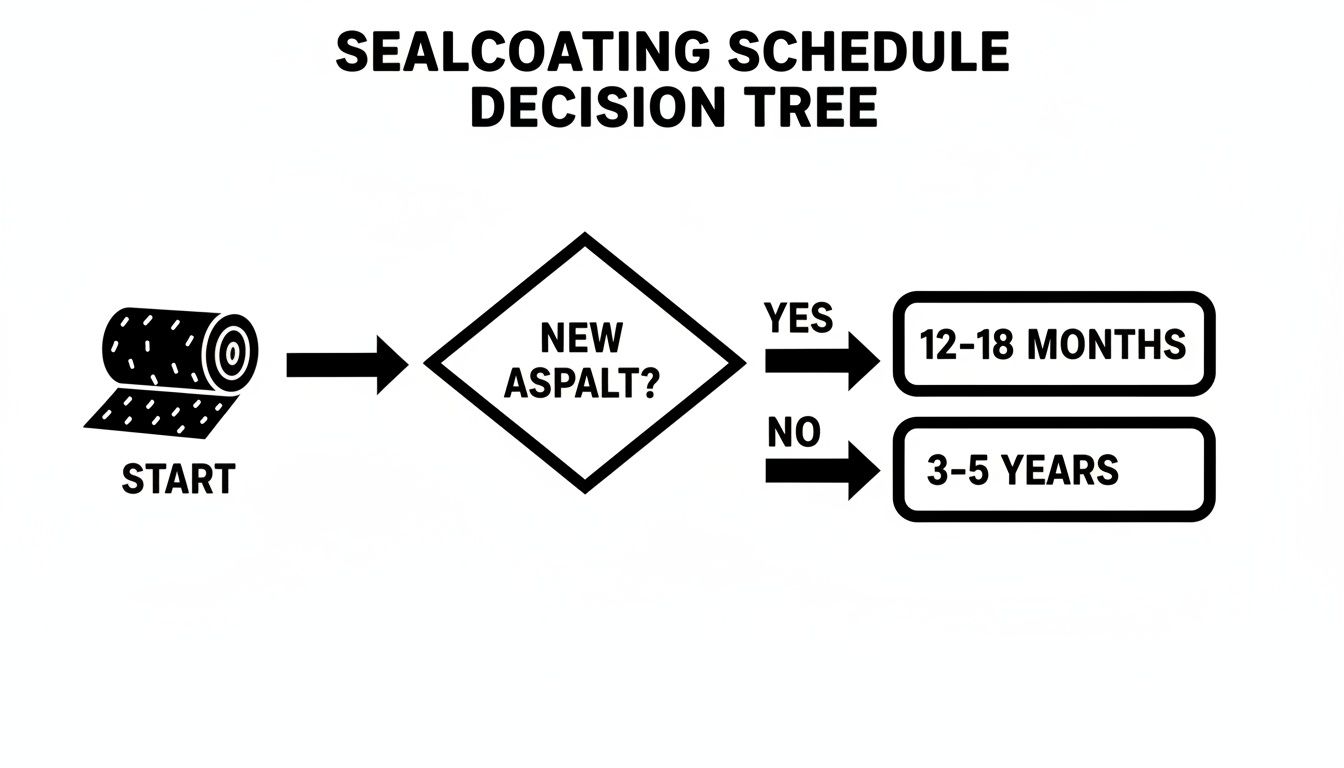
New asphalt gets sealed sooner to protect its initial investment, while older surfaces settle into a steady, multi-year rhythm. The core idea is similar to other types of exterior home care; just as there's a recommended schedule for how often to power wash your home, your asphalt needs consistent attention to perform its best.
Your Partner in Pavement Longevity
At Coastal Pipeline, we know that sealcoating isn't a one-size-fits-all job. We use commercial-grade sealants, apply two-coat systems when appropriate, and ensure proper surface prep (no rushed jobs). We don’t treat sealcoating like a simple task—it’s part of your long-term pavement strategy.
Whether you manage a parking lot in Santa Cruz or have a private road in San Benito County, Coastal Pipeline can help extend your pavement’s life and avoid costly repaving. Ask us about our preventive commercial parking lot maintenance programs tailored to Central Coast conditions.
Why Sealcoating Is Your Pavement's Best Defense
It’s a common question we hear: "Is sealcoating my driveway just for looks?" When the asphalt starts to fade but seems structurally sound, it's tempting to put off maintenance. But that fresh, black finish is actually the least important part of the job. The real power of sealcoating lies in its protective qualities.
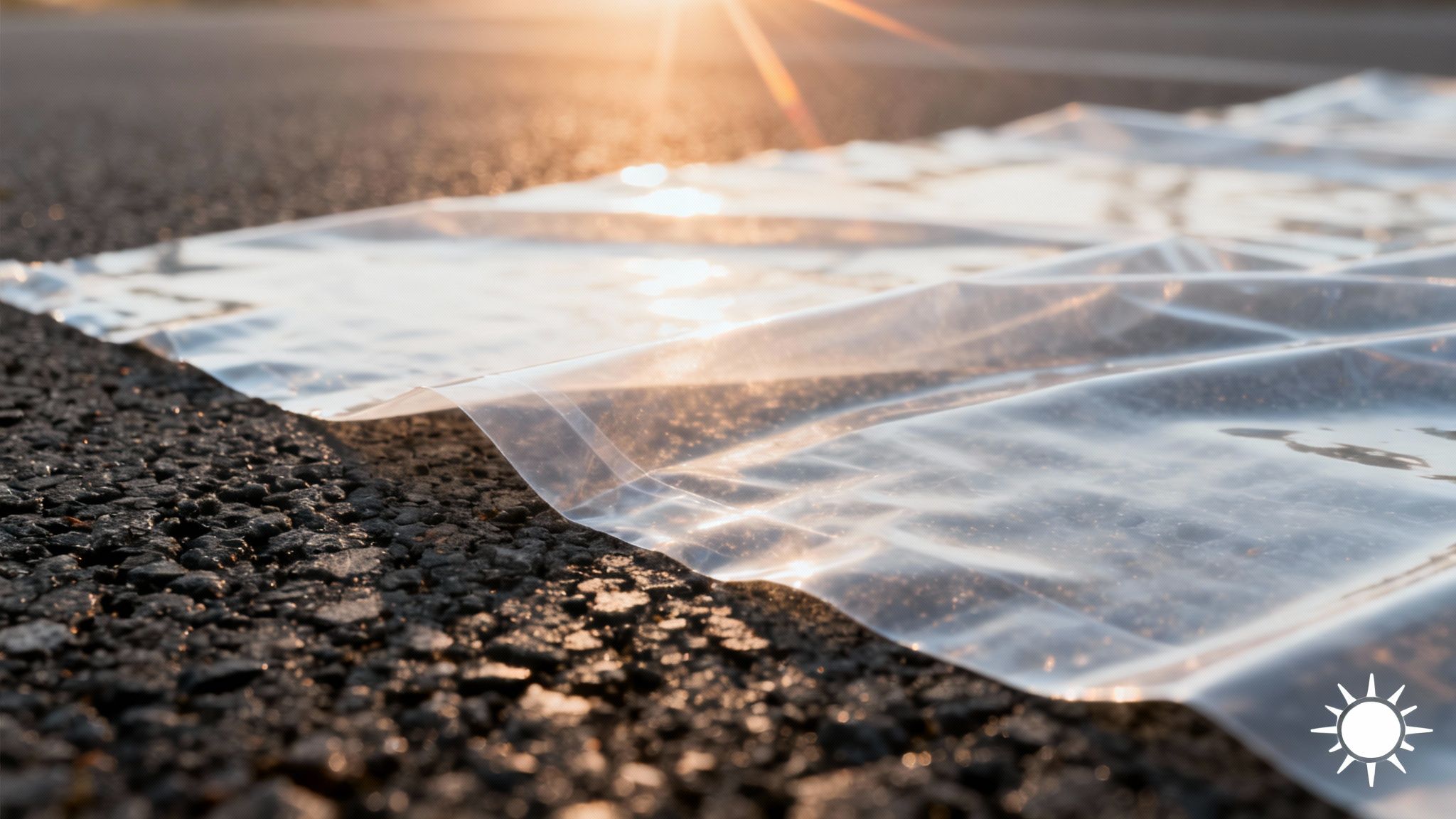
The best way to think about it is like sunscreen for your pavement. Just as sunscreen blocks harmful UV rays from damaging your skin, a quality sealant shields your asphalt from its worst enemies: sunlight, water, and chemical spills. This thin but tough layer is essential for keeping your pavement healthy for years to come.
Preventing Damage Before It Starts
Sealcoating is much more than a cosmetic touch-up. Its main job is to stop oxidation, water penetration, and cracking—the three main reasons for asphalt failure. In fact, industry data shows that a consistent sealcoating program can double the life of a paved surface, a huge benefit in areas with lots of sun or rain.
Without that protective barrier, the sun's UV rays bake the binders out of the asphalt, making it brittle and gray. Water then seeps into small cracks. When that water freezes, those tiny cracks are forced into large, destructive potholes. Even minor fluid leaks from cars can eat away at the asphalt binder, weakening the surface. A good sealcoat stops all of that.
One of the biggest mistakes property owners make is waiting until they see serious problems like potholes or crumbling edges. By that point, you've missed the window. Sealcoating is preventive maintenance, not a structural repair. Waiting too long turns a simple, affordable maintenance task into a complex and expensive repaving project.
By the time you notice significant cracks or potholes, the underlying foundation of your asphalt is already compromised. Proactive sealcoating stops this damage from ever taking root.
The Right Way to Protect Your Pavement
So, what's the right approach? It all comes down to a consistent maintenance plan. After a new asphalt surface is installed, the first sealcoat should be applied within 12–18 months to lock in its flexibility. After that, a new coat every 3–5 years is a good rule of thumb. You can adjust the schedule based on traffic, weather, and visible wear and tear.
This routine protects the asphalt binder, keeping the pavement flexible and waterproof. At Coastal Pipeline, we build this into a long-term pavement strategy for our clients. We always use commercial-grade sealants and proper surface prep to ensure a lasting bond, sometimes using two-coat systems for maximum durability.
Whether you manage a busy commercial parking lot in Santa Cruz or own a private road in San Benito County, Coastal Pipeline can help you get the most out of your asphalt. Ask us about our preventive maintenance programs—they’re designed to protect your investment from the unique challenges of the Central Coast climate and help you avoid the high cost of repaving.
Tailoring Your Sealcoating Schedule
The 3-to-5-year rule is a solid rule of thumb for how often to sealcoat, but it’s just a starting point. Think of it less as a hard-and-fast deadline and more as a baseline. The reality is, your specific situation dictates the true timeline.
Several key factors can shift that schedule, sometimes dramatically. You have to look at how your asphalt is actually being used day in and day out.
High Traffic vs. Low Traffic
Is your pavement a busy commercial lot or a quiet residential driveway? The difference is huge. A shopping center parking lot with constant traffic, heavy delivery trucks, and countless cars is going to need attention more often. For these high-stress surfaces, resealing every 2 to 4 years is a smart move to prevent premature failure.
On the other hand, a typical suburban driveway that sees only a couple of cars a day can easily go the full 5 years, sometimes even a bit longer, between coats. How much your asphalt gets used is one of the biggest variables in the equation.
Local Climate and Pavement Condition
Your environment is another major player. Here on the Central Coast, we get a double whammy of intense sun and seasonal rain. All that UV exposure literally bakes the protective oils out of the asphalt, leaving it dry and brittle. Then, when the winter rains arrive, water finds its way into every tiny flaw. This cycle of baking and soaking puts a unique strain on our pavement, often meaning we need to be more proactive than folks in milder climates.
You also have to consider the current state of your asphalt. An older driveway is naturally going to be more porous and fragile than a newer one. If you're already seeing a web of hairline cracks, that's a clear signal that your pavement is vulnerable and needs protection sooner rather than later. Before you even think about sealing, it’s worth understanding the fundamentals of driveway crack repair for asphalt, because you can't seal over existing problems.
Sealcoating is preventive maintenance, not a miracle cure. The real magic happens when you apply it on a schedule customized for your property’s traffic, climate, and current condition. That’s how you get the most out of it and avoid expensive repairs down the road.
Here at Coastal Pipeline, we know that a cookie-cutter approach just doesn’t work. We take the time to evaluate your property's unique needs to build a pavement strategy that actually makes sense for you. Whether you’re managing a bustling lot in Santa Cruz or a private drive in San Benito County, our goal is to create a maintenance plan that works.
By using top-tier, commercial-grade sealants and focusing on meticulous prep work, we ensure your investment is built to last. Let's talk about putting together a preventive plan that fits your property perfectly.
The Hidden Dangers of Sealcoating Too Often
When it comes to protecting your asphalt, it’s easy to fall into the "more is better" trap. It feels like sealing your driveway every year would provide the ultimate shield against the elements, right? In reality, this common mistake can do more harm than good and is one of the quickest ways to ruin your pavement.
Think of it like putting way too many coats of paint on a wall. Applying sealant too often creates a thick, brittle shell on the surface. This excessive buildup can’t flex with the pavement, so it inevitably starts to crack and peel away in ugly flakes.
Once those cracks appear, you’ve got a bigger problem on your hands. The heavy top layer traps moisture underneath, preventing it from evaporating naturally. Water caught between the sealant and the asphalt is a recipe for disaster, accelerating damage from below and leading to problems that a simple sealcoat can no longer fix.
Why Less Is Often More
Proper pavement protection isn't about sealing as often as possible. It's about applying a high-quality coat at just the right time. Research and years of field experience show that sealing too frequently—especially every single year—actually damages asphalt. It traps the essential oils within the pavement, which can soften the structure and ironically make it more vulnerable to cracking and failure.
True pavement protection isn't about sealing as often as possible; it's about applying a high-quality coat at the right time. A professional assessment will tell you when your pavement is ready for a new coat, saving you from wasteful and counterproductive maintenance.
The only way to know for sure when your pavement is ready for its next coat is with a professional assessment. This step saves you from spending money on a service that could be counterproductive. Instead of a rigid annual schedule, it's best to follow a professionally recommended plan. For most properties, this works out to a fresh coat every 3 to 5 years.
If excessive layering has already caused surface damage, another coat of sealant won't solve the problem. In these situations, you may need to look at more intensive solutions like asphalt resurfacing in Monterey to restore the pavement's integrity before you can get back on a healthy maintenance cycle.
At Coastal Pipeline, we know every surface has its own story. Whether you have a busy parking lot in Santa Cruz or a quiet private road in San Benito County, we can help you create a preventive maintenance plan that makes sense for your property and the unique climate of the Central Coast.
Key Signs Your Asphalt Needs Sealcoating
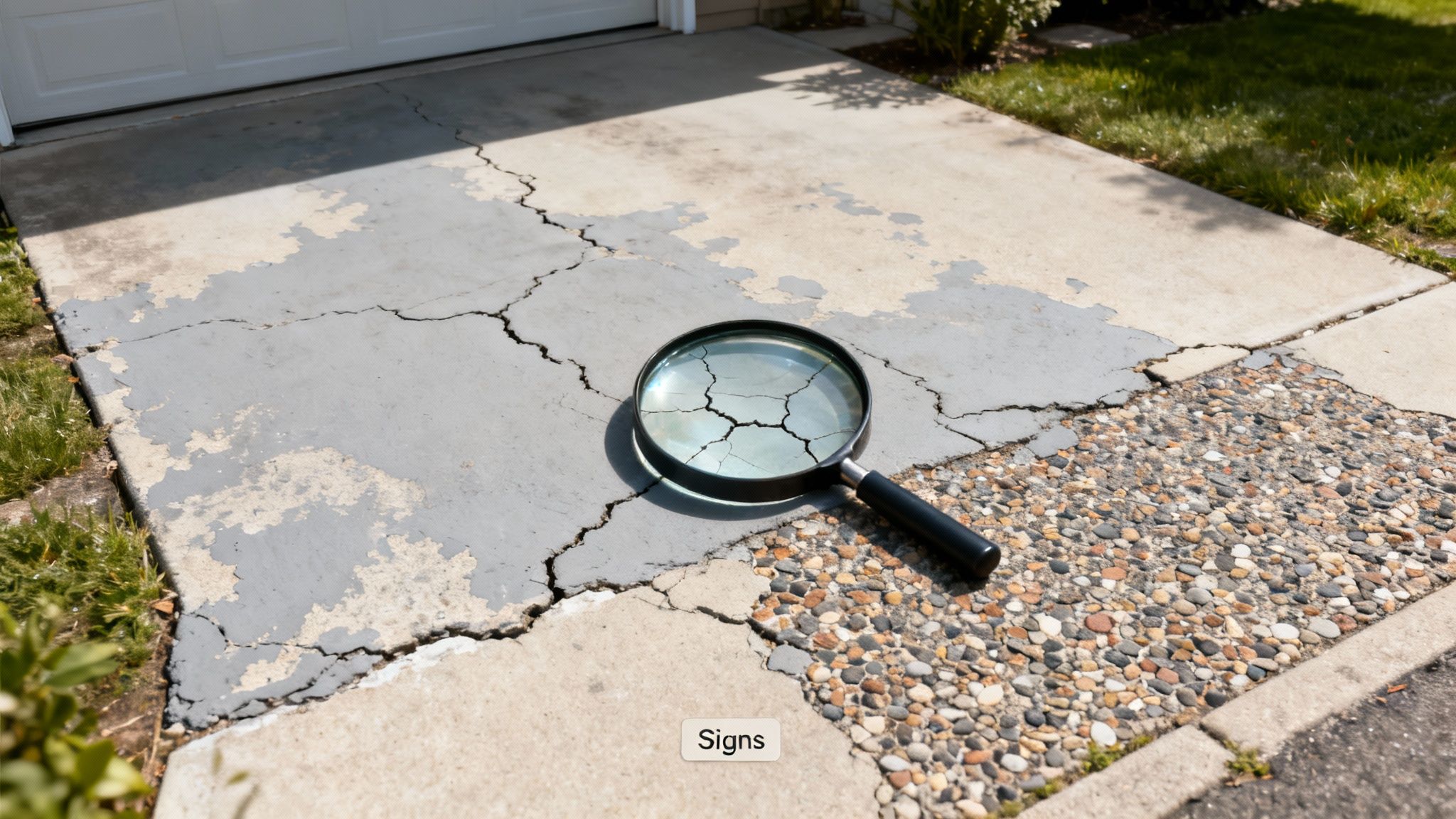
Your asphalt is constantly talking to you; you just need to know what to look for. The most obvious signal that it’s time for a fresh sealcoat is a simple color change. When that deep, rich blacktop starts looking more like a washed-out gray, it's a clear sign the protective top layer is wearing thin.
This isn’t just about looks. That fading color means the essential oils in the asphalt binder are oxidizing away, leaving your pavement vulnerable.
Get down on the surface and inspect it closely. Do you see a web of tiny, hairline cracks starting to form? That's your asphalt telling you it's getting brittle. You might also feel the texture getting rougher as sand and small stones—the aggregate—begin to pop out.
Don't Wait for Major Damage
One of the biggest mistakes I see property owners make is putting off maintenance until a pothole appears or the edges start to crumble. At that point, the damage is no longer just skin deep, and a simple sealcoat won't be enough. Think of it this way: sealcoating is preventive maintenance, not a structural repair.
Acting on those early warning signs is what stops a minor issue from becoming a massive, expensive headache. If you ignore those little cracks, water will find its way in, and soon you'll be looking at a much bigger problem. It’s crucial to understand how to repair alligator cracks in asphalt before they can destroy the foundation of your pavement.
Catching the warning signs early is the key to maximizing your pavement's lifespan. A proactive approach saves thousands of dollars in the long run by preventing the need for major reconstruction.
Here at Coastal Pipeline, we specialize in helping property owners on the Central Coast read these signs and create a smart maintenance plan. Whether you're managing a busy parking lot in Santa Cruz or a private driveway in San Benito County, we can help you get the most out of your asphalt and avoid the high cost of a total repave. Just ask us about our preventive programs designed specifically for our unique Central Coast climate.
Choosing the Right Partner for Your Pavement
Knowing when to sealcoat your driveway or parking lot is one thing, but the real key to a long-lasting job is who you hire to do it. The quality of the materials and the skill of the crew make all the difference. Honestly, a rushed job with cheap sealant can do more harm than good, leaving you worse off than before.
Think of it like painting a car. You wouldn't just spray a new coat of paint over dirt and rust, right? The same logic applies here. Proper surface preparation is the absolute foundation for a durable finish. This means getting the surface immaculately clean, treating any oil or gas spots, and—most critically—filling every single crack. Slapping sealant over a dirty, cracked surface is a waste of money; the problems underneath will just push their way through in no time.
More Than Just a One-Time Job
At Coastal Pipeline, we don't see sealcoating as a quick fix. We see it as a vital part of a long-term pavement health strategy. It’s a proactive investment that protects your asphalt and saves you from the massive expense of repaving down the road. That's why we don't offer a cookie-cutter solution; every property has its own unique needs.
We use commercial-grade sealants that are built to last and often apply a two-coat system for areas that see a lot of traffic. Our whole process, from meticulous prep work to the final coat, is built around delivering a durable, high-quality result that aligns with your long-term property maintenance goals.
The whole point of professional sealcoating is to create a seamless, tough barrier against the elements. That's only possible when every crack is filled, the surface is spotless, and the right materials are applied with precision.
Local Expertise Matters on the Central Coast
Hiring a contractor who truly understands the local climate is non-negotiable. Here on the Central Coast, our asphalt gets a unique beating from the intense sun and damp, rainy seasons. That combination creates stresses you just don't see in other parts of the country. A local expert knows exactly what your pavement is up against and how to protect it. When you're vetting contractors, it's a good idea to look at their full range of professional pavement care services to see if they can handle the entire job, from prep to finish.
Our team has spent years working on pavement right here in Monterey, Santa Cruz, and San Benito Counties. We build maintenance plans that are specifically designed for our local weather and your property's traffic patterns. Whether you manage a busy commercial lot in Santa Cruz or a quiet private road in San Benito County, our goal is to help you extend its life and avoid the headache of a full repaving project.
You can learn more about our specific approach to sealcoating and crack filling services in Monterey. Let's work together to create a plan that gives you the best return on your investment.
Your Sealcoating Questions, Answered
If you're wondering about the nuts and bolts of sealcoating, you're not alone. Many property owners have the same questions. Getting clear, straightforward answers is the first step toward protecting your asphalt investment, so let's dive into a few of the most common ones we hear.
Is Sealcoating Just a Cosmetic Fix?
This is probably the number one question we get. People see a faded driveway and wonder if a new blacktop is just for show. The short answer is a hard no.
While a fresh, dark sealcoat absolutely boosts curb appeal, its primary job is protection. Think of it as a shield for your asphalt, blocking out the sun's UV rays, water, and automotive fluids like oil and gas—the very things that cause pavement to break down. In fact, industry data shows that a consistent sealcoating schedule can double the life of your pavement.
Why Not Just Wait Until I See Cracks or Potholes?
It’s tempting to put off maintenance until a problem is staring you in the face, but that's a costly mistake with asphalt. By the time you see crumbling edges or potholes, the damage is already done, and you're looking at a much more expensive repair.
Sealcoating is preventive maintenance, not a structural fix. Waiting for visible damage is like ignoring your car's oil change light until the engine seizes. It turns a small, affordable task into a massive headache. A proactive 3–5 year maintenance plan is what keeps your pavement healthy for the long haul.
Does a Professional Application Really Make a Difference?
Absolutely. The final result comes down to two things: the quality of the materials and the prep work. We use commercial-grade sealants designed to stand up to heavy use and weather, often applying a two-coat system for maximum durability. We see sealcoating not as a simple paint job, but as a critical part of a long-term strategy to preserve your property.
Whether you're managing a busy parking lot in Santa Cruz or a quiet private road in San Benito County, Coastal Pipeline can help you get the most out of your pavement and sidestep the high cost of repaving. Let’s talk about a maintenance plan built for our unique Central Coast conditions.
Ready to protect your pavement and enhance your property's value? Contact Coastal Pipeline Inc. today to schedule a professional assessment and learn more about our tailored sealcoating solutions. Visit us at https://coastalpipelineinc.com.