California is moving its utility lines underground for one big reason: to stop dangerous wildfires started by old overhead power lines. This is a huge effort across the state. But it's not just about fire. The goal is to build stronger, more dependable systems that can handle bad weather and keep the power on for everyone.
The Urgent Shift to Underground Utilities
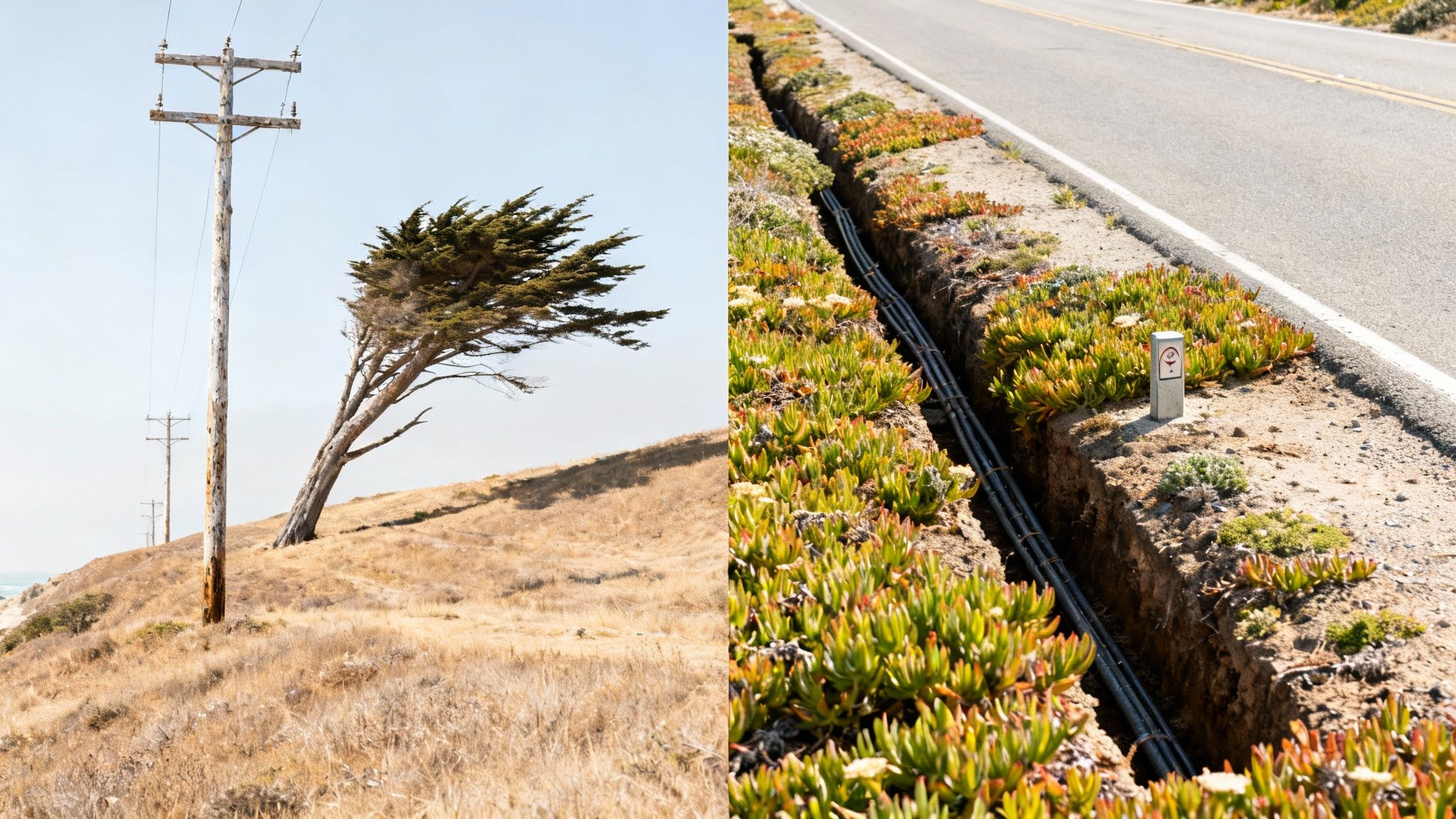
A major change is happening all over California. Current market data shows a significant shift: undergrounding of utility lines is accelerating in 2026 as state and local agencies respond to wildfire threats and storm damage by burying vulnerable infrastructure.
Think of old power lines like a clothesline in a hurricane—they are easily knocked down by high winds and falling trees. Buried lines, on the other hand, are like a protected tunnel, safe from the chaos above. This sensible move to protect power, water, gas, and communication lines is picking up speed. This trend is especially active along the Central Coast, where weather volatility is increasing.
This table shows the main reasons for this statewide project.
Primary Reasons for Utility Undergrounding in California
| Driving Factor | Core Motivation | Community Impact |
|---|---|---|
| Wildfire Mitigation | Stop power lines from sparking fires in high winds. | Lowers the risk of deadly wildfires in fire-prone areas. |
| Grid Reliability | Protect lines from storms, falling trees, and car crashes. | Fewer power outages for homes and businesses. |
| Climate Resilience | Build systems that can handle extreme weather. | Keeps essential services working during heatwaves, floods, and storms. |
| Policy & Funding | Follow state rules and use new government funding. | Speeds up the move to safer infrastructure. |
All of these factors point to a safer and more stable future for California’s essential services.
Pressure Mounts on Property Owners and Developers
This statewide push is changing things for anyone who builds or manages property. Property owners, developers, and municipalities are under increasing pressure to move electrical, water, gas, and communication lines underground—not only for safety but also to comply with new infrastructure resilience standards.
Waiting to act means higher costs and fewer available contractors, especially as PG&E and other agencies issue more undergrounding mandates. Homeowners who delay trenching or utility tie-ins may face construction slowdowns and insurance challenges.
This is the new reality. It means planning ahead is more important than ever. The time for voluntary upgrades is getting shorter as official rules become more common.
Staying Ahead of Mandates and Storms
If you’re planning upgrades in Monterey, Santa Cruz, or San Benito County, talk to Coastal Pipeline about underground utility trenching before mandates increase. The benefit of acting now is big. By burying your utilities, you get a system that is up to code and ready for the future. It minimizes service interruptions, reduces risk from fire or floods, and improves property value.
It's a clear sign that sustainability isn't optional when it comes to building strong communities.
Coastal Pipeline Inc. is a PG&E-certified installer with deep expertise in multi-utility trenching, electrical conduit placement, and gas line coordination—handling full-scope underground projects for residential, municipal, and commercial clients. Working with an expert makes a huge difference. It’s the best way to stay ahead of the curve—and the next storm.
How Underground Power Lines Prevent Wildfires
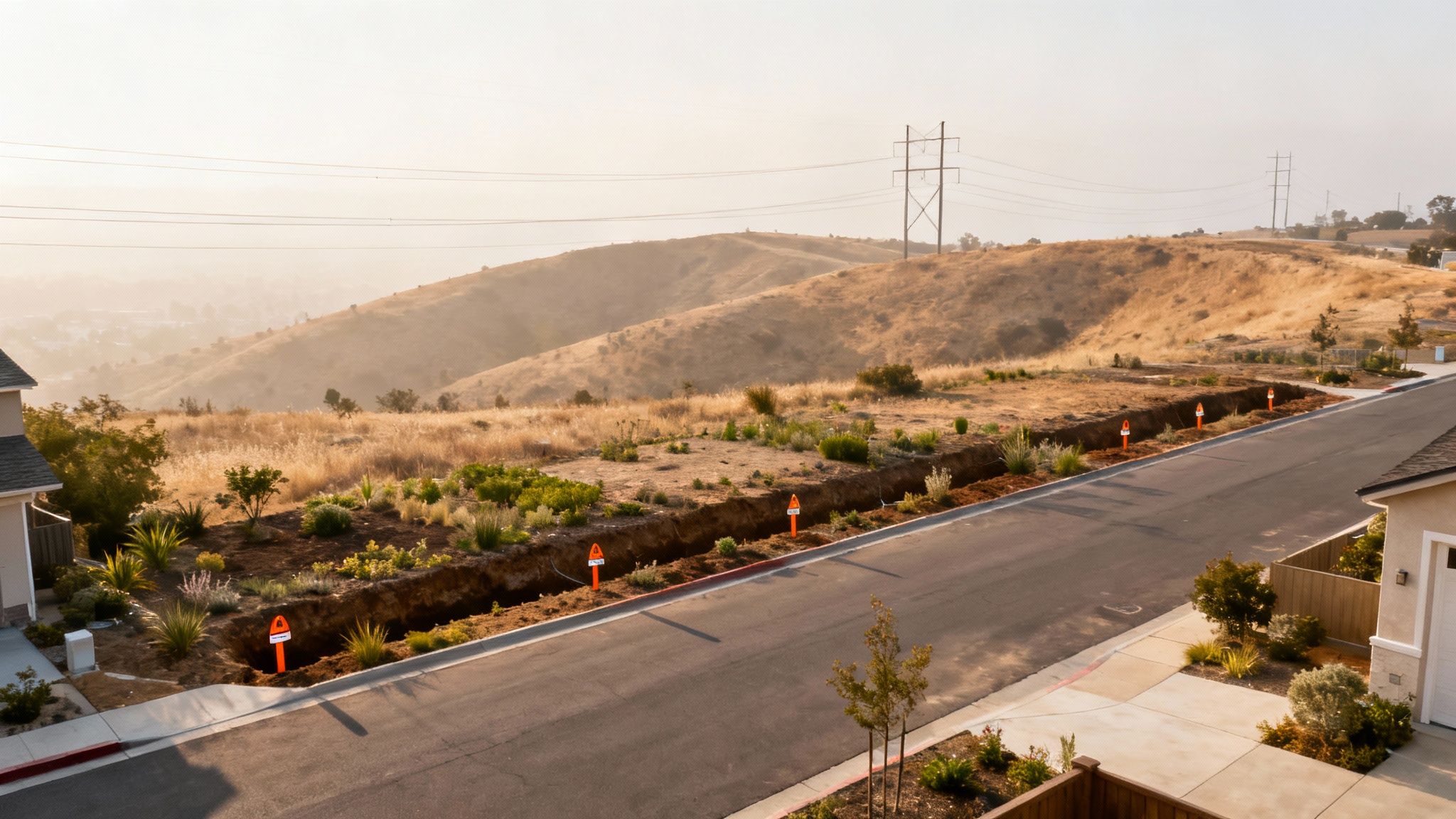
The main reason California is rushing to bury its utility lines is ignition. Our state is covered in overhead power lines, and many are old and exposed. When you mix those lines with California’s dry weather and strong winds, you have a recipe for disaster.
A single spark is all it takes.
High winds can cause power lines to slap together, sending hot metal down onto dry grass. A tree branch can fall and break a live wire. A strong gust of wind can knock over a utility pole. Any of these events can start a fire that destroys homes and communities in an instant.
Burying power lines solves this problem. By placing electrical lines safely underground, we remove them from the danger. Buried lines are protected from high winds, falling trees, and other threats. It's a simple solution that almost completely gets rid of the risk of power lines starting a wildfire.
The connection is clear: burying power lines is not just an upgrade—it's a necessary step to save lives. It’s one of the best ways we have to prevent a known cause of disasters.
A Clear and Present Danger
California's recent past is marked by terrible wildfires started by utility lines. The sad results—lost lives, destroyed towns, and huge financial losses—are the real reason for the state's big push to bury lines.
The size of this problem is hard to imagine. For example, investigations connected PG&E's overhead equipment to fires in 2018 that led to over 100 deaths and burned hundreds of thousands of acres. This led to the company's bankruptcy in 2019 and a $25.5 billion payment to cover fire damages.
In response, PG&E started its wildfire safety undergrounding program in 2021. Since then, it has buried over 800 miles of power lines in 27 counties. This has cut the wildfire risk in those areas by a reported 98%.
This work is now seen as a necessary cost of doing business and protecting people in a state prone to fires. The proof is clear: burying lines is a direct and proven way to stop the cycle of fire and destruction. To learn more about how it's done, you can read our guide on underground utility trenching for electrical lines.
Breaking Down the Ignition Risk
To understand why this change is so important, it helps to know the exact ways that overhead systems can fail. These are the specific problems that burying lines gets rid of.
- Arcing: When winds make power lines touch, they create a big electrical spark—like a welding torch—that throws sparks and hot metal.
- Equipment Failure: Old parts on utility poles can break, especially in bad weather, causing sparks or fires on the pole.
- Line-to-Ground Contact: A fallen tree branch or a broken pole can drop a live wire onto the ground, which can instantly light dry grass on fire.
- Vehicle Collisions: A car hitting a utility pole can bring live wires down, creating an immediate fire hazard.
Each one of these risks is gone when the lines are safely underground. No longer exposed to wind, trees, or crashes, the grid becomes much safer for everyone. That simple fact is what is driving this huge, statewide effort to move our important infrastructure out of harm's way.
Building a Storm-Proof and Reliable Energy Grid
While stopping wildfires is the top reason why California is burying more utility lines, the benefits go far beyond fire season. Burying lines is about creating a stronger, more reliable energy grid that can handle many kinds of threats. This helps keep homes and businesses powered up when it matters most.
Think of our current overhead power lines like a tent in an open field. It’s exposed to every gust of wind and falling branch. A single bad storm can knock it down, leaving you in the dark. That’s the problem with a grid that is strung up on poles.
Now, think of a storm shelter. Buried underground, it’s safe from the chaos above. No matter how hard the wind blows, the shelter stays safe. This is what burying lines does for our utility grid—it moves our important systems into a safe, protected place.
Shielding the Grid from Everyday Threats
Let's be honest, power outages are a common and frustrating part of life. They aren't always caused by huge fires. Many outages happen because of more common, everyday events that damage our old overhead lines.
By moving lines underground, we protect them from a long list of common problems:
- Severe Storms and High Winds: Buried cables are not affected by strong winds that can break poles and tear down lines, which is a common cause of big outages.
- Ice and Snow: In colder areas of the state, heavy ice can build up on overhead lines, weighing them down until they break. Underground lines are protected from freezing weather.
- Falling Trees and Branches: A large number of power outages start with a tree branch falling in a storm. This entire risk is gone when lines are underground.
- Vehicle Accidents: When a car hits a utility pole, it can cut power for a whole neighborhood. Buried lines are safely out of the way of traffic.
Each of these examples shows how fragile an exposed grid is. Moving lines underground is one of the best ways to build a stronger system and protect our communities. It’s a key part of building resilient underground utilities that can serve people reliably for years.
A Future-Proof Strategy for Power Reliability
The goal of burying lines isn't just about stopping disasters. It’s about creating a steady and dependable power supply we can all count on. As extreme weather happens more often, a strong grid is no longer a luxury—it’s a necessity for safety and our economy.
Current market data shows a significant shift: undergrounding of utility lines is accelerating as state and local agencies respond to wildfire threats and storm damage by burying vulnerable infrastructure.
This trend is especially active along the Central Coast, where increasing weather volatility makes a storm-proof grid essential. Research has already shown how big of an impact this strategy has. While wildfires are the main reason, the reliability benefits have made California a leader in building a strong grid. For example, burying just 25% more lines could shorten outages by nearly 11 hours during major storms.
PG&E's work has already put over 800 miles of lines underground since 2021. This has cut wildfire risk in those areas by 98% and reduced power outages for 16 million customers.
In the end, burying utility lines is an investment in stability. It’s about making sure the lights stay on, businesses stay open, and important services keep running, even when the weather is at its worst. This is a big step toward building a truly storm-proof California.
The Real Costs and Complexities of Going Underground
Burying utility lines is a great way to prevent wildfires and build a stronger grid, but let’s be clear: it’s a very expensive project with some serious challenges. This isn't just about digging a ditch and dropping in a cable. It requires careful planning, heavy machinery, and working around a mess of existing pipes and lines—especially in crowded cities or California's hilly areas.
The biggest hurdle is the upfront cost. Unlike putting wires between poles, burying lines involves a lot of digging, laying special pipes, and then fixing every road, sidewalk, and yard that was disturbed. No two projects are the same, and the final price can change a lot based on a few key things.
Factors Influencing Undergrounding Costs
Several things can make the cost of a project go up. If you’ve ever wondered why one project costs so much more than another one nearby, these are usually the reasons:
- Terrain and Soil Conditions: Digging through solid rock or loose soil is much harder than digging in soft dirt. The hilly and rocky areas common along the Central Coast, for example, create some unique challenges.
- Urban Density: Working in a busy city means you're trying to fit new lines into a maze of existing water, sewer, and gas pipes. It requires a lot of precision and slows things down.
- Environmental Regulations: Any project near sensitive natural areas has to follow strict environmental rules. This can add a lot of time and money to a project.
- Permitting and Coordination: Just getting the right permits from different agencies and working with different utility companies is a complicated process that can make a project take longer.
With so many moving parts, managing risk in project management is very important. A well-run project can handle these challenges without going over budget or schedule.
The Price of Protection
Putting utility lines underground in California is not cheap, but when you look at the growing threat of wildfires, the costs start to make more sense.
This table gives an idea of the estimated costs per mile from California's major utility companies. As you can see, the numbers are very different, which shows the unique challenges of each area, from dense cities to faraway, rocky landscapes.
Estimated Utility Undergrounding Costs Per Mile in California
| Utility Company | Low-End Cost Per Mile | High-End Cost Per Mile |
|---|---|---|
| PG&E | $3.4 million | $6.1 million |
| SDG&E | $2.5 million | $5.0 million |
| SCE | $2.8 million | $5.5 million |
These numbers show that there's no single price. Each project's cost depends on its specific location and how complicated it is.
Across the state, about 33% of California's 220,590 miles of distribution lines are already underground. But that leaves 147,000 miles of overhead lines still exposed. Burying all of them would be a huge job, with costs estimated as high as $559 billion.
This chart shows the most common reasons the power goes out—all of which are greatly reduced by moving lines underground.
The data is pretty clear. Wind, ice, and accidents are the biggest threats to overhead power lines. Putting that infrastructure safely underground almost completely removes those threats.
The Long-Term Costs of Inaction
While the initial cost seems high, you have to compare it to the huge long-term costs of doing nothing. The price of inaction isn't just measured in dollars; it's measured in lost homes, damaged nature, and lives turned upside down.
The real cost isn't what you spend on burying the lines; it's what you risk by leaving them exposed. The expenses associated with wildfire damages, constant repairs, and skyrocketing insurance rates often far exceed the initial investment in undergrounding.
When you think about the financial damage from a single major wildfire, the choice becomes much clearer. Proactively burying lines quickly becomes a smart, financially sound plan. That’s why working with experienced contractors who specialize in utility systems construction is so important. They can keep these complex projects on budget and on schedule, making sure the investment provides the protection it promises.
Why Waiting to Act Is No Longer an Option
The statewide push to bury utilities is not a distant goal anymore. It's creating real, immediate pressure on anyone involved with California property. For property owners, developers, and cities, the time to get ahead of this is now. State and local agencies are already moving fast to bury at-risk lines in response to ongoing wildfire threats and storm damage.
This isn't just a future trend—it's happening now. A significant shift is underway. Current market data shows that undergrounding of utility lines is accelerating in 2026. This is especially true along the Central Coast, where changing weather is making exposed utility lines a serious problem.
The Rising Pressure of New Standards
The days when burying utilities was just a nice upgrade are over. Now, property owners, developers, and municipalities are under increasing pressure to move electrical, water, gas, and communication lines underground. It’s no longer just about safety. It’s about meeting new infrastructure resilience standards designed to protect our communities.
These new rules change everything. Waiting is no longer a good choice. If you delay an undergrounding project today, it will cost you more and be harder to do tomorrow.
Waiting to act means higher costs and fewer available contractors, especially as PG&E and other agencies issue more undergrounding mandates. Homeowners who delay trenching or utility tie-ins may face construction slowdowns and insurance challenges.
As demand for this work grows, the cost of materials, labor, and special equipment will go up. More importantly, the number of qualified, experienced contractors will get smaller. The best crews will be booked for months or even years.
The Real-World Consequences of Delay
Putting off an undergrounding project creates a lot of risks that can ruin your budget or stop your project completely. The problems that come from waiting are getting more serious every year.
- Guaranteed Higher Costs: With more utility rules coming, the demand for trenching work will be greater than the supply of qualified crews. This will drive up labor costs. Waiting just means you will pay a higher price.
- Fewer Available Experts: Finding a top-rated, certified contractor is already hard. As big city and utility projects get started, the best teams will be busy, leaving fewer good options for private projects.
- Construction Slowdowns: Nothing stops a new building project faster than not having a crew to handle the utility work. Delaying your undergrounding plan can create a major delay for your whole project.
- Insurance and Liability Challenges: If you're in a high-risk fire area, those overhead lines on your property are a red flag for insurance companies. Burying your utilities is becoming one of the best ways to show insurers you are serious about reducing risk, which can make it easier and cheaper to get insurance.
All of this points in one direction: the time to act is now. Planning ahead is the only way to control your project’s timeline and budget. The longer you wait, the more you'll pay, and the harder it will be. If you’re planning upgrades in Monterey, Santa Cruz, or San Benito County, talk to Coastal Pipeline about underground utility trenching before mandates increase. Stay ahead of the curve—and the next storm.
Finding Your Proactive Undergrounding Solution
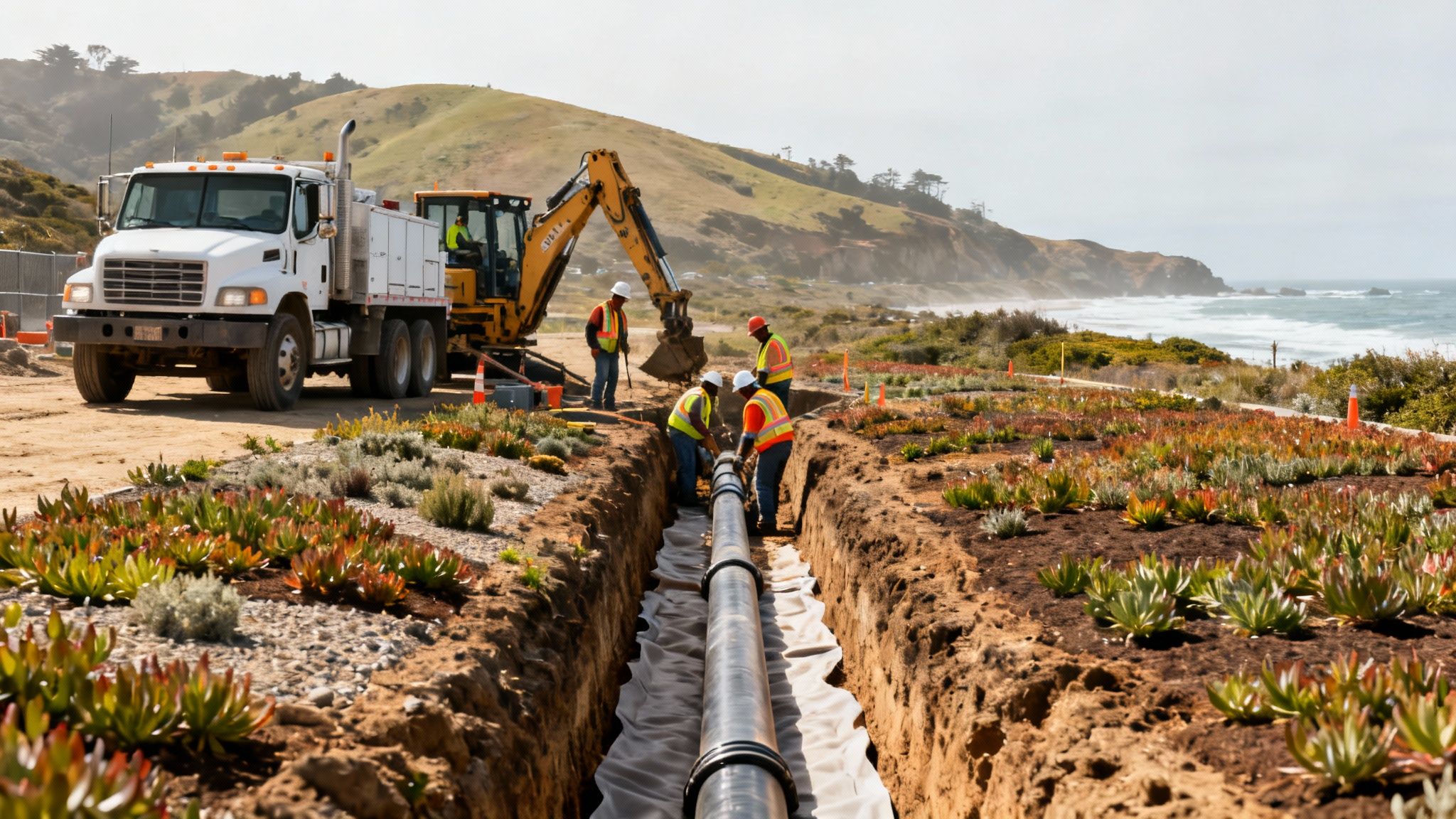
With new rules for burying utility lines on the way, the question for property owners and developers has changed. It’s no longer if you need to act, but how you’re going to get it done.
The move to underground systems is happening faster, and getting ahead of it is the only way to avoid higher costs, contractor shortages, and project delays. You need a partner who knows the area and understands the local rules.
Choosing the right contractor means finding a team that can handle the whole complicated process, from the first survey and digging all the way to fixing the site. For communities on the Central Coast, making this change is very important as our weather gets more unpredictable.
That's where a partner like Coastal Pipeline Inc. comes in. As a PG&E-certified installer, our team is ready for the kind of complex, multi-utility projects that are now becoming common.
Your Full-Scope Undergrounding Partner
A successful undergrounding project is about more than just digging a ditch. It requires the careful coordination of many services—electrical, gas, water, and communications—often laid together in the same trench. Doing this requires advanced, safe digging methods. For example, knowing what hydro excavation is and when to use it is key.
An experienced contractor makes this easier by managing every part of the project.
- Multi-Utility Trenching: Instead of tearing up the ground with a different trench for each utility, a full-scope contractor creates one clean, efficient trench for everything. It saves a lot of time and money.
- Electrical Conduit Placement: We make sure every electrical pipe is installed exactly to code, so it’s ready for the utility company to connect to without any problems.
- Gas Line Coordination: Our crew handles the careful work of installing and coordinating gas lines, following the strict safety rules that PG&E requires.
By handling the entire job, a specialized installer gets rid of the headache of managing different subcontractors and makes sure the whole project runs smoothly.
Clients get code-compliant, future-proof systems that minimize service interruptions, reduce risk, and improve property value—especially in fire-prone or flood-sensitive zones.
Local Expertise for the Central Coast
If you’re planning upgrades in Monterey, Santa Cruz, or San Benito County, having a local expert on your side is a big advantage. Coastal Pipeline Inc. has deep roots here. We know the unique land and the specific rules of our region.
Our job is to help our clients stay ahead of the curve—and the next big storm.
We focus on building systems that not only meet today's rules but are also built to last for many years. When you bury your utilities, you're not just reducing power outages or protecting your property from fire and storms. You're making a smart investment that increases its value for the long run.
To see how we manage these important projects, you can learn more about our complete underground utility services and find out how we can help you get ready for what's coming.
Common Questions About Utility Undergrounding
As California's push to bury power lines grows, property owners and developers are asking what it all means for them. It's one thing to understand why this big change is happening. It's another thing to figure out how to handle your own project. Let's answer some of the most common questions we hear.
A major change is happening. Current market data shows a significant shift: undergrounding of utility lines is accelerating in 2026 as state and local agencies respond to wildfire threats and storm damage by burying vulnerable infrastructure. This is creating a new sense of urgency for property owners, especially along the Central Coast where the weather is becoming more unstable.
How Long Does a Typical Project Take?
The honest answer? It depends. For a home utility undergrounding project, the timeline can change a lot based on a few key things: the size of your property, how many different utilities you’re burying, the type of soil, and how quickly you can get permits from local agencies and PG&E.
For a simple job, it might take a few weeks from the first dig to the final fix. But for a larger, more complex project, it could easily take several months. A good, experienced contractor will give you a more accurate timeline after they have checked out the site.
Who Foots the Bill?
When it comes to new construction, the developer is almost always responsible for installing underground utilities inside the property lines. It's now a standard part of building a new property—a box you have to check to meet local building codes and get your power turned on.
While the utility company, like PG&E, handles the final connection to the main grid, all the lines and pipes on your actual property are paid for by the developer.
Property owners, developers, and municipalities are under increasing pressure to move electrical, water, gas, and communication lines underground—not only for safety but also to comply with new infrastructure resilience standards.
Is It Better to Bury Everything at Once?
Yes, absolutely. It is much more efficient and cheaper to bury all your utilities—electrical, internet, water, gas—in a single "joint trench" at the same time. This approach is just smart. It reduces the mess on your property by doing all the digging and fixing in one go.
Waiting to act means higher costs and fewer available contractors, especially as PG&E and other agencies issue more undergrounding mandates. Homeowners who delay trenching or utility tie-ins may face construction slowdowns and insurance challenges. Planning a multi-utility project from the start is the best way to prepare your property for the future while saving a lot of money and hassle.
If you’re planning upgrades in Monterey, Santa Cruz, or San Benito County, talk to Coastal Pipeline about underground utility trenching before mandates increase. Staying ahead of the curve—and the next storm—is the smartest move you can make.
At Coastal Pipeline Inc., we are a PG&E-certified installer with deep expertise in multi-utility trenching, electrical conduit placement, and gas line coordination. We handle full-scope underground projects for residential, municipal, and commercial clients, delivering code-compliant, future-proof systems that reduce risk and improve property value. Get in touch with us to discuss your project.