When a sewer problem hits, the first question on everyone's mind is the same: Is this my problem or the city’s?
It’s a big question, and the answer is usually simpler than you might think. As a property owner, you are responsible for the section of sewer pipe that runs from your building to the public sewer main, which is usually under the street. This pipe is called the private lateral. If there's a clog, a break, or a backup anywhere along that private line, you are the one responsible for fixing it.
Understanding Your Sewer Line Responsibility
It’s a tough lesson many homeowners and even developers learn the hard way. Finding out that a major sewer issue is your problem, not the city's, can be a real shock. This common mix-up can mess up your budget, delay emergency repairs, or even stop a new building project. Learning who is responsible for what is the first step to handling sewer line problems with confidence.
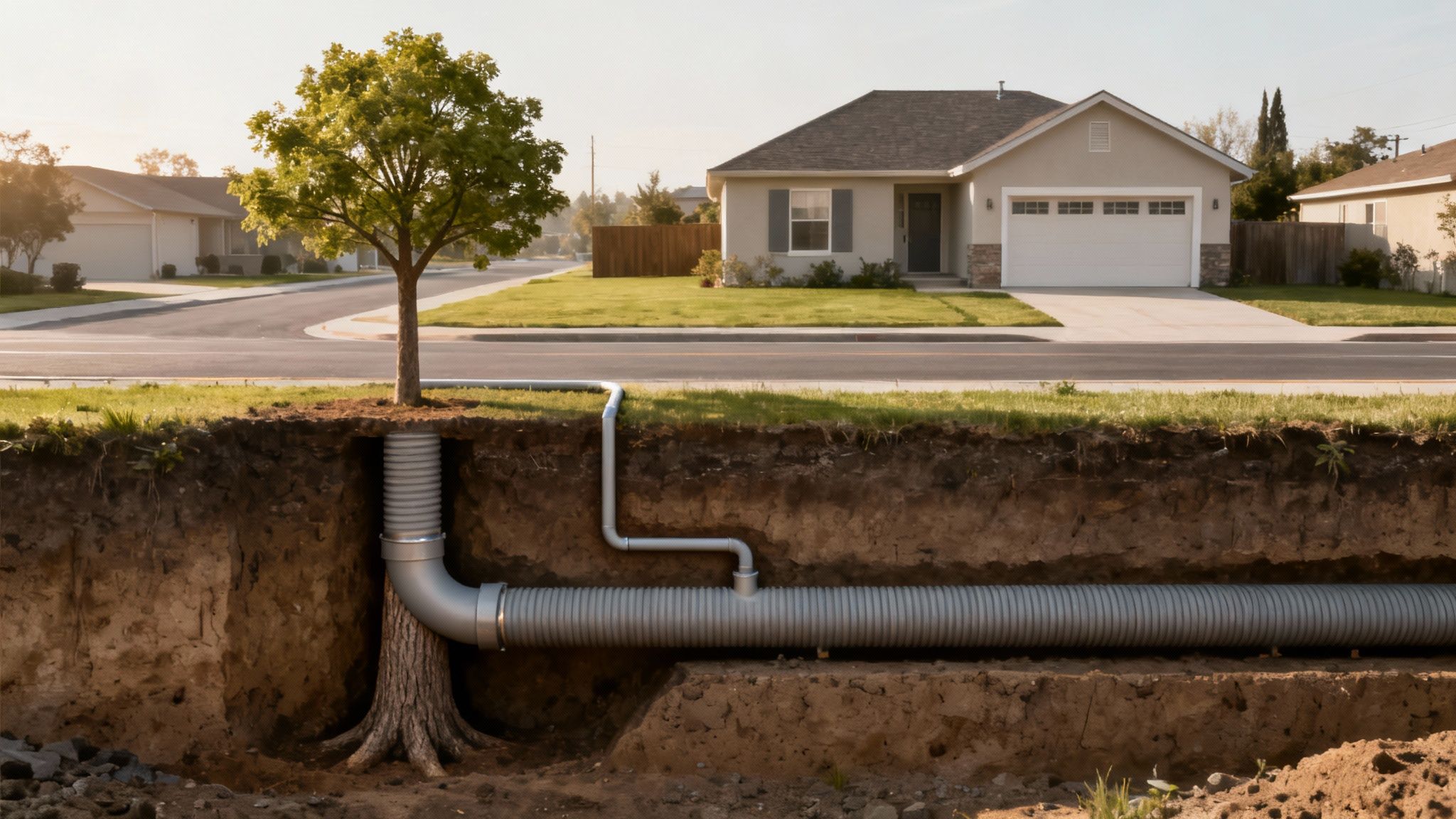
Here’s a helpful way to think about it: your sewer system is like a tree. The huge public sewer main under the street is the trunk, which the city owns and takes care of. The pipe connecting your property to that main is like a large branch. Just like a branch on a tree in your own yard, you own it and you're responsible for it.
Quick Guide to Sewer Line Ownership
To make it even clearer, here’s a simple chart of who is usually responsible for different parts of the sewer system. This will help you quickly see where your ownership begins and ends.
| Sewer System Component | Typical Responsible Party | What This Means For You |
|---|---|---|
| Pipes Inside Your Home | Property Owner | Any clog or leak under your roof is your job to fix. |
| Private Sewer Lateral | Property Owner | The line from your house to the city main, even the part under the sidewalk or street. |
| Connection Point (Tap) | Varies by City | This is where it can get tricky; some cities cover it, but others don't. |
| Public Sewer Main | City or Municipality | The large, shared pipe, usually under the street, is the city's responsibility. |
Understanding this table is key. Knowing that you're responsible for that private lateral pipe lets you act fast instead of waiting for a city crew that might not be able to help.
The Private Lateral: Your Responsibility
Your private sewer lateral is the pipe that runs from your home’s foundation all the way to where it connects with the city's main line. That connection point, often called the "tap," is where your ownership ends.
This means you are responsible for fixing any issues that happen on your side of that connection, including:
- Blockages from grease, "flushable" wipes, or other things that go down the drain.
- Damage caused by tree roots from trees growing on your property.
- Cracks or collapses from old, worn-out pipes or shifting soil under your yard.
If you have a backup in your basement or every drain in the house is running slow, the problem is almost always in your private lateral. It's a key part of your property that, like other aging utility lines, will eventually need to be fixed or replaced.
The key takeaway is simple: if the problem is between your house and the main city sewer, it's your responsibility. This knowledge helps you to act quickly and confidently instead of waiting for a city crew that may not be able to help.
As a NASSCO PACP-certified contractor, our team at Coastal Pipeline has the technical knowledge to find out exactly what's going on in your private system. We help our clients understand where their responsibility ends and the city's begins. We can guide you through both system check-ups and any coordination needed with the city.
If you’re unsure where your property’s responsibility ends and the city’s begins, Coastal Pipeline offers certified video inspections and detailed assessments to help you plan the right repair—or avoid one altogether.
Recognizing the Early Warning Signs of Trouble
Big sewer line problems almost never happen overnight. Long before you have an emergency—like a flooded basement or sewage backing up into your showers—your plumbing will give you small hints that something is wrong. As a property owner, learning to spot these early warnings is your best defense against a small issue turning into a huge mess.
Think of your drains as local roads and your main sewer line as the highway. A single slow drain is like a small traffic jam on a side street; it’s a local problem. But when you have slow drains all over the house, that’s a sign of a major pile-up on the highway, and it’s affecting everyone.
Unusual Noises and Smells
Often, the very first clues are things you hear and smell. Your plumbing should be pretty quiet and shouldn't make your house smell bad.
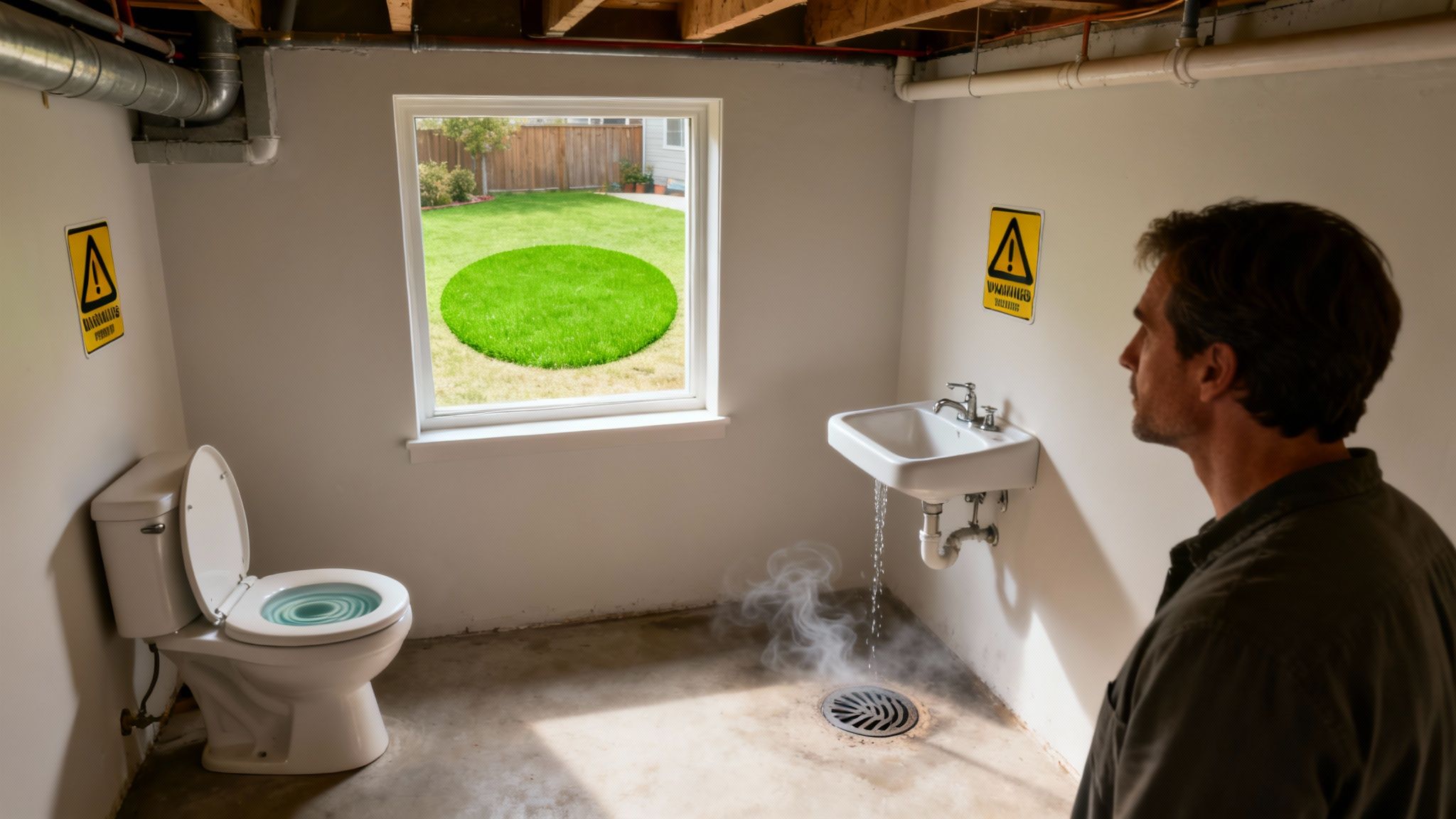
- Gurgling Toilets and Drains: Have you ever flushed a toilet and heard a strange gurgling sound coming from the shower drain? That's a classic sign of trapped air. When wastewater struggles to push past a blockage in the sewer line, it creates a vacuum that pulls air through your drains, causing that gurgling sound.
- Foul Odors: A constant sewer gas smell inside your home or in your yard is a big red flag. This means that waste and bad smells are escaping from the pipe somewhere, likely through a crack or a bad joint, before they reach the city main.
These sounds and smells are your plumbing’s early warning system. Ignoring them is like putting a piece of tape over your car's check engine light—you’re just asking for a bigger, more expensive problem later on.
Visible and Physical Signs
Besides the sounds and smells, you'll eventually see physical proof that something is seriously wrong with your main sewer line.
A single slow drain is one thing, but if the kitchen sink, bathtub, and toilet all seem to be draining very slowly, the issue isn't with just one of them. The real problem is almost certainly a blockage in the main sewer lateral, which affects every drain in the building.
One of the most serious signs is when using one fixture causes a backup in another. If running your washing machine sends dirty water bubbling up into a ground-floor shower or toilet, that wastewater has nowhere to go. It's being forced back into your home through the lowest possible exit.
This is a clear signal the main line is blocked. Another sneaky sign can be a patch of grass in your yard that’s suddenly much greener than the rest of the lawn. It might look healthy, but it’s often being fertilized from below by a leaking sewer pipe. To find out for sure, professional sewer leak detection services can use special tools to find the exact source of the leak without having to tear up your yard.
Catching these signs early is key. The cost difference between clearing a simple clog and digging up your yard to repair a collapsed pipe is huge. When you notice these symptoms, your best move is to get a professional inspection right away, before a small problem gets much worse.
What Causes Sewer Pipes to Fail
So you’ve spotted the warning signs, and now the big question is: what’s actually going on down there? Sewer pipes are tough and made to last for many years, but they’re not perfect. A few powerful forces, both natural and man-made, are always working against them.
Knowing what causes sewer pipes to fail is the first step in understanding the risks your property might face.
One of the most common causes is completely natural: tree roots. Trees are always searching for water, and your sewer line is like an underground source of water and nutrients for them. Tiny roots can sneak into the pipe through the smallest cracks or loose joints. Once inside, they grow and spread. Over time, these roots create a thick web that catches waste, causing a total blockage or even splitting the pipe open.
The Impact of Age and Environment
Just like everything else in your home, sewer pipes don't last forever. The material they're made from often tells you a lot about their biggest weaknesses. Many older homes still have cast iron or clay pipes, which get weaker over the years.
- Corrosion and Wear: Cast iron pipes, common in homes built before the 1980s, are likely to rust. After decades underground, this rust wears down the pipe walls, leading to cracks, breaks, and, eventually, a total collapse.
- Shifting Soil: The ground under your property isn't still. Soil settling, heavy rains, or even nearby construction can cause the earth to shift. This movement puts a lot of pressure on pipes, causing them to crack, move out of line at the joints, or develop a "belly" where waste sits instead of flowing away.
The problem of aging pipes is a huge challenge for property owners everywhere. Many sewer lines are simply past their expected lifespan. A 2023 study found that about 20% of water and sewer mains in the U.S. and Canada are past their useful life, leading to roughly 260,000 pipe failures each year.
Man-Made Blockages and Buildup
While age and environment play a big role, what we send down the drain has a direct impact on our pipes' health. Many sewer line issues are caused by things we shouldn’t be putting down our drains. These clogs put a serious strain on the entire system and lead to messy backups.
A sewer pipe is designed to handle only two things: human waste and toilet paper. Anything else, no matter how harmless it seems, can cause a blockage.
This includes everyday stuff that builds up over time. Pouring cooking grease down the sink is a classic mistake. As it cools, the grease turns solid and sticks to the pipe walls. This makes the pipe narrower and traps other waste that comes along.
Besides tree roots and old pipes, this kind of household waste can form huge blockages. You can learn more about understanding fatbergs and their impact to see how simple kitchen waste can create city-wide problems.
So-called "flushable" wipes are another major problem—they just don't break down like toilet paper. The combination of these issues shows how aging sewer lines are driving a construction boom as property owners are forced to deal with these failures. Once you understand the real causes, you can stop just reacting to problems and start protecting your property.
How We Pinpoint the Exact Sewer Problem
When it comes to your sewer line, guessing is the most expensive mistake you can make. A gurgling drain or a wet spot on your lawn are just symptoms. Trying to fix them without knowing the real cause is a recipe for wasted money and more problems.
Luckily, we can now take a direct look inside your pipes without digging a single hole.
The key is a professional video camera inspection. This isn't just a helpful tool; it's the only way to be absolutely sure what’s going on down there. We feed a special, high-definition camera on a flexible rod deep into your sewer line. What the camera sees is shown on a screen, giving us a clear, up-close view of your pipe's condition from the inside.
This detailed look leaves nothing to guess about. We can spot tiny cracks before they become major breaks, see where heavy soil is crushing a pipe, find the exact point where tree roots are breaking in, and locate the source of a stubborn clog. It’s like giving your plumbing a complete check-up from the inside.
The Gold Standard: NASSCO PACP Certification
Having a fancy camera is one thing, but knowing how to understand what you’re seeing is what really matters. This is where NASSCO PACP certification is so important. Think of the Pipeline Assessment and Certification Program (PACP) as the official language for checking sewer pipes across North America. It’s a tough training that makes sure every problem is noted and classified the same way, every time.
A PACP-certified technician can:
- Systematically find defects using a standard coding system, leaving no room for opinion.
- Grade the seriousness of each problem, from a small issue to a major failure needing immediate attention.
- Create clear, consistent reports that you, your insurance company, or city officials can easily understand and trust.
This certification is your guarantee that the diagnosis is based on industry standards, not just one person's opinion. It’s the difference between hearing "looks like you have a root problem" and getting a detailed report stating, "There is a 2-inch root intrusion causing a moderate structural crack at 75 feet from the cleanout."
A proper diagnosis is the foundation of any successful sewer repair. It eliminates costly guesswork and ensures the solution—whether it's high-pressure cleaning, pipe lining, or digging—is the right one for the job, saving you both time and money.
Why an Expert Diagnosis Is Non-Negotiable
Without a camera inspection, any proposed fix is just a guess. A contractor might suggest a full-line replacement when a powerful cleaning would have solved the problem. Worse, they might clear a clog without ever realizing the pipe itself is broken, which means you'll be calling them back in a few months for the same issue.
A certified inspection provides the blueprint for an effective, long-lasting repair. It confirms the "what" and, just as importantly, the "where." Pinpointing the exact location of the damage is necessary for modern trenchless repairs and is a critical first step to safely locate all underground utilities before any digging starts.
As a NASSCO PACP-certified contractor, Coastal Pipeline brings that special expertise to every job. We don't just look for problems; we provide the clear, documented proof you need to move forward with confidence. A precise diagnosis ensures you only pay for the work you actually need, turning a major headache into a clear, manageable plan.
Comparing Your Sewer Repair and Replacement Options
Once you have a clear diagnosis from a professional video inspection, it’s time to talk about solutions. When it comes to sewer line problems, property owners usually have two different paths: the old-school method of digging a trench or the modern, less-messy methods that work from the inside.
Understanding the real-world impact of each is a big deal. The choice you make directly affects your budget, how long the project takes, and how much your property (and your life) gets disturbed. Let's walk through these options so you can have a confident conversation with your contractor.
This decision tree gives you a simple look at the path from first suspecting a problem to getting it fixed.
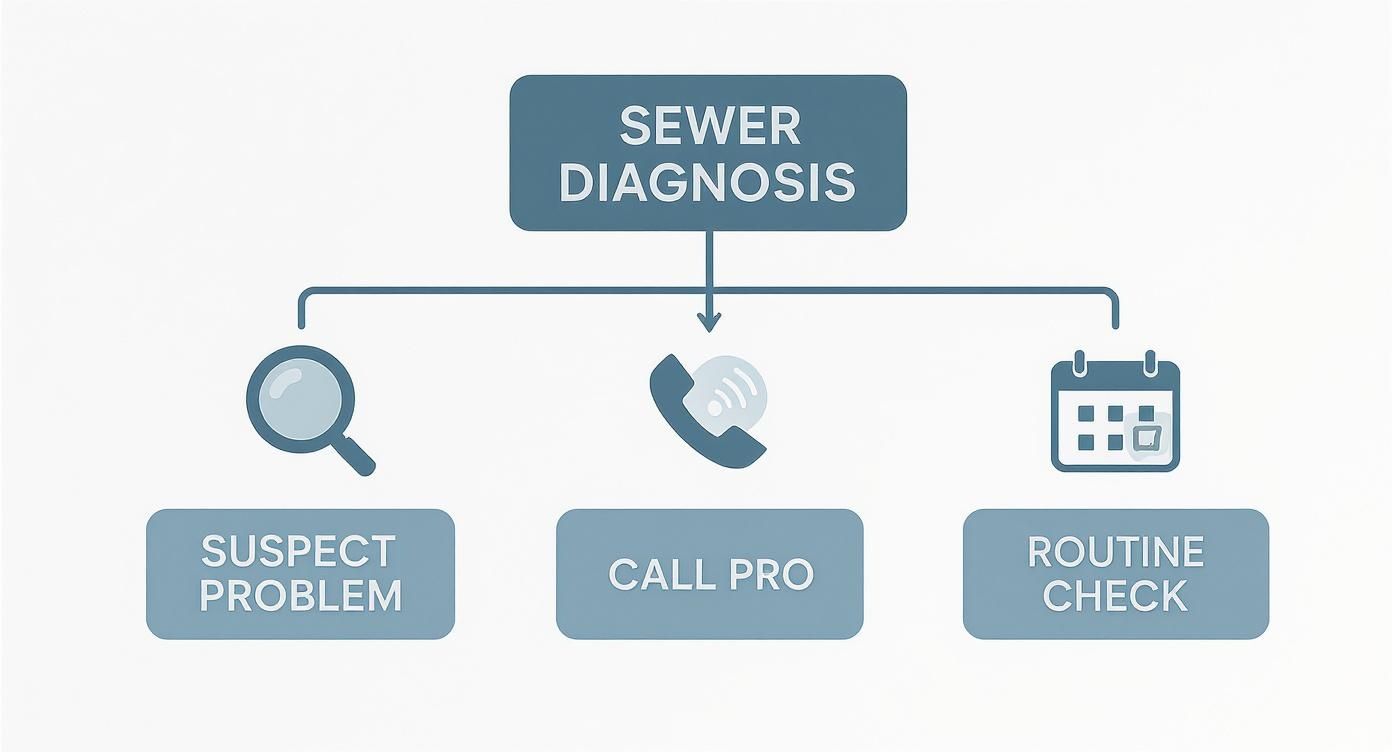
As you can see, the first two steps are always the same: spot a possible issue, then call a professional to get an accurate diagnosis. Only then can you choose the right repair plan.
The Traditional Method: Open Cut Excavation
For many years, there was only one way to fix a buried sewer pipe: dig it up. This method, known as open cut or trenching, is exactly what it sounds like. A crew digs a large trench along the entire length of the damaged sewer line, exposing the pipe so it can be physically repaired or replaced.
While it gets the job done, this method is a major disturbance. You can expect:
- Serious Property Impact: A long, deep trench will run through your yard, tearing up lawns, gardens, and anything else in its path—including driveways or patios.
- Longer Project Times: The whole process of digging, replacing the pipe, filling the trench, and fixing your landscape can easily take several days, sometimes longer.
- Hidden Restoration Costs: The final bill isn't just for the plumbing work. You also have to budget for rebuilding your landscaping, repairing concrete, and getting your property back to how it was before.
Traditional digging is still the best option for completely collapsed lines or other complex situations where no other method will work. But because of the total cost and mess, it’s often the last choice when a less disruptive method can be used.
The Modern Solution: Trenchless Technology
Thankfully, technology has given us a much cleaner option. Trenchless sewer repair is a modern way to fix pipes from the inside out, which means little to no digging is needed. Instead of a huge trench, the entire job is often done through one or two small access points.
There are two main types of trenchless repair we use:
- Pipe Lining (CIPP): We insert a flexible tube coated in a special resin directly into the damaged pipe. It’s then inflated, pressing the liner firmly against the old pipe's walls. The resin hardens, creating a brand new, seamless, and super-strong pipe right inside the old one.
- Pipe Bursting: This method is for pipes that are too damaged for lining. A new pipe is pulled through the old one, and a "bursting head" at the front breaks the old pipe apart, pushing the pieces into the surrounding soil. This replaces the line completely without having to dig it up.
The move toward less disruptive methods is growing. The global market for sewer services was valued at around $3.8 billion in 2023 and is expected to hit $4.5 billion by 2028. This growth is driven by aging pipes and the popularity of trenchless technologies.
Trenchless vs. Traditional Sewer Repair Methods
This side-by-side look at the two main sewer repair methods can help you decide which is right for your property.
| Factor | Trenchless Repair (e.g., Pipe Lining) | Traditional Repair (Open Cut) |
|---|---|---|
| Property Disruption | Minimal. Usually requires only 1-2 small access holes. Saves lawns, driveways, and landscaping. | High. A large trench is dug across the property, destroying everything in its path. |
| Project Timeline | Fast. Most jobs are completed in one day. | Slow. Can take several days to a week or more, including digging and restoration. |
| Total Cost | Often lower when you include the cost of fixing your landscape and driveway. | The first quote may seem lower, but total costs go up with restoration expenses. |
| Durability | Very high. Cured-in-place pipe (CIPP) liners are seamless, root-proof, and last 50+ years. | High. New PVC or ABS pipes are strong, but joints can be a weak spot for roots over time. |
| Best For | Root intrusion, cracks, misaligned pipes, and saving established landscapes, driveways, or patios. | Completely collapsed pipes, severe sags (bellies), or situations needing a change in pipe slope. |
In the end, both methods result in a working sewer line. The best choice depends on your pipe's condition, your property's layout, and what is most important to you regarding time, cost, and convenience.
Making the Right Choice for Your Property
So, which way should you go? It really comes down to your specific situation. Trenchless repair is almost always faster, cleaner, and can even be cheaper once you add up the expense of putting your yard back together. It's the perfect solution for saving mature trees, custom patios, and your peace of mind.
To get a better handle on the financial side of things, take a look at our guide on sewer line replacement costs.
At the end of the day, a proper NASSCO PACP-certified video inspection will tell us which options are truly possible for your property. A detailed diagnosis from an experienced contractor like Coastal Pipeline gives you the facts you need to weigh the costs and benefits of each method, helping you make the best investment in your home.
Proactive Steps to Prevent Future Sewer Disasters
The old saying, “an ounce of prevention is worth a pound of cure,” is especially true for sewer lines. The absolute best way to deal with a sewer problem is to keep it from happening in the first place.
While you can’t do much about pipes getting older or the ground shifting, a little forward thinking can save you from a world of messy, expensive problems. It’s all about switching your mindset from reacting to a disaster to staying in control of your property’s health.
Protecting Your Pipes with Daily Habits
Believe it or not, your everyday habits have a huge impact on your plumbing's lifespan. A few small, consistent changes can stop the gunk and buildup that lead to those nightmare clogs.
-
Never Pour Grease Down the Sink: Cooking grease, fats, and oils may seem harmless when they’re hot liquid, but they turn solid in your pipes as they cool. This creates a sticky coating that grabs onto other waste, forming thick clogs that are hard to clear.
-
Only Flush Toilet Paper: This is a big one. Even wipes that say they are "flushable" simply don't break down the way toilet paper does. They are one of the main causes of clogs in both home pipes and city sewer mains.
-
Use Drain Strainers: A simple mesh strainer in your kitchen sink and shower is a great tool. It’s a very cheap and easy way to catch hair, food scraps, and other things before they can get into your plumbing system.
It's also worth noting that well-maintained plumbing inside your home, like working Basement Drains, is key. Keeping these clear helps prevent water from backing up, which can be both a sign of and a cause of larger sewer line issues.
Strategic Maintenance for Long-Term Peace of Mind
Besides what you do every day, some planned maintenance can catch problems before they get out of control. This is especially important if you live in an older home or have large, mature trees anywhere near your sewer line.
Think of a professional sewer inspection not as a cost, but as a smart investment in your property. It gives you the clear, factual information you need to plan ahead and avoid being surprised by a sudden, expensive failure.
One of the smartest moves any homeowner can make is to schedule a video camera inspection every few years. This lets a certified technician put a camera through your pipes and see their exact condition from the inside. We can spot tiny cracks, small root problems, or early clogs long before they cause a sewage backup in your home. It provides a clear picture of your system’s health.
If you have any doubts about your pipes' condition—or even where your line ends and the city's begins—Coastal Pipeline is here to help. Our NASSCO PACP-certified video inspections provide a detailed, accurate assessment, giving you the clarity to plan the right repair or confirm that you don't need one at all. Let us help you get a clear picture of what’s happening underground.
Got Sewer Line Questions? We've Got Answers.
Even after you get the basics down, it’s normal to have more specific questions about your sewer system. We hear many of the same concerns from property owners, so let's clear up some of the most common ones.
Will My Homeowners Insurance Pay for Sewer Line Repairs?
This is probably the biggest question—and point of confusion—we hear. The short answer is, probably not. A standard homeowners insurance policy usually does not cover repairs to the sewer line itself, especially if the problem is from old age, normal wear and tear, or tree roots.
The good news? Many insurance companies now offer a special add-on, often called "service line coverage." It's made specifically for these situations and helps cover the high cost of fixing or replacing the underground pipes on your property. Your best bet is to look at your policy or call your agent to see if you have this important protection.
How Long Is My Sewer Line Supposed to Last?
The lifespan of your sewer pipe really depends on what it’s made of. The materials used in construction have changed a lot over the years, and each has its own timeline.
- Clay Pipes: If your home was built before the 1970s, you likely have clay pipes. They can last 50-60 years, but their joints are common spots for cracks and tree roots.
- Cast Iron Pipes: Common in mid-century homes, these are tough and can last 75-100 years. The downside? They eventually rust from the inside.
- PVC Pipes: This is the modern standard for a reason. PVC is strong, won't rust, and can easily last for over 100 years if it was installed correctly.
If you're in an older home, don't just go by the age of the house. A professional video inspection is the only way to know what's really going on inside your pipes.
I Think I Have a Sewer Problem. What's the First Thing I Should Do?
If you see the classic signs of a sewer backup—multiple drains are slow, or worse, water is coming up in a shower or floor drain—the first thing to do is stop using all water. Immediately. Don't flush toilets, run sinks, use the dishwasher, or do laundry. Every drop you add to the system will make the problem worse.
Your second step? Call a certified professional. An expert can figure out what's wrong and, just as importantly, where the problem is—on your property or the city's main line. They'll give you the right plan to protect your home from more damage.
Trying to fix a major sewer line issue yourself is a bad idea. You're dealing with special equipment, possible contact with raw sewage, and local plumbing codes. This is one job you should always leave to licensed and insured professionals.
If you’re unsure where your property’s responsibility ends and the city’s begins, Coastal Pipeline offers certified video inspections and detailed assessments to help you plan the right repair—or avoid one altogether. Learn more about our sewer line diagnostics and schedule a consultation today.