An asphalt resurfacing contractor is a specialist who gives old pavement a new life. Instead of tearing out and replacing the entire surface, which is expensive, they apply a fresh layer of asphalt on top. It's like putting a new, strong case on a scratched-up phone. It makes it look new again and adds a tough layer of protection for less money.
What Is Asphalt Resurfacing and When Is It Needed
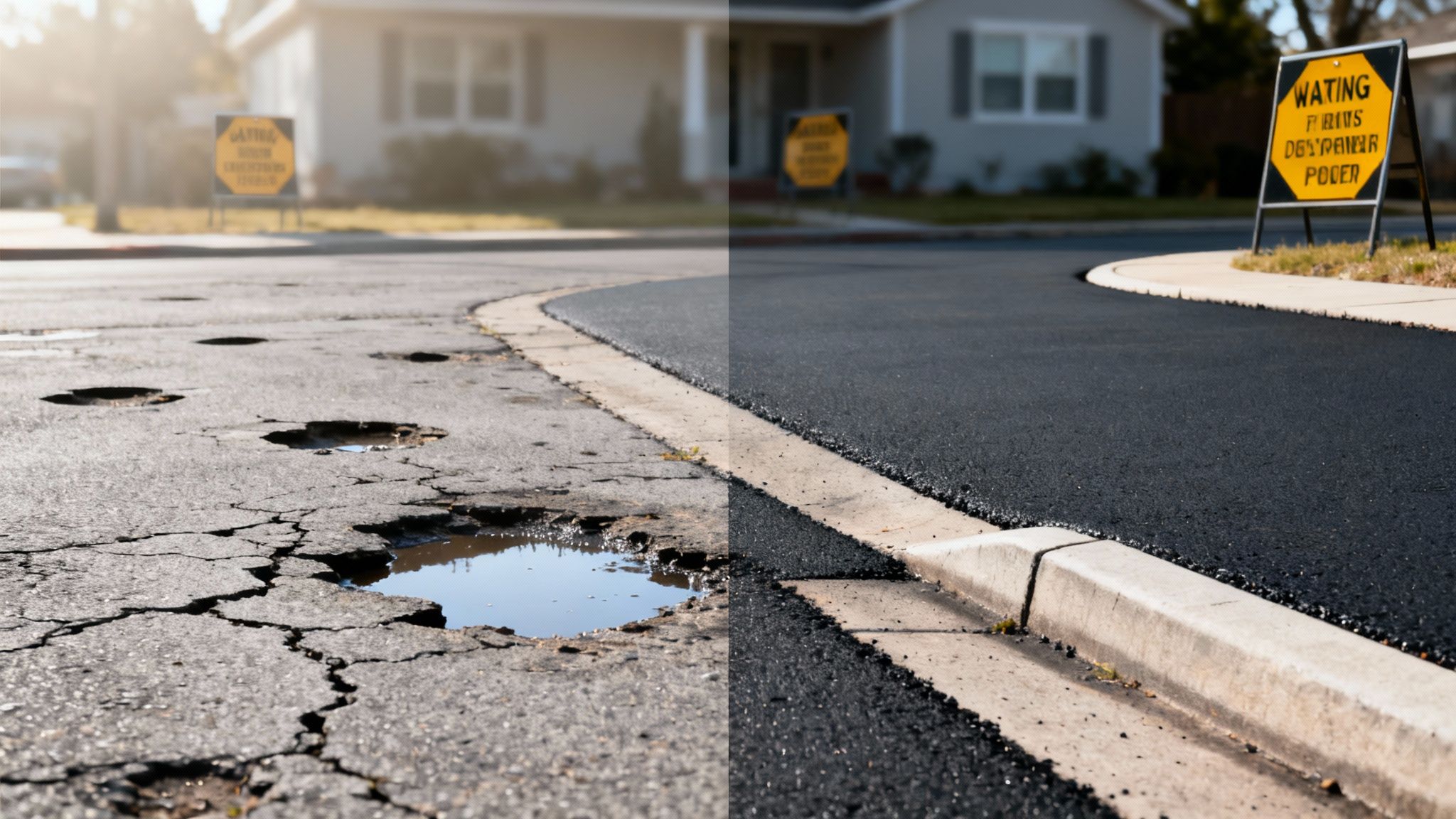
Asphalt driveways, roads, and parking lots get worn down by traffic, sun, and rain. Over time, they start to show their age. Asphalt resurfacing, also called an "overlay," is the perfect middle-ground fix. The process involves putting a new layer of hot asphalt, usually 1.5 to 2 inches thick, right on top of the old, prepared surface.
This is more than just a quick paint job; it's a real structural update. Resurfacing works great when the pavement's foundation is still strong, but the top layer is starting to fail. A good contractor can make a worn-out lot look and work like new.
Telltale Signs You Need Resurfacing
So, how do you know it's time to call a professional? Your pavement will give you some clear signals. If you ignore them, a small repair can turn into a huge, expensive project.
Look for these key signs that your asphalt needs an overlay:
- Widespread Cracking: A few small cracks are normal. But when you see a web of cracks that looks like a lizard's back, that’s a big warning sign. This "alligator cracking" means the top layer is failing.
- Faded, Gray Color: New asphalt is a deep, solid black. Over time, sunlight bleaches the surface, turning it a faded gray. This isn't just about looks. It means the binders that hold the asphalt together are breaking down, making the pavement weak.
- Growing Potholes: If you see a few small potholes, it's time to act. It means water is getting under the surface and causing damage from below. An overlay can stop them before they become deep, dangerous holes.
- Standing Water: Do you see puddles in your parking lot or driveway long after it rains? You probably have dips or low spots. An overlay levels the whole surface, fixing the slope so water drains away properly.
Think of an asphalt overlay as a smart investment. It fixes surface problems before they can damage the foundation. A damaged foundation would require a much more expensive full replacement.
Catching these problems early is the key to saving money. The longer you wait, the less likely it is that a simple resurfacing will be enough. For example, knowing how to repair alligator cracks in asphalt is often the first step before a successful overlay. Having an expert contractor check the situation can save you a lot of money later on.
When you hire an asphalt resurfacing contractor, you get more than just a crew to lay down new pavement. You are hiring a specialist with many solutions to protect, repair, and restore your asphalt. Think of them as a doctor for your driveway or parking lot. They figure out the problem and give you the right treatment to fix it.
Their services are not one-size-fits-all. The right solution depends on the condition of your pavement, from minor wear and tear to serious structural problems. Learning about these services will help you understand why a contractor suggests one option over another.
Asphalt Mill and Overlay: The Best Resurfacing Method
The most common and effective way to resurface is the asphalt mill and overlay. This is not just about covering up old problems. It is a careful, two-step process that creates a strong, long-lasting surface.
First, the crew uses a large milling machine to grind off the top 1 to 3 inches of the old, damaged asphalt. This step is very important. It removes cracks, ruts, and other problems. It also creates a rough surface for the new asphalt to stick to.
After milling, a sticky “tack coat” is sprayed on, which acts like a powerful glue. Finally, a new layer of hot asphalt is paved on top and packed down with heavy rollers. This leaves you with a smooth, strong, and brand-new surface.
An asphalt overlay is the best way to resurface. It fixes the source of the damage by removing it before adding new material. This makes sure the new layer won't just cover up the old problems.
This method basically resets your pavement's life. It restores its look and safety without the high cost of a full replacement.
Preventative Treatments That Protect Your Investment
A smart asphalt contractor knows that preventing problems is better than fixing them. Taking care of your asphalt is the best way to avoid expensive repairs later. The most common preventative service is sealcoating.
Think of sealcoating as sunscreen for your asphalt. It’s a thin, protective liquid layer applied over the surface to shield it from things that cause damage:
- UV Rays: The sun's rays break down the binder in asphalt, making it brittle and easy to crack.
- Water: Sealcoating fills tiny holes in the surface, stopping water from getting in and causing damage, especially when it freezes and thaws.
- Oil and Gas Spills: It creates a barrier that resists damage from car fluids, which can soften and eat away at the asphalt.
Applying a fresh sealcoat every 3 to 5 years can make a big difference in how long your asphalt lasts, while keeping it looking black and new. It’s a small cost that saves you a lot of money in the long run.
Full-Depth Repairs: The Surgical Solution
Sometimes, the damage is deeper than just the surface. If the foundation under your asphalt has failed in one spot, an overlay alone won't fix the real problem. This is where a full-depth repair is needed.
It’s like a dentist filling a cavity. The dentist removes only the bad part of the tooth and fills it. An asphalt contractor does the same thing. They cut out the bad section of asphalt all the way down to the base, fix the foundation underneath, and then rebuild the layers with new material.
This focused approach is perfect for fixing specific problems like deep potholes or bad "alligator" cracking without replacing the whole parking lot. It is a key service that any good contractor will offer, and it’s often a necessary first step before a full overlay can even start.
To help you keep track of these options, here's a quick summary of common maintenance services.
Asphalt Maintenance Services at a Glance
| Service | Best For | Primary Goal | Lifespan Extension |
|---|---|---|---|
| Sealcoating | Pavement in good condition | Protection from UV, water, and oil | 3-5 years |
| Crack Sealing | Single, straight cracks | Preventing water from getting in | 1-3 years |
| Full-Depth Repair | Deep potholes, alligator cracking | Fixing foundation problems | Permanent (for the repaired spot) |
| Mill and Overlay | Widespread surface damage | Creating a brand new surface | 10-15 years |
Understanding these different services is key to making a good decision. The demand for these services is part of a huge global industry. The global asphalt market was recently valued at about USD 56.2 billion and is still growing. For property owners, learning about the full range of professional asphalt paving services in Monterey and Santa Cruz County is the first step toward a successful project.
The Asphalt Resurfacing Process From Start to Finish
Have you ever wondered what happens when an asphalt resurfacing contractor shows up to a job? It's a carefully planned process that is more than just pouring down new blacktop. Every step is done with care to give you a strong, smooth surface that will last for years.
Knowing how the pros do it helps you understand what to expect. More importantly, it shows why taking shortcuts can ruin your investment. Let's look at the whole process, from the first step to the final finish.
Stage 1: The Initial Preparation and Cleaning
Before any new asphalt is used, the old surface needs to be cleaned very well. This is one of the most important stages of the whole project. A crew will use power brooms and high-pressure air blowers to remove all dirt, gravel, and plants.
Think of it like painting a house. You would never paint over dirty, peeling walls and expect it to look good. The same idea applies here. The new asphalt will only stick correctly to a perfectly clean surface. Any leftover dirt creates a weak spot that will fail later.
This simple flowchart helps show how resurfacing fits with other common asphalt services.
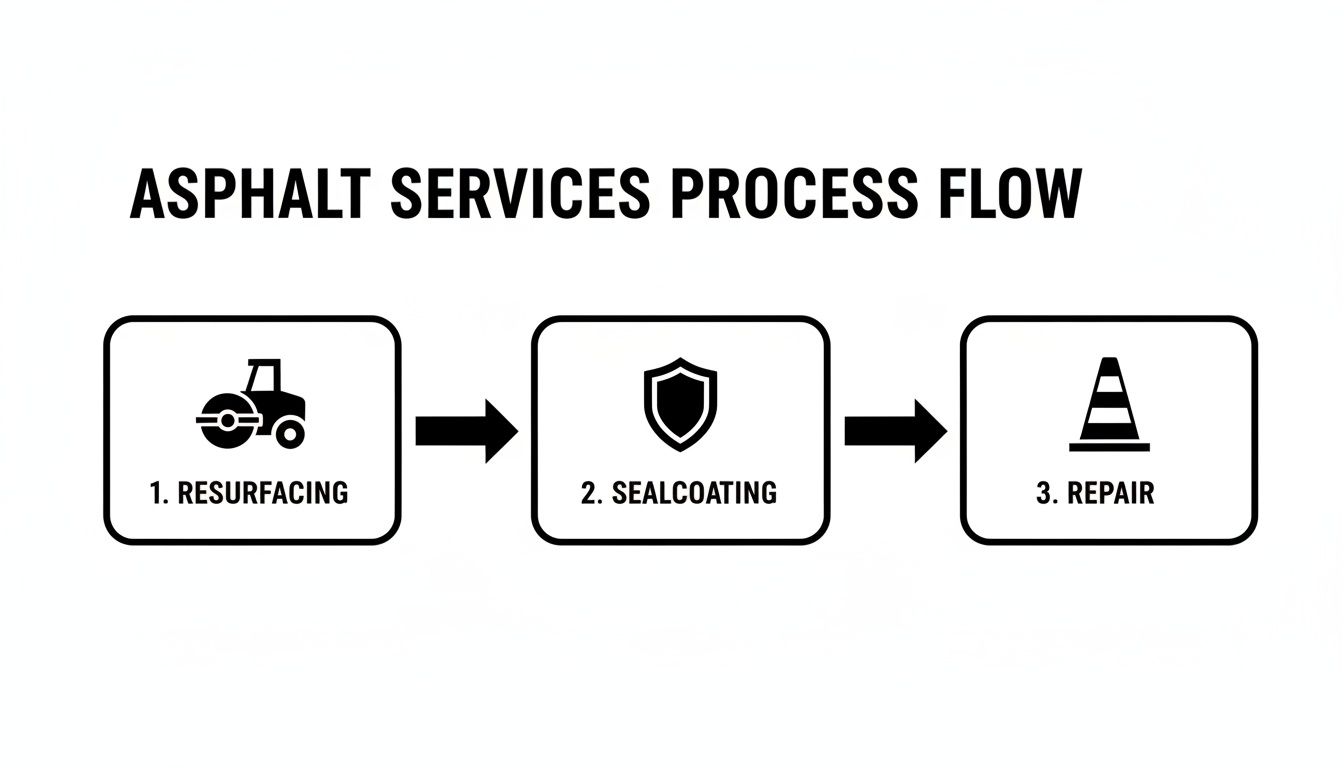
As you can see, resurfacing, sealcoating, and repair are all tools a contractor uses to keep pavement in good shape, but each one has a different purpose.
Stage 2: Milling and Base Repair
Once the area is clean, the next step is often asphalt milling. A large milling machine grinds away the top layer of old, damaged pavement, usually removing 1.5 to 3 inches. This isn't just for looks. It gets rid of surface problems like shallow cracks and ruts. It also creates a perfect, rough base for the new layer to stick to.
During this stage, if the crew finds deeper problems like soft spots or "alligator" cracking, they will stop and do a full-depth repair. This means cutting out the bad section down to the base, rebuilding it with new gravel, and packing it down until it's solid. Skipping this step is a bad idea, as the same problems will quickly appear in your new surface.
Stage 3: Applying the Tack Coat
Once the milling and repairs are done, it's time for the tack coat. This is a thin, hot, and very sticky layer of liquid asphalt that acts like a powerful glue. Its only job is to connect the old, prepared base with the new layer of asphalt.
Without a proper tack coat, the new asphalt can't stick correctly. It can shift or slide under the weight of traffic, a problem known as slippage. This step is a must-have for a strong, long-lasting pavement.
A good contractor will make sure this glue is spread evenly over every inch of the surface. It’s what gives the finished pavement its strength.
Stage 4: Laying and Compacting New Asphalt
Now for the main event: paving. A paving machine moves across the site, laying down a fresh, steaming layer of hot asphalt at a specific thickness and temperature. The asphalt mix is a special recipe, designed for the local weather and the type of traffic it will see. The crew moves quickly to spread the hot material before it cools.
Right behind the paver are heavy vibratory rollers. These huge machines are the key to a strong finish. They press down the hot asphalt, squeezing all the pieces together and removing any air pockets. This packing process is what creates strength and density. Most jobs need several passes with different rollers to reach the right density, which is usually around 95% of its maximum.
A quality job depends on doing every step perfectly. For big projects, a contractor's skill in professional grading and paving is what makes it successful. This ensures good water drainage and a stable foundation long before the first truck of asphalt shows up. When all these steps come together, you get a surface built to last for years.
How Much Does Asphalt Resurfacing Cost?
Figuring out the cost of an asphalt resurfacing project can feel tricky. The good news is, it's not a complete mystery. While every job is different, the price an asphalt resurfacing contractor gives you is based on a few key factors. Once you understand them, you can set a realistic budget and compare quotes like a pro.
Think of it this way: when you paint a room, you don't just ask, "How much for paint?" The real cost depends on the room's size, the paint quality, and if you need to fix holes in the wall first. Asphalt is the same. The final price is based on materials, labor, and the condition of your property.
Key Factors That Influence the Final Price
When a contractor gives you a quote, they are adding up the costs needed for a job that lasts. Be careful of the cheapest price. It often means someone is cutting corners, either on prep work or the quality of materials.
Here’s what really affects the price:
- Total Project Size: This is the biggest factor. The total square footage of the area is the main cost driver. A huge parking lot will cost more overall than a small driveway, but it will usually have a lower cost per square foot because of the large scale.
- Condition of the Existing Pavement: Is your current asphalt in bad shape? If you have deep potholes, lots of "alligator" cracking, or soft spots, that all has to be fixed before the new layer goes down. This repair work adds to labor and material costs.
- Thickness of the New Asphalt Layer: For most jobs, a new layer of 1.5 to 2 inches is standard. But if your pavement needs to handle heavy traffic like delivery trucks or an RV, your contractor will suggest a thicker layer. That extra strength comes with a higher price.
The goal isn't to find the lowest price, but the best value. A properly done asphalt overlay should last for over a decade. Paying a bit more for a good contractor who prepares correctly and uses quality materials will save you a lot of money on future repairs.
Typical Cost Ranges Per Square Foot
So, what should you expect to pay? These numbers can change based on your location, the current price of asphalt, and how complex your job is. But they give you a good starting point.
For a typical home driveway, resurfacing often costs between $2.50 to $4.50 per square foot. For a small commercial lot that needs more prep and a thicker layer of asphalt, you might see prices from $3.00 to $5.50 per square foot.
This gives you a good idea of what to expect when you get quotes. For more detail, check out our guide on the full cost to install an asphalt driveway, which explains all the factors.
The Growing Market for Quality Paving
It's not just you—more people are looking for skilled asphalt work. The global market for asphalt sealers was recently valued at around USD 852 million and is expected to grow to over USD 1.12 billion.
This growth is driven by new technology and a bigger focus on the environment. New rules are pushing the industry to use more eco-friendly products. Big investments in road and parking lot maintenance show the need for quality resurfacing. You can find more asphalt industry trends that show how the market is changing. For property owners, this growing demand means more choices, making it even more important to know what a fair price for good work really is.
How to Choose the Right Asphalt Resurfacing Contractor
Choosing the right asphalt resurfacing contractor is the most important decision you will make for your project. The quality of their work decides not just how your new surface looks, but how long it will last. Picking the lowest bidder can lead to disaster, with early cracks, bad drainage, and a new set of expensive repairs.
A great contractor is more than someone who just lays down asphalt. They are a partner in protecting your property's value. This guide will give you a simple checklist to help you check out contractors, ask the right questions, and hire a pro you can trust.
Start with the Essentials: Licensing and Insurance
Before you get into the details of your project, the first step is to check a contractor’s official papers. This is a must. Any good asphalt resurfacing contractor should be able to show you proof of two key things right away.
First, ask for their state contractor's license number. This proves they are legally allowed to do the work in your area. Second, ask for a certificate of insurance that shows they have both general liability and workers’ compensation coverage.
- General Liability Insurance: This protects your property from damage if an accident happens on the job.
- Workers’ Compensation: This covers their crew if they get hurt on your property, which protects you from legal trouble.
A true professional will have these documents ready and won't hesitate when you ask. If a company acts strange or can't show you this information, see it as a big red flag and find someone else.
Go Beyond Price: Look at Their Work and Reputation
Once you have a short list of licensed and insured contractors, it's time to do more research. A low price means nothing if the final work is bad. You need to see real proof of their skill and find out what past customers are saying.
Ask each contractor for a list of recent projects, with photos and addresses. A confident contractor will be proud to show you their work. If you can, drive by a few of these places to see the quality for yourself. Look for smooth surfaces, clean edges, and good water drainage.
Next, go online and check their reviews on Google, Yelp, and the Better Business Bureau. Don't just look at the star rating—read the actual comments. How a contractor responds to feedback, good and bad, can tell you a lot about their professionalism. To better understand what to look for, you can get some insights into the tradie industry.
Get a Detailed Written Contract
Never start a project based on a verbal agreement or a handshake. A detailed, written contract is your best protection. It makes sure that you and the contractor agree on every detail of the job.
Your contract should clearly state the following:
- Scope of Work: A step-by-step list of everything they will do, from site prep and milling to base repairs and the final thickness of the new asphalt.
- Materials to Be Used: It should name the exact type of asphalt mix they will use.
- Total Cost and Payment Schedule: The contract must state the full price and when payments are due (deposit, progress payments, final payment).
- Project Timeline: Include an estimated start and finish date, and explain how things like weather delays will be handled.
- Warranty Information: You need a clear explanation of what their warranty covers and for how long.
A good contract avoids confusion and prevents arguments later. It is the sign of a contractor who is honest, organized, and serious about their business. Knowing how to manage contractors is a key skill. Our guide on how to hire subcontractors has some great tips that apply here too.
Remember, the asphalt industry is a big part of the economy, with sales expected to hit about USD 36.7 billion in the U.S. soon. Because this market is linked to changing oil prices, material costs can change. Working with a known contractor who can manage their supplies is a huge plus. Taking these steps will help you feel confident in choosing the right partner for your project.
Local Paving Rules in Monterey and Santa Cruz Counties
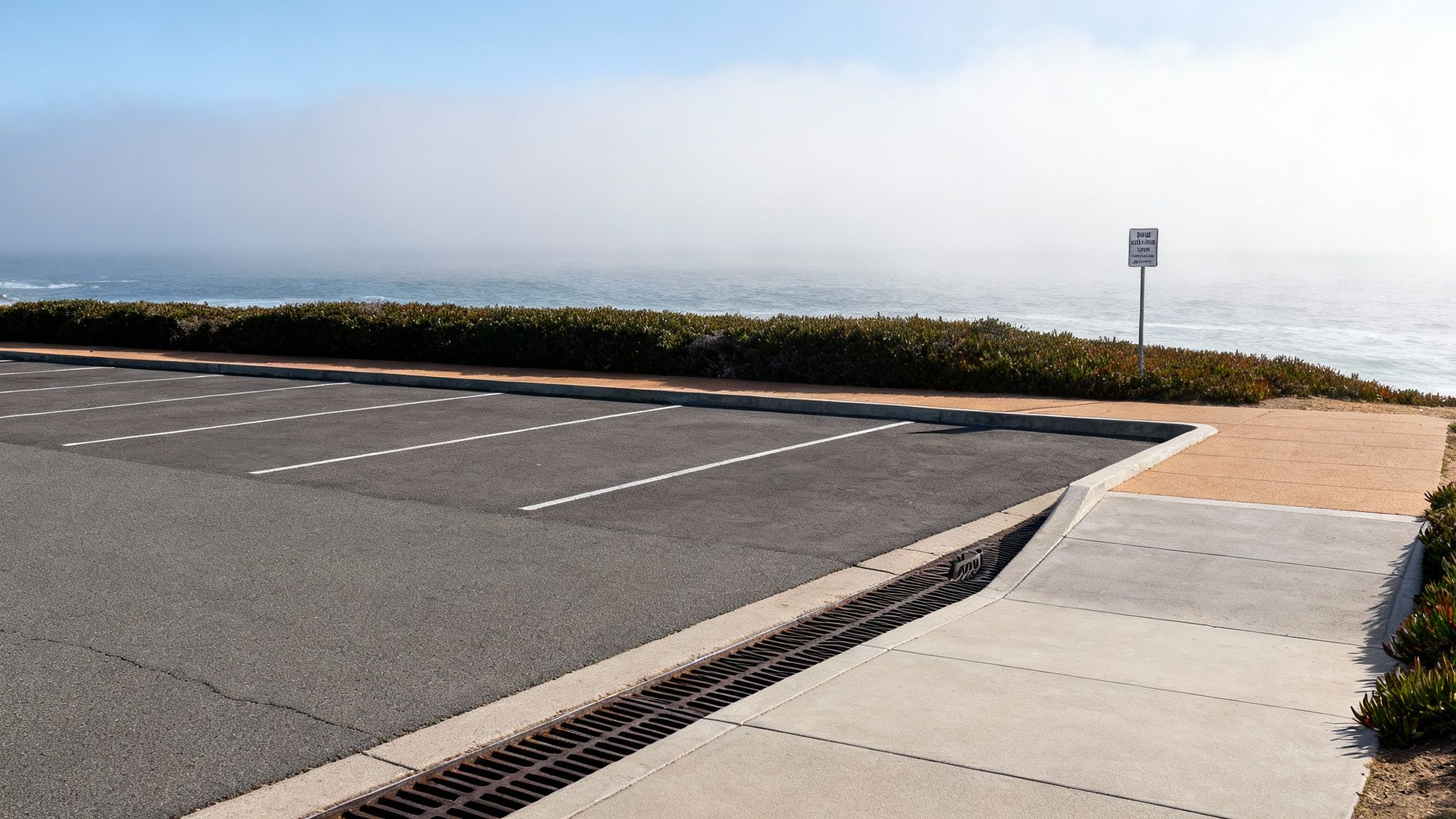
Paving projects in Monterey, Santa Cruz, and San Benito counties have special challenges that you don't find inland. The beautiful coast we love is also pretty tough on asphalt. This is where hiring an experienced local asphalt resurfacing contractor is not just a good idea—it's necessary.
They understand the local details that can make or break a project. From dealing with the damp sea air to knowing which permits are needed, their local knowledge protects your investment from the start.
The Coastal Climate and Its Impact
Anyone who lives here knows about our cool, foggy air. While it’s great for a walk on the beach, it can be a problem for paving. Asphalt needs warm, dry air to set properly, and our constant coastal moisture can slow things down.
A skilled local contractor knows how to handle this. They will schedule work for the warmest, driest parts of the day and often use special asphalt mixes made for our climate. This isn't just about getting the job done. It's about preventing a weak surface that will start to fail too soon.
The success of an asphalt project on the Central Coast often depends on the contractor's ability to adapt to our weather. What works in sunny San Benito might not work on a foggy morning in Monterey. This makes local expertise very important.
Navigating Permits and ADA Compliance
Every paving job, especially on a business property, has local rules. Each city and county—from Salinas to Santa Cruz—has its own set of rules for permits, inspections, and safety.
A huge part of this is ADA (Americans with Disabilities Act) compliance. You can't afford to get this wrong. Federal law has very specific rules for parking lots, including:
- Proper Slope: Making sure ramps and paths are not too steep for wheelchairs.
- Correct Striping: The number, size, and layout of accessible parking spots are required by law.
- Clear Signage: Putting up the right signs at the exact required height.
A good contractor will handle all the permit paperwork for you and make sure your finished lot follows all the rules. This protects you from big fines and makes your property safe and accessible for everyone.
Managing Water Drainage and Runoff
Around here, we know that when it rains, it can really pour. Proper water drainage is a top priority, not an extra thought. Water is asphalt's number one enemy. If it sits on the surface, it will get into the base layer, causing cracks, potholes, and total failure.
A professional asphalt resurfacing contractor will design the surface with a very slight, hard-to-see slope. This slope guides water away from your pavement and into storm drains. They also make sure your new surface doesn't just push your water problems onto your neighbors, keeping you in line with local environmental rules.
For contractors working in different counties, managing local business presence across multiple locations is key to serving the community well. By choosing a company with deep local roots, you get a finished product built to handle our unique coastal conditions and follow all the local rules.
Common Questions About Asphalt Resurfacing
Even if you understand the process, you probably still have a few questions. Let's answer some of the most common things we hear from property owners before a project starts.
When Can I Use My New Driveway?
This is the most common question, and the answer is all about patience. You can usually walk on the fresh asphalt within 24 hours, but you'll need to keep cars off it for a bit longer.
We recommend waiting at least 3 to 5 days before driving or parking on the new surface. This gives the asphalt time to cure and get completely hard. If the weather is cool, this can take a little longer, so always follow your contractor's advice.
What Is the Best Time of Year for Resurfacing?
With asphalt, timing is very important. The best time for resurfacing is during warm, dry weather, like late spring through early fall.
Asphalt needs the ground temperature to be at least 50°F (10°C) and rising. Paving in cold or damp weather will result in a weak surface, because the material won't pack down correctly and it won't last as long.
How Long Will the New Surface Last?
A professionally done asphalt overlay is a great investment in your property. When it's installed the right way, you can expect a newly resurfaced layer to last anywhere from 8 to 15 years.
The real lifespan of your new pavement depends on a few things: the quality of the job, how much traffic it gets, and our local weather. The best way to get the most out of your investment is with regular maintenance, especially applying a protective sealcoat every 3-5 years.
Ready to give your pavement a fresh start with a professional, long-lasting finish? The team at Coastal Pipeline Inc. has the local expertise to handle your project from start to finish. Learn more about our asphalt services and get your project started today.