So, you have a project that needs some serious digging. Finding the right excavation contractor can feel like a huge task, but it doesn't have to be. The secret isn't just frantically Googling "excavation services near me." The real first step is getting crystal clear on what your project actually involves. Are you digging a foundation, clearing a plot of land, or trenching for new utilities? Knowing the answer is your key to filtering out the noise and zeroing in on the perfect professional for the job.
Your First Steps to Finding Excavation Services Near You
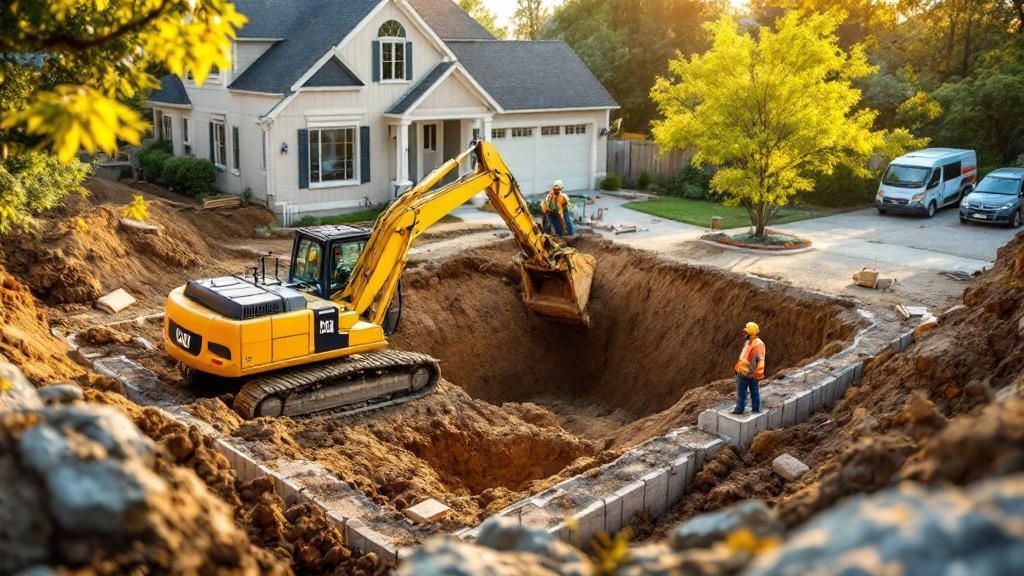
Any project that involves moving earth is a big deal. The quality of that initial excavation work lays the groundwork—literally—for everything else. Whether it's the stability of your new home's foundation or the proper function of a septic system, it all starts here. A botched job can snowball into a nightmare of structural problems, drainage issues, and expensive delays. This is exactly why your initial search is so critical.
Your goal is to look past the flashy ads and find the real pros in your area. You need contractors who not only have the heavy equipment but also a solid history of success with projects just like yours. A company that specializes in massive commercial site development might not be the right—or most affordable—choice for digging out a residential driveway.
Broaden Your Search Beyond Basic Ads
While a quick online search is a fine place to start, you'll often find the best, most reliable contractors through other channels. Think of your research phase as a mix of digital sleuthing and old-fashioned community intel.
Here are a few goldmines for finding reputable excavation services near you:
- Local Community Forums: Jump into neighborhood groups on social media or local online forums. There's nothing quite like a candid review from a neighbor to get an honest read on a contractor's work ethic and quality.
- Better Business Bureau (BBB): The BBB is still a go-to for checking a company's official rating, complaint history, and general trustworthiness. A high rating is always a good sign.
- Building and Landscape Supply Yards: These places are hubs for local contractors. The staff behind the counter see these crews day in and day out. They often have the inside scoop on who is busy, professional, and known for doing quality work.
A crucial first step is to match the contractor's specialty to your project's demands. For example, if you're building a new home, you'll want to find a team with extensive experience in foundation work. You can discover more about what goes into a top-quality residential excavation service and what to look for in a contractor.
As you start compiling a list of names, a quick initial screening can save you a ton of time. This simple checklist helps you perform a quick background check before you even pick up the phone.
Initial Contractor Vetting Checklist
| Vetting Criteria | What to Look For | Why It Matters |
|---|---|---|
| Online Presence | A professional website with a portfolio of past work. Active and positive social media profiles. | A solid digital footprint often reflects a company's professionalism and pride in their work. |
| Local Reviews | Consistent positive feedback on Google, Yelp, or local directories. Note how they respond to negative reviews. | Reviews provide real-world insight into customer experience, reliability, and communication. |
| BBB Rating | An "A" rating or better. Check for any unresolved complaints. | A high BBB rating indicates a commitment to ethical business practices and customer satisfaction. |
| Specialization | Look for evidence of work similar to your project (e.g., photos of foundation digs, septic installs). | You want a specialist, not a generalist. The right expertise ensures the job is done correctly. |
Running through these points will help you build a much stronger, more qualified list of potential contractors to contact.
Define Your Project Needs First
Before you make that first call, take a few minutes to map out your project's scope. When you can clearly articulate what you need, you empower contractors to give you a far more accurate initial assessment.
Think through the specifics:
- What's the main goal? Are you digging a basement? Installing a swimming pool? Trenching for utility lines?
- What's the site like? Make a note of any challenges. Things like steep slopes, mature trees, or tight access for heavy machinery are all important details.
Showing up with these details transforms a vague inquiry into a productive conversation. It helps you quickly weed out companies that aren't the right fit and creates a focused, manageable list of partners who can actually get your job done right.
Of course. Here is the rewritten section, crafted to sound completely human-written and natural, following all your provided instructions and examples.
What Kind of Excavation Do You Actually Need?
Before you even think about picking up the phone, you need to know what to ask for. In our world, "digging" is way too broad. Professional excavation is a game of specifics, and each job demands different skills, different machinery, and a different kind of expert.
Trust me, hiring a crew that excels at wide-open land clearing for a job that requires surgical precision—like digging around utility lines—is a classic mistake. It's how projects go off the rails.
Getting the terminology right is the first step to getting accurate quotes and keeping your project safe and on schedule. It’s the difference between a smooth ride and a nightmare of delays and surprise bills.
Common Types of Excavation Work
Most projects, whether for a home or a business, will fit into a few common buckets. Chances are, your job involves one or more of these.
- Site Preparation and Land Clearing: This is ground zero for new construction. It’s all about getting rid of trees, stumps, boulders, and any other junk to give you a clean, workable site.
- Grading and Resloping: This is the art of shaping the land. You can’t just have a flat patch of dirt; you need proper slopes so water drains away from your foundation, not into it. Getting this wrong can cause major headaches down the road.
- Foundation Digging: This is a high-stakes job. Whether it’s for a new house, a building addition, or a big commercial structure, the hole has to be perfect. The depth, the width, the corners—everything has to match the architect's plans exactly for the foundation type, be it a slab, basement, or crawl space.
- Trenching: This means digging those long, narrow channels needed for utilities. Think water lines, sewer pipes, or electrical conduits. The specs here are non-negotiable; they have to meet local codes to ensure everything works safely and correctly.
My Takeaway: When you can clearly say, "I need grading and foundation digging," instead of just "I need some digging," you're speaking a contractor's language. It helps you zero in on the right expert and get quotes that actually make sense.
Specialized Excavation Techniques
Sometimes, your project isn’t straightforward. You can’t just roll in a backhoe and start scooping. This is especially true in crowded city environments or on sites with a spiderweb of existing utilities underground. This is where a more advanced method, like hydraulic vacuum excavation, becomes a game-changer.
Imagine you have to dig right beside a high-pressure gas main or a bundle of fiber optic cables that power half the neighborhood. One wrong move with a steel bucket could be catastrophic. Precision isn't just nice to have; it's everything.
Here’s a real-world example: We had a project to replace an old water line in a tight downtown area. The city's utility maps were sketchy at best, and we were working in a narrow alley between two historic buildings. Bringing in a standard excavator was out of the question—the risk was enormous.
The solution? We used hydraulic vacuum excavation. This machine uses highly pressurized water to gently loosen the soil, and a massive vacuum hose sucks all the mud and debris into a tank. It’s a low-impact, surgical approach. It allowed the crew to uncover the old pipe without so much as scratching the nearby utilities. That one decision probably saved the project from millions in potential damages and fines.
This kind of smart, safe digging is why the market for it is booming. The global hydraulic vacuum excavation market was valued at $6.52 billion and is expected to hit $10.19 billion by 2033. It’s not just a trend; it’s a shift toward safer, less disruptive excavation, especially in delicate environments. You can read more about the growth of this excavation technology if you're interested in the details.
When you know these different services exist, you’re in the driver's seat. You can call a contractor and ask specific, intelligent questions that prove you’ve done your homework. It’s the fastest way to find out if they truly have the right gear and the right experience for your job.
How to Vet and Hire the Right Excavation Contractor
You’ve done your initial research and have a solid shortlist of potential excavation services. Now the real work begins. This is where you shift from a researcher to an investigator, and it’s the phase that separates the true professionals from the ones that could turn your project into a nightmare.
It's about more than just getting a price. You need to confirm they have the right protections in place, a track record of quality work, and a commitment to safety you can count on. This is how you dig into the credentials that actually protect you and your investment.
Verify the Non-Negotiable Credentials
Before you even think about picking up the phone, do a quick background check on three critical items. Any legitimate contractor will have these ready and will never hesitate to provide proof. If you get any pushback or excuses, consider it an immediate red flag and move on.
- State Contractor's License: This is your proof they are legally allowed to do the work. Don't just take their word for it—verify their license number with your state's licensing board.
- General Liability Insurance: This is what protects your property from damage caused by the contractor's operations. Ask for their certificate of insurance. A good tip is to call the insurance company directly to confirm the policy is active.
- Worker's Compensation: This is crucial. It covers their employees if they get hurt on your property, which protects you from being held liable.
This quick check weeds out the unqualified players right away.
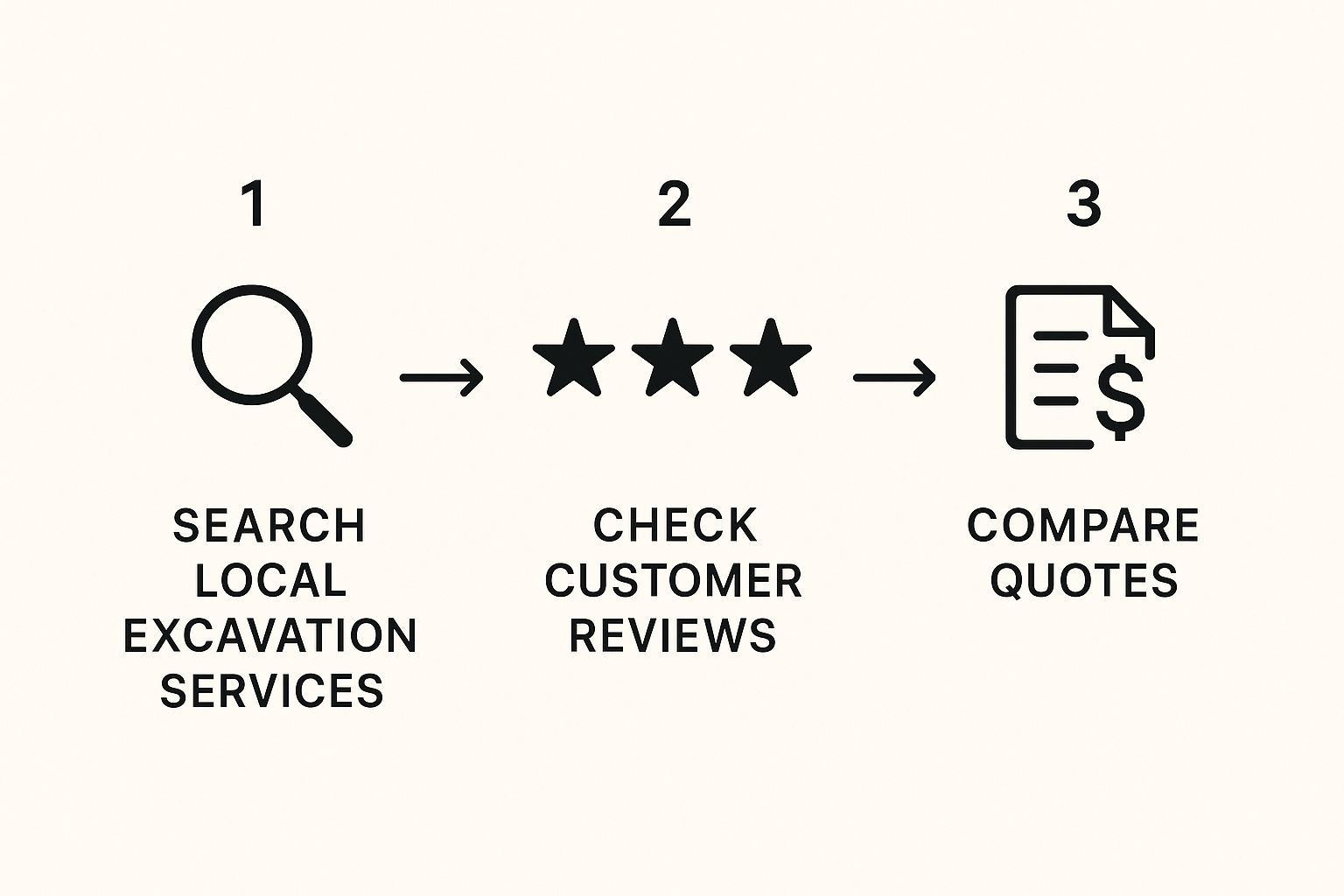
As you can see, the process flows from a broad search to reviewing your options and then comparing quotes. It's a methodical way to effectively narrow down the field.
The Initial Phone Call and Beyond
Once you've confirmed the essentials, it's time to make contact. The goal of this first call is to get a feel for their professionalism and expertise, and to see if they’re even a good fit for what you need done.
Don't just ask, "Can you dig a foundation?" Go deeper with questions that reveal their actual experience. Try asking things like, "Can you walk me through a similar project you finished recently?" or "How do you handle surprises on-site, like hitting a massive boulder or finding poor soil?" Their answers will speak volumes about their problem-solving skills. For bigger jobs, understanding the approach of professional commercial excavation contractors is even more critical and can help you form better questions.
A contractor's portfolio is their resume. Never hire a team without seeing examples of their completed work, especially projects that resemble yours. Photos and addresses of past jobs give you tangible proof of their capabilities.
Finally, always ask for references—and actually call them. Ask past clients about the contractor's communication, how they were with deadlines, and whether the project stayed on budget. This firsthand feedback is one of the most reliable ways to predict what your own experience will be.
Taking the time for this thorough vetting process ensures you hire a partner for your project, not just a person with a backhoe.
Making Sense of Excavation Quotes and Project Costs
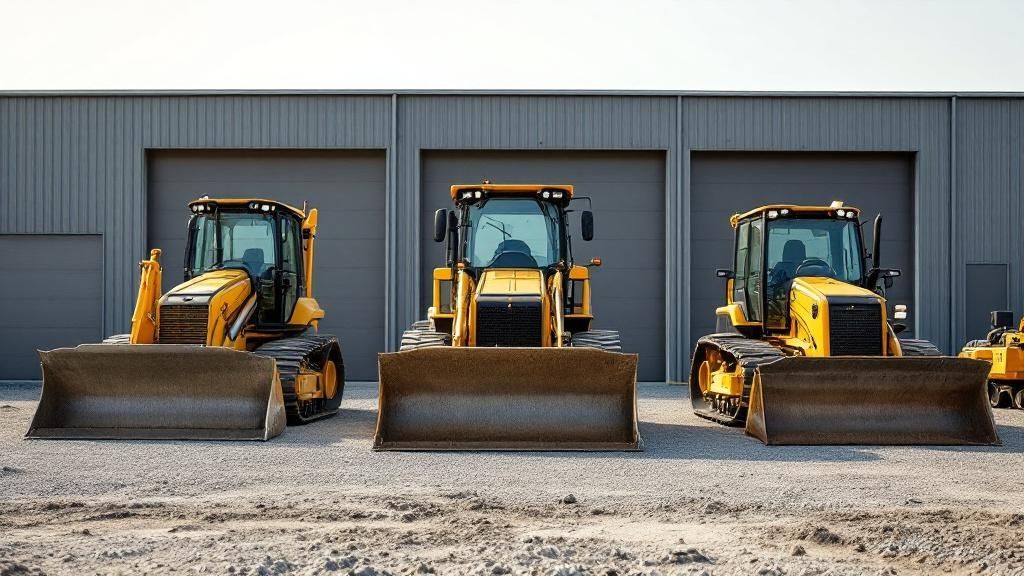
Alright, you’ve done the legwork and have a few quotes for your project sitting on the kitchen table. This is the moment where a lot of people get tripped up. It's so easy to just scan for the lowest number, but comparing proposals from different excavation contractors is about so much more than the bottom line. You have to understand what that final number actually represents.
Think of it this way: a detailed, transparent quote is the first sign you’re dealing with a true professional. It breaks down every cost so you can see exactly where your money is going. On the other hand, a vague, one-line estimate is a massive red flag. Those are the ones that almost always hide future expenses that conveniently "pop up" after the work has already started.
Learning to read between the lines isn't just a good skill—it's your best defense against surprise bills and a poorly executed job.
Decoding the Details of a Good Quote
A solid proposal should feel less like a mystery and more like a blueprint for your project. It needs to provide a clear, itemized list of everything included. Don't just see it as a single price; see it as a breakdown of all the individual parts that add up to the whole.
Here’s what you should expect to see on any comprehensive quote:
- Labor Costs: This isn't just a single number. It should detail the rate for the skilled operators and crew, whether it's charged by the hour or as a lump sum for the entire job.
- Equipment Fees: That heavy machinery—excavators, backhoes, dump trucks—costs money to operate and maintain. This line item covers the use of all that essential equipment.
- Material and Disposal Costs: This covers the logistics of getting all that excavated soil, rock, and other debris off your property. A good quote will account for hauling expenses and any landfill fees.
- Permit and Inspection Fees: Any reputable contractor will know which local permits are needed. They’ll often handle the filing process and list those municipal fees clearly in the proposal.
The most common mistake I see is homeowners grabbing the lowest bid without asking why it's so low. An unusually cheap quote often means the contractor has cut corners, skipped crucial steps like proper soil disposal, or is banking on hitting you with "unforeseen" charges down the road.
Spotting Red Flags in an Excavation Proposal
That cheap quote might look tempting, but trust me, it’s often the most expensive one in the long run. When you see a bid that’s significantly lower than the others, it’s time to put on your detective hat and start asking some tough questions.
Here’s a real-world scenario I’ve seen play out: soil disposal. A vague quote might just have a line for "site cleanup." A detailed, professional quote will specify the cost for hauling away a certain number of truckloads of dirt. If the contractor with the vague bid just plans to shove all that excavated earth into a big pile in the corner of your lot, you're the one left with a giant mess and a brand-new expense to deal with.
For a closer look at what separates the pros from the amateurs, our guide on excavation contractors in Monterey County provides some great insights into professional standards.
Ultimately, your decision shouldn’t come down to the lowest price but the best overall value. The contractor who gives you a clear, comprehensive scope of work is giving you more than just a quote—they’re giving you peace of mind. That clarity is your best insurance against budget overruns and a project that doesn't meet your expectations.
Understanding the Modern Excavation Industry
When you first search for "excavation services near me," you might picture a guy with a single backhoe. But that image is a little dated. The truth is, modern excavation has become a highly professional field, driven by major investments in technology, strict safety protocols, and some pretty sophisticated project management.
Getting your head around this from the start helps set the right expectations. We're not just talking about digging holes anymore. This work is a critical, foundational step for almost any construction or infrastructure project, and the level of professionalism directly impacts your project's quality, safety, and timeline. When you recognize this, you can have much better conversations with potential contractors and show them you're a knowledgeable client who expects quality work.
A Professional and Growing Field
The demand for skilled excavation work has absolutely exploded. It's being fueled by construction booms and the constant need for essential infrastructure upgrades across the country. This isn't some small-time trade anymore—it's a massive economic driver.
In fact, the excavation contractor industry in the United States has blown past a market size of $145 billion. It's been growing at a steady clip of 3.1% annually for the last five years, which tells you just how strong and consistent the need for professional services really is.
This growth means the old "man in a truck" model is fading fast. Today's top-tier companies operate more like specialized engineering firms. They are laser-focused on precision, compliance, and getting the job done efficiently. They handle complex logistics, from coordinating with utility companies to ensuring every scoop of dirt perfectly aligns with architectural plans.
What This Means for Your Project
So, why does any of this industry-level stuff matter for your specific project? Simple. It completely raises the bar for what you should expect from a contractor. A true professional brings a lot more to your job site than just heavy machinery.
They should bring a structured, buttoned-up approach that includes:
- Detailed Project Scopes: You should see a clear, written outline of all the work, including timelines, key deliverables, and a full cost breakdown. No surprises.
- Advanced Safety Protocols: A professional crew lives and breathes safety. They will follow strict standards to protect their team, your property, and the public.
- Technical Expertise: You're hiring them for their deep understanding of things like soil mechanics, how to grade for proper drainage, and how to work around critical underground infrastructure without causing a disaster.
By appreciating the modern state of excavation, you're better equipped to identify a high-quality contractor. You’ll recognize the signs of a professional operation and know which questions to ask, ensuring you partner with a team that can deliver safe, accurate, and reliable results.
This is especially true when your project involves more specialized work. For instance, knowing what goes into professional underground utility services helps you properly vet contractors for jobs that require a lot more finesse than just basic digging. Ultimately, this insight helps you pick a partner who will lay the perfect foundation for your project's success.
Common Questions About Hiring Excavation Services

So you’ve narrowed down your list of contractors and have a few quotes in hand. That’s great! But it’s completely normal to have a few last-minute questions bubbling up before you sign on the dotted line. These are often the little details that make a big difference.
Let's walk through some of the most common questions I hear from clients. Getting these answers now will give you the confidence you need to move forward and ensure your project gets off to a smooth start.
How Far in Advance Should I Book an Excavation Contractor?
In the construction world, timing really is everything. For most projects, I always recommend contacting contractors at least 4 to 6 weeks before your ideal start date. If your project is on the larger side or has some complexity, giving yourself 2 to 3 months of lead time is even smarter.
Why so long? This isn't just about getting on their schedule. A professional crew needs that time to do their job right—this includes a proper site visit, creating a detailed quote, pulling all the necessary permits, and coordinating the mandatory utility line marking.
Trying to find a crew at the last minute, especially during the peak spring and summer seasons, is a recipe for stress. You'll have fewer good options, and you might even face rush fees. A little planning goes a long way in securing a quality partner.
What Permits Are Usually Needed for Excavation Work?
Navigating permits can feel like a maze, and the rules change from city to city and county to county. The good news? Your contractor should be the expert here, not you.
Depending on your specific project, you’ll likely need one of the following:
- A grading permit for any work that changes the slope of your property.
- A building permit if the digging is for a new foundation, like a house or an addition.
- A right-of-way permit if any work spills over onto public property, like a sidewalk or street.
A huge part of a contractor’s job is handling the local red tape. They should know exactly what permits your job requires and manage the entire application process for you. Make sure this is clearly spelled out in the contract before you sign anything.
Who Is Responsible for Marking Underground Utility Lines?
This one is critical and non-negotiable: the contractor is 100% responsible.
Before a single shovel hits the dirt, your contractor is legally required to call 811, the national "Call Before You Dig" service. It's a free service that alerts all the local utility companies to come out and mark their buried lines on your property. You’ll see colored flags or paint appear, each indicating a different utility—gas, electric, water, etc.
Never, ever let a contractor begin digging until these marks are on the ground. Hitting a utility line is incredibly dangerous, can knock out services for your whole neighborhood, and comes with huge fines. If any contractor suggests skipping this step, consider it a massive red flag. Safe excavation and land clearing always, always starts with this.
What Happens if They Find Unexpected Problems?
This is the "what if" question you absolutely need to ask. No matter how much you plan, you never truly know what’s buried underground. That’s why any professional contract should have a clause for "unforeseen conditions."
What if the crew hits a massive boulder that wasn't on any plans? They’ll likely need a hydraulic hammer to break it up, which means extra equipment and labor costs. Or what if they uncover contaminated soil? All work has to stop immediately while environmental protocols are followed.
Talk through these potential scenarios before work starts. You need to understand how unexpected issues are handled and, just as importantly, how they are billed. This simple conversation can prevent a lot of headaches and budget surprises down the road.