When heavy rain hits a parking lot or street, it can't just soak into the ground. It has to go somewhere. This runoff water is a powerful force that can cause costly flooding, soil erosion, and even damage to building foundations. Smart drainage design helps manage this water, protecting your property and the local environment.
Why Stormwater Runoff Is a Growing Threat
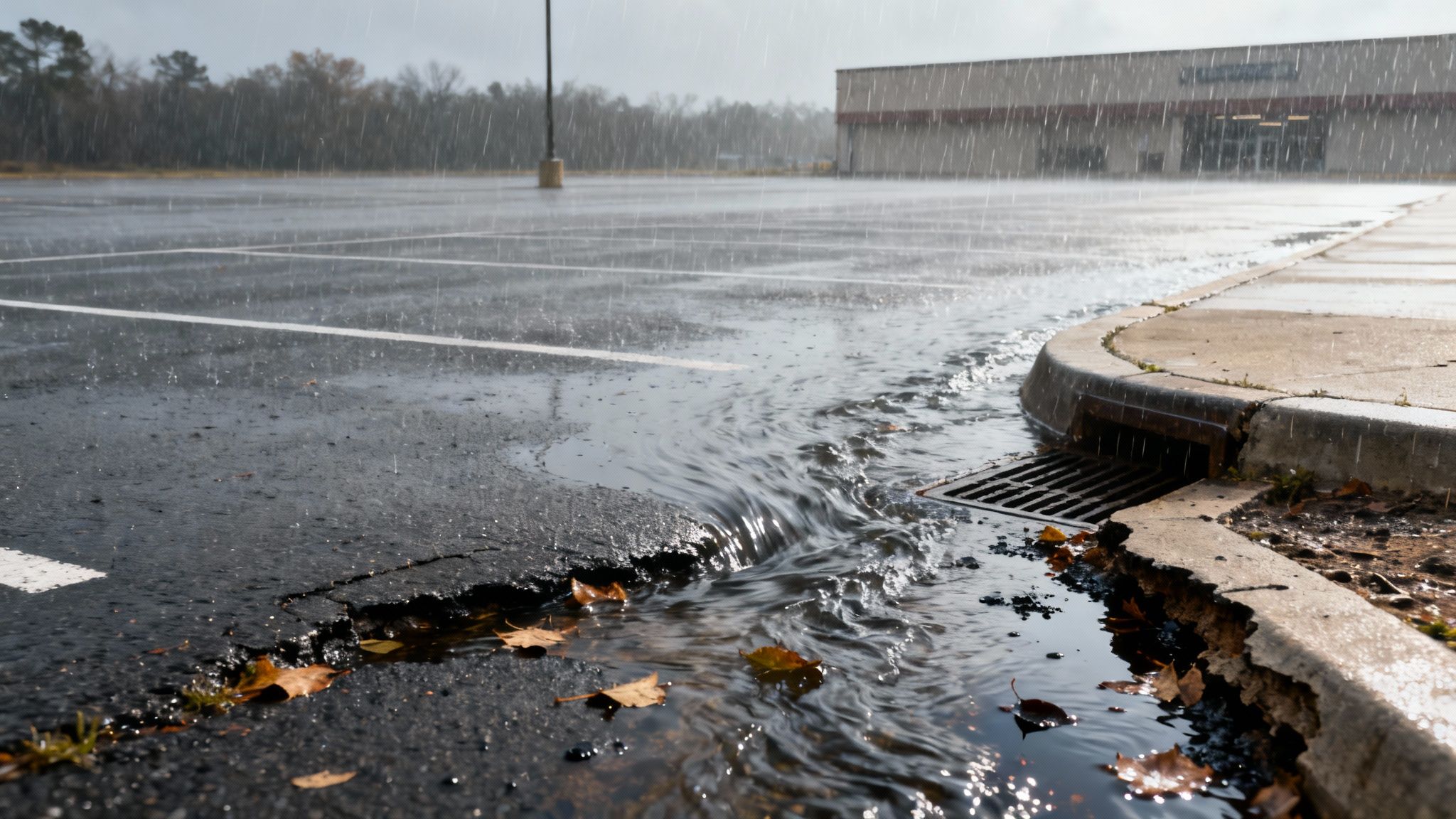
Uncontrolled stormwater is more than just a few puddles. As development continues on the Central Coast, we replace natural ground with hard surfaces like roofs, driveways, and asphalt. These surfaces act like giant slides, sending rainwater rushing toward the lowest point.
This creates two major problems for property owners, developers, and cities.
The Two-Fold Risk to Property and Environment
First, there's the physical threat. During a storm, the amount and speed of runoff can overwhelm old or small drainage systems. This leads to flooding that can damage buildings, ruin landscaping, and harm public roads. The water also has the power to wash away soil, which can weaken foundations and roads. Repairing this damage can be very expensive.
Second, this water is dirty. As it flows over parking lots and streets, it picks up pollutants like oil, chemicals, and trash. This polluted water goes directly into storm drains. Unlike sewage, stormwater is often released without treatment into local creeks, rivers, and the ocean. This harms water quality and hurts fish and other aquatic life.
Unchecked stormwater runoff creates a direct link between our properties and the health of our local waterways. Every storm can cause both physical damage and environmental harm.
Why Traditional Drainage Is Not Enough
For years, the solution was simple: get water into a pipe and move it away as fast as possible. But this "pipe-it-away" method often just moves the flood risk to another location. It also speeds up the flow of pollutants into our natural waters. With today's stricter rules and better understanding of water, it's clear this old approach is not enough.
Modern projects need a smarter strategy. Anyone preparing for heavy rain must think about how to manage water on their own site. Whether it's an HOA repaving a parking lot or a city upgrading old culverts, controlling stormwater is now a key part of the job. This is where smart drainage design comes in. By using systems that slow, filter, and absorb runoff, we can protect our investments and build stronger communities that work with nature.
Understanding the Principles of Smart Drainage Design
For decades, the main goal for rainwater was to get it off a property as fast as possible. We built concrete channels and large pipes to carry water away. But we've learned that this "pipe-it-away" approach often creates more problems, from downstream flooding to polluted rivers.
Smart drainage design changes that old way of thinking. It treats stormwater as something to be managed, not just thrown away.
The main idea is to copy nature. Instead of forcing water into a pipe, modern systems are built to slow it down, spread it out, and let it soak into the ground. This approach, often called Low-Impact Development (LID), is about working with the water cycle, not against it.
Think about how a forest handles rain. The leaves and soil act like a sponge, absorbing the rain, filtering it clean, and letting it slowly seep into the earth. Smart drainage tries to recreate that natural process in our communities.
Working With Nature, Not Against It
This change is not just about being "green"—it's a practical need. Stricter regulations and the real risks of flooding and erosion mean property owners and cities need better solutions. The goal is to manage water where it falls, stopping destructive runoff before it starts.
This proactive approach has big benefits:
- Reduced Flood Risk: When you slow water down and give it a place to go, you lower the sudden surge that floods old storm drains during a big storm.
- Improved Water Quality: As stormwater soaks into the ground, soil and plant roots act as a natural filter. They trap pollutants like oil and chemicals before they can harm our creeks and ocean.
- Groundwater Recharge: Letting water seep into the ground helps refill underground aquifers, which are a key source of drinking water for many Central Coast communities.
The Foundation of Modern Stormwater Management
Smart drainage isn't one single product; it's a set of strategies designed for a specific site. These ideas are always improving, sometimes using concepts from fields like smart water technology in waste water management to make our systems work better. It’s about designing a landscape that can handle rain.
Many people are seeing the value in this. The global market for stormwater management systems is already worth USD 15.8 billion and is expected to grow. This is a worldwide shift toward building smarter, more sustainable infrastructure.
Low-Impact Development is about making our built environments function more like natural ones. It’s a design philosophy that integrates stormwater management directly into a site’s landscaping and infrastructure, creating a more sustainable and resilient property.
This thinking is at the center of every effective stormwater drainage system design we create. By using these principles, we can protect properties from water damage while also improving the health of our local environment. The result is a landscape that's safer, cleaner, and better prepared for any weather.
Your Toolkit of Sustainable Stormwater Solutions
Knowing why smart drainage is important is one thing, but the how is where the work begins. Let's look at the practical tools that make these ideas a reality. Think of these solutions as a special toolkit. Each one is designed for a specific job in managing runoff and protecting your property.
These methods are all designed around a simple, powerful idea inspired by nature: slow the water down, spread it out, and let it soak into the ground. This is a complete change from the old "pave and pipe" approach. It turns a potential problem into a resource we can manage.
This simple idea is the foundation of modern stormwater management.
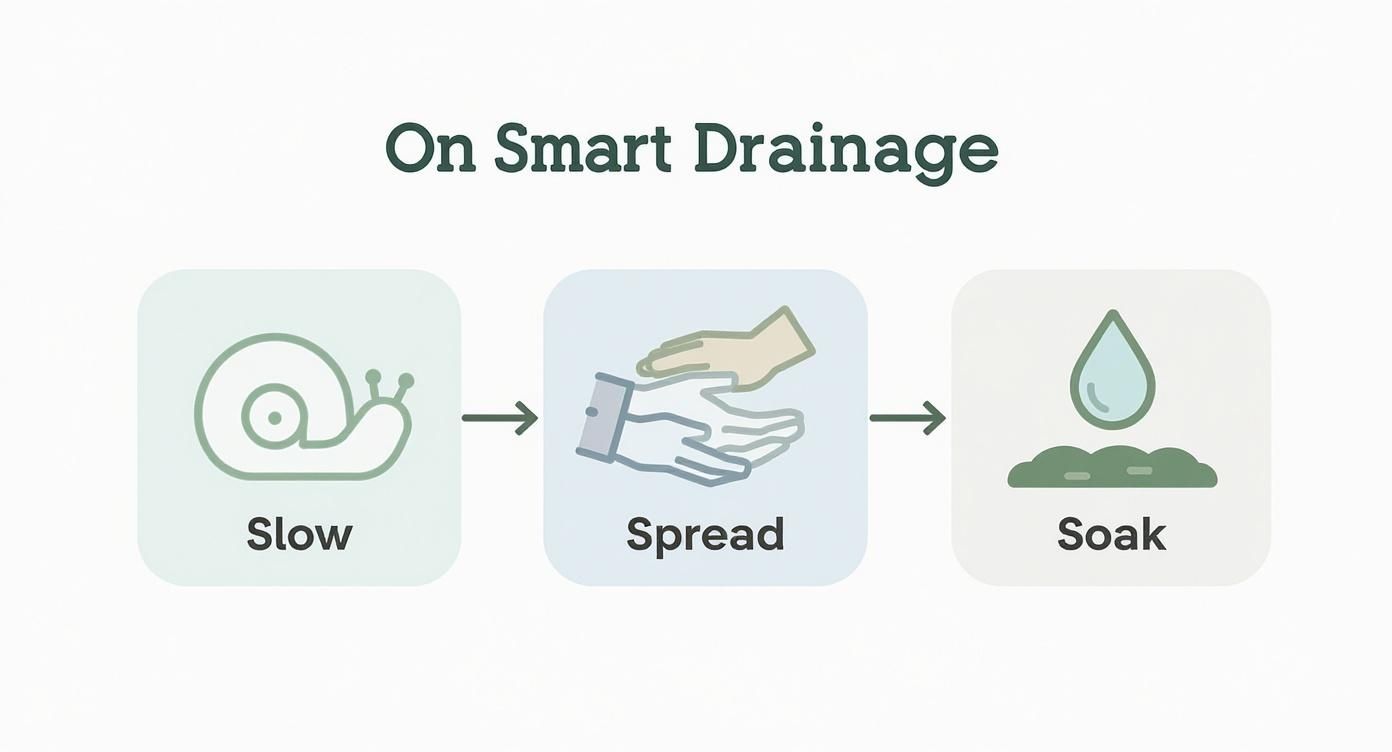
By focusing on these three actions, we can greatly reduce flood risk, stop erosion, and filter out pollutants before they can harm our local waterways.
Bioswales: Nature's Filter System
A bioswale is a landscaped drainage channel. Instead of a concrete gutter that rushes water away, it's a shallow ditch with native plants, grasses, and a special soil mix. When it rains, the bioswale catches the runoff, slows it down, and gives it time to soak gently into the earth.
As the water moves through the plants and soil, it gets cleaned. The plant roots help break down pollutants, while the soil traps dirt and other harmful materials. This makes bioswales a great and attractive solution for parking lot islands, roadsides, and new developments.
Permeable Pavements: Letting the Ground Breathe
Normal asphalt and concrete are impervious—water runs right off them, creating a flood of runoff. Permeable pavements, however, are made to do the opposite. They let the ground breathe.
These systems use materials like porous asphalt, pervious concrete, or pavers with gravel-filled gaps. Rainwater passes right through the surface into a layer of crushed stone below. It's held there for a short time before slowly seeping back into the soil. This is a game-changer for reducing runoff from driveways, walkways, and parking lots.
Detention and Retention Basins: Taming the Flood
When you have a large amount of water from a big parking lot or a new neighborhood, you need a way to handle that surge. That's where detention and retention basins are used.
- Detention Basins: These are dry ponds built to hold stormwater for a short time after a storm. A controlled outlet releases the water slowly, preventing a flood downstream. After the storm, the basin becomes dry again.
- Retention Basins: You have probably seen these—they're the "wet ponds" that always hold water. They manage runoff like a detention basin but also create a wetland habitat and give pollutants more time to settle.
Smart stormwater solutions aren't about picking just one "best" option. It’s about creating a custom-fit system for a specific site, blending the right combination of tools to solve the unique challenges of that property and the surrounding watershed.
Putting these solutions together requires careful engineering and strong infrastructure. To meet modern environmental standards, project planners need complete storm water management systems that combine these green methods with reliable, long-lasting parts.
Comparing Modern Stormwater Management Techniques
Here is a quick look at which tool fits which job. Each method offers a unique approach, and the best choice depends on the project's needs.
| Technique | Primary Function | Best For |
|---|---|---|
| Bioswales | Filtering pollutants and slowing runoff | Parking lots, street medians, and landscaped areas where water needs to be cleaned and soaked in. |
| Permeable Pavements | Reducing surface runoff and promoting infiltration | Low-traffic parking areas, patios, walkways, and driveways where you want to limit hard surfaces. |
| Detention Basins | Temporarily storing water to reduce peak flow | Large commercial or residential sites that produce a lot of runoff and need flood control. |
| Retention Basins | Storing water long-term for treatment and flow control | Developments where a permanent water feature is wanted and there is a need for high-level pollutant removal. |
Finding the money for these upgrades can be a challenge. Exploring options like US EPA Grant Funding for Sustainable Stormwater Solutions can provide the financial support needed to start these important projects.
When designed and installed correctly, these tools offer a powerful way to protect both our properties and our precious Central Coast environment for years to come.
Navigating Stormwater Regulations on the Central Coast
For most developers and property owners, stormwater rules can feel confusing. But these rules are not just paperwork—they are a critical defense for both our properties and the unique environment here on the Central Coast.
From our coastal waters to our erosion-prone hills, smart drainage design is now a legal requirement. Federal laws like the Clean Water Act, enforced by local city codes, set the rules for how we must manage runoff. These rules help prevent flooding, stop erosion, and keep pollutants out of our water.
Why Central Coast Rules Are So Specific
The Central Coast is a special place, and our stormwater rules show that. Our closeness to the Monterey Bay National Marine Sanctuary means we must protect our water quality. A single storm can wash oil and other chemicals from a parking lot straight into sensitive marine habitats.
Also, our region's steep hills and unique soils make us likely to have erosion. Poorly managed runoff can cause more than just mud; it can make hillsides unstable, leading to serious property damage. That's why local permit offices are so strict—they need to make sure every new project is part of the solution, not the problem.
You need a deep understanding of local water systems and environmental rules to get through the permitting process. Working with someone who knows the area can save you from costly mistakes and project delays.
A No-Nonsense Look at the Permitting Process
Getting the right permits might seem hard, but it comes down to one thing: proving your project will not harm the environment or nearby properties. This usually means providing detailed engineering plans that show exactly how your site will handle stormwater.
Regulators will look closely at a few key areas:
- Strong Erosion Control: You must show how you will keep soil in place, both during construction and for the long term.
- Proven Water Quality Protection: Your design needs features that will filter or trap pollutants before runoff leaves your site.
- Sized for Heavy Rain: The system must be built to handle the intense rain we see on the coast without causing floods on your property or downstream.
Failing in any of these areas can lead to big fines, work stoppages, and the need to redesign the project. But when you work with a contractor who understands these requirements, you can make the process much smoother.
A well-designed drainage system does more than just meet a legal rule; it's an insurance policy for your investment. Keeping up with how drainage infrastructure is evolving is the best way to avoid problems with compliance. When you treat these rules as a guide for strong construction, you build something that protects both your property and our community.
Building Community Resilience with Engineered Solutions
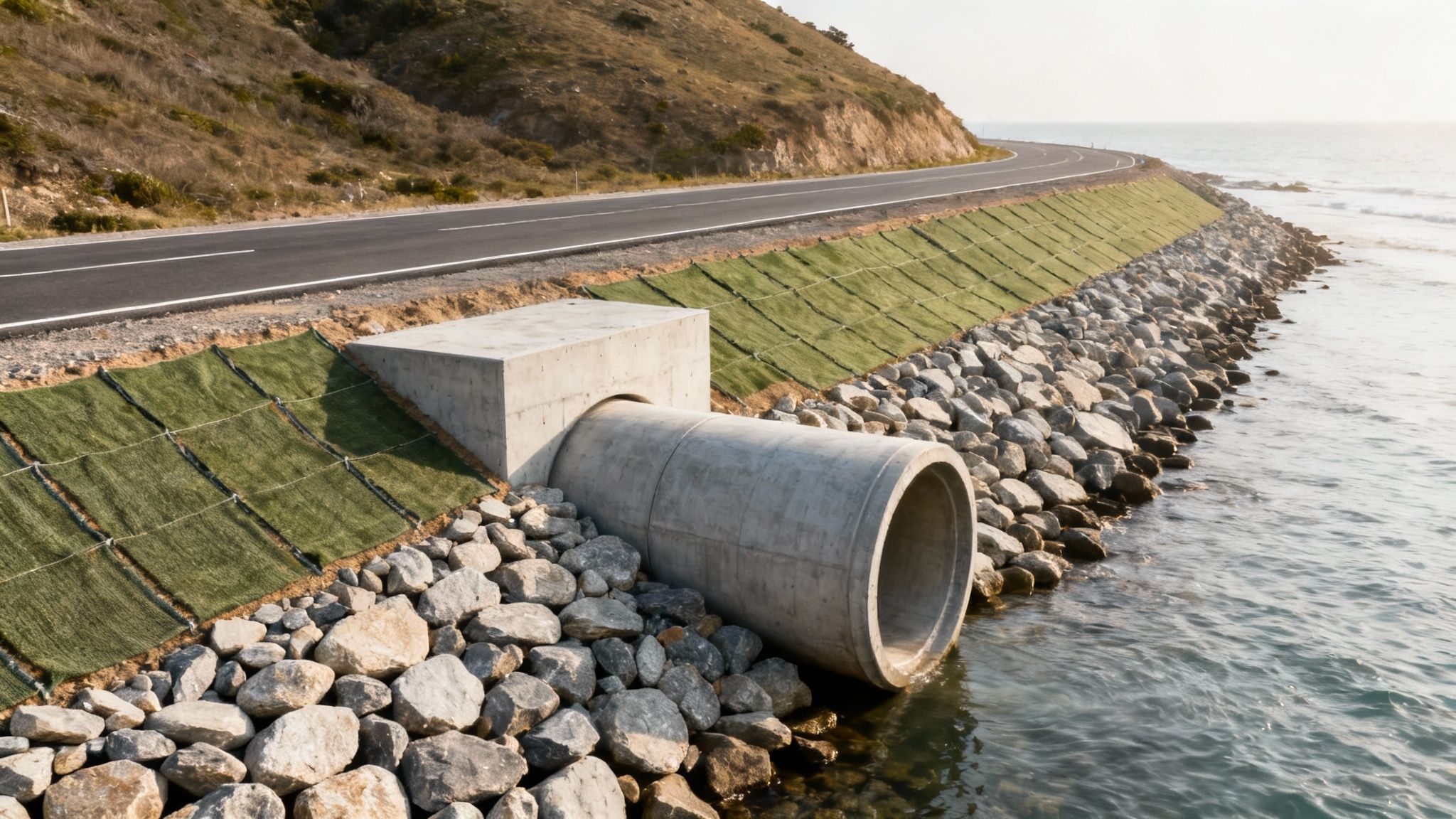
Smart drainage ideas like bioswales are great for managing runoff where it falls. But their success depends on something you can't see: a strong, engineered system hidden underground. To move large amounts of stormwater safely during a heavy rain, you need a durable infrastructure designed to last for decades.
This is where heavy-duty parts come in. A truly effective system is not about quick fixes. It’s about building long-term strength for the whole community. It creates infrastructure that not only meets today’s codes but is also ready for future challenges.
The Unseen Heroes of Drainage Infrastructure
While green infrastructure helps manage water on the surface, the core of any large drainage system is the network of pipes that carry water away from important areas. Two materials are the foundation of this modern infrastructure:
- Reinforced Concrete Pipe (RCP): Known for its strength and long life, RCP is the top choice for areas with heavy loads, like roads and large commercial sites. It can handle great pressure from the soil and traffic above and can last for over a hundred years.
- High-Density Polyethylene (HDPE): This is a modern plastic pipe that is light, flexible, and resistant to rust and wear. HDPE is great for projects that need long, continuous pipes or are in difficult locations. Its sealed joints create a leak-free system.
These materials ensure a drainage system works well under pressure. Whether a city is upgrading an old culvert or a developer is building a new shopping center, this engineered strength prevents major failures in the future.
From Blueprint to Lasting Protection
A successful project is more than just picking the right pipes. It requires a deep understanding of local water patterns and a commitment to correct installation. Coastal Pipeline offers engineered storm drain systems designed to meet modern hydrology standards.
A professional solution combines multiple parts to provide lasting protection. This is why Coastal Pipeline uses materials like RCP and HDPE, along with erosion control methods such as riprap and reinforced channels.
An engineered storm drain system is a long-term investment in property protection and community safety. It’s the critical difference between a temporary patch and a resilient solution built to serve a property for decades to come.
This gets to the heart of why stormwater matters: how smart drainage design protects property and the environment. It's about combining green ideas with solid engineering. The demand for resilient, sustainable infrastructure is rising sharply, as stormwater capture and environmental protection become top priorities for cities.
Stopping Erosion in Its Tracks
Controlling where water goes is only half the battle. The other half is preventing it from washing away the ground your property stands on. This is a big concern in the hilly areas of the Central Coast. Professional erosion control measures are key to keeping channels and slopes stable.
Here are a few techniques we use:
- Riprap: This involves placing large, angular stones at drainage outlets or along creek banks. These stones slow down the water's energy, stopping it from washing away the soil.
- Reinforced Channels: For areas with fast-flowing water, drainage channels can be lined with concrete or other strong materials. This creates a smooth, erosion-proof path for stormwater.
By combining strong pipe systems with proven erosion controls, we build infrastructure that works with nature, not against it. This complete approach ensures that every part works together to create a safer, stronger property. You can learn more about building resilient underground utilities in our detailed guide.
Protecting Your Investment for the Long Term
A smart drainage system is more than just a way to handle rain—it's a direct investment in the long-term value of your property. By using smart engineering and nature-inspired designs, you can turn a potential problem into a real asset. This is the heart of why stormwater matters: how smart drainage design protects property and the environment.
When you trust a professionally designed system, you are buying peace of mind. You are not just meeting today's rules; you are preparing your property for the future, whether it's tougher environmental laws or more extreme weather.
Securing Value and Minimizing Costs
A modern stormwater system protects your investment in a few key ways. First, it protects the physical value of your property by greatly reducing the risk of flooding and erosion. Preventing water damage before it happens means you avoid expensive repairs to foundations, landscaping, and pavement later on.
It also reduces your long-term maintenance needs. A modern system is designed to be durable and efficient, which means less hands-on work and more money saved over the system's life.
Proactive planning is the key to turning stormwater from a threat into an asset. An engineered drainage solution secures your property's resilience and value for decades to come, ensuring long-term stability and compliance.
Meeting Modern Environmental Standards
As cities and environmental agencies create stricter rules, staying compliant is a huge part of any project. A modern drainage system helps you meet those rules from the start, avoiding potential fines and project delays.
But it's about more than just rules. A good system shows you care about the community's well-being. By filtering out pollutants and stopping runoff from harming local waterways, your property becomes a good neighbor to the Central Coast’s ecosystem.
The shift toward sustainable infrastructure is growing fast. The global market for stormwater management solutions was valued at around USD 19.17 billion and is expected to climb to USD 37.58 billion by 2032. This growth shows a rising need for climate-ready solutions and smarter water management.
Property owners and project planners looking to reduce flood risk, protect local waterways, or comply with new drainage codes can benefit from Coastal’s storm drain expertise. We build infrastructure that works with nature—not against it.
Stormwater Management FAQs
It's one thing to understand why smart drainage is important, but it's another to know where to start. We get many practical questions from property owners and developers. Here are some of the most common ones we hear, with simple answers.
What’s the First Step in Designing a New Drainage System?
It all starts with a full site assessment. You can't design a solution without first understanding the problem. An experienced engineer will look at the property's unique features—like its size, slope, soil type, and how much of it is covered by hard surfaces like parking lots and roofs.
This first review helps find potential problem areas. It's the basis for figuring out the right mix of solutions, whether that’s bioswales, correctly sized culverts, a detention basin, or a combination of them all.
How Long Do Sustainable Stormwater Systems Last?
Modern drainage systems are built to last. When they're professionally engineered and installed with durable materials like Reinforced Concrete Pipe (RCP) or High-Density Polyethylene (HDPE), the main infrastructure can easily last for 50 to 100 years.
Green infrastructure like bioswales or permeable pavements also have long lifespans if they get regular maintenance. These are not temporary fixes; they are permanent upgrades designed to protect your property for decades.
A well-designed stormwater system is a long-term investment in your property's value and resilience. It’s about building infrastructure that is prepared for future weather patterns and evolving environmental regulations.
Are Modern Drainage Solutions More Expensive?
The initial cost for a modern, compliant system can sometimes be higher than a basic, old-school approach. But looking only at the upfront price is misleading—it's the total cost over time that really matters.
A smart drainage system lowers your risk of facing expensive flood damage, erosion repairs, or fines for not following the rules. By preventing property damage and keeping future maintenance low, these systems provide a strong return on investment. Protecting your assets from water damage is one of the smartest financial moves you can make, which gets back to why stormwater matters: how smart drainage design protects property and the environment.
Ready to secure your property with an engineered drainage solution? The team at Coastal Pipeline Inc. has the expertise to design and build stormwater systems that meet the unique challenges of California’s Central Coast. Our deep understanding of local permitting and environmental compliance helps clients avoid costly setbacks while contributing to community resilience. Learn more about how a custom drainage solution can protect your investment for decades to come.