
Thinking about your ADU’s utility connections from the start is the best way to keep your project on time and on budget. Before you finalize the design, you need to figure out what your property can handle, get the utility companies involved early, and make sure trenching and hookups are a planned part of your schedule, not a last-minute problem. Getting this right can turn a potential nightmare into just another step in the building process.
Why Getting Utility Planning Right is a Game-Changer for Your ADU
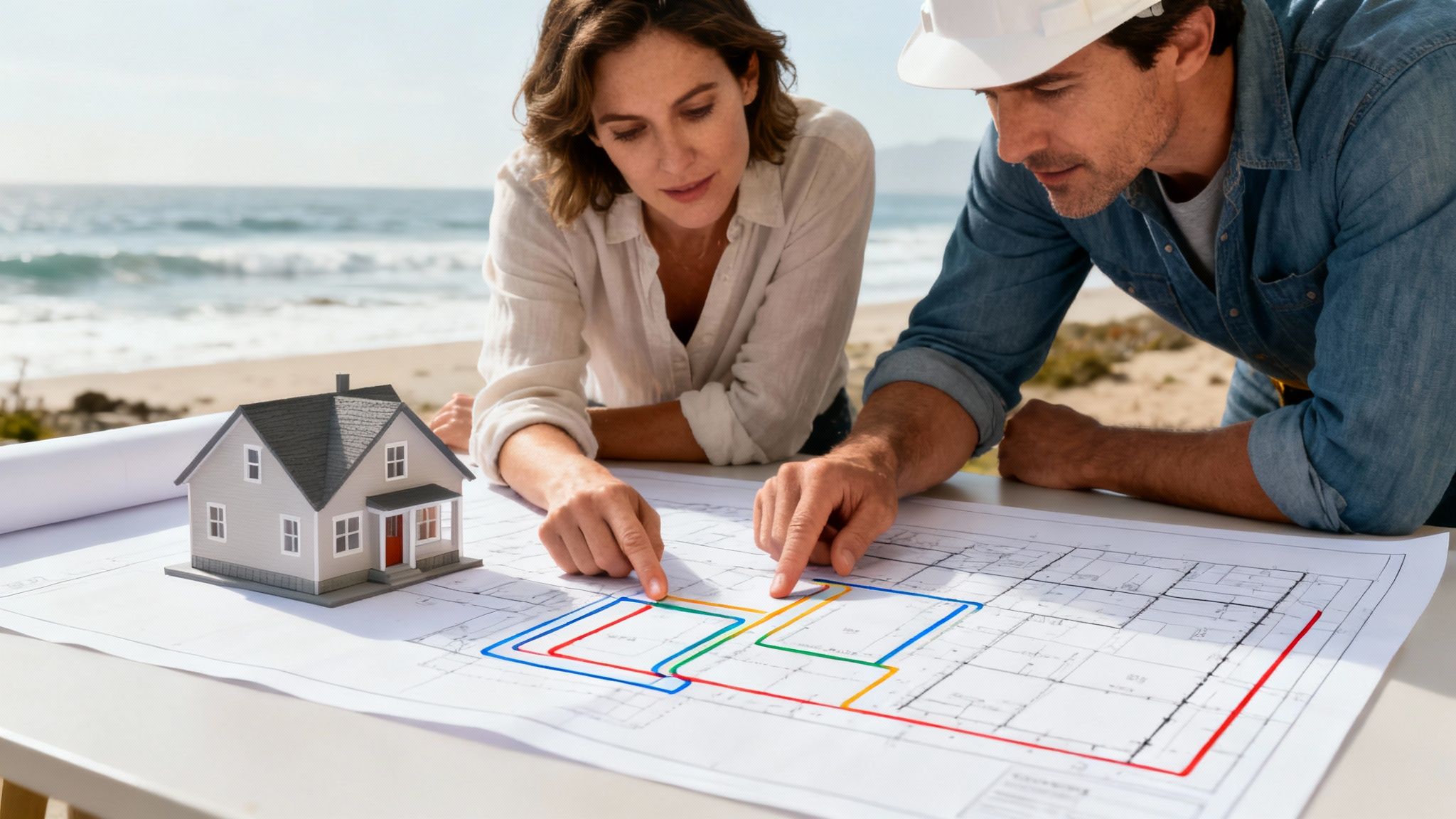
It’s easy to get excited about building an Accessory Dwelling Unit (ADU). Most of the focus goes to the fun stuff, like the layout and finishes. But the real success of your project often depends on what’s happening underground.
Many homeowners assume they can just "tap into" the main house's utility lines for water, sewer, and power. It's a common idea, but it's rarely that simple. The truth is that many properties, especially older homes or those on tricky lots like hillsides, have pipes and wires that were never meant to support a second home.
The Growing Challenge on the Central Coast
Across the Central Coast, ADU construction is booming. State laws encourage building more housing, making it easier to get permits for rental or in-law units. As a result, cities in Monterey, Santa Cruz, and San Benito Counties are seeing more ADU permit applications every year.
But there’s a problem: many property owners don't realize how complex it is to connect new units to sewer, water, gas, and electricity. This often leads to expensive delays or failed inspections. While cities are fast-tracking ADU approvals, they are also putting stricter rules on utility compliance. This is especially true for older homes that lack modern infrastructure.
Key Takeaway: Failing to plan for utility hookups can stop a project that meets all other design and zoning rules. It's the number one cause of unexpected budget increases and delays in ADU construction.
Avoiding Costly Surprises and Delays
When utility planning is an afterthought, things can get messy and expensive. Imagine your ADU is nearly finished, and then you find out your main sewer line is too small and has to be replaced. Now you have to dig up your new landscaping, break up concrete, and spend thousands of dollars you didn't plan for.
Proper, early-stage planning is designed to prevent these kinds of nightmares. By thinking about utilities from day one, you can:
- Spot needed upgrades right away. Can your electrical panel handle another kitchen? Is your water meter big enough? You can find out now, not later.
- Budget with confidence. You'll get a real picture of all the costs, from digging trenches to city connection fees.
- Pass inspections easily. When the work is done to code from the start, you avoid "stop work" orders that can derail your schedule.
ADU builders—including homeowners and contractors—must deal with underground trenching, system capacity needs, and city rules. This is where a specialist can make all the difference. Coastal Pipeline Inc. offers complete underground utility services perfect for ADUs, including sewer line extensions, water line upgrades, and trenching for gas and electrical conduits.
With our experience in the region, we help clients avoid permit problems and ensure their ADU is move-in ready—on time and on budget.
To help you see the process, we've made a quick guide to the common problems we see homeowners face.
Quick Guide to Common ADU Utility Pitfalls
This table shows the key planning stages and the mistakes to avoid at each step. Keeping these points in mind will help your ADU project stay on track.
| Planning Stage | Key Action | Common Mistake to Avoid |
|---|---|---|
| Pre-Design | Check existing utility capacity (electrical panel, sewer line, water meter). | Assuming current systems can handle the new load without a professional check. |
| Permitting | Send detailed utility plans to the city and utility companies early. | Waiting until after building permits are approved to contact utility providers. |
| Scheduling | Plan trenching with other site work like foundation and landscaping. | Treating trenching as a separate, last-minute job, causing extra work and delays. |
| Construction | Schedule all required city and utility company inspections in advance. | Forgetting to book inspections ahead of time, leading to wasted time on-site. |
| Budgeting | Get firm quotes for all utility work, including city fees and possible upgrades. | Underestimating costs or not including a 15-20% backup fund for surprise issues. |
By being proactive at each stage, you can handle ADU utility connections and avoid the delays and extra costs that surprise many others.
Your Pre-Design Utility Investigation Checklist
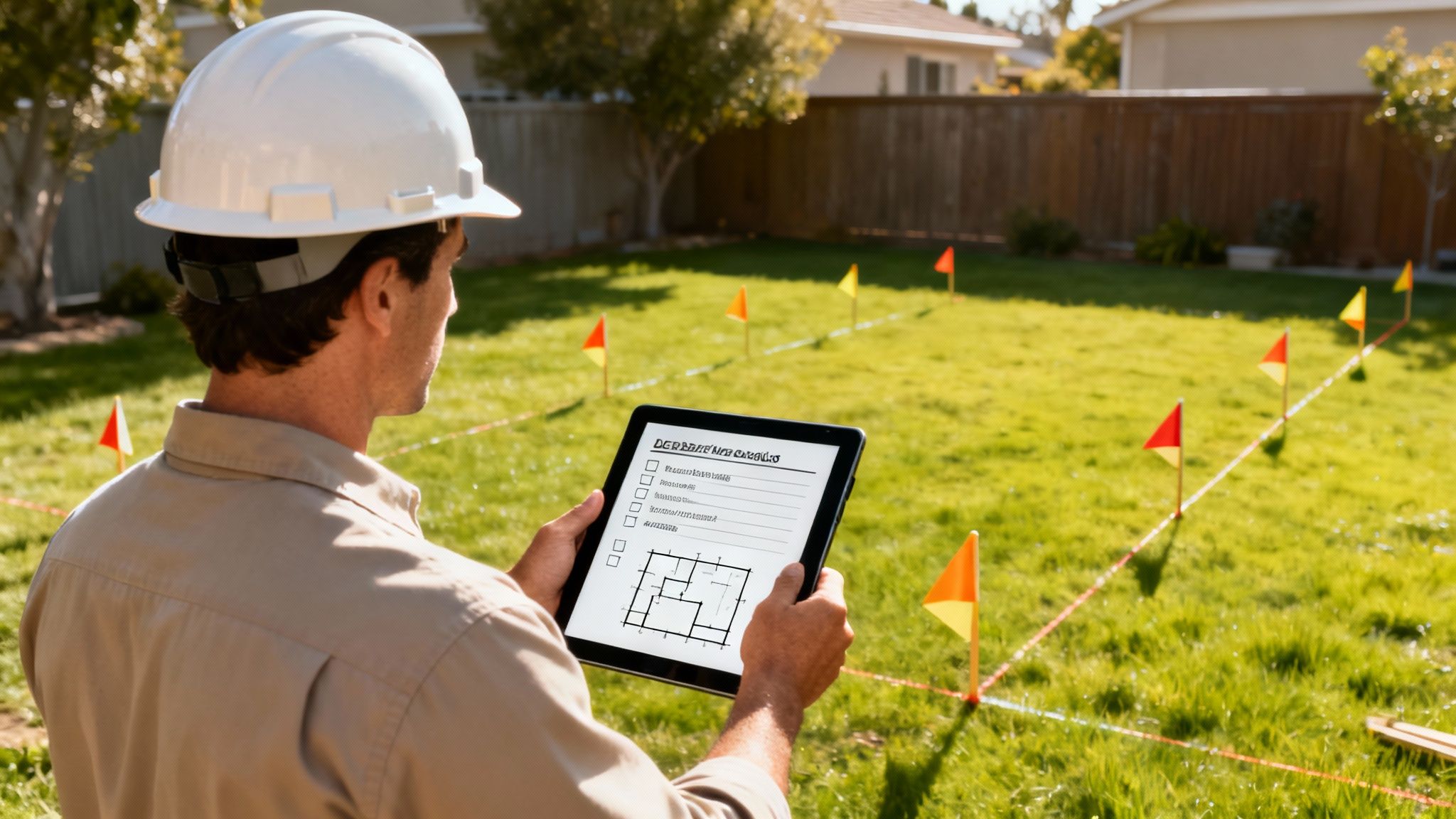
Before your architect draws a single line, the most important work for your ADU project happens underground. Understanding your existing utilities isn’t just a first step; it's the key to a successful build that can save you from headaches and expensive changes later.
Think of it as making an accurate map of your property’s hidden pipes and wires. When you know the exact location and depth of your sewer line, you and your architect can make smarter choices about where to place the ADU to keep digging costs down.
Start With What You Already Have
Your first move is to find any existing paperwork on your property. You are looking for "as-built" diagrams—the technical drawings that show where the original utility lines were installed. Your city's building or public works department is the best place to start.
But be careful: these documents are a starting point, not the final word. Old records can be wrong, and past homeowners may have made changes that were never recorded. That’s why a physical site survey is a must. For a deeper look, check out our guide on how to locate underground utilities on your property.
Calculating Your Property's Utility Load
One of the biggest mistakes homeowners make is assuming their current systems can handle the extra demand from an ADU. When you add a new kitchen, bathroom, and laundry room, you're putting a big new load on your water and sewer lines. This is where "fixture units" become very important.
Every sink, shower, and toilet has a "fixture unit" value based on local plumbing codes. According to the California Plumbing Code, if the total fixture units from your main house and the new ADU add up to more than 42, you'll have to upgrade your existing 3/4-inch water meter to a 1-inch meter. That’s a surprise expense that can cost thousands and cause major delays if you don't plan for it.
Pro Tip: Don't just focus on water and sewer. Your electrical panel is also important. Have an electrician do a load calculation to see if your main panel has enough power for the ADU. If not, you'll need to plan for a service upgrade.
Key Questions to Ask Utility Providers
Once you have a general idea of your site, it’s time to call your local utility companies and the city planning department. Being prepared with the right questions will get you the clear answers you need.
Here’s a checklist of what you should ask:
-
Water Department:
- What's the size and material of the water main in the street?
- What size is my current water meter and service line?
- Based on my planned fixtures, will I need a meter upgrade?
- What are the connection fees and permit costs for a new service or an upgrade?
-
Sewer/Wastewater District:
- Can you give me a map showing the sewer main and my property’s connection?
- Are there any known capacity issues with the sewer main in my neighborhood?
- What is the process for connecting a second unit? Do I need a new line, or can I connect to the existing one?
-
Electric and Gas Company:
- Will my ADU need its own separate electric and gas meters?
- Are there specific rules for placing new meters on my property?
- If my electrical panel is full, what’s the process for a service upgrade?
Getting these answers early is the secret to a smooth project. If you're planning an ADU in the tri-county area, consult with a utility specialist like Coastal Pipeline Inc. early. We can determine if your property’s current lines can support the new unit and what upgrades may be needed.
Juggling Permits and Utility Company Approvals
Getting all your permits and working with different utility companies can feel like a big headache. This is where many ADU projects get stuck. But it doesn't have to stop your build. The secret is clear communication, getting your applications right the first time, and starting these talks much earlier than you think.
My best advice is to talk with your city's planning department and each utility provider long before you break ground. Don’t see them as obstacles; think of them as partners. They just want to make sure your new ADU is safe and up to code. Your job is to make it easy for them to say "yes" without a lot of back-and-forth.
The New Reality of ADU Permitting
It's true that cities on the Central Coast—in Monterey, Santa Cruz, and San Benito Counties—are fast-tracking ADU permits. They want to see more housing built. But there’s a catch.
With this faster pace, planning departments are being tougher about utility compliance and inspections. This is especially true in older coastal neighborhoods or hillside areas where the existing infrastructure is already strained. They know a nice ADU is useless if it can't be safely hooked up to water, sewer, and power. So, expect your utility plans to be looked at very closely.
Putting Together an Application That Sails Through
The most common reason for a permit to be rejected is a simple one: an incomplete or confusing application. When you submit your plans, a plan checker shouldn't have to guess what you mean. Everything needs to be perfectly clear.
To avoid common problems, make sure your application includes these details:
- Detailed Site Plans: These should clearly show the ADU, the main house, and the exact routes for all new utility lines—water, sewer, gas, and electrical.
- Load Calculations: You'll need a licensed professional to provide the math that proves your existing electrical panel can handle the extra load from the ADU. If it can't, the plans must show the needed upgrades.
- Fixture Unit Counts: This is a big one. You need to list all the plumbing fixture units for both the main house and the ADU. This is how they check that your water meter is the right size. Our guide on water meter installation requirements explains why this is so important.
- Tie-In Details: Don’t just draw a line. Include specific drawings showing exactly how the new lines will connect to existing pipes or the public mains.
A study from the Texas Transportation Institute found that poor utility data and not knowing the process are major causes of project delays. In some cases, these issues can add months to a timeline and increase costs by 10-20%.
Knowing When to Call in a Utility Pro
Let's be honest—for most homeowners, managing technical talks with several different agencies is a lot of work. One small mistake, like misunderstanding a rule from the gas company, can cause a failed inspection that stops all other work.
This is where a utility specialist is worth the cost. A contractor with deep local experience, like our team at Coastal Pipeline Inc., can take this whole process off your plate. We speak the same language as city inspectors and utility engineers, which means we can make sure every rule is met from the start. A good understanding of local rules is everything. This article on navigating building codes and regulations shows why this knowledge is so important.
When an expert handles the permits and coordination, you get rid of the risk of mistakes that stop so many good projects. It frees you up to focus on the rest of the build, knowing that the important work underground is being handled correctly and on schedule.
Smart Ways To Keep Your ADU Utility Costs in Check
Utility work can be expensive on an ADU project. Costs can quickly get out of control if you aren't careful. But the good news is that a few smart decisions upfront can save you thousands of dollars. It all comes down to thinking about where you build and how you connect.
The biggest financial choice you'll make is whether to connect the ADU's utilities to the main house's existing lines or to install separate connections. This single choice has a huge impact on your final bill.
To Share or Separate Your Utility Lines
For most homeowners, sharing the existing water and sewer lines is the cheapest option. You can save a lot on connection fees and avoid expensive upgrades. Running new, separate utility hookups can easily cost $5,000 to $15,000, and sometimes more.
Local governments are realizing this. Many cities in California and across the country are updating their codes to make it easier to share utilities for ADUs, as they know it's a big hurdle for homeowners. You can read more about these changes in recent findings on ADU utility regulations.
But sharing isn't always possible. If your current sewer line is old, too small, or in bad shape, it might not be able to handle the extra load from a new unit. A professional camera inspection is the only way to know for sure. If it turns out the line needs to be replaced anyway, it might be a good time to install a separate connection for the ADU. To get a better idea of the factors, our guide explains the things that affect sewer line replacement costs.
My Two Cents: Before you decide to share a water line, call your local utility provider. Some districts have strict rules that require a separate water meter for any new home. If that's the case, the decision is made for you.
To help you decide, here's a quick comparison of shared versus separate utility lines.
Cost Comparison Shared vs Separate Utility Lines
| Factor | Shared Utility Lines | Separate Utility Lines |
|---|---|---|
| Upfront Cost | Lower (typically $3,000 – $8,000) | Higher (typically $5,000 – $15,000+) |
| Pros | Much cheaper, less digging, faster to install. | Independent billing, no impact on main house, may add more resale value. |
| Cons | Can strain old systems, may have complex plumbing tie-ins, not always allowed. | Expensive city/utility fees, requires more digging, more complex permits. |
In the end, separate lines give you more independence, especially if you plan to rent out the ADU. But for most, the big cost savings of a shared system make it the clear winner if the existing pipes and wires can handle it.
How Your ADU's Location Drives Up the Bill
Here’s a simple rule I tell all my clients: distance equals dollars. Where you place your ADU on your property directly affects the cost of your utility connections. The farther your ADU is from the main house's connection points, the more you'll pay for digging, pipe, and labor.
Every foot of digging adds up. And if that trench needs to cut through a concrete driveway, a patio, or landscaping? The price goes up again, because now you’re paying for demolition and repairs too.
Just think about these two situations:
- Low-Cost Placement: An ADU built right next to the main house. The utility lines run a short, straight path through a lawn. Easy.
- High-Cost Placement: An ADU at the back of a deep lot. Now you're digging a long trench, going around big trees, and cutting through a concrete patio. Expensive.
Get your designer and a utility contractor involved early in the planning. They can help you map out the most efficient, cheapest route for your lines. This one conversation can help you decide on placement and keep your budget from getting too high. And remember, these tips are just one part of the puzzle—learning how to reduce overall construction costs is key to making your ADU project a financial success.
How to Schedule Trenching and Pass Inspections
With permits in hand, the real work begins—and this is where your project timeline is most at risk. The trenching phase, where you dig channels for your new utility lines, and the inspections that follow are critical moments for your schedule. A failed inspection isn't just a small problem; it can easily set your project back weeks and throw your whole construction calendar off.
Getting this part right is all about smart scheduling and knowing what city inspectors look for. If you do this well, you’ll keep your ADU build moving along without delays and extra costs.
The key is to balance placement, connection choices, and your budget from the very beginning.
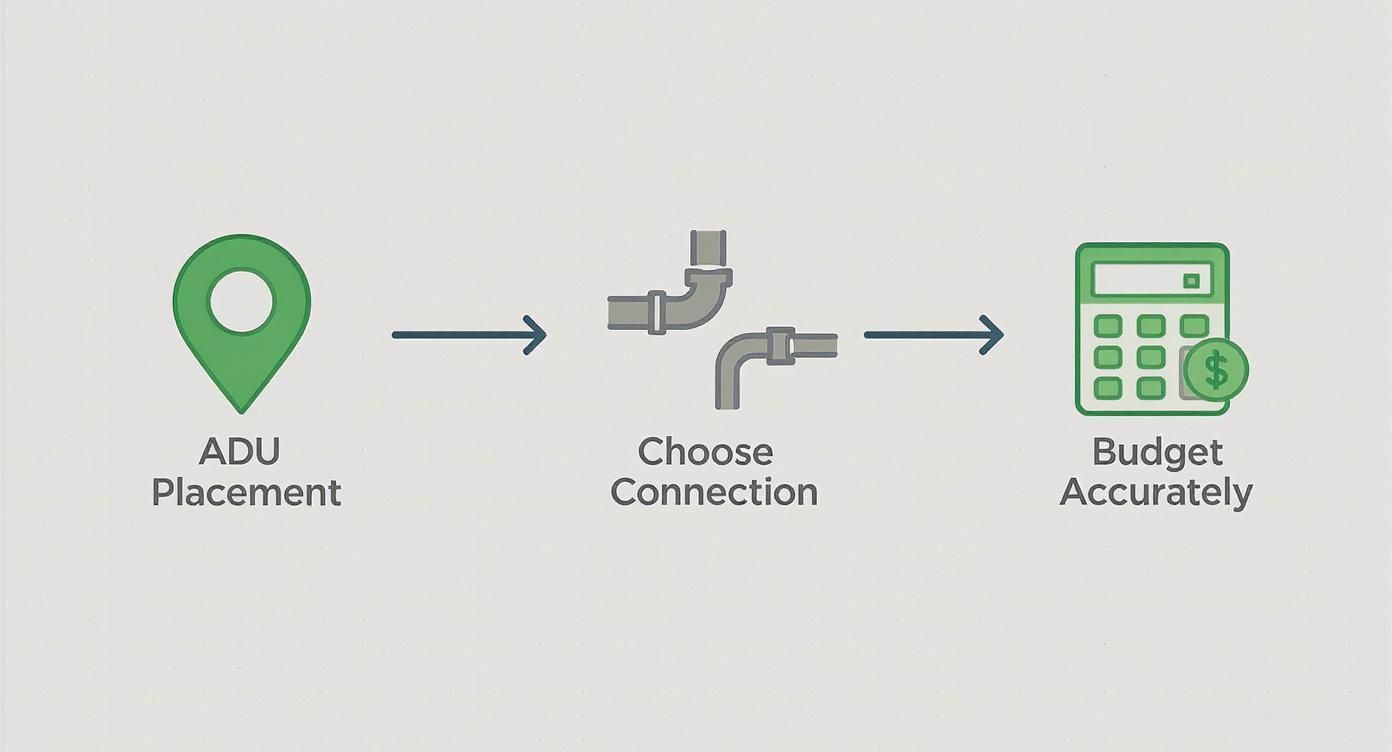
This image shows how thinking through these three things together is the best way to prevent big financial surprises.
When to Bring in the Excavator
Timing is everything. Dig too early, and you’ll get in the way of the foundation work. Dig too late, and you’re trying to move heavy machines around a new structure.
The best time for trenching is almost always after the foundation is poured and cured, but before any wall framing goes up. This gives the excavator clear access without risking damage to the new ADU’s structure.
Coordinating this is a very important project management task. Everyone involved, from you to your general contractor, needs to understand how to schedule this work correctly. One mistake here can stop a project that was moving along quickly.
Understanding Trenching Methods
Not all digging is the same. The best method for your property depends on your soil, the distance you need to cover, and what’s already in the ground.
- Open-Cut Trenching: This is the most common way. A backhoe or excavator digs a simple trench from one point to another. It’s the most affordable option for properties with clear, open access.
- Trenchless Methods (Pipe Bursting/Boring): Have a nice concrete driveway, big tree, or expensive patio in the way? Trenchless is your answer. It costs more at first but saves you money on repairs by tunneling under things instead of destroying them.
- Hand Digging: Sometimes, the only way is the slow way. For tight spaces or when you get very close to existing gas or water lines, some sections will have to be carefully dug by hand to prevent accidents.
Electrical lines have their own set of rules for depth and the type of pipe used. To learn more about that, you can find details in our guide on underground utility trenching for electrical lines.
Acing Your Underground Inspection
A city inspector doesn’t just take a quick look. They have a detailed checklist and have seen every shortcut. Passing the first time means making sure every detail is perfect before you call them.
Pro Tip: Never fill in the trench before the inspection is done and signed off. The inspector needs to see everything—the pipe, the material it sits on, and the connections. Covering it up is an automatic fail and means you’ll be digging it all up again.
Here’s a look at what’s on their checklist:
- Correct Depth and Slope: Sewer lines need a steady, exact slope—usually 1/4 inch per foot—to work right. Water and gas lines must be buried deep enough to be safe.
- Proper Bedding: You can't just drop a pipe on rocks. It has to rest on a prepared bed of sand or fine gravel to protect it.
- Approved Materials: Every pipe, fitting, and part must be exactly what was approved in your plans. No changes are allowed.
- Secure Connections: The inspector will check every joint to make sure they are perfectly sealed.
- Tracer Wire: For any non-metal pipes (like PVC for water), a copper wire must be run alongside it in the trench. This lets the utility line be found with equipment in the future.
Once you get the inspector's approval, then you can fill in the trench. This is best done in layers, packing the soil as you go to prevent it from sinking later. This careful approach gives your ADU a solid, reliable foundation.
Your Top Questions About ADU Utility Connections Answered
Even the best ADU plan can run into problems with utilities. It's a complex part of the build, and many homeowners feel overwhelmed by it. Here are some simple answers to the questions I hear most often from clients here on the Central Coast. Getting these things clear from the start can save you a lot of headaches and surprise costs.
How Do I Know if My Sewer Line Can Handle an ADU?
This is a big question, and you cannot guess. The only way to know for sure is to have a professional put a camera down there. A licensed utility contractor will run a camera through your sewer line to see its condition, measure its size, and check the slope. This is not optional; it's necessary.
The camera inspection tells us two things. First, we see if there are any cracks, roots, or blockages. Second, we can calculate the total Drainage Fixture Units (DFUs)—that’s the combined load from your main house and the new ADU. If that total number is more than your existing pipe can handle by code, or if the pipe is in bad shape, you will need an upgrade or a new line. You want to find this out long before you finalize your ADU’s design.
What’s the Biggest Hidden Cost I Should Watch Out For?
The most painful surprise cost is finding out you have to work in the public right-of-way—the area under the street. If your ADU requires a larger water main or a new sewer line that has to go past your property line, the budget can get much bigger very quickly.
Why? Because the project suddenly involves more than just digging in your yard. You're dealing with:
- Heavy-Duty Permitting: This means getting special permits from the city's public works department, which is a different process.
- Traffic Control: You’ll be paying for people to direct traffic, signs, and sometimes even road closures. It adds up fast.
- Serious Restoration: You can’t just throw dirt back in the hole. You have to pay for professional repairs to the asphalt or concrete to meet strict city rules.
Another common surprise is finding out your main electrical panel is already full. Upgrading your electrical service isn't a quick fix. It involves working with the utility company, can take months to schedule, and often costs thousands. An expert check early on is your best defense against these kinds of big budget surprises.
On the Central Coast, especially in older coastal towns and hillside areas, we see a lot of aging public pipes and wires. This makes it more likely that your ADU project might need one of these expensive off-property utility upgrades.
Can I Just Dig the Trenches Myself to Save Some Cash?
I understand the desire to do it yourself. But when it comes to utility trenching, this is one area where you should not try to cut corners. It’s not just a bad idea; it’s often illegal and can be very dangerous.
There are strict codes for how deep utility lines must be buried for safety. If you start digging without knowing exactly where the existing gas, water, or high-voltage electrical lines are, you're risking a disaster. Licensed professionals are required by law to call 811 to have all public utilities located and marked before they start digging.
Hiring a licensed and insured contractor like Coastal Pipeline Inc. means the job is done safely, it meets all local codes, and it will pass inspection. Trying to save a few hundred dollars here could end up costing you tens of thousands in repairs, fines, or worse. It's just not worth the risk.
Realistically, How Long Does the Utility Tie-In Process Take?
This is where homeowner expectations often don't match reality. Connecting utilities is rarely a one-week job. You need to build extra time into your overall construction schedule for this phase.
Here’s a more realistic look at the timeline:
- Planning & Permitting: This can vary the most. It includes the first site check, getting detailed utility plans drawn up, submitting them, and then waiting for approval from both the city and the utility companies. Realistically, plan on 4 to 12 weeks for this stage alone.
- On-Site Installation: Once you have permits, the actual digging and pipe-laying work can usually be done in 1 to 3 weeks, depending on how far you’re digging.
- Final Connections & Inspections: Getting the utility company out for the final hookup and working with the city inspector for the final approval can easily add another 1 to 2 weeks to the schedule.
All together, you should budget at least two to four months for the entire utility process, from the first call to the final approval. The best advice I can give is to start the utility planning process the moment you decide to build.
Ready to break ground on your ADU? Let Coastal Pipeline Inc. handle the utility side of your project. We serve Monterey, Santa Cruz, and San Benito Counties with reliable underground infrastructure solutions tailored for ADU development. Schedule a consultation today to start smart by visiting us at https://coastalpipelineinc.com.