Building an ADU on the Central Coast is an exciting idea. But the most important details are usually buried underground. While it’s fun to pick out floor plans and finishes, figuring out your ADU utility hookups on the Central Coast: what homeowners need to know in 2025 is where projects in Santa Cruz, Salinas, and Monterey often hit problems and surprise costs.
Getting your water, sewer, gas, and electric connections sorted out from the start is the secret to a smooth build.
ADU Construction Is Booming Across the Central Coast
Accessory Dwelling Units, or ADUs, are popping up in backyards all over the Central Coast. California has relaxed its zoning and building laws, so building is easier than ever. Homeowners are converting garages, building backyard units, or adding to their homes.
But they often underestimate the utility work needed to connect these new units to city systems. Missing this step in the planning phase can cause major problems.
Common issues include:
- Sewer Line Surprises: Assuming the existing sewer line can handle another bathroom without a proper check.
- Water Connection Woes: Not realizing the city requires a separate water meter or a special valve to prevent backflow.
- The PG&E Waiting Game: Underestimating how long it takes to get new gas and electric services designed and installed.
When these details aren't planned for, you could face stalled permits, expensive changes during the project, or failing a final inspection.
Why It Matters: Utility Connections Can Delay or Complicate Projects
California's push for ADUs has been a huge success. The state went from just 1,336 permits in 2016 to nearly 27,000 in 2023. This shows how important these small homes are for creating new housing. New laws in 2025 are making it even easier, like cutting certain fees for homeowners.
The boom in ADU construction shows a major gap in homeowner knowledge. Most guides talk about the building itself, but very few explain the complex underground utility work. This is where an experienced pipeline contractor becomes your most valuable partner.
Many ADU delays come from poorly planned sewer line extensions, water main connections, or coordinating with PG&E for gas and electricity. Contractors often focus on framing and finishes, but few address the underground utilities. You might also find you need a major electrical panel upgrade to power the new unit, which is a big project on its own.
This is why planning your project's success starts with a solid utility plan. For more on this, check out our guide on effective construction project management tips—it shows how early planning pays off.
Quick Guide to ADU Utility Priorities on the Central Coast
To get a clearer picture, let's look at the main utility connections. Each has its own rules and potential problems. This table shows what you need to think about from day one.
| Utility Type | Common Challenge | Why Plan It First |
|---|---|---|
| Sewer & Septic | Existing lines may be too small, too old, or not sloped correctly. | A failed sewer line can stop the whole project. It's the deepest utility, so it must be installed first. |
| Water Supply | Cities often require a new, separate meter or an expensive backflow prevention device. | Water main connections can require street cuts and traffic control, which need early permit applications. |
| Storm Drainage | New roofs and driveways create runoff that must be managed with systems like French drains or dry wells. | Bad drainage can cause flooding. Your building permit won't be approved without a solid plan. |
| Electric & Gas | The main electrical panel may not have enough capacity for the ADU. PG&E lead times are very long. | Getting on PG&E's schedule can take months. This should be one of the first calls you make. |
Understanding these things from the start is the difference between a project that runs smoothly and one with delays and extra costs. Your entire construction timeline depends on getting these underground systems right.
Navigating Central Coast Water and Sewer Connections
When you build an ADU, it's easy to focus on fun parts like picking finishes. But the real make-or-break moments happen underground. Your water and sewer connections are the biggest source of unexpected costs and delays for homeowners on the Central Coast.
Many people assume they can just connect their new ADU to the house's existing plumbing. This can be a risky choice, especially with older homes in places like Santa Cruz and Monterey. You might budget for a simple connection, only to have an inspector tell you your main sewer line is cracked or full of roots and must be replaced.
Suddenly, you're facing thousands of dollars in unplanned costs and a construction site that's stopped for weeks. This is why having a professional inspect your pipes first isn't just a good idea—it's essential.
This infographic shows the typical project flow and why you have to sort out your underground utilities first.
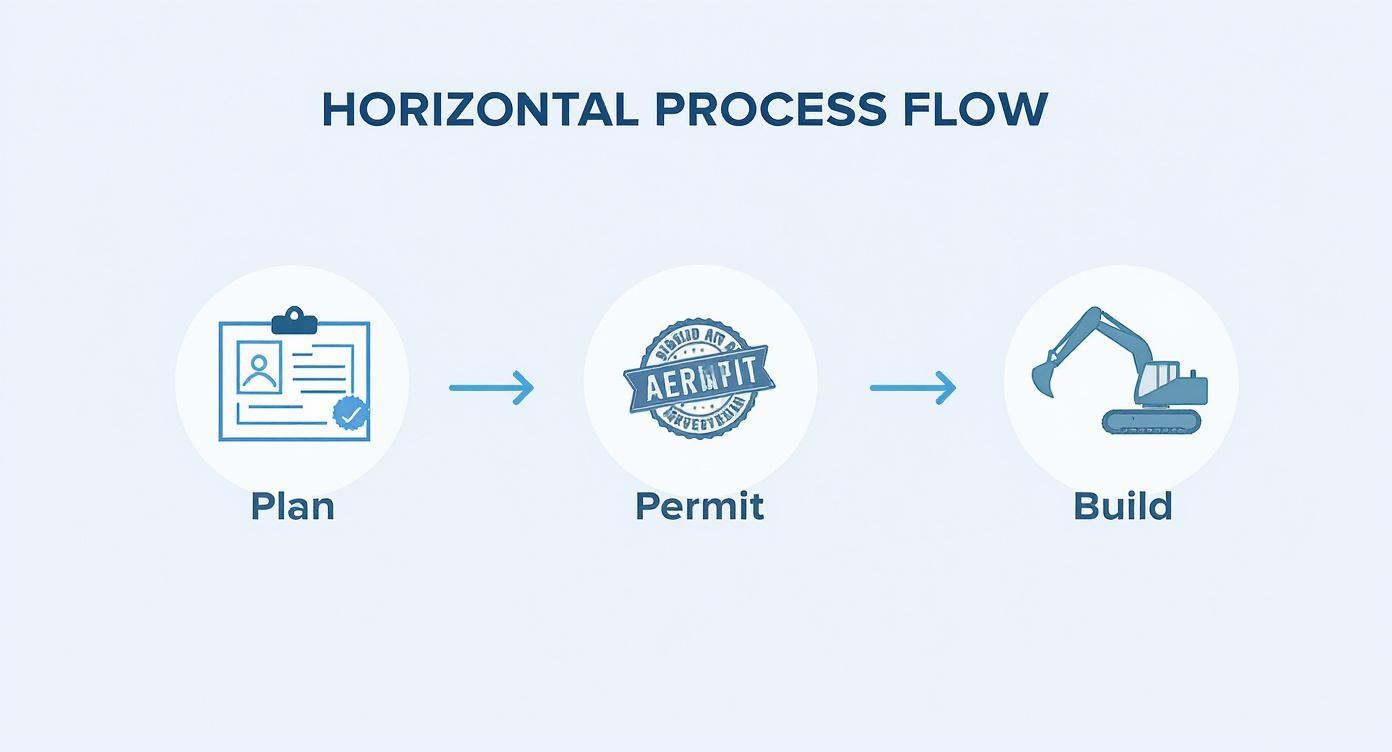
As you can see, a successful build starts long before the first hammer swings. It begins with good planning and getting your permits in order.
Understanding Your Sewer Lateral Options
Your home's sewer lateral is the pipe that runs from your house to the city's main sewer line under the street. When you add an ADU, you have a couple of ways to connect it. Your choice will affect your budget and timeline.
The first, and simplest, option is to connect the ADU's new sewer line to your existing one. This is the cheapest way, but it only works if your current pipe is:
- Large enough to handle the extra flow from a new home.
- In good shape, without any cracks or damage.
- At the right depth and slope to let gravity drain the ADU properly.
The other option is to install a brand-new sewer lateral just for the ADU. This is often needed if the existing line is old, small, or damaged. It costs more at the start, but it ensures you'll pass inspection and avoid plumbing headaches later. To learn more about what this involves, you can read about how to install sewer lines and see why it’s a job for professionals.
Here’s a common story: A homeowner in Salinas is converting their garage. They think they're ready to start, but a quick camera inspection shows their 60-year-old clay sewer line has collapsed. The project stops while they deal with an unexpected, expensive digging project.
Water Connections and Local Requirements
Connecting your ADU to the water main is another key step. It’s more than just running a new pipe; you have to follow strict local codes that protect the public water supply.
One of the most important things you'll need is a backflow prevention device. This is a special valve that stops water from your property from flowing backward into the city's clean water system. It's a required safety measure in almost every city on the Central Coast.
You might also need to install a separate water meter. This depends on where you live and what kind of ADU you're building.
- Attached or Conversion ADUs: These can often share the main house's water meter.
- Detached ADUs: Many cities now require a separate meter for new, standalone units.
A separate meter is great for billing if you plan to rent the ADU, but it adds to your construction cost. A good utility contractor can explain your city's rules for ADU utility hookups on the Central Coast and find the best way to get it done without surprises.
Getting Your ADU Hooked Up to PG&E Gas and Electric
Connecting gas and electricity to your ADU is one of the last steps, but you need to plan for it from day one. Many homeowners have a beautiful, finished ADU that sits dark and cold for months because they started the PG&E process too late.
Getting on PG&E’s schedule is not a quick phone call. It’s a process with applications, detailed plans, and reviews. One small mistake on your paperwork can send you back to the beginning, adding weeks or months to your timeline.
The most important advice is this: start talking to PG&E and your utility contractor while you’re still in the design phase, not when the drywall is up.
The Application and Design Maze with PG&E
First, you'll need to submit an application. PG&E needs to see accurate load calculations. These numbers show exactly how much power your ADU will use, from the heater and appliances down to every outlet.
Getting these calculations right is very important. If you underestimate your power needs, you could have flickering lights or tripped breakers later. If you overestimate, PG&E might make you pay for expensive, unneeded upgrades. A good utility contractor can create precise calculations that get your application approved easily.
Once you submit everything, PG&E assigns a planner to your project. This person will review your plans and map out where the new lines and meter will go.
Digging In: Trenching for New Lines
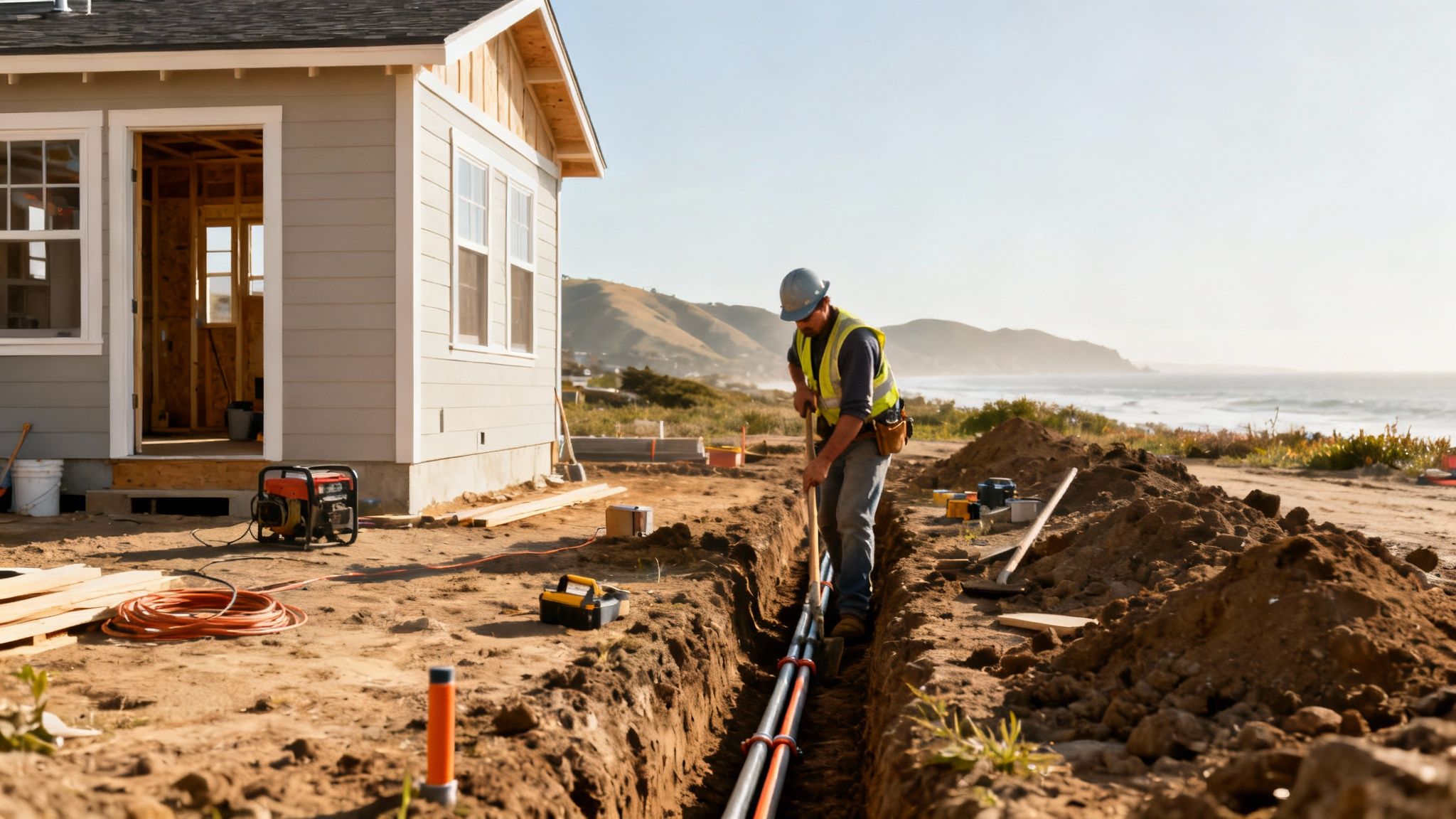
After PG&E approves your project, it's time to put the lines in the ground. This almost always means digging a trench from the main connection point to the ADU.
Safety and following the rules are key here. The trenches for gas and electric lines have specific depth and separation rules. For example, electrical lines usually need to be buried deeper than other utilities.
A few key things to watch for during trenching are:
- Trench Depth: Gas lines on the Central Coast usually need to be at least 24 inches deep. Electrical lines are often required to be 18 to 24 inches deep.
- Separation: You must keep enough space between different utility lines like gas, water, and sewer. This prevents one line from damaging another.
- Safety First: This work must be done by a qualified team. Handling natural gas lines requires special training that most general contractors don't have.
Following the rules for ADU utility hookups on the Central Coast is about more than just digging a ditch. It’s about making sure every connection meets the strict standards of both PG&E and the city so you pass your inspections the first time.
Because this work is so specialized, it's a good idea to work with a team that has the right training. For example, Coastal Pipeline is a PG&E OQ-certified gas line trenching company. This means our crew is trained to handle natural gas lines exactly the way PG&E requires.
The Final Step: Scheduling the Meter Set
The "meter set" is the final step. This is when a PG&E technician comes to install the new gas and electric meters and turn on the power. But they won't schedule this until a few things are done:
- All the trenching and line installation is finished and the ground is filled back in.
- The work has passed inspection by both the city and a PG&E inspector.
- The electrical panel and gas pipes inside the ADU are fully installed and have passed their own inspections.
Only when all those boxes are checked can you schedule the meter installation. By planning ahead with an experienced utility contractor, you can make sure each step goes smoothly and avoid having your new ADU sit powerless.
Understanding ADU Permits and Regulations for 2025
Building an ADU has gotten easier in the last few years, thanks to state laws aimed at solving California’s housing shortage. This is great news for people on the Central Coast. But while the state has removed a lot of hurdles, you still have to follow local rules in cities like Salinas, Santa Cruz, and Monterey—especially for your underground utilities.
The state sets the main rules, but each city controls its own local codes. To get your project done right, you need to know both. Before you can dig a trench, you need the right permits. Skipping this step will lead to a stop-work order, which will stop your project and increase your costs.
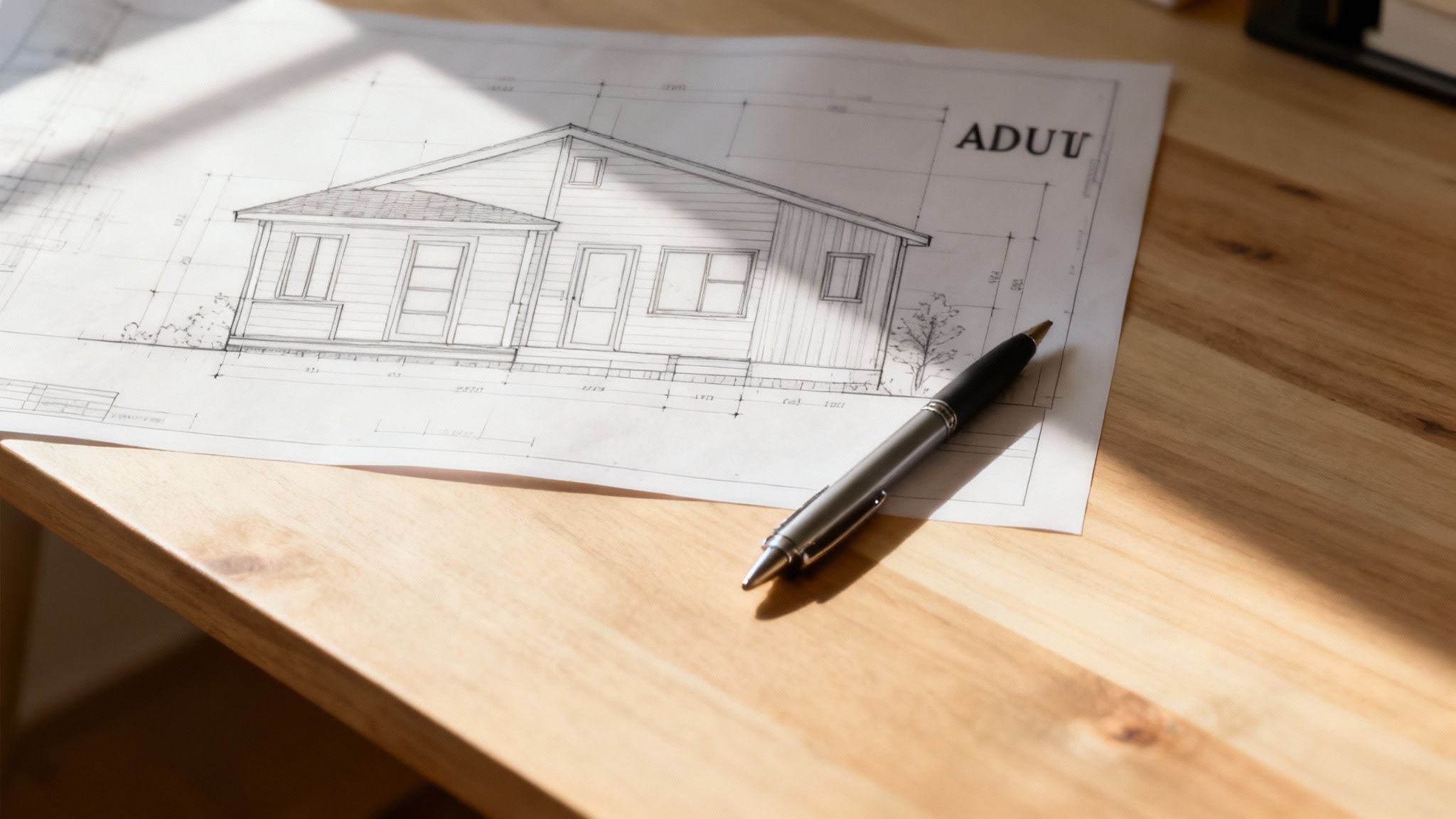
Let’s look at the permits for 2025 so you can be prepared. Knowing the rules ahead of time is the best way to avoid costly surprises and keep your project moving.
The Permits You Will Actually Need
When you submit your ADU plans, they cover the building itself. What many homeowners don't realize is that the underground utility work often needs its own special permits. These are important because they require inspections at specific points in the process.
Here are the most common permits you’ll need for ADU utility hookups on the Central Coast in 2025:
- Encroachment Permit: If your project goes into public property, like the street or sidewalk, you'll need this permit. This is often needed to connect to a city sewer main.
- Trenching Permit: This permit is for the digging. A city inspector needs to see the open trench to check its depth and safety before you can fill it back in.
- Plumbing and Electrical Permits: These are for the final hookups for your water, sewer, gas, and electrical lines. An inspector will check every connection to make sure it’s safe and up to code.
The city inspector is there to help ensure quality. Their job is to make sure the work is done safely and will last a long time.
How New 2025 Laws Are Helping Homeowners
The good news is that California continues to make it easier to build ADUs. The laws for 2025 are a big help, especially for utility connections and local rules.
New laws are making a real difference. For example, Assembly Bill 2533 helps if you have an unpermitted ADU built before 2020. It requires local agencies to help you make the unit legal without fines or new utility connection fees, as long as it meets basic safety standards. For those in coastal zones, Senate Bill 1077 is designed to speed up the approval process.
You can learn more about how 2025 legislation changes the game for homeowners on aduwestcoast.com.
These new laws are on your side. They can save you thousands of dollars in fees that used to be a major problem for ADU projects.
This is why working with a contractor who knows these rules is so important. A good contractor can use these state laws to help your permit applications, making the process clear and manageable.
Plan Underground First to Stay on Schedule and Save Money
A successful ADU build starts with the infrastructure. Planning your underground utilities first is the secret to keeping your project on time and on budget.
Imagine a homeowner who gets their building plans approved and starts framing. Then they find out the sewer main is on the other side of the property, under the brand-new driveway they just poured. Now they are facing expensive changes, a torn-up yard, and a project that’s stopped for weeks waiting for new permits.
ADU success starts with infrastructure planning. By planning your utilities first, your build is predictable and stays on budget. You avoid those expensive surprises.
The Real Cost of Planning Last
When utility connections are an afterthought, the problems and the bills can add up quickly. Homeowners who wait often face problems that could have been avoided.
Some of the most common issues include:
- Emergency Change Orders: Finding out you have a collapsed sewer line after construction has started means you’re paying more for last-minute fixes.
- Wrecking Finished Work: Digging trenches after the landscaping is done or the patio is finished is painful. You pay to destroy and then rebuild perfectly good work.
- Major Project Delays: Waiting for the city or PG&E to approve a new plan can add months to your timeline.
"The difference between a smooth ADU build and a nightmare project often comes down to one thing: a comprehensive utility plan. Before you even finalize your blueprints, you should know exactly how your water, sewer, and power will get to the new unit."
A Smarter Approach Starts Below the Surface
A predictable project begins with knowing what’s happening underground. Bringing in a utility specialist early in the design phase helps you map out the best path for every connection. This turns potential problems into simple items on a plan.
The Central Coast is building a lot of ADUs. Our region accounted for about 6% of all ADU permits in California between 2018 and 2022. You can see the numbers in the full California ADU outcome report from calhfa.ca.gov. With so much construction, smart planning is what makes a project successful.
Good planning also means using modern tools. With clash detection and coordination services, we can create a digital model of all the underground routes. This avoids surprises when the digging starts.
This is what we do at Coastal Pipeline. We work with ADU builders, architects, and homeowners to handle trenching, utility connections, and inspections. We coordinate with cities and utility providers to make sure everything from backflow prevention to fire line requirements is handled correctly and efficiently. Our team helps homeowners avoid unnecessary trenching and comply with local rules to get approvals without delay. Our expertise in utility systems construction gives you a clear plan, saving you time and money.
So before you fall in love with a floor plan, make sure you have a solid plan for what’s happening underneath it.
Your Top ADU Utility Questions Answered
Building an ADU brings up a lot of questions, and many of them are about what's underground. When it comes to hooking up water, sewer, and power, homeowners across the Central Coast face the same challenges. Let's answer some of the most common questions about ADU utility hookups and what to expect in 2025.
This is your guide to getting your project on the right track from the start.
Do I Really Need a Separate Utility Meter for My ADU in Santa Cruz County?
This is a very common question. The short answer is: it depends on your ADU and your city's rules.
Whether you need separate meters for water, gas, or electricity often depends on the type of ADU you’re building.
- Garage Conversions: If you're building within an existing structure, like a garage, you can often connect to the main house's meters. This is simpler and cheaper at the start.
- New Detached Units: For new, standalone ADUs, cities are increasingly requiring separate meters. This makes life easier if you plan to rent the unit because it separates the bills.
While 2025 laws are making the process easier, your first call should be to your local planning department. From there, an experienced utility contractor can look at your plans and find the most practical way to meter your new unit.
What's the Biggest Mistake Homeowners Make with ADU Utility Connections?
The most common and costly mistake is treating utility connections as an afterthought. Many homeowners get their plans approved, only to find a huge problem when they start digging.
They find out the existing sewer line is too old to handle the extra load, or that the PG&E connection is on the other side of the property, which requires a lot of expensive trenching. This lack of planning stops projects, increases budgets, and creates a lot of stress.
The best way to avoid this is to bring in a utility specialist during the early design phase. Planning your underground infrastructure first isn't just a good idea—it’s the foundation of a successful ADU build.
Can I Hook Up My ADU to My Septic System in San Benito County?
Connecting to an existing septic system may be possible, but it is not guaranteed. It all depends on the age, size, and condition of your system.
Most septic systems are designed for the number of bedrooms in the main house. Adding an ADU means more wastewater, and your current system might not be able to handle it.
Before you do anything, you’ll need a licensed septic professional to evaluate your system. They will check its capacity and the soil conditions to see if it can handle the increased flow. This is a requirement to meet local health codes. They will tell you if your system can be expanded or if you need a new, separate system.
How Do the 2025 California Laws Help with ADU Utility Hookup Costs?
The new laws for 2025 offer real financial help to homeowners. Assembly Bill 2533, for example, is great for anyone who wants to make an older, unpermitted ADU legal. It allows you to bring the unit up to code without facing penalties or new utility connection fees, as long as it meets basic health and safety standards.
Also, statewide rules now prevent local agencies from charging certain impact fees for any ADU under 750 square feet. You’ll still have to pay for the actual installation, but these changes can save you thousands in government fees. Knowing these rules is important for keeping your budget in check. To learn more about the work involved, you can see our underground utility services.
If you’re building an ADU in Monterey, Santa Cruz, or San Benito County, contact Coastal Pipeline Inc. to ensure your utility connections are done right—from the trench to the final tie-in.