
For property owners in California, making sure your parking lot follows all the rules can feel confusing. It's like having two sets of instructions: one for federal laws (ADA) and another for state laws (Title 24). This guide will help you understand both, using simple language to create a clear plan for your property.
Your Guide to California ADA Parking Rules
Let's start by looking at these rules in a new way. They aren't just a list of things to do. They are the key to creating a safe and welcoming place for every person who visits your property.
If you get these rules wrong, you could face fines, lawsuits, and expensive repairs. For business owners, developers, or property managers in Monterey, Santa Cruz, and San Benito Counties, paying attention to these details from the start is a must. We’ll break down everything you need to know, from the number of spaces required to the exact size of each stall. We will also point out the key differences between the federal Americans with Disabilities Act (ADA) and California's stricter Title 24 building codes.
What This Guide Covers
Think of this guide as a practical plan, not just a rulebook. We will cover the specific requirements you need to meet, including:
- Stall Dimensions and Layout: The exact measurements for standard and van-accessible spaces, plus the very important access aisles.
- Surface and Slope Requirements: Why the less than 2% slope rule is one of the most important—and most often failed—rules in California.
- Signage and Markings: The required heights, symbols, and specific words needed for signs and pavement markings.
- Path of Travel: How to make sure there is a clear, safe path from the parking spot all the way to your front door.
By the end of this guide, you’ll understand your legal duties and have a clear plan to make your property compliant. This will help you avoid common mistakes and make sure your property is open to everyone.
Getting these details right is the first step. For a good start, you can check out the general rules for handicap parking spaces. From there, we'll dive into the specific rules that make California's accessibility codes some of the toughest in the country. Let's get started.
Understanding Federal ADA Parking Standards
Before we get into California's specific rules, we have to start with the basics: the federal Americans with Disabilities Act (ADA). These are the rules for the whole country that set the minimum standard for what makes a parking lot accessible. Getting these basics right is the first step for any property owner.
The federal rules provide a clear guide for everything, from the number of required spaces to their exact size. This makes sure that no matter where a person with a disability goes in the country, they can count on a safe and consistent level of access.
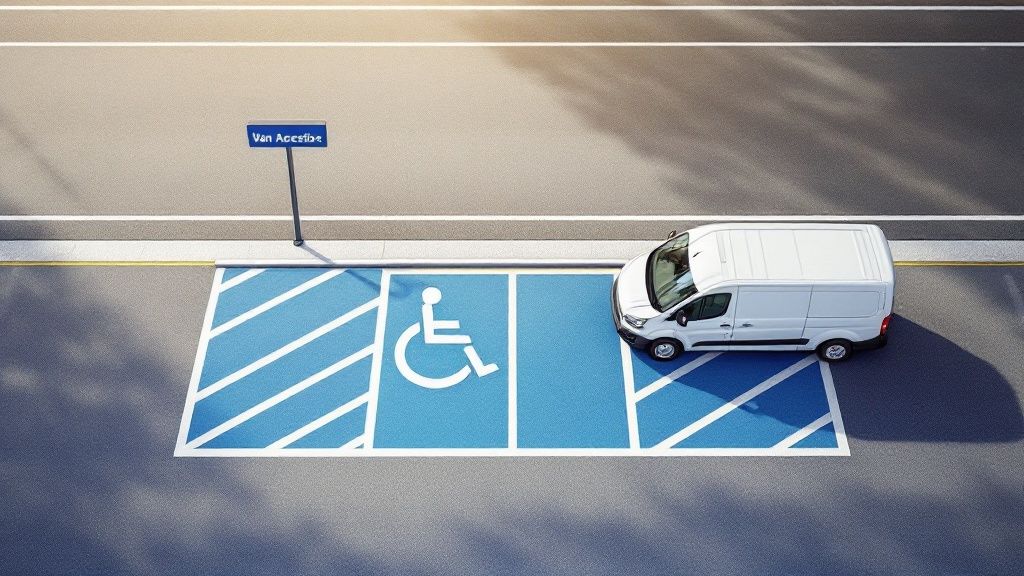
This image shows a great example of a well-done layout in a California lot. Notice the clear markings, easy-to-read signs, and simple flow—all key parts of ADA compliance.
As you can see, a compliant layout is more than just paint. It's a carefully designed system where stalls, access aisles, and signs all work together.
How Many Accessible Spaces Do You Need?
The first question people ask is, "How many handicap spots do I need?" The ADA makes it simple. The answer is based on the total number of parking spaces in your lot.
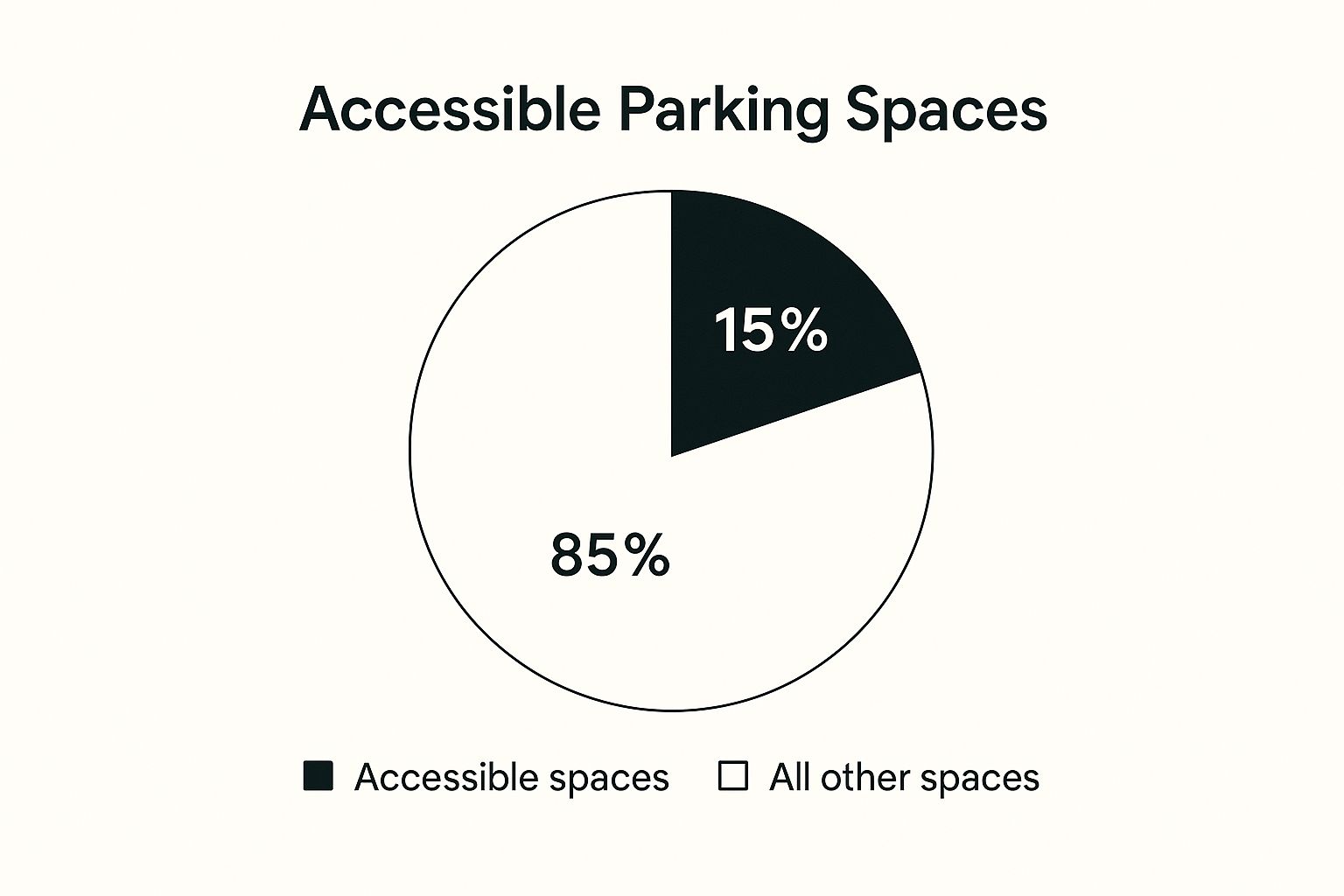
This isn't a suggestion—it's the law. The number of required spaces grows with the size of your lot. For example, a small lot with 1 to 25 spaces needs at least one accessible spot. A larger lot with 101 to 150 spaces must have at least five.
The table below shows the exact requirements. Use it to find the minimum number of accessible spaces your lot needs.
Required Accessible Parking Spaces Under ADA Rules
| Total Parking Spaces in Lot | Minimum Required Accessible Spaces | Van-Accessible Requirement Note |
|---|---|---|
| 1 to 25 | 1 | At least 1 of every 6 accessible spaces must be van-accessible. |
| 26 to 50 | 2 | At least 1 of every 6 accessible spaces must be van-accessible. |
| 51 to 75 | 3 | At least 1 of every 6 accessible spaces must be van-accessible. |
| 76 to 100 | 4 | At least 1 of every 6 accessible spaces must be van-accessible. |
| 101 to 150 | 5 | At least 1 of every 6 accessible spaces must be van-accessible. |
| 151 to 200 | 6 | At least 1 of every 6 accessible spaces must be van-accessible. |
| 201 to 300 | 7 | At least 2 of every 7 accessible spaces must be van-accessible. |
| 301 to 400 | 8 | At least 2 of every 8 accessible spaces must be van-accessible. |
| 401 to 500 | 9 | At least 2 of every 9 accessible spaces must be van-accessible. |
| 501 to 1,000 | 2% of total | At least 1 of every 6 accessible spaces must be van-accessible. |
| 1,001 and over | 20, plus 1 for each 100 over 1,000 | At least 1 of every 6 accessible spaces must be van-accessible. |
It’s a simple system: the more cars your property can hold, the more accessible options you must provide.
Stall Dimensions and Access Aisles
Having the right number of spots is only the first part. They also have to be the right size. The ADA is very specific about stall dimensions to make sure people have enough room to get in and out of their vehicles safely, especially if they use a wheelchair or walker.
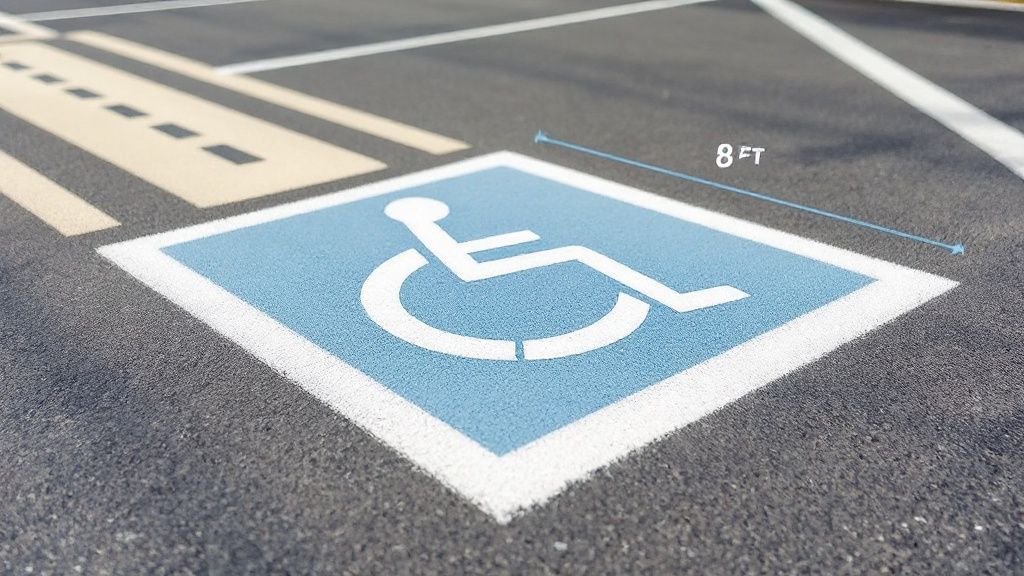
- Standard Accessible Stalls: These must be at least 96 inches (8 feet) wide.
- Van-Accessible Stalls: These also need to be at least 96 inches (8 feet) wide.
- Access Aisle: This is the striped area next to the parking stall, and it's very important. For a standard accessible space, the aisle must be at least 60 inches (5 feet) wide. For a van-accessible space, that aisle needs to be much wider—at least 96 inches (8 feet).
The striped access aisle is a "no parking" zone. It gives people a safe, clear space to use a wheelchair ramp or lift. For a closer look at these layouts, our complete guide to building an ADA-compliant parking lot breaks it down even further.
Crucial Tip: It's best to place the access aisle for a van-accessible space on the passenger side. Most vans have ramps that come out from that side, so this small detail makes a big difference.
Signage and Surface Requirements
The final parts of the federal rules are proper signs and a safe surface. Every accessible space needs to be clearly marked with a sign showing the International Symbol of Accessibility (the familiar blue and white wheelchair symbol).
For van-accessible spaces, the sign must also say "Van-Accessible." These signs need to be mounted high enough so that the bottom edge is at least 60 inches from the ground. This makes sure they can be seen even when a car is parked in the spot.
Finally, the ground itself matters. The surface of the parking stall and the access aisle has to be firm, stable, and not slippery. Most importantly, the slope cannot be more than 2% in any direction. This is a key safety feature that keeps wheelchairs from rolling and makes it easy to move from the vehicle.
How California Title 24 Raises the Bar
We have covered the federal ADA standards, which are the basic rules for the whole country. But here in California, we have our own set of rules, known as Title 24. These rules add another, stricter layer of requirements. This is where many property owners get into trouble.
Think of the federal ADA as the basic model of a car. California's Title 24 is like a required upgrade package with better safety features. It takes the basic rules and makes them stronger. The most important rule for any project in California is simple: you must always follow the stricter code.
Forgetting about Title 24 is a big mistake. It can lead to violations, fines, and having to redo work that you thought was finished.
The Unforgiving Slope Requirement
One of the biggest differences is the ground itself. The federal ADA allows a surface slope of up to 2%. California is much more demanding.
Title 24 requires that both the accessible parking stall and the access aisle have a slope of less than 2% in all directions.
The words "in all directions" are very important. It means the surface has to be almost perfectly flat, leaving no room for a wheelchair to roll. This is one of the most common reasons projects fail inspection because getting it right requires very careful work during grading and paving.
This small difference between "2%" and "less than 2%" can be the reason an inspection passes or fails. It shows why you need a contractor who knows all the details of Title 24.
Stricter Rules for Markings and Signage
California also has a very specific look for its accessible parking spaces. While federal rules focus on the International Symbol of Accessibility, Title 24 requires extra markings to make these spots easy to see.
- Blue Border Striping: A solid blue line must outline the access aisle.
- Hatched Lines: The inside of the access aisle needs to be filled with diagonal blue lines, called "hatching."
- Specific Signage Language: The sign needs more than just the accessibility symbol. It must also include the words "MINIMUM FINE $250," a state rule to stop people from parking there illegally.
These are not suggestions; they are required by law. Getting the paint and signs wrong is an easy way to fail an inspection. This is one area where having the right team is very helpful; you can see more by reviewing our guide to the best parking lot ADA compliance solutions.
Enhanced Van Accessible Space Requirements
Title 24 also has its own rules for van-accessible spaces. While the federal rule is one van spot for every six accessible spaces, California law can require more depending on the type of building. The state code also requires these spots to be clearly marked with "Van-Accessible" on the sign.
On top of that, state and local laws can add even more rules. It’s a constantly changing situation.
Defining a Clear Path of Travel
Finally, California law places a lot of importance on the path of travel. This isn't just about the parking space; it's about the entire trip from the car to the front door. Title 24 requires a continuous, clear route.
This path must be at least 36 inches wide and made of a firm, stable surface. Any curb ramps along the way have to meet their own strict slope rules. It’s a complete view of accessibility—making sure that from the moment a person leaves their car, their path into the building is safe and smooth.
Avoiding Common and Costly Compliance Mistakes
Knowing the rules is one thing, but seeing how they are broken in the real world is another. Even property owners with good intentions can make simple mistakes that lead to big fines and expensive repairs. The first step to protecting your property is understanding where most people go wrong.
These mistakes usually happen because people don't understand the small but important differences between federal ADA standards and California's stricter Title 24 rules. A small error in measurement or the wrong kind of sign can turn a new parking lot into a major problem.
Incorrect Slope and Grading
The most expensive mistake to fix is getting the slope wrong. While the federal ADA allows a slope of up to 2%, California's Title 24 is tougher. It demands a slope of less than 2% in all directions for both the parking space and its access aisle. This is a must.
A surface that's even a little too steep can cause a wheelchair to roll, creating a safety hazard. Fixing this after the asphalt is laid often means redoing the entire surface. That's why getting the grading right from the start is so important.
Faded or Improper Striping
Parking lot stripes are a form of legal communication. In California, accessible stalls and their access aisles have very specific marking rules that are easy to get wrong.
Here are some of the most common striping mistakes:
- Missing Blue Borders: Access aisles must have a solid blue painted border.
- Incorrect Hatching: The inside of the access aisle must be filled with diagonal blue lines.
- Faded Markings: Paint wears down over time. Lines that are not clearly visible are a violation.
- Wrong Stall Dimensions: Being off by just a few inches on the width of a stall or aisle can put you out of compliance.
Signage Errors and Obstructions
Another common problem is wrong or missing signs. A sign that’s too low, is missing the required "MINIMUM FINE $250" text, or doesn't say "Van-Accessible" where needed will fail an inspection. These signs must be permanently installed.
It is also important to keep the path of travel clear. People often overlook simple things that can lead to a violation, such as:
- Trash cans placed in an access aisle.
- Overgrown shrubs or low-hanging branches that block the path.
- Poorly placed parking bumpers that create a tripping hazard.
The legal risks for these violations in California are very high. Each mistake, no matter how small, can be considered a civil rights violation and lead to expensive lawsuits.
California is known for its strict enforcement of accessibility laws. A single violation carries a minimum penalty of $4,000 plus lawyer fees. To avoid these expensive mistakes, it's important to be ready for inspections. This Ultimate Audit Preparation Checklist provides a good guide to help you get prepared.
How Coastal Pipeline Inc. Ensures ADA & Title 24 Compliance
Getting your parking lot compliant with both federal ADA and California’s Title 24 is about building a space that is safe and welcoming for everyone. This is where an expert approach can make the process smooth and simple. At Coastal Pipeline Inc., we are ADA & Title 24 experts who build compliance into every project from the start.
It All Starts with a Smart Layout
True compliance begins before the paving starts. The best way to avoid expensive mistakes is to get the design right from the start. We begin every project with a careful layout design. We create a parking lot that not only uses your space well but also includes every ADA and Title 24 requirement. By planning for the correct number of stalls, access aisle locations, and accessible routes from the beginning, we remove the guesswork.
A good design is the best investment you can make. It’s much cheaper to plan for accessibility from the start than to rebuild a non-compliant lot later.
Precision Grading: The Key to Slope Compliance
The most common and expensive compliance failure in California is the surface slope. Title 24’s rule of less than a 2% slope in all directions is a major challenge.
This is where precision grading for slope compliance is so important. Using special equipment, our trained crews shape the ground with great accuracy. We make sure that every accessible stall and access aisle is graded to meet this tough standard. This careful work is what helps you pass inspections instead of facing the nightmare of repaving a new lot.
Your One-Stop Shop for Guaranteed Compliance
Full compliance has many parts. The paving, striping, signs, and inspections all have to be perfect. Trying to manage different companies for each task can lead to mistakes.
We make it easy by being a one-stop compliance solution. We handle every part of the process to ensure a perfect result. Our services include:
- Compliant Paving: We lay high-quality asphalt or concrete, graded perfectly for slope.
- Precision Striping: Our team paints all required markings, from blue borders to hatched access aisles. You can see how these elements fit together in our guide on handicap parking dimensions.
- Correct Signage Installation: We install every required sign, making sure they meet the strict height and placement rules.
- Inspection Coordination: We can work with inspectors to make the final approval process as smooth as possible.
This all-in-one approach guarantees that every part of your parking lot is done correctly, saving you time, money, and stress.
Trusted by Public and Private Clients
Our commitment to doing things right has made us a trusted for public & private projects. We have successfully delivered fully compliant parking lots for:
- Schools and Universities
- Commercial Businesses
- Municipalities and Public Agencies
- Homeowners Associations (HOAs)
Whether you are starting a new project or updating an old lot in Monterey, Santa Cruz, or San Benito Counties, our team has the experience to deliver results you can trust.
Your On-the-Ground California Compliance Checklist
Think of this as a quick guide to check your own parking lot. While it's not a substitute for a professional inspection, this simple checklist helps you spot the most common problems. It's the perfect first step to see where your property stands.
This guide covers the key points we've discussed, from the number of spaces to the words on your signs. To help with your property management, you can also look at a comprehensive due diligence checklist to see how this fits into a bigger plan.
Perform a Basic Lot Audit
Grab a notepad and a tape measure, and use these steps to get a quick look at your lot’s compliance.
-
Count Your Spaces: First, count all parking spots. Then, count the number of accessible spaces. Does that number match the minimum required in the chart we covered earlier?
-
Verify Van Accessibility: Now, look at the accessible spaces. Remember the rule: for every six accessible spots, at least one must be van-accessible. Do you have the right number?
-
Measure Stalls and Aisles: Time for the tape measure. Standard accessible stalls must be at least 9 feet wide. The access aisles next to them need to be at least 5 feet wide. For a van-accessible space, that aisle must be 8 feet wide.
-
Inspect the Signage: Look at the signs at each accessible space. They need the wheelchair symbol. But for California, they also must include the words "MINIMUM FINE $250". This is a common mistake.
-
Check the Slope: You don't need special tools to see a clear problem. Does the parking stall and access aisle look and feel level? California law requires a slope of less than 2% in all directions. If you see puddles after it rains or the ground feels tilted, that’s a big red flag.
-
Examine the Path of Travel: Finally, walk the path from the accessible parking stall to the building's entrance. Is the path clear and at least 36 inches wide the entire way? Look for anything in the way—trash cans, overgrown plants, or cracks in the pavement.
Doing this quick check gives you a good idea of where you stand. If you find even one problem, it shows why calling an expert like Coastal Pipeline Inc. for a professional check is so important.
Got Questions About California Handicap Parking? We’ve Got Answers.
When it comes to the details of ADA and California's Title 24, it's easy to get confused. Let's clear up some of the most common questions property owners have.
My Lot Meets Federal ADA Rules. Do I Really Need to Worry About Title 24?
Yes, you absolutely do. In California, the strictest rule always applies. Many of California's rules—like the surface slope, wording on signs, and pavement markings—are much tougher than the federal rules. An ADA-compliant lot can still break California law, which can lead to fines and lawsuits.
How Many Van-Accessible Spaces Do I Need?
For every six accessible parking spaces you have, at least one needs to be a van-accessible space.
Here are a couple of examples:
- If your parking lot needs a total of 4 accessible spaces, one of them must be van-accessible.
- If your lot needs 7 accessible spaces, two of them must be for vans.
These larger stalls have a wider access aisle (at least 8 feet) to give people using wheelchair lifts the space they need.
Can I Just Put the Accessible Stalls Wherever They Fit?
No. Placement is a very important part of compliance. Accessible parking spaces must be on the shortest accessible route to a building's accessible entrance. You have to place them so a person with a disability does not have to go behind other parked cars or cross traffic lanes to get to the door.
My Parking Lot is Old. Do These New Rules Still Apply?
Yes, they do. The ADA requires you to remove barriers if it is reasonably easy and affordable. This includes restriping your parking lot, installing correct signs, or fixing a steep slope.
Any time you make changes to your property, like repaving or repainting your lot, you must bring the parking into full compliance with the most current ADA and Title 24 standards. The best move is to be proactive—upgrading your lot not only helps with accessibility but also protects your business from legal problems.
Getting every detail right takes skill and knowledge. Coastal Pipeline Inc. is the Central Coast's trusted partner for creating parking lots that are fully compliant with both ADA and Title 24, handling everything from layout and grading to paving and signage. Make sure your property is safe, accessible, and protected by working with the experts. Learn more about our services at Coastal Pipeline Inc..