Is your asphalt driveway or parking lot looking worn out? You might think you need to tear it all out and start over. But for many property owners in Monterey, there's a smarter, cheaper option: resurfacing.
Think of resurfacing as giving your asphalt a brand-new top layer. If the foundation underneath is still strong, we can apply a fresh coat of asphalt right over the old one. This makes it look and feel new again without the high cost and long timeline of a full replacement.
When Is Asphalt Resurfacing the Right Choice?
How do you know if resurfacing is the best choice for you? It's simple: resurfacing works when the base of your asphalt is in good shape, but the surface is worn out.
This process, also called an asphalt overlay, is a common solution. A professional crew will clean the old surface, fix any small problems, and then add a new layer of hot asphalt. This new layer is usually about 1.5 to 2 inches thick. It's a great way to get a "brand new" driveway for much less money and time than a complete rebuild.
Spotting the Signs for Resurfacing
So, how can you tell if your asphalt is a good fit for resurfacing? Look for problems that are only on the surface. If the issues haven't damaged the foundation, an overlay is likely the perfect fix.
Keep an eye out for these clues:
- Small Surface Cracks: These are thin, shallow cracks, usually less than a quarter-inch wide. They haven't gone deep into the asphalt.
- Faded Color: The Monterey sun can turn black asphalt into a dull gray over time. This is just a surface issue and is a perfect reason to resurface.
- Slight Surface Wear: The texture might feel a little rough from years of use, but you don't see any large potholes or crumbling edges.
This infographic shows a driveway that is perfect for resurfacing compared to one that needs to be completely replaced.
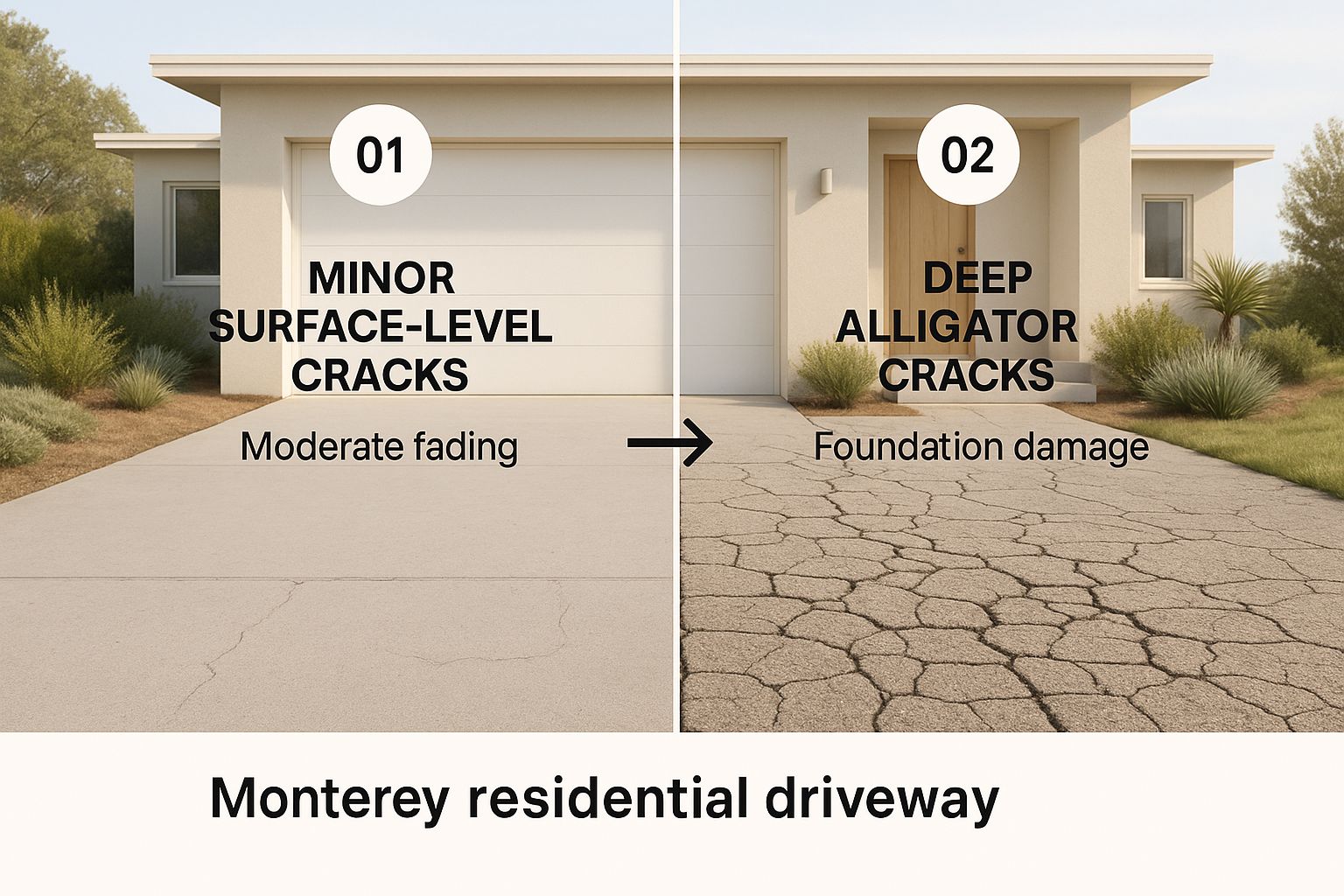
As you can see, surface problems like fading are easy to fix with an overlay. But deep, connected cracks (called "alligator" cracks) are a sign of a bigger problem with the foundation.
When Full Replacement Is Necessary
Sometimes, an overlay isn't enough. If your asphalt has deep cracks that look like an alligator's skin, it means the foundation has failed.
Other big warning signs include large potholes, soft spots that feel spongy, or areas where water pools for a long time. These problems show that the base is weak. Paving over them won't fix the real issue. It's like putting a bandage on a broken arm.
While resurfacing is a great option, it's also smart to know when other materials might be a better choice. You can learn more in our article comparing asphalt vs pavers to see what works best for your property.
The Asphalt Resurfacing Process From Start to Finish
So, what happens when a crew shows up to resurface your driveway? It’s more than just pouring new asphalt. It’s a careful process to make a worn-out surface strong and new again. Let's look at the steps with examples from real Monterey jobs.
Step 1: Surface Preparation and Cleaning
First, the old surface must be perfectly clean. We use powerful brooms and blowers to remove all dirt, leaves, and loose stones. We also treat oil stains and clear out any weeds. This step is key. The new asphalt needs a clean surface to stick to. If it's not clean, the new layer could peel off later.
Visual Breakdown: Imagine a photo of our crew using high-powered blowers to clear every last bit of dust from a Monterey driveway, getting it ready for the next step.
Step 2: Milling and Minor Repairs
Next, we fix any damage. For worn surfaces, we often use a milling machine. This machine grinds off the old top layer of asphalt. This creates a rough, even surface that helps the new asphalt bond tightly. We also fill small cracks and patch minor holes to make the base smooth and strong.
Visual Breakdown: Picture our milling machine grinding away the faded, cracked top layer of a commercial parking lot, creating the ideal texture for the new overlay.
Step 3: Applying the Tack Coat
After cleaning and repairs, it's time for the tack coat. This is a thin layer of sticky liquid asphalt sprayed over the old surface. It acts like a powerful glue, making sure the old and new layers stick together and become one solid piece.
Visual Breakdown: Think of a close-up shot showing the tack coat being evenly sprayed, creating a glossy black film that will lock the new asphalt in place.
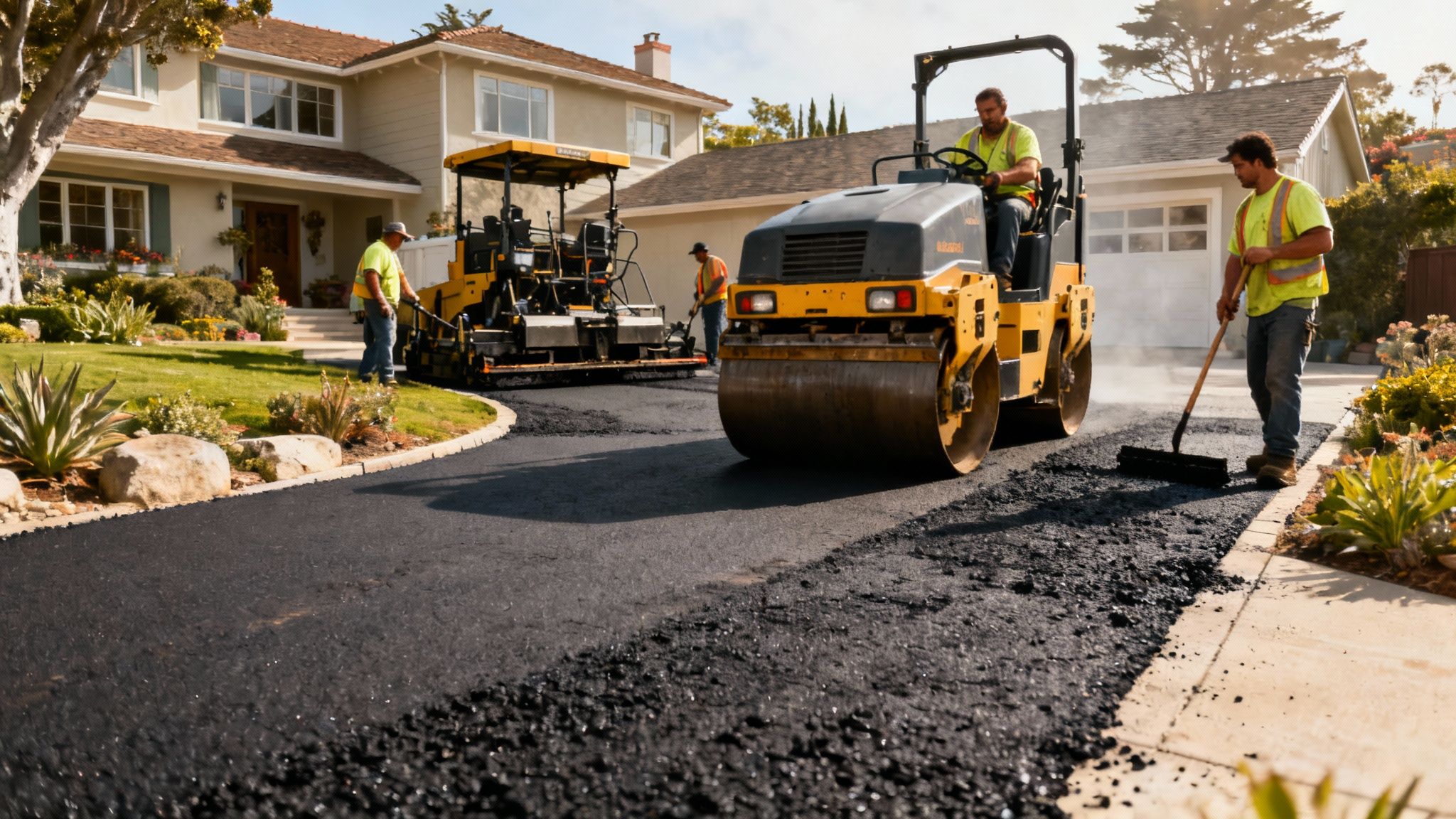
Step 4: Laying the New Asphalt Overlay
Now for the main event: the new asphalt. We use hot mix asphalt, which is the best material for strong, long-lasting pavement. About 72.1% of the world's asphalt market uses this type. Our paving machine spreads a fresh layer, usually 1.5 to 2 inches thick. The temperature of the asphalt is very important for a good result. You can learn more in our guide on asphalt paving temperature requirements.
Visual Breakdown: See our modern paving machine in action, smoothly laying down a steaming, fresh layer of blacktop, with our crew guiding it for a perfect finish.
Step 5: Compaction and Final Curing
As soon as the new asphalt is down, heavy rollers move in to press it flat. This process, called compaction, squeezes out air pockets and makes the asphalt strong and dense. The rollers pass over the surface many times until it is perfectly smooth. The new pavement then needs 24 to 48 hours to cool and harden. You can walk on it then, but you should wait 3 to 5 days before driving on it. And don't forget to plan for waste removal by understanding prohibited items in skips.
Visual Breakdown: The final scene: A heavy steamroller compacting the new surface, leaving behind a smooth, flawless black driveway that looks brand new.
Why a Strong Foundation Is Your Pavement's Best Friend
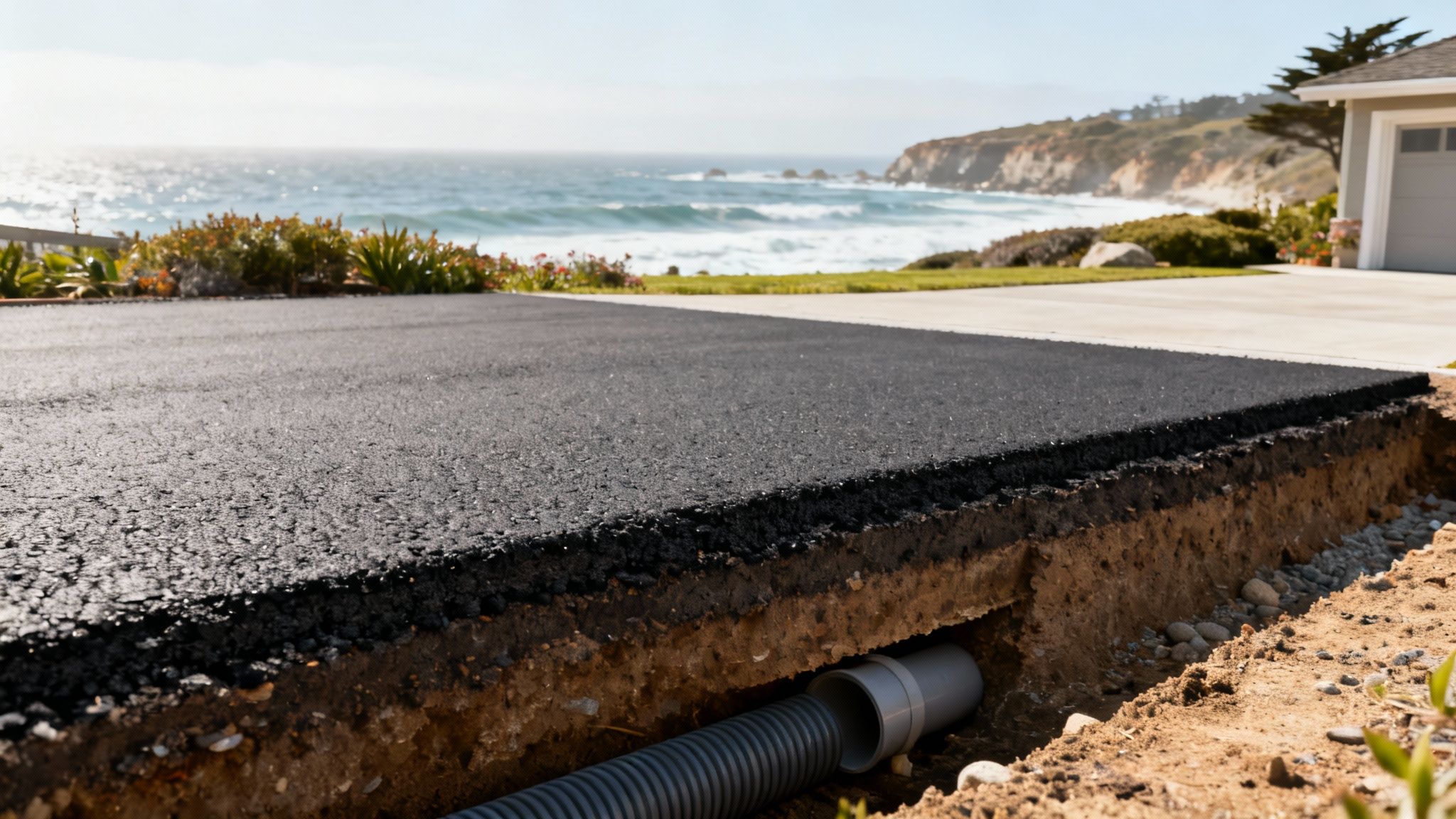
A new layer of asphalt looks great, but its real strength comes from what's underneath. The foundation, or subgrade, is the most important part of any paving project. A weak subgrade will cause even the best asphalt to crack and fail.
At CPI, we always check the subgrade before we start a resurfacing job. A strong foundation is the only way to make sure your new surface lasts for years.
How CPI Ensures Subgrade Integrity
Before we lay any new asphalt, our team at Coastal Pipeline Inc. carefully checks the subgrade for hidden problems. We look for the common causes of pavement failure.
Here’s what we check for:
- Poor Soil Compaction: If the soil underneath isn't packed down tightly, it can shift over time, creating weak spots that lead to cracks.
- Bad Drainage: Water is the enemy of asphalt. If the subgrade holds water, it gets soft and can't support the pavement above it.
- Wrong Soil Type: Some soils, like the clay we often have in California, expand when wet and shrink when dry. This movement can tear the asphalt apart from below.
By finding and fixing these issues before we resurface, we ensure your new pavement has a strong, stable base. This is key to making it last.
"Paving over a bad foundation is like putting a new roof on a house with crumbling walls. The real problem is still there, and it will eventually show itself. Proper subgrade preparation is non-negotiable for a quality, long-term result."
Correcting Foundational Flaws
If we find a problem with the subgrade, we fix it. This might mean digging out the bad soil and replacing it with stronger material like crushed rock. Then, we use heavy machines to pack the new base down until it is solid and stable.
This careful preparation creates a strong platform for your new asphalt. Our commitment to getting the foundation right is a core part of our grading and paving services. By doing this, we make sure your new surface stays smooth and problem-free for a long time.
Comparing Costs Resurfacing vs Full Replacement
When your asphalt starts to fail, the big question is about cost. Is it better to resurface or to start over completely? For most people in Monterey with a good foundation, resurfacing is the clear winner for saving money.
Choosing to resurface can save you 50% to 70% compared to a full replacement. That's a huge saving. You get a fresh, strong surface and add years to your driveway's life for much less money. The trick is to act before the foundation gets damaged.
When Resurfacing Is More Cost-Effective
According to expert analysis, resurfacing is the most cost-effective choice when your asphalt's foundation is still strong. If you only have surface problems like small cracks, fading, or a worn-out top layer, an overlay is the perfect solution. It fixes all the visible problems without the high cost of digging everything up.
With resurfacing, you're only paying for the new top layer of asphalt and the work to put it down. You avoid the much bigger costs of excavation, hauling away old material, and rebuilding the entire base. To see more about costs, check out our guide on asphalt driveway costs.
You can also use a construction material cost predictor to get a better idea of what raw materials cost in our area.
A Head-to-Head Comparison
Let's compare the two options side-by-side for a typical home project in the Monterey area.
Cost and Longevity Comparison Resurfacing vs Replacement
| Factor | Asphalt Resurfacing (Overlay) | Full Asphalt Replacement |
|---|---|---|
| Typical Cost | $2.50 – $6.00 per square foot | $7.00 – $13.00 per square foot |
| Project Timeline | 1-2 days | 3-5 days or more |
| Expected Lifespan | Adds 8-15 years | 20-30 years |
| Best For | Surface cracks, fading, good foundation | Deep cracks, potholes, poor foundation |
As the numbers show, resurfacing is a smart way to extend the life of your pavement without breaking the bank. It's a proactive choice that keeps your property safe and looking great.
There's a reason this method is so popular. Asphalt is used on 94% of all roads in the United States. That’s over 2.7 million miles of roads that rely on smart maintenance like resurfacing to stay in good shape.
A Simple Maintenance Plan for Your New Asphalt
Your new asphalt looks great, but you need to protect it. This is especially true here in Monterey, where the coastal air and weather can be tough on pavement. A little bit of care can prevent big, expensive problems later on.
This simple plan is based on the type of wear we see on the Central Coast. Following it will help you keep your asphalt in top shape.
Your Post-Resurfacing Timeline
A simple schedule is the best way to maintain your new asphalt. That first year is the most important for protecting it.
Here’s a timeline based on local wear-and-tear patterns:
-
First 6-12 Months: Apply the First Sealcoat
This is your most important first step. After your new asphalt has had time to cure, applying a protective sealcoat within the first year is key. This thin liquid layer acts as a shield against sun, rain, and oil spills. -
Every 2-4 Years: Re-Seal the Surface
Monterey's damp, salty air can make asphalt brittle and gray. Re-sealing every 2 to 4 years renews its protection. If you see the color fading or small cracks appearing, it's time for a new coat. -
Annually: Inspect and Repair Minor Cracks
Once a year, walk around your driveway and look for any small cracks. Filling them right away with a crack sealant is a cheap and easy way to stop water from getting underneath and causing serious damage.
The Power of Proactive Sealcoating
Sealcoating is the best tool for making your asphalt last. It's like sunscreen for your pavement, stopping the sun from drying it out. It also fills small pores in the asphalt, which keeps water from getting into the foundation.
A regular sealcoat can be the difference between a driveway lasting 8 years and one lasting 15 years. It's a small, regular cost that helps you avoid the much larger cost of another resurfacing project.
The global market for asphalt sealers, valued at USD 1.84 billion, shows how important this step is. You can read more about insights on asphalt sealers at wiseguyreports.com.
For big properties, a regular maintenance plan is even more important. Our guide to commercial parking lot maintenance offers tips for lots of any size. By following these simple steps, you can keep your asphalt in great shape for years.
Got Questions? We've Got Answers
It's normal to have questions before starting a big project like this. Resurfacing your asphalt is an important investment, and you should feel confident about it. Here are answers to some common questions we hear in the Monterey area.
How Long Will My Driveway Be Out of Commission?
This is a common question, and the answer is usually pretty quick. For a normal driveway, the entire job often takes only one or two days.
Day one is for preparation: cleaning, milling the old surface, and fixing small cracks. Day two is for laying and compacting the new asphalt. After that, the new surface needs time to harden. You'll need to keep cars off it for at least 3 to 5 days.
When Is the Best Time of Year to Resurface?
Timing is very important for asphalt work. The best time to resurface in Monterey is during the warmer, drier months, usually from late spring to early fall. The temperature should be at least 50°F and rising for the asphalt to be laid correctly.
Warm, dry weather helps the new asphalt bond to the old surface and cure properly. Paving in cold or rainy weather can lead to a weak surface that won't last.
Do I Need a Permit for This?
For a simple resurfacing job (an overlay), you usually don't need a permit in Monterey County. Since you're just adding a new top layer and not changing the size or location of your driveway, a permit is typically not required.
However, if you plan to make the driveway larger, dig out the foundation, or change drainage, you will almost certainly need a permit. A good contractor will check with the local planning department to make sure all rules are followed.
How Do I Pick the Right Paving Contractor?
This is the most important decision you will make. A great driveway starts with the right team.
Here's what to look for:
- Properly Licensed and Insured: Make sure the contractor has a valid California state license and full insurance. This protects you and their workers.
- Local Monterey Experience: Choose a team that understands our local climate and soil conditions.
- A Detailed, Written Estimate: A professional will give you a clear estimate that lists all the work to be done, from prep work to the thickness of the new asphalt.
- A Portfolio and Real References: Ask to see pictures of their past work and for references from recent customers. A good contractor will be happy to share these.
Ready to bring your driveway back to life with a team that puts quality first? At Coastal Pipeline Inc., we’ve been handling asphalt resurfacing projects in Monterey for decades. Get in touch today for a free estimate and let us show you what a difference true craftsmanship makes.