
Laying new asphalt is a lot like baking a cake. If the oven isn’t at the right temperature, you won’t get the result you want. The same is true for paving. The right asphalt paving temperature is key to making sure the final surface is strong, smooth, and will last a long time. For most jobs, the best temperature is between 250°F and 325°F.
Why Temperature Is The Key to Perfect Asphalt
When you’re paving, temperature is not just one of many things to think about—it’s the most important one. It affects everything from how the asphalt mix spreads to how strong the pavement will be years later. Ignoring the right temperature is a sure way to end up with a weak, cracked driveway or road that doesn’t last.
Think about trying to spread cold butter on soft bread. It’s stiff, clumpy, and tears the bread. Hot mix asphalt acts the same way. If it cools down too fast, it’s very hard for the crew to work with. It also becomes almost impossible to press it down correctly.
The Role of Heat in Asphalt Paving
Heat keeps the liquid part of the asphalt mix, called a binder, fluid. This is important so it can evenly coat all the sand and rock particles. This makes the mix workable, which allows the crew to create a smooth surface. Without enough heat, the mix gets stiff before it can be shaped and pressed. This leads to a weak structure that will cause problems later.
Controlling the temperature has a direct impact on the quality of any paving job:
- Durability: When asphalt is pressed down at the right temperature, it becomes dense and strong. This helps it stand up to heavy traffic and bad weather for years.
- Smoothness: A hot, flexible mix is easy to level out. This means you get a perfectly smooth surface without bumps or rough spots.
- Longevity: The right temperatures keep tiny air pockets from getting trapped in the asphalt. These pockets are weak spots where water can get in, freeze, expand, and cause cracks and potholes.
The success of a paving project is decided long before the first roller hits the pavement. It all starts with managing the asphalt’s temperature from the moment it leaves the plant to the second it’s laid on the job site.
More Than Just The Mix
It’s not just about the temperature of the asphalt itself. The air and ground temperatures are just as important. Laying hot asphalt on a cold surface is like pouring hot coffee into a frozen mug—the heat gets pulled right out. This fast temperature drop keeps the asphalt from sticking to the base correctly and becoming as strong as it should be.
Understanding how temperature works is the foundation of any good paving job. It’s what makes sure your investment gives you a strong, good-looking surface that will last.
To make things easier, we’ve put together a quick table. It breaks down the key temperature ranges for each step of the paving process. Think of it as your cheat sheet for a perfect asphalt job.
Critical Asphalt Temperatures at a Glance
| Paving Stage | Ideal Temperature Range (°F) | Ideal Temperature Range (°C) | Why It Matters |
|---|---|---|---|
| At the Plant | 300°F – 350°F | 149°C – 177°C | Makes sure the binder fully coats the rocks and sand for an even mix. |
| During Transit | Lose no more than 25°F | Lose no more than 14°C | Stops the mix from cooling too early, which makes it stiff and hard to work with. |
| Application/Paving | 250°F – 325°F | 121°C – 163°C | The perfect range for workability, allowing for a smooth, even surface. |
| Initial Compaction | 220°F – 290°F | 104°C – 143°C | The most important step for making the pavement dense and strong. |
| Final Rolling | Above 175°F | Above 79°C | Smooths out any final marks; below this, the asphalt can crack under the roller. |
| Ambient/Ground | Above 50°F | Above 10°C | Prevents quick heat loss, which helps with proper sticking and compaction. |
Keeping these numbers in mind is the first step toward a perfect finish. Each stage depends on the one before it, and temperature is the most important link in the chain.
The Asphalt Journey From Plant to Pavement
For an asphalt project to succeed, the temperature of the mix has to be managed perfectly from the time it’s made until it’s pressed into place. This journey has several important checkpoints where heat is either kept in or carefully let out. Understanding this process shows why professional paving needs such strict temperature control.
It all starts at the plant, where Hot Mix Asphalt (HMA) is made. Think of it like a huge industrial kitchen. Materials like rock and sand are heated to very high temperatures. Then, they are mixed with a hot liquid asphalt binder. This ensures every single particle is coated, creating a strong, even mixture that’s ready for the road.
From Hot Mix to Transport
Once mixed, the HMA is loaded into special dump trucks to be delivered to the job site. The main goal during transport is simple: keep the asphalt hot. These trucks are built to lose as little heat as possible. This makes sure the mix arrives while it’s still warm enough to work with. If it loses too much heat on the way, the mix gets stiff and hard to use, which is a common reason for paving jobs to fail.
This infographic breaks down the best temperature ranges for each key stage of the asphalt’s journey.
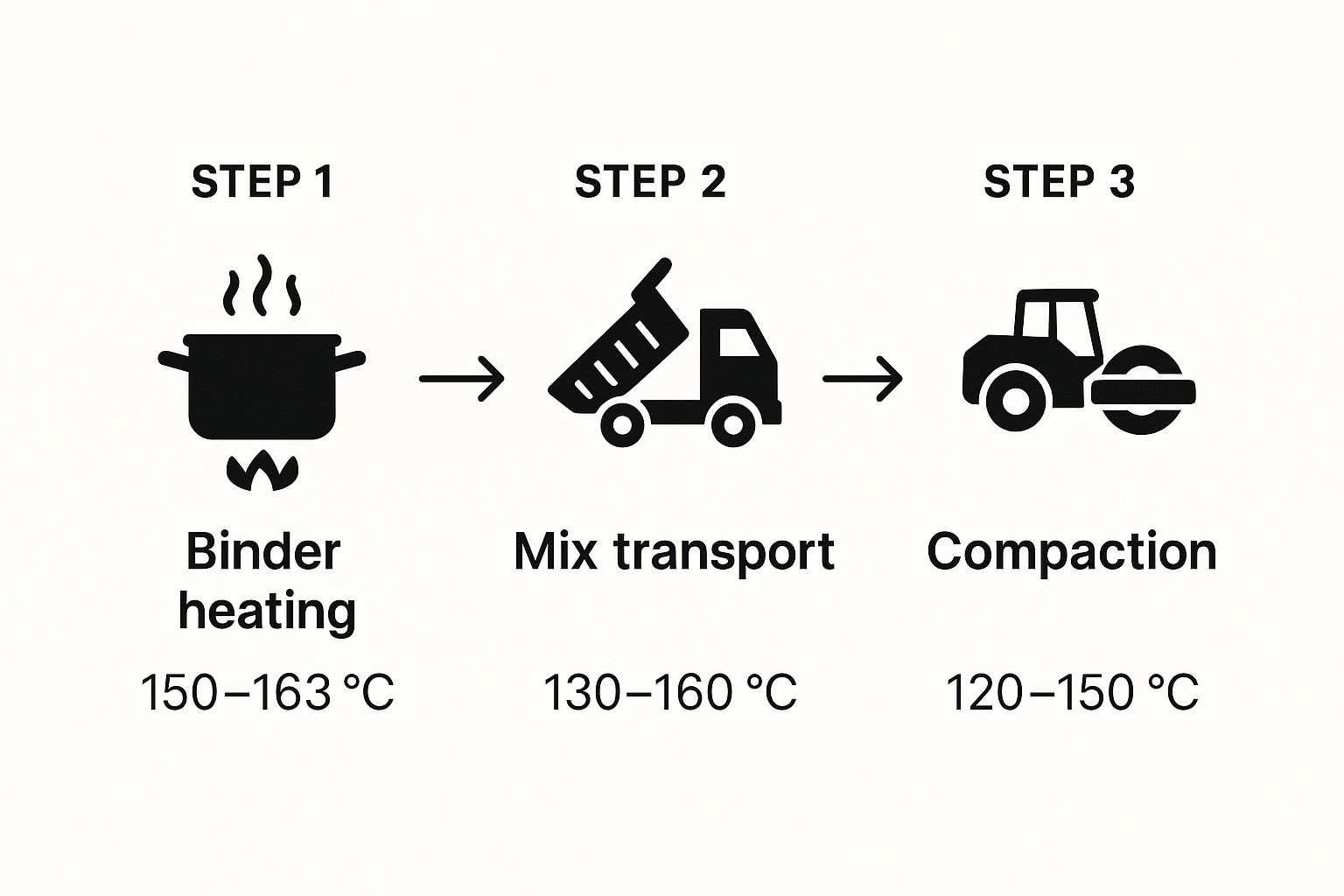
As you can see, there’s a slow but controlled drop in temperature from the plant to the final rolling. This shows just how time-sensitive the whole operation is.
Laydown and the Rise of Warm Mix Asphalt
When the truck arrives, our crew immediately starts the “laydown” step. The hot asphalt is put into a paving machine, which spreads it into a smooth, even layer. This is where exact asphalt paving temperature requirements are most important. The material has to be flexible enough for the machine to do its job. You can learn more about the equipment and methods we use for professional paving and grading on our services page.
The success of any paving project really comes down to keeping the mix workable. Once the asphalt cools below a certain point—usually around 185°F (85°C)—it becomes too stiff to be pressed down properly. At that point, the chance for a quality finish is gone.
Traditionally, HMA is made at temperatures between 300°F and 350°F (149°C and 177°C). However, new methods have created Warm Mix Asphalt (WMA). This type uses special additives to lower production temperatures by 50°F to 100°F. This newer option uses less energy and creates fewer fumes. This makes the paving process safer for our crews and better for the environment, without losing quality.
How Air and Ground Temperatures Affect Your Project
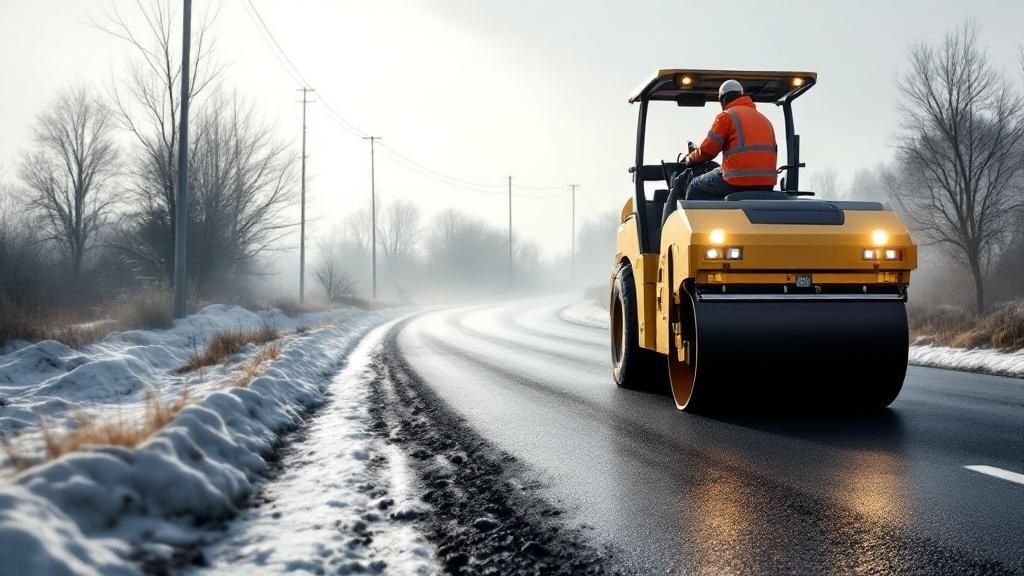
Laying asphalt is not done in a factory. It happens out in the open, where it’s exposed to weather. This is why the air temperature and the ground temperature are just as important as the temperature of the asphalt mix itself.
Trying to pave when it’s too cold is like trying to bake a cake in a cold oven. No matter how good your mix is, the conditions will ruin the final product.
Think about what happens when you pour hot asphalt onto a cold surface. It’s a lot like pouring hot coffee into a cold mug. The cold ground immediately starts pulling the heat out of the asphalt, causing it to cool down way too fast.
This quick heat loss is a huge problem. It cuts down the time our crews have to spread and press the material. This makes it nearly impossible to get the right density needed for a strong, long-lasting pavement.
The Magic Number for Paving Weather
Any good paving contractor follows a strict rule: we don’t pave when the air temperature is below 50°F (10°C) and isn’t expected to rise. This isn’t just us being picky; it’s an important quality control step. It has to do with how asphalt acts in the cold.
When both the air and the ground are chilly, that hot asphalt mix becomes stiff and unworkable in just a few minutes. This leads directly to weak spots, a rough surface, and pavement that will fail much sooner than it should. Understanding this helps explain the factors that go into asphalt driveways’ cost, because a failed job means paying for it all over again.
For a successful paving job, the ideal air temperature is between 50°F and 85°F (10°C to 29°C). This range prevents rapid cooling and gives our team the time needed for proper compaction. Paving should only happen when the ground temperature has been consistently above 50°F (10°C) for a few days and is expected to stay that way.
Why Consistent Ground Warmth Is Key
It’s not enough for the ground to be warm just on the day of paving. The surface needs to have been above 50°F (10°C) for several days before the project. A single warm day after a week of cold weather won’t work, because the ground is still cold deep down.
Here’s why a consistently warm base is so important for a quality job:
- It prevents “temperature shock”: A warm ground slows the cooling process. This gives the crew the time they need to get the perfect density.
- It ensures proper bonding: The hot asphalt mix can stick much better to a warm surface. This creates a stronger pavement structure from top to bottom.
- It avoids trapped moisture: A cold, damp ground can trap moisture underneath the new asphalt. When hot asphalt hits it, that moisture turns to steam and can cause serious problems with sticking.
In the end, paying close attention to these asphalt paving temperature requirements is an easy way to tell a true professional from a contractor who cuts corners. A good crew will never risk your money by trying to pave in bad weather.
The Critical Window for Asphalt Compaction
Once fresh, hot asphalt is laid down, the clock starts ticking. The next step is compaction, and it’s the most time-sensitive part of the whole process. This is where heavy rollers press the hot mix together, squeezing out air pockets to create a dense, strong, and water-resistant surface.
Think of it like working with warm modeling clay. When it’s warm, it’s soft and easy to shape into a smooth, solid form. But if it cools, it becomes brittle and impossible to work with. Asphalt acts the exact same way. This gives paving crews a very specific “compaction window” to get the job done right.
The Point of No Return
This important window is the short period of time before the asphalt cools down too much to be pressed effectively. As soon as the mix temperature drops below 185°F (85°C), it becomes too stiff and rigid.
Trying to compact asphalt below this temperature doesn’t just work poorly—it can actually damage the new surface. The weight of the roller on cold, brittle asphalt can cause tiny cracks, weakening the pavement from day one. A well-organized paving crew is needed to work quickly and smartly, making sure every square foot gets the right amount of compaction while the material is still hot.
Missing the compaction window is a recipe for failure. It leaves behind a pavement full of tiny air pockets just beneath the surface. This porous structure acts like a sponge, allowing water to seep in. This leads directly to early cracking, potholes, and a much shorter life for your pavement.
Consequences of Poor Compaction
When compaction is rushed or done at the wrong temperature, the problems might not show up right away, but they will appear over time.
- Weak Structure: The pavement never reaches its full strength, leaving it open to damage from traffic.
- Water Damage: Those tiny air pockets let water in. When that water freezes and expands, it creates cracks from the inside out.
- Surface Raveling: Over time, the small stones in the mix can break loose from the surface.
This is why proper compaction cannot be skipped if you want a durable, long-lasting surface. When these issues appear, they often require a lot of work to fix. You can learn more about how these problems are fixed by looking at professional asphalt patching and repair. Getting compaction right the first time is the best way to avoid expensive problems down the road.
What Happens When Paving Temperatures Are Wrong

Ignoring the strict rules of asphalt paving temperature requirements will lead to failure. When the temperature isn’t right, the asphalt mix itself is damaged. This leads to a surface that will disappoint you and break down fast. The long-term costs of getting it wrong are always much higher than any short-term savings from cutting corners.
Think of the liquid asphalt binder as the glue that holds all the rock and sand together. If the mix gets too hot at the plant, this glue can get “burned.” That damage makes the binder brittle and weak. This will lead to cracking years before it should.
On the other hand, if the asphalt is too cold when the crew tries to compact it, they can’t press out all the tiny air pockets. The result is a weak, porous surface that looks more like a rice krispie treat than a solid road. A lot of air pockets is a major red flag for pavement failure.
Visual Signs of Temperature-Related Failures
When temperature rules are ignored, the pavement will start showing signs of bad work. These problems might not appear overnight, but they will show up eventually, leading to expensive repairs. Knowing what to look for can help you spot a job that was done wrong from the start.
Some of the most common signs of failure are:
- Premature Cracking: A weak binder from overheating or poor compaction from cold asphalt leads to cracks appearing within the first few years.
- Raveling (Loose Stones): When the binder doesn’t stick properly to the rocks, the small stones on the surface start to break loose. This creates a rough, crumbling texture.
- Ruts and Depressions: Pavement that wasn’t compacted at the right temperature isn’t dense enough to support heavy loads. This causes dips and ruts to form where cars drive most often.
A properly paved surface should be dense, even, and smooth. If you see a lot of loose stones or early cracking, there’s a strong chance the asphalt paving temperature requirements were not met during the job.
These issues really show why proper base preparation and paving methods are so important. Similar ideas apply when you’re thinking about laying new pavement over old surfaces, which we cover in our guide on placing asphalt on top of concrete.
Ultimately, controlling the temperature during the entire paving process is the single best way to make sure you get a durable, long-lasting investment that works as expected for years to come.
Answering Your Questions About Asphalt Temperature
The science behind asphalt paving temperature requirements can seem a little complicated, but it really comes down to a few key questions. We’ve answered the most common ones we hear to help you feel confident about your next paving project.
What Is the Minimum Temperature to Pave with Asphalt
Most experienced pavers follow a strict rule: the air and ground temperature must be at least 50°F (10°C) and rising. If it’s any colder, you’re taking a huge risk that the asphalt mix will cool down way too fast.
When the mix loses heat too quickly, the heavy rollers can’t get it compacted enough. What you’re left with is a weak, porous pavement that simply won’t hold up over time. And for thinner layers of asphalt, which lose heat even faster, contractors will often require even warmer conditions.
Can I Get My Driveway Paved in the Winter
In any area that gets freezing temperatures, paving a driveway in the winter is something we strongly advise against. The cold ground sucks the heat right out of the asphalt. This makes it almost impossible to keep the mix workable long enough for good compaction.
While you can find “cold patch” materials for small, temporary fixes, a full paving job needs the steady warmth you only get in spring, summer, or early fall. Waiting for the right season is a must if you want a strong, high-quality surface. To learn more, see our detailed guide on how weather affects asphalt repairs.
Paving is a race against the clock where temperature is the most important factor. A professional crew will always choose the right weather conditions over getting a job done quickly. That’s what guarantees the pavement’s long-term strength and appearance.
How Do Professionals Measure Asphalt Temperature
To get it right, contractors don’t just guess. They use special tools to keep a close eye on the asphalt’s heat from start to finish. It’s all about being precise and controlling the quality.
Here are the two most common tools you’ll see on a job site:
- Infrared Temperature Guns: These let the crew get a quick surface heat reading from a distance. They are perfect for fast checks as the asphalt is being laid down.
- Probe Thermometers: For a more accurate reading of what’s going on inside the mix, a probe is put directly into the asphalt.
These measurements are taken over and over again, from the second the truck arrives until the final roller pass is done.
At Coastal Pipeline Inc., we know that lasting results come from combining expert skills with the right conditions. If you have a project in Monterey, Santa Cruz, or San Benito Counties, contact us for a professional consultation.