
As winter approaches, many industry peers focus on asphalt maintenance, pothole repair, and seasonal sealcoating. These topics trend because rain, freeze–thaw, and traffic can quickly damage pavement. But most of that content stops at the surface. It rarely looks at the buried pipes, drains, and trenches that can fail and make cracks come back again.
Coastal Pipeline Inc. goes deeper. As a general engineering contractor, we restore underground utilities, fix trench backfill, and then pave. We make sure storm drains, water lines, and gas pipes are solid and up to code. This builds a stable base that keeps pavement strong all winter long.
When melting snow and rain soak into poorly compacted trenches, the pavement above can shift and crack. Water around a damaged pipe freezes, expands, and pries the asphalt apart. Soon, tiny cracks widen into potholes.
Hidden Utility Failures Make Winter Worse
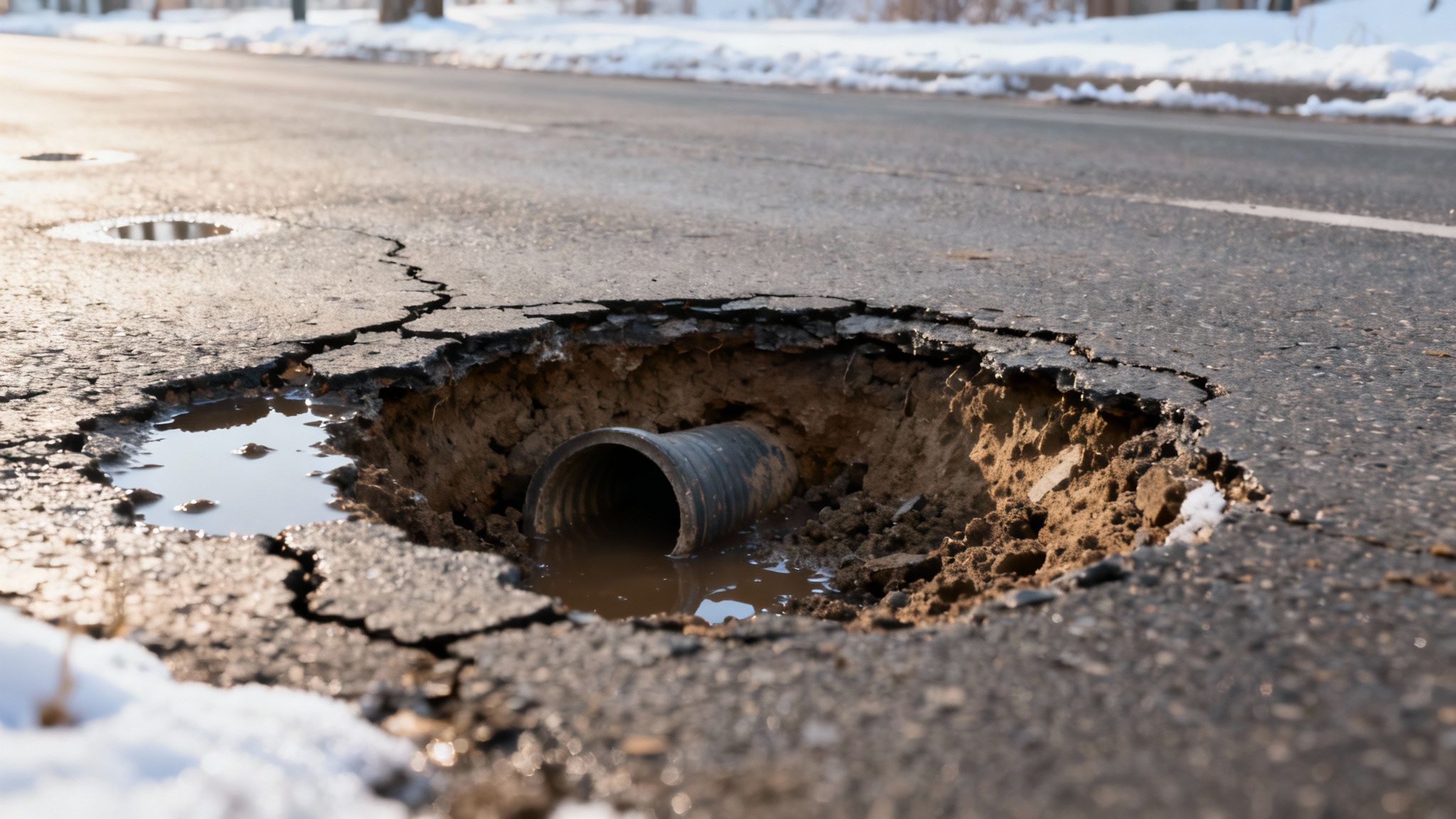
It’s easy to see surface damage. Finding the true cause takes work. Watch for these red flags:
- Small cracks spreading out from old patches
- Soft spots that sink under your foot
- Water that stays in low spots long after rain
These clues mean freeze–thaw cycles are doing damage, but only because something below gave out first.
Surface Symptoms vs. Underground Root Causes
Below is a quick guide to pair what you see with what’s happening out of sight. Use it to target the real trouble, not just the surface.
| What You See on the Surface | What’s Likely Happening Underground |
|---|---|
| Network of spider or alligator cracks | Soil in trench backfill is settling and losing density |
| Edges crumbling near utility cuts | Voids around pipes are filling with water |
| New potholes at the same spot | Leaky drain or sewer line saturates subgrade |
Fixing only the top layer is a short-term patch. Winter will reopen those cracks if the roots are not addressed.
A proper winter prep always starts below the asphalt. That means:
- Verifying trench backfill density with simple compaction tests
- Checking moisture levels in the subgrade
- Ensuring water drains away from pipes and utilities
Then you combine trench restoration with your paving plan. Coastal Pipeline Inc. excels at this integrated approach—repairing trenches, upgrading drains, and resurfacing in one coordinated effort. Learn more on Coastal Pipeline Inc.’s website.
Next Steps For Property Managers:
- Schedule a pre-winter subsurface audit
- Test moisture levels around utility trenches
- Confirm compaction meets 95% standard
- Repair or replace failing drains before freezes
You might also want to dive deeper into a utility-smart pothole strategy. Read Why pothole season demands a utility-smart response.
Inspection Checklist For Winter
- Walk the pavement to spot cracks above utility lines
- Use a moisture meter near trenches to detect saturation
- Review compaction reports for 95% or better density
- Inspect storm drains and catch basins for blockages
- Schedule trench repairs well before the freeze
A winter-ready pavement is only as strong as its foundation. By focusing on compaction, drainage, and utility integrity, you eliminate potholes before they form. Partner with experts who connect subsurface health to lasting pavement performance.
Contact Coastal Pipeline Inc.’s website early to book your winter-readiness assessment and dodge costly spring repairs. Call today!
Understanding the Foundation Under Your Pavement
Imagine gliding down a smooth road. Under the blacktop lies a stack of layers—soil, trenches, and backfill—that decide how long the pavement lasts. If any layer is loose or wet, cracks and dips can appear fast.
Looking past the obvious potholes shows you the real troublemakers: unstable subgrade, trenches with voids, and backfill that’s not compacted right. Surface patches only hide these issues for a little while.
- Subgrade Soil: The main load-bearing layer under traffic.
- Utility Trenches: Cuts where pipes and conduits are laid.
- Backfill Material: Engineered fill used to replace excavated earth.
Once you connect these dots, it’s clear why a fracture hints at a larger problem.
Why Foundation Health Matters
A strong foundation spreads loads evenly—think of a balanced table. Push down on one corner and the whole top tilts. In pavement terms, a soft spot under a tire starts a crack that can spread.
Watch for:
- Spongy patches after rain, signaling trapped water below
- Shallow dips along utility lines from settling backfill
- Radiating cracks from past repairs showing poor compaction
These clues show the real issues under the asphalt.
Key Subsurface Elements
Think of the subgrade as the pavement’s skeleton. If it’s loose or over-watered, the pavement flexes and cracks.
Soil types matter:
- Clay soaks up moisture and swells—like a sponge
- Sand drains fast but packs loose under traffic
Imagine a heavy storm on sandy subgrade. When it freezes, water expands 9%, pushing up the pavement and causing heaves.
Inspecting Utility Trenches
Every trench makes a seam in the pavement’s strength. Without proper compaction, that seam becomes a weak band. Heavy vehicles soon form dips and cracks there.
On a recent Monterey County project, loose gravel backfill settled 0.5 inches in just three months of traffic.
Proper trench restoration is non-negotiable to avoid recurring potholes.
Inspection checklist:
- Scan for seams or depressions in the asphalt
- Probe around manholes with a steel rod to find soft spots
- Measure moisture with a meter to spot saturated fill
Why Proper Compaction Matters
Packing soil in thin, dense lifts is like folding clothes tightly in a suitcase—fewer voids means more stability. Good compaction can cut settlement and cracking by up to 60%.
| Compaction Process | Benefit |
|---|---|
| Thin, Dense Layers | Minimizes air pockets |
| 95% Relative Density | Meets municipal standards |
| Repeated Passes | Ensures uniform stiffness |
Best practices:
- Use a plate compactor for even force
- Control moisture around 5%–8% for good bonding
- Test each layer with a nuclear gauge or sand cone
Compaction tests should hit at least 95% relative density—anything less often leads to winter potholes.
Check out our guide on underground utility services to learn about proper backfill techniques.
How Drainage Prevents Winter Damage
In cold weather, trapped water is pavement’s worst enemy. When drainage fails, moisture freezes and expands, pushing the asphalt apart.
Keep these steps in mind:
- Maintain a 2% slope away from trenches and sublayers
- Clear debris from drains and catch basins after storms
- Inspect and flush drainpipes regularly to prevent blockages
“Water trapped under pavement is like an iceberg ready to heave,” says Coastal Pipeline Inc. expert Alejandro Aragon.
By fixing subgrade stability, trench backfill, compaction, and drainage before freeze–thaw cycles start, you can cut repair costs by 30% and extend pavement life.
How Winter Weather Exploits Hidden Weaknesses
Winter can hurt quick patches and hidden flaws in pavement. Under every smooth road, there’s a silent struggle when temperatures drop.
Water in loose fill or around old pipes freezes and expands 9%, acting like an ice wedge that lifts the asphalt.
Once the ice melts, the soil loses strength, can’t support traffic, and forms ruts and cracks.
To see exactly how subgrade, trenches, and backfill work together under these conditions, check the infographic below.
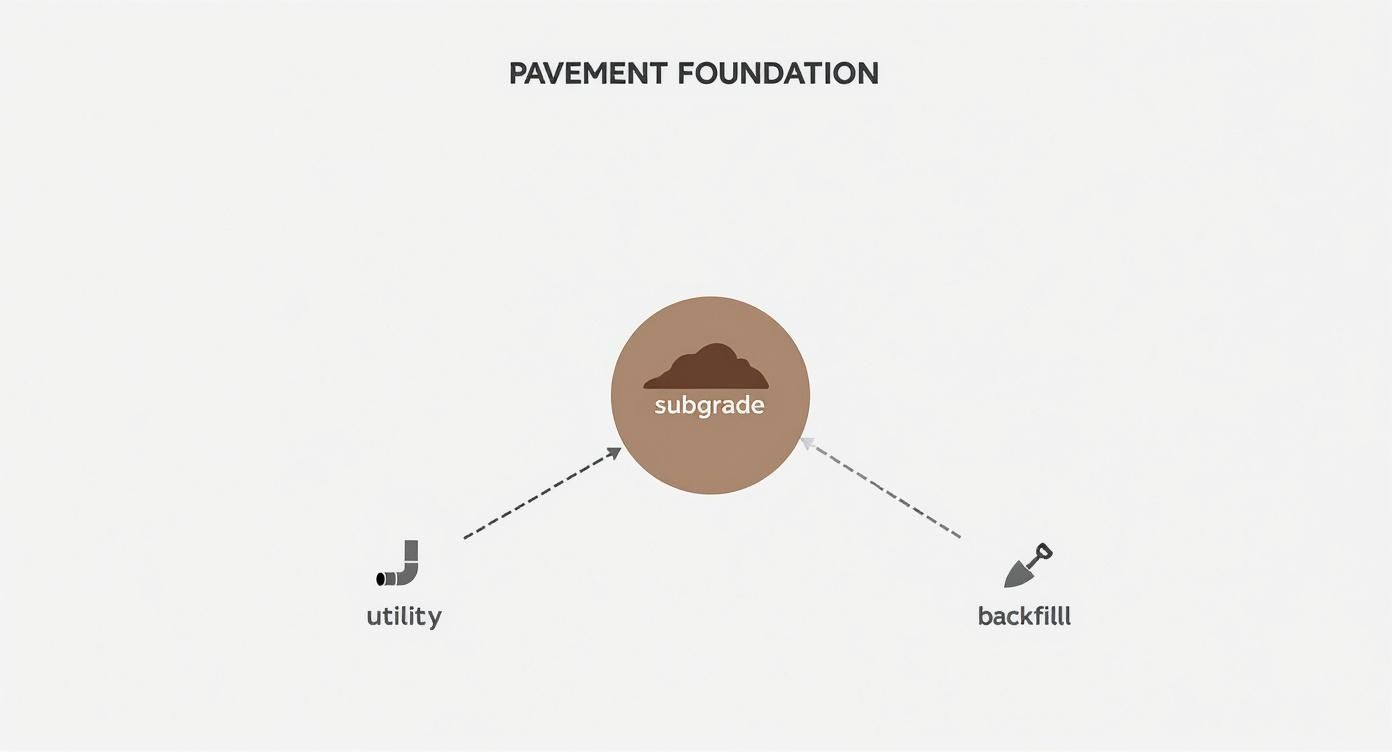
This map shows how small voids in backfill become paths for freeze–thaw pressure and highlights areas to inspect before the first frost.
Key Stages Of The Freeze Thaw Cycle
- Infiltration: Water seeps into cracks, loose seals, and voids
- Frost Heave: Ice crystals push upward with forces up to 30,000 psi
- Thaw Settlement: Saturated soil compacts under traffic, forming dips
Environmental Impact On Pavements
Studies show 36% of flexible pavement damage links to freeze–thaw stress from subsurface water. In rigid pavements, it’s around 24%.
| Pavement Type | Environmental Damage (%) |
|---|---|
| Flexible | 36 |
| Rigid | 24 |
Key soil risks:
- Fine Sand: Holds moisture and feeds ice growth
- Silt: Pumps water upward even after surface dries
- Clay: Swells when wet and shrinks when dry, causing heave and settlement
Read our guide on evolving stormwater codes in Drainage Infrastructure Is Evolving Are Your Stormwater Systems Up To Code for more on keeping water away from critical trenches.
Practical Inspections To Prevent Damage
Before winter, use a moisture meter to find damp spots ready to heave.
Compaction tests should aim for 95% relative density around every trench.
- Walk the pavement with a steel rod to feel for soft areas
- Measure moisture near manholes, cuts, and basins
- Confirm compaction with a nuclear gauge or sand cone
- Ensure trenches slope at least 2% for good drainage
- Clear storm drains to keep water moving away
“Ignoring subsurface weakness is like patching a broken window without fixing the frame,” says Alejandro Aragon.
Routine checks catch hidden flaws before potholes appear. Combine these steps with proper trench work and surface sealing to keep winter damage at bay.
Start your winter plan by pairing subsurface audits with trench repairs. Finding voids and moisture early gives you time to act before freeze–thaw cycles hit.
Coastal Pipeline Inc. combines utility restoration and paving in one seamless package. By syncing drainage upgrades with asphalt overlays, you stop underground failures from ever reaching the surface.
The Lasting Impact Of A Single Utility Cut
A narrow trench through asphalt might seem small. But it’s a weak link, like cutting a chain. Traffic and water will find their way in, turning that cut into a hotspot for cracks and dips.
If backfill is loose or wrong, the area never gains full strength. Each wheel pass shifts it more, and water wades in, carving shallow dips that lead to more cracks.
- Thin lifts of backfill reduce voids
- Dense compaction forces out air pockets
- Proper moisture control keeps soil stable
Skip these steps and the trench will sink, creating ruts or settlement.
Why Utility Cuts Create Soft Spots
Cutting asphalt interrupts the surface layer. Rain and melting snow seep in, saturating the base. When it freezes, water expands 9%, prying at repair edges and widening cracks.
As seams open, moisture floods in, weakening the soil. Next time a vehicle rolls by, you’ll see a rut along the trench line—a clear signal the subgrade is failing.
“A patch is only as good as the soil it rests on,” says a Coastal Pipeline Inc. engineer.
Poor compaction in backfill cuts pavement life in half or worse.
Patching And Pavement Life
Studies show roads with utility repairs wear out 1.64 times faster than untouched pavement. That means patched sections deteriorate about 64% sooner under the same traffic and weather.
This faster decline shows up as more ruts, settlement, and edge cracking along each trench.
Steps To Restore Structural Strength
Municipal crews and contractors can follow these best practices to match original pavement strength:
- Inspect trench depth and width before backfilling
- Use engineered backfill like controlled density fill (CDF)
- Compact soil in thin, dense 6-inch lifts to 95% relative density
- Test moisture and adjust to the optimal range
- Apply a temporary surface course until final asphalt is laid
- Schedule repairs in stable weather—avoid rain or freeze–thaw periods
These steps help the trench match the rigidity of the surrounding roadway. Good timing can save thousands in emergency fixes when temperatures drop.
Check out our guide on backfilling in excavation for detailed specs on moisture, lift thickness, and compaction.
An integrated plan—from subsurface prep to final overlay—seals seams, matches subgrade strength, and keeps water out. By syncing utility restoration with paving, you can stop small patches from becoming costly winter damage.
Winter readiness starts below the surface, where a small cut can have a big impact.
Shifting From Reactive Repairs To Proactive Management
Fixing potholes after they appear is like mopping up a spill—you’ll still slip when the next freeze–thaw hits. Instead, see what lies beneath the asphalt before cracks form.
Mapping subsurface utility conditions helps you spot trouble early. Techniques like potholing in construction show hidden voids, poor compaction, and water infiltration.
A proactive plan means smoother traffic, tighter budgets, and fewer emergency fixes. Equip your team to find and fix hidden issues before winter roads fail.
Warning Signs To Watch
- Sinking near manholes signals soil washing out from inside pipes
- Wet spots lingering days after rain hint at leaks or clogs
- Alligator cracks often trace buried trenches or damaged conduits
“Catching these early signs is like reading the pavement’s diary before it writes itself in cracks.”
Proactive Inspection Checklist
- Inspect drainage patterns after rain—ensure water flows away from trenches
- Use a moisture meter to check subgrade saturation near cuts and manholes
- Probe soft spots with a steel rod to find voided or loose backfill
- Review compaction reports and aim for 95% or higher at every trench
- Schedule repairs when you see damp patches—even if the surface looks fine
These steps help you tackle unseen problems before winter’s first freeze.
Seasonal Preparation Steps
Plan inspections before the first frost to avoid last-minute rush. Fix trenches during dry weather to meet compaction targets without too much moisture.
- Avoid trench work if rain is forecast in the next 48 hours
- Lock in overlay dates before the holiday rush
- Set calendar alerts to clear drains before storms
Linking Records To Roots
Cross-check past utility jobs with recurring pavement failures to spot patterns. Use GIS to overlay trench lines and crack maps.
Instead of just sealcoating or patching, public works and property owners should look at the real problem below roads and driveways. Winter is the perfect time to check for saturated soils, confirm drains work, and shore up old utility corridors.
Upgrading water mains and storm drains before paving stops future voids and settlement. Early subsurface audits can cut emergency repairs by 30%, according to local data.
Contact Coastal Pipeline Inc. in Monterey, Santa Cruz, and San Benito Counties for trench restoration and paving integration before winter sets in. A proactive stance now means reliable pavement tomorrow.
Building Resilient Pavement From the Ground Up
Every winter, pavement fights frost, moisture, and traffic. Its strength depends on the work below the surface—starting with that trench.
Coastal Pipeline Inc. sees each cut and fill as part of one load-bearing system.
Choosing The Right Backfill Material
Picking the right backfill is more than tossing dirt in place. Controlled Density Fill (CDF) is an engineered mix that flows into voids, bonds to pipes, and cures with strength.
Gravel-and-sand blends drain fast and resist frost heave but must match the subgrade to prevent uneven support. Consider these options:
- Controlled Density Fill: Fills gaps and locks around utilities
- Engineered Gravel: Drains well and fights frost heave
- Custom Soil Blend: Matches nearby material for even load transfer
On a recent Santa Cruz project, switching to CDF cut uneven settlement by 80% in six months.
Implementing Layered Compaction
Proper compaction is like building a brick wall—each layer must fit snugly. By adding backfill in 6-inch lifts, crews remove air pockets and weak zones.
Steps for a reliable base:
- Place a 6-inch layer of CDF or gravel
- Set moisture to 5–8% for optimal density
- Roll a plate compactor over the layer
- Verify density with a nuclear gauge or sand-cone test
Right moisture and lift thickness keep pavement stable under freeze–thaw cycles.
“Compacting in lifts is like stacking strong books without gaps,” says a Coastal Pipeline engineer.
Quality Control Checks
Skipping density checks is like driving blind. Technicians use nuclear and sand-cone tests to confirm each layer hits 95% relative density.
| Tool | Purpose |
|---|---|
| Nuclear Gauge | Measures relative density |
| Sand Cone Device | Verifies moisture and compaction |
Finding soft spots before paving helps the asphalt resist rutting and settlement all season.
Seasonal Scheduling Tips
Weather can turn trench backfill into a rework nightmare. On California’s Central Coast, aim for late September through early December.
- Book crews before heavy rains arrive
- Avoid compaction when frost is forecast
- Let new asphalt cure at least 48 hours in mild conditions
Matching trench work with paving dates cuts seams and boosts bond strength.
Integrating Paving And Utilities
Coordinating utility and paving crews locks in a smoother surface. Sharing schedules means trench teams wrap up just as pavers arrive.
Key benefits:
- Fewer joints for water to follow
- One traffic closure for all work
- Final compaction tests on the real pavement
By aligning backfill selection, compaction, and timing, you get pavement ready for winter’s worst.
If your commercial, residential, or municipal property is seeing repeat pavement failures or signs of subsurface instability, contact Coastal Pipeline Inc. We serve Monterey, Santa Cruz, and San Benito Counties with expert trench restoration, paving, and underground utility support to keep your infrastructure sound all winter long. Learn more on Coastal Pipeline Inc.'s website. Contact their office soon to schedule an evaluation today.
Check out our guide on grading and paving to explore how proper groundwork sets the stage for lasting pavement.
Frequently Asked Questions About Pavement Failure
Property managers keep seeing patches crumble once the freeze–thaw cycles and winter rains roll in. That pattern usually points to hidden problems in the subsurface utility layers.
-
Why do the same potholes keep coming back every year?
If the subgrade stays waterlogged, every freeze–thaw cycle acts like a hammer. Soft soils can’t support traffic, and cracks reopen when it freezes. -
Can a leaking pipe under the pavement really cause that much damage?
Yes. Even a small leak from a water line or storm drain washes away soils around the trench. This makes voids that collapse under traffic, causing cracks. -
Is it more expensive to fix the subsurface problem instead of just patching the asphalt?
Underground repairs cost more up front but save money over time. Repeated surface patches add up in labor, materials, and traffic delays.
Common Mistakes And How To Fix Them
- Ignoring standing water near manholes lets saturation spread out of sight
- Skipping compaction tests on trench backfill can shorten pavement life by 64%
- Relying only on sealcoating leaves deeper voids untouched—and potholes will return
Fixing underground causes outperforms surface-only patches every time.
Best Practices You Need To Know
- Use a moisture meter around trenches to catch saturation early
- Verify backfill compaction meets 95% relative density before paving
- Ensure runoff diverts away from utility corridors to limit freeze–thaw pressure
This FAQ wraps up how subsurface utility conditions shape pavement performance in winter. By spotting hidden issues early, you save time and money—and keep your roads safer.
Stop winter pavement failures. Contact Coastal Pipeline Inc. at https://coastalpipelineinc.com for trench restoration and paving integration before the first freeze. Schedule a subsurface audit now to protect your pavement investment this season.