Eco-friendly utility construction is more than a popular phrase. It's a smart way to build essential systems like water mains and sewer lines while protecting the environment. This approach mixes good engineering, modern materials, and careful site management to keep our local ecosystems safe.
What Does Eco-Friendly Utility Construction Really Mean?
At its core, "eco-friendly" construction means we design and install important utility systems with a focus on reducing our impact on the environment. For an underground utility contractor, this means taking specific actions to protect the soil, water, and nearby habitats. It’s about going beyond the basic rules and choosing better, more responsible methods for every job.
Many companies mention sustainability, but they don't explain what it means for underground utility work. We believe in showing how our green practices make a difference. Our approach includes:
- Minimal Site Disruption: We use methods like low-impact trenching to make our work area smaller, saving as much of the natural landscape as possible.
- Active Soil Erosion Prevention: We use strong erosion controls to stop soil and dirt from washing into storm drains, which keeps local creeks and rivers clean. This is a key practice that many competitors overlook.
- Thoughtful Water Resource Protection: We manage stormwater to prevent polluted runoff and help rainwater soak back into the ground. This is important for municipalities and developers who care about groundwater recharge.
- Sustainable Material Choices: We choose durable, recycled, or low-impact materials, like high-density polyethylene (HDPE) pipes or recycled asphalt. These choices create longer-lasting infrastructure and reduce waste.
To see the difference, let's compare the two approaches.
Eco-Friendly vs. Traditional Utility Construction at a Glance
| Aspect | Traditional Construction | Eco-Friendly Construction |
|---|---|---|
| Site Impact | Large-scale digging and land clearing | Smaller work area, keeps plants safe |
| Materials | Standard materials like PVC or iron | Recycled/low-carbon materials (HDPE, etc.) |
| Water Management | Basic runoff control, often an afterthought | Proactive stormwater and erosion control |
| Disruption | Major traffic, noise, and community impact | Often uses trenchless methods to reduce disruption |
| Long-Term Focus | Meets immediate needs | Focuses on long life and resilience |
This table shows a shift in thinking—from just getting a job done to doing it right for the future.
A Commitment to Resilience and Compliance
For our clients in Monterey, Santa Cruz, and San Benito Counties, this approach is essential. Our practices help meet California's strict stormwater and erosion control regulations. This is about building infrastructure that is strong and responsible. You can learn more about why sustainability isn't optional for underground utility contractors in our guide.
This isn't just a local trend. The global green building market was valued at $618.58 billion in 2025 and is expected to grow much larger. You can explore more data on green building trends here.
In the end, eco-friendly utility construction is just smart engineering. It delivers the reliable systems our communities need while protecting the environment. It gives municipalities, developers, and property owners confidence that their project aligns with their values. If you're planning a project and care about sustainability, Coastal Pipeline is ready to help.
The Blueprint for Green Utility Work
So, how do we turn a good idea into a real-world, eco-friendly project? It starts with a clear plan. This plan uses proven techniques to protect the environment at every stage. We build strong, long-lasting infrastructure for communities in Monterey, Santa Cruz, and San Benito Counties in a smarter, more responsible way.
A good green plan also includes safety. Using things like reliable gas monitoring equipment helps catch leaks and keep workers safe. It’s a complete approach that focuses on long-term stability and care for the environment.
The picture below shows the main steps of a sustainable project. Green practices are part of the process from start to finish.
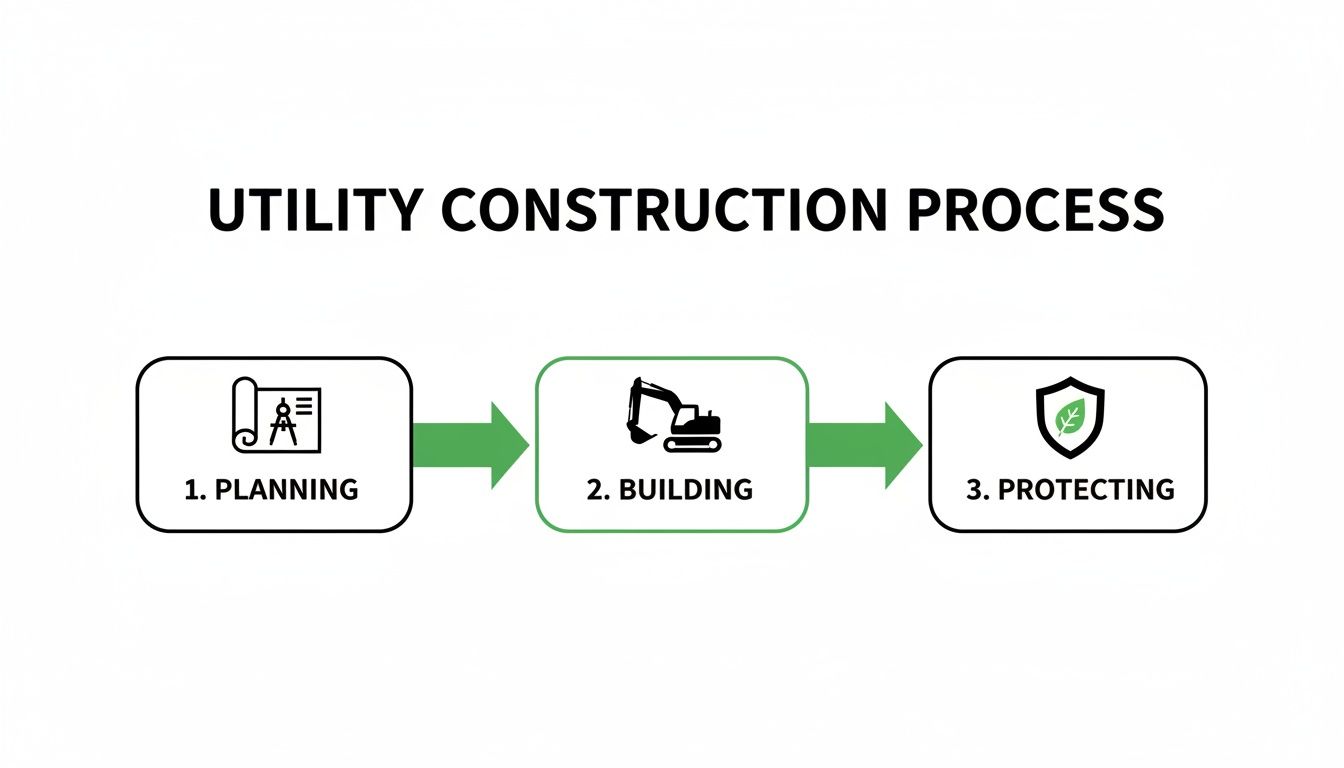
As you can see, protecting the environment is not an afterthought. It is a key part of the entire project.
Minimizing the Footprint with Low-Impact Methods
The first rule of a greener approach is simple: disturb as little as possible. In the past, utility work often meant digging huge, open trenches. Today, we have better options.
Low-impact trenching is a great example. Instead of a wide, deep pit, this method uses special equipment to cut a narrow trench just big enough for the pipe. This may seem like a small change, but it has big benefits.
It reduces the amount of soil we have to dig up and move. It also leaves nearby plants and soil layers mostly untouched. This helps the site recover faster and lowers the risk of erosion. For businesses and residents, it also means less disruption to traffic and daily life.
Choosing Smarter, More Sustainable Materials
What we put in the ground is just as important as how we put it there. An eco-friendly project uses materials that are durable, made from recycled content, or have a lower carbon footprint. This is where smart engineering and sustainability meet.
A great example is the use of High-Density Polyethylene (HDPE) pipes. Often made from recycled plastics, HDPE is not just a "green" choice—it's also a better one.
- Corrosion-Resistant: Unlike metal pipes, HDPE doesn’t rust. This means no leaks and no risk of harming the soil or water.
- Flexible and Durable: It can handle ground movement and even earthquakes—a must-have feature in California.
- Long-Lasting: HDPE pipes can last 50 to 100 years, which means fewer repairs and future disruptions.
This thinking goes beyond pipes. We can use water-smart backfill materials that allow rainwater to soak back into the ground. When we repair a road, using recycled asphalt pavement (RAP) gives old material a new life and keeps it out of landfills. You can see more about these methods in our overview of utility systems construction.
Advanced Erosion Control on the Job Site
Living and working near the coast means we have a special duty to keep soil out of our waterways. A single rainstorm on an unprotected site can send dirt into creeks that flow to the Monterey Bay.
Effective erosion control is a top priority. It creates a protective barrier between our work and the local ecosystem, keeping dirt, chemicals, and trash on the site where they belong.
To do this, responsible contractors use a set of Best Management Practices (BMPs). These are required by California’s tough stormwater rules.
- Silt Fences and Fiber Rolls: These temporary fences are placed around the work area to trap dirt before it can wash away.
- Gravel Bags and Inlet Protection: We put these around storm drain openings to catch trash and soil before they enter the public system.
- Stabilized Construction Entrances: This is a thick pad of gravel at the site’s entrance. It knocks mud off truck tires so it isn't tracked onto public roads.
By combining low-impact methods, sustainable materials, and strict erosion control, we have a clear plan for building the infrastructure our communities need without harming the environment.
Smart Water Management and Erosion Control
Here in California, water is precious. Protecting it is a top priority for any responsible utility project. When we talk about "eco-friendly" construction, managing water is at the heart of it. It’s about controlling stormwater from the start of a project until long after it's done, all while following strict environmental rules.
This is more than just keeping a site from getting muddy. It's about smart engineering that works with nature. The goal is to reduce runoff, which can carry pollutants into storm drains. Instead, we help rainwater soak back into the ground to refill our groundwater supplies.
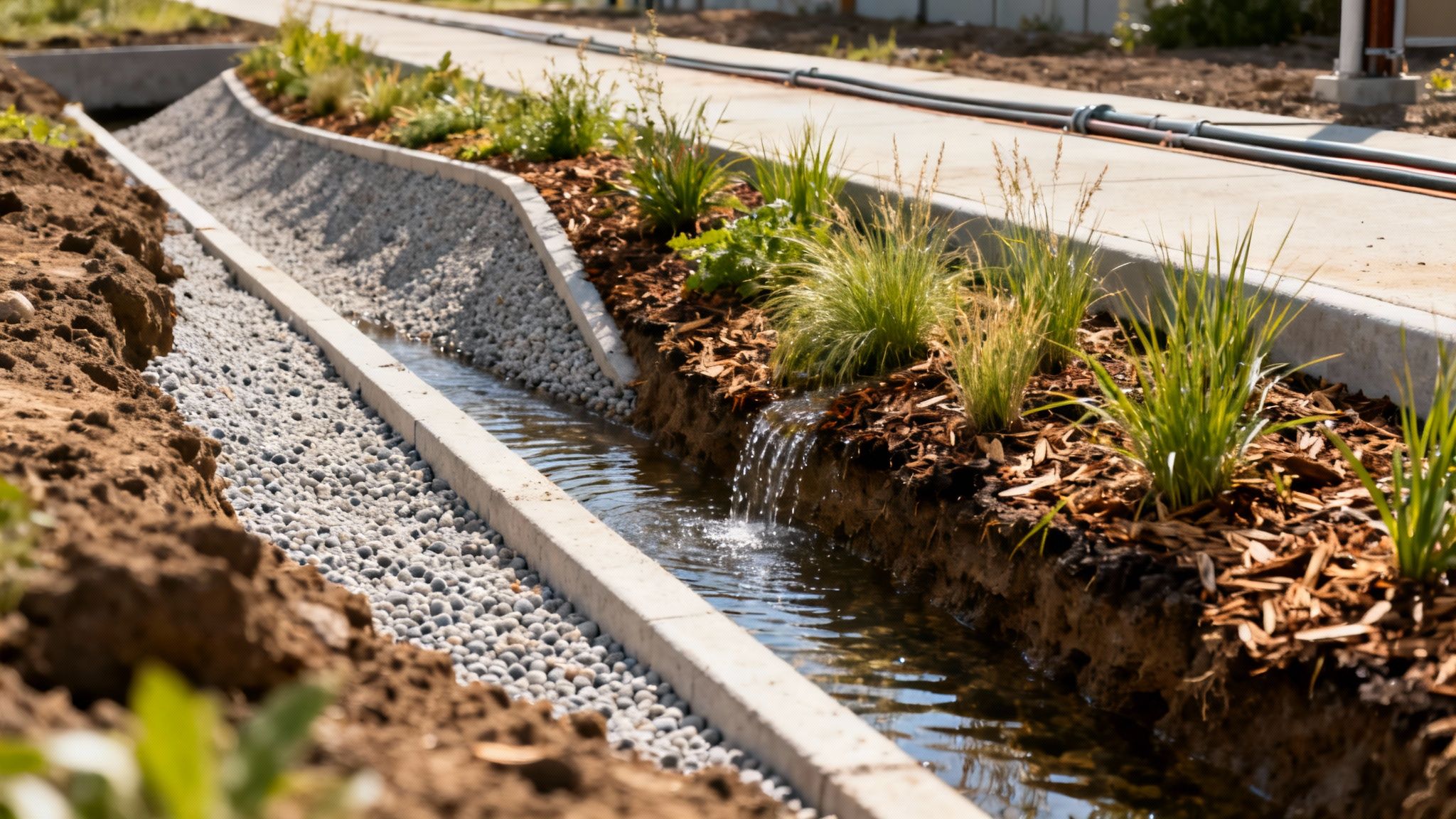
This proactive approach is a game-changer. Any contractor can dig a trench. A truly sustainable partner understands that how they manage the land and water is just as important as the pipe they install.
Techniques for Effective Stormwater Control
Controlling rainwater on a job site requires a toolkit of proven methods. These techniques are designed to slow water down, filter out dirt, and let it soak in naturally. This is how we prevent pollution and follow California’s tough environmental laws.
On our projects in Monterey, Santa Cruz, and San Benito Counties, we use several key strategies:
- Permeable Backfill: Instead of dense clay, we use special gravel or sand to fill trenches. This material acts like a sponge, letting rainwater filter through and refill the groundwater on site.
- Vegetated Bioswales: This is a shallow, landscaped channel designed to catch runoff from roads or parking lots. The plants and soil filter out pollutants before the clean water leaves the site.
- Strategic Site Grading: This is the art of shaping the land to guide water flow. By carefully grading the site, we can direct water away from sensitive areas and toward collection points, like bioswales. It’s a simple but powerful tool for stopping erosion.
By using these smart designs, we reduce the burden on public storm systems and help keep local creeks and the Monterey Bay clean.
Preventing Erosion: The Foundation of Site Protection
Before any of those water management systems can work, you have to control the soil. Erosion is the biggest enemy of an eco-friendly construction project. When soil is left bare, a single heavy rain can wash tons of it into storm drains, clogging waterways and harming aquatic life.
At its core, eco-friendly utility construction is about building with foresight. It’s understanding that every action on a job site affects the local environment and then taking steps to make sure that effect is positive.
Effective water management means getting serious about strategies for preventing soil erosion. A contractor who is committed to green practices will use a full set of Best Management Practices (BMPs) to keep soil in place. You can see how we design these systems in our guide to storm water management systems. This is not just about following rules; it's about being a good steward of the land.
The bigger picture is about creating infrastructure that has a low impact on the environment. By choosing the right materials and methods, we can greatly reduce disruption. Studies show this approach can cut on-site emissions by 50-70%. Building smarter is the future of our industry.
Why Green Utility Construction Is a Smart Investment
Choosing eco-friendly practices in utility construction is not just good for the environment—it's a smart financial decision. The immediate goal is to protect our natural resources, but the long-term benefits provide real value to developers, cities, and property owners. This is about building infrastructure that is not just compliant, but also stronger and more cost-effective over its lifetime.
For developers and commercial property owners, thinking green offers a competitive edge. Projects that focus on sustainability often move through the permitting process more smoothly. That foresight can save a lot of time and money, keeping your project on track without costly delays.
Long-Term Savings Through Durability
One of the biggest benefits of this approach is building infrastructure that lasts longer. When you use better materials like HDPE pipes and construction methods that reduce ground disturbance, you will have fewer leaks, breaks, and emergency repairs in the future.
Eco-friendly utility construction is about building smarter from day one to reduce the total cost of ownership. By investing in resilient materials and methods, we extend the life of the infrastructure, minimizing future maintenance burdens and protecting your capital investment.
This durability saves money over time. For cities in Monterey, Santa Cruz, and San Benito Counties, water and sewer lines that last longer mean less strain on public budgets. For commercial developers, it leads to higher property values and lower upkeep costs.
Enhancing Property Value and Community Appeal
Today’s buyers and tenants care about sustainability. They look for places to live and work that align with their values. A development built with sustainable infrastructure is a huge selling point. It shows quality, responsibility, and a commitment to a healthier environment.
This is a global trend. The green construction market is expected to grow from USD 711.0 million in 2025 to over USD 1,508.6 million by 2032. You can learn more about the growth of the green construction market and what it means for our industry.
Achieving Environmental Compliance and Community Goals
For public works departments and city planners, the benefits are even greater. Green utility practices help meet community-wide sustainability goals. When projects reduce stormwater runoff and protect local waterways, they make our region healthier and more resilient. You can explore our guide on building resilient underground utilities to see how these methods are changing the industry.
This forward-thinking approach also helps you stay ahead of California’s strict environmental regulations, reducing the risk of fines or project shutdowns. For cities, the advantages are clear:
- Protection of Natural Resources: It directly protects local water quality and ecosystems.
- Reduced Strain on Public Works: It lowers the long-term maintenance needs of storm and sewer systems.
- Achievement of Sustainability Targets: It’s a practical way to meet community and regional environmental goals.
Choosing eco-friendly utility construction isn't an extra cost—it's an investment in efficiency, durability, and peace of mind. It’s where smart financial planning meets responsible action.
Finding the Right Partner for Your Sustainable Project
Choosing the right contractor is the most important decision for an eco-friendly utility project. It’s easy for a company to use words like “sustainable” or “green” on their website. The real test is finding a partner who can show you how they use these practices on the job site.
A committed contractor will do more than just talk. They will explain their specific methods for erosion control, where they get recycled materials, and their plans for low-impact site work. For cities, developers, and property owners who care about the environment, this transparency is key. It gives you confidence that your project's environmental goals are in good hands.
The Value of Local Expertise
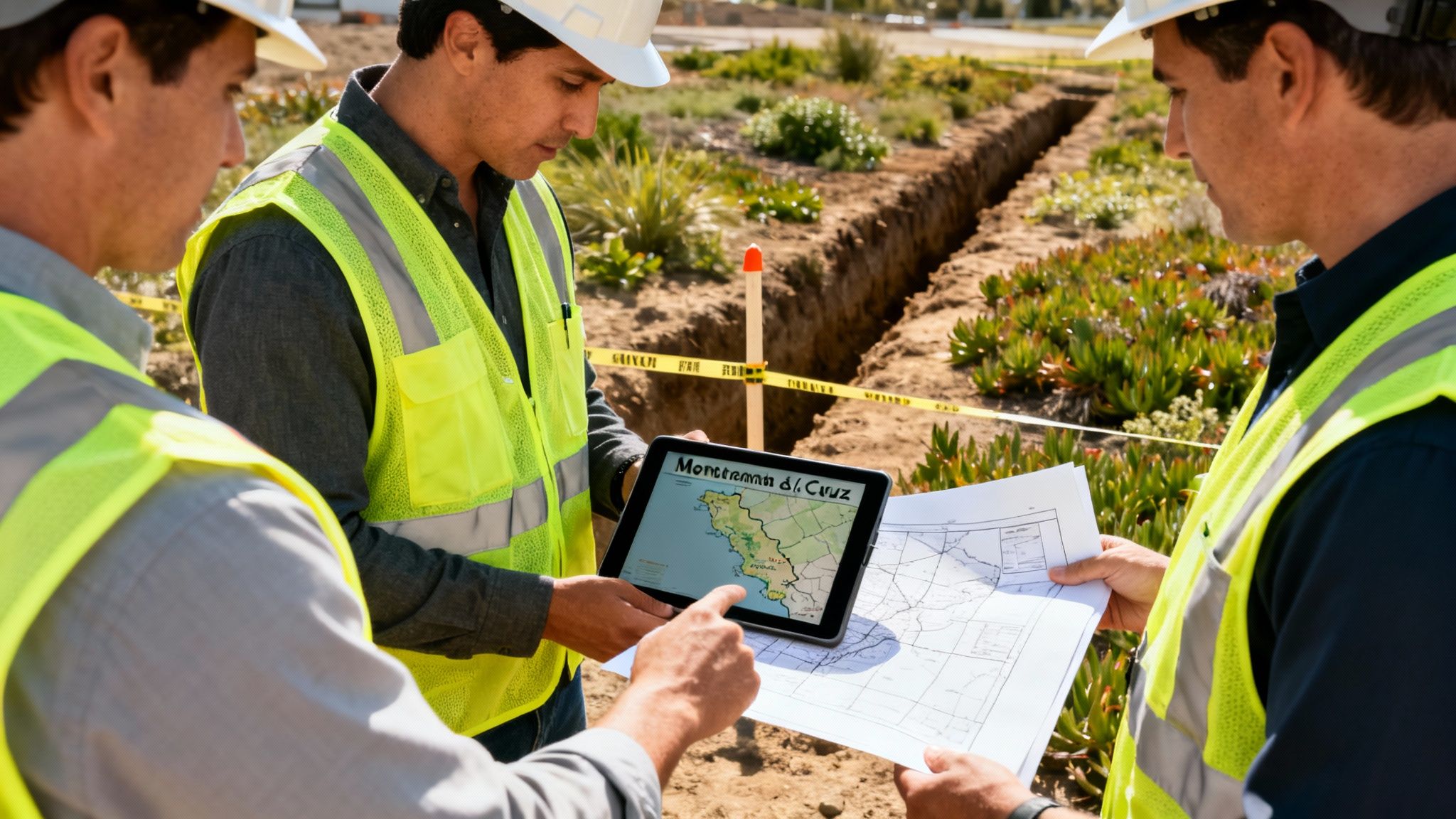
A deep understanding of the local environment is essential for this kind of work. A contractor who knows the unique ecosystems and soil conditions in Monterey, Santa Cruz, and San Benito Counties has a huge advantage. They have seen how coastal fog affects soil and know the specific rules protecting our local watersheds.
This local knowledge is critical for following California’s changing stormwater and erosion control rules. A partner with a proven track record here can navigate the complex permitting process more easily and design solutions that work for our region’s needs. At Coastal Pipeline, we incorporate best practices like low-impact trenching and smart stormwater management into every project we do.
Questions to Ask a Potential Contractor
To find the right partner, you need to ask the right questions. Their answers will show their level of commitment. A contractor who knows their stuff should be able to answer these questions easily.
Here are a few questions to ask:
- Erosion Control: "Can you explain the specific Best Management Practices (BMPs) you will use on my site to prevent soil erosion?"
- Material Sourcing: "What amount of recycled materials, like HDPE pipe or reclaimed asphalt, do you use on projects like this one?"
- Water Management: "How will you manage stormwater during construction to help recharge groundwater and keep our storm drains clean?"
- Local Experience: "Can you share examples of projects you’ve completed in my county that show your commitment to sustainable practices?"
Green utility construction isn’t just about feeling good—it’s about smart engineering that protects local ecosystems, ensures regulatory compliance, and extends the life of your critical infrastructure. The right partner understands this from day one.
Choosing a contractor is a big decision. Our guide on how to hire subcontractors offers helpful advice. If you’re planning a project and want to meet your sustainability goals, Coastal Pipeline is ready to help. Contact us to talk about your site’s needs and environmental priorities.
So, What's the Next Step for Your Project?
We've covered what it really means to build underground utilities in an environmentally friendly way. It's more than a trend; it's a smarter way to build the infrastructure that powers our communities in Monterey, Santa Cruz, and San Benito Counties.
This is about practical engineering—the kind that protects our local coastlines while making sure your investment is built to last.
The benefits are real. For public works departments, it's about meeting California’s tough environmental standards. For developers, it means fewer maintenance problems, a better reputation, and a smoother permitting process. This is where good financial sense and environmental care come together.
Turning Good Ideas into Great Projects
You now have a clear picture of what eco-friendly utility construction looks like. It’s about being thoughtful—choosing strong materials like HDPE, using precise trenching methods, and focusing on erosion and stormwater control from the start.
The next step is to find a partner who truly understands this approach.
An experienced contractor doesn't just talk about sustainability; they build it into every step of the project. They will know how to reduce site disturbance and manage water flow to prevent pollution. They understand that doing it right the first time protects both the environment and your project's long-term value.
Green utility construction is just good engineering. It’s about building with foresight to protect our local ecosystems and ensure infrastructure serves our communities for generations.
Whether you're a city engineer, a developer, or a property owner, you can choose a better way to build. This approach is not just a win for the environment—it ensures your project is strong and cost-effective for years to come.
If you’re ready to build a project that meets its goals without harming the environment, we’re here to help. Contact Coastal Pipeline today to talk about your site’s specific needs.
Got Questions? We've Got Answers.
When it comes to eco-friendly utility work, many questions come up. Here are some of the most common ones we hear, with simple answers based on our experience.
Is This Eco-Friendly Approach Going to Cost Me More?
Not when you look at the big picture. Some sustainable materials may have a higher upfront cost, but they almost always save you money in the long run. The key is the total cost of ownership.
Think of it this way: using durable materials like HDPE means fewer leaks and repairs later. That leads to lower maintenance budgets for cities and fewer problems for property owners. Plus, meeting environmental rules from the start helps you avoid big fines and project delays. It's a smarter financial move.
In California, What’s the Single Most Important Green Practice?
If we had to pick just one, it would be mastering erosion and sediment control. California's environmental laws are very strict about protecting our creeks, rivers, and the Monterey Bay.
A contractor's skill in managing erosion shows they are serious about compliance and protecting the local environment. Keeping dirt from washing into a storm drain is a non-negotiable part of working in Monterey, Santa Cruz, and San Benito Counties.
How Do I Know if a Contractor Is Actually "Green" or Just Saying It?
Look for proof beyond the buzzwords. A truly eco-conscious partner can explain their exact methods and show you their results.
Don't be afraid to dig deeper. Ask pointed questions about their specific erosion control plans, the types of recycled materials they use, and their strategies for minimizing site disturbance. A truly experienced contractor will have ready answers and project examples to back them up.
For example, ask to see their plans from a recent project. Have them show you photos of their work, like their silt fences or how they used low-impact trenching. A contractor who is proud of their work will be happy to show you. This is what eco-friendly utility construction really means—it’s about real actions, not just words.
If you’re planning a project and want a partner who can answer these questions with confidence, Coastal Pipeline Inc. is ready to help. Contact us today to discuss your site’s needs and environmental priorities.