For anyone involved with underground utilities—from contractors in the trenches to property owners paying the bills—sustainability is no longer a "nice-to-have." It's a "must-do." This is a big change in how we build our infrastructure. We are moving away from old methods and toward smart, eco-friendly practices that protect both the environment and our investment.
This isn't just about feeling good. It's about building systems that can handle the extreme weather our climate is throwing at us while meeting tough new standards.
The New Reality of Underground Utility Construction
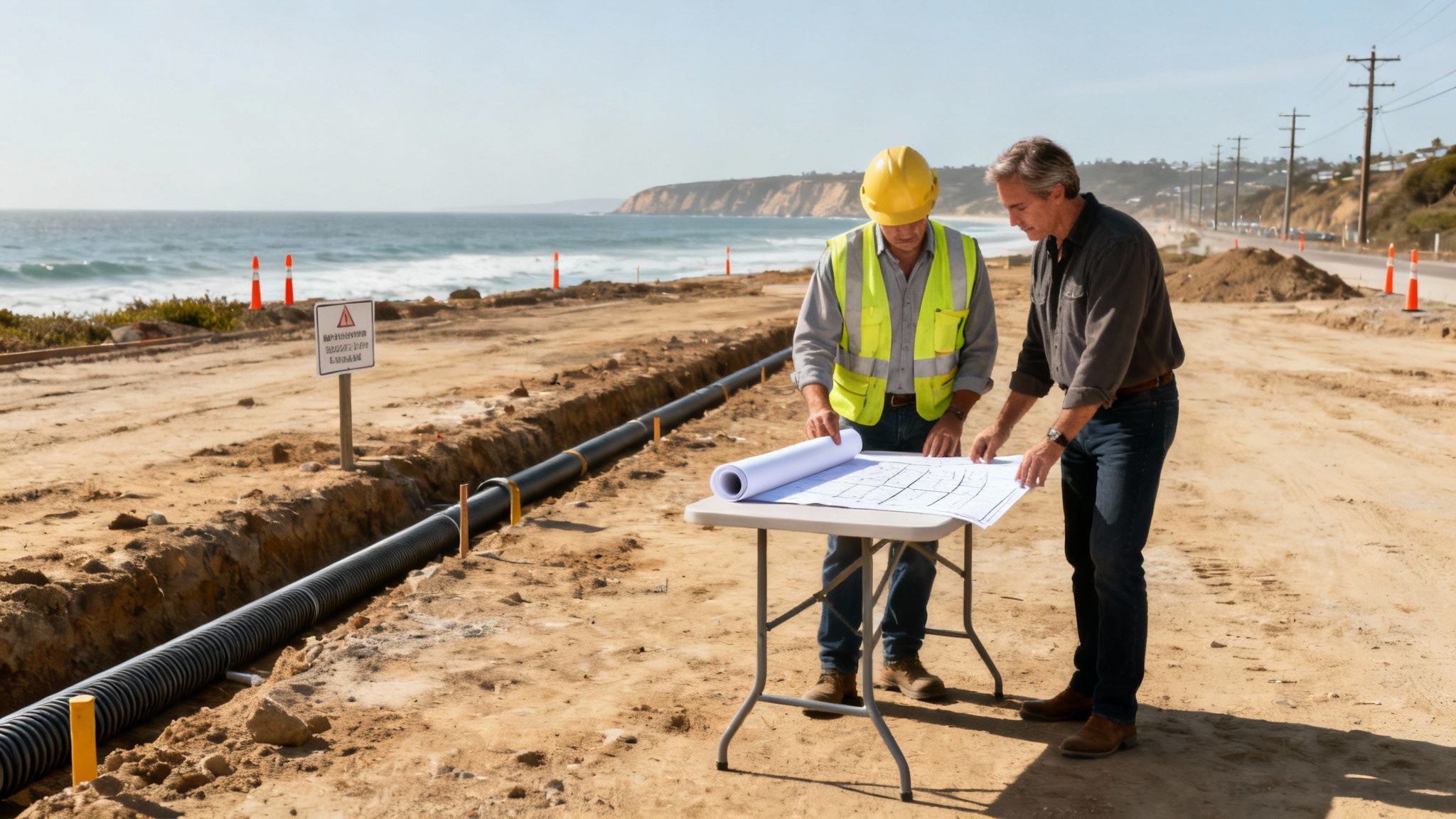
The days of treating sustainability as an extra feature are over. It’s now a key part of the entire process, from getting a project approved to making sure it’s built to last.
Think of it this way: you wouldn't build a new house on the coast without making it hurricane-resistant. In the same way, building sustainable utility systems in places like California's Central Coast isn't just an environmental goal—it’s smart business.
The underground utility sector is changing quickly as property owners, cities, and developers now want systems that can withstand climate extremes and have a smaller environmental impact. This shift is changing how projects are designed, permitted, and built across California.
Why Did Sustainability Suddenly Become So Important?
Let's look at the main reasons why sustainable practices are now a required part of underground utility work.
This table gives a quick look at the key forces pushing contractors and property owners to adopt sustainable practices in their underground utility projects.
| Why Utility Sustainability Became Mandatory |
| :— | :— | :— |
| Driving Force | Impact on Contractors | Impact on Property Owners |
| Intense Climate Events | Must use materials and methods that stand up to floods, droughts, and unstable soil. | Protects investment from major failure and keeps services running. |
| Strict Environmental Rules | Must follow rules to get permits; not following them leads to fines and delays. | Reduces legal risk and ensures the project meets legal standards, adding long-term value. |
| Smarter Investment Demands | Projects with "green" features are more likely to win bids and get funding. | Increases property value and attracts buyers or tenants looking for strong infrastructure. |
As you can see, the pressure is coming from all sides. For contractors, using these practices is key to winning bids and building a good reputation. For property owners, it’s about making a smart investment in infrastructure that provides real, lasting value.
These factors are changing how projects are designed and approved in California.
-
Intense Climate Events: We’re seeing more droughts, floods, and wildfires. These events demand infrastructure that won’t fail under pressure. A leaking water main during a drought, for example, isn't just a small problem—it's a major failure.
-
Strict Environmental Regulations: California has some of the toughest environmental laws. Trying to ignore them can lead to huge fines, work stoppages, and legal trouble. Building sustainably from the start is now the safest way to get a project approved.
-
Smarter Investment Demands: Money is a big factor. Both public and private investors are now tying funding to resilience and "green" construction goals. If your project focuses on sustainability, it’s much more likely to get the money it needs.
This trend opens opportunities for smarter, longer-lasting infrastructure. When we choose durable materials and design systems that work with the environment, not against it, we lower future maintenance costs and add years to the life of our most important utilities.
At the end of the day, sustainability isn’t just about being green—it’s about being prepared. The harsh weather hitting California, like the winter rains that cause failing roads and buried utility issues, shows how important a smart response is. Building with resilience in mind protects our communities and makes sure our essential services stay reliable for decades.
Building Infrastructure That Withstands Climate Change
Modern infrastructure has a tough job. It’s not enough to just deliver water or manage waste. It also has to stand up to the worst weather Mother Nature can offer. The reality of climate change is changing how we design and build underground utility systems. A pipe isn't just a pipe—it has to be strong and resilient.
This shift makes us see our infrastructure as a key defense against environmental threats. Here on California's Central Coast, we can't ignore the impacts. A water pipe becomes a lifeline during a drought. A single leak isn't a simple fix—it's a huge loss of a very precious resource.
In the same way, a storm drain has to do more than just prevent puddles. It needs to handle sudden, heavy downpours to stop flooding and erosion that can damage entire communities. The old ways of building just won't work in this new climate.
Adapting Utilities to a Harsher Environment
The link between extreme weather and infrastructure failure is clear. The droughts, wildfires, floods, and earthquake risks we face on the Central Coast are pushing everyone—from cities to private property owners—to invest in better, stronger systems. This means using leak-resistant piping, better erosion control measures, and smarter stormwater management.
Underground utilities now have to do two jobs: their main function and an environmental one. This means every part, from the pipe material to how it's installed, must be chosen with resilience as the top priority. The goal is a system that can handle extreme conditions and keep working.
Let's look at the specific threats and the solutions they require:
- Droughts: When it's dry for a long time, every drop of water counts. Old, leaky pipes can waste millions of gallons, putting a huge strain on low water supplies. The solution is to invest in leak-resistant piping materials like High-Density Polyethylene (HDPE), which has fused joints that are almost leak-proof.
- Wildfires: After a fire, the burned ground can’t absorb water. The first big rain can cause flash floods and major erosion, overwhelming normal drainage systems. Advanced erosion control and stormwater management are needed to handle this runoff and protect communities.
- Flooding: "Atmospheric river" events can dump huge amounts of rain in a short time. Our infrastructure must be built to handle these surges. That means bigger pipes, well-placed catch basins, and systems designed to move floodwaters safely away from homes and businesses.
- Seismic Risks: We live in an area with earthquakes. A quake can break rigid pipes, cutting off water and sewer services when people need them most. Using flexible materials that can move with the ground without breaking is key to keeping services running after an earthquake.
Underground utility design is no longer a simple, one-size-fits-all process. It’s a strategy that must plan for future climate conditions to keep our communities safe and working.
The New Standard for Stormwater and Erosion
One of the most important areas for change is how we manage stormwater. With rainfall becoming more extreme, controlling where all that water goes is vital. A poorly designed system doesn't just fail; it creates polluted runoff that harms local waterways and ecosystems.
Modern systems are designed to do more than just get water out of sight. They're built to manage it smartly. You can see a similar forward-thinking approach in how ZPN is tackling energy resilience in a changing climate, adapting power systems to these new realities.
This proactive approach to water management involves:
- Hydrology Compliance: Designing systems based on scientific models of local water flow to make sure they can handle heavy rain without failing.
- Erosion Control: Using tools like silt fences and retention basins to keep soil from washing away, which protects the landscape and water quality.
- Pollution Prevention: Installing catch basins that trap trash and pollutants before they can get into our rivers and the ocean.
By building with these climate realities in mind, contractors and property owners are not just following the rules. They are making a smart, long-term investment. A proactive and thoughtful storm water drainage system design is now the only way to protect properties and communities from the high costs of extreme weather. This is what it means to build for the future.
Putting Sustainable Utility Practices Into Action
It's one thing to talk about the need for sustainable infrastructure; it's another to see it happen on a job site. This is where ideas become reality. We’re moving beyond theory and into the practical, daily methods that top contractors use to protect the environment and build long-term value.
These aren't just small changes to old methods. They are a smarter way to build from the ground up. For property owners and developers, understanding these practices is key to hiring the right team. It separates the contractors who just dig a trench from those who build a system made to last.
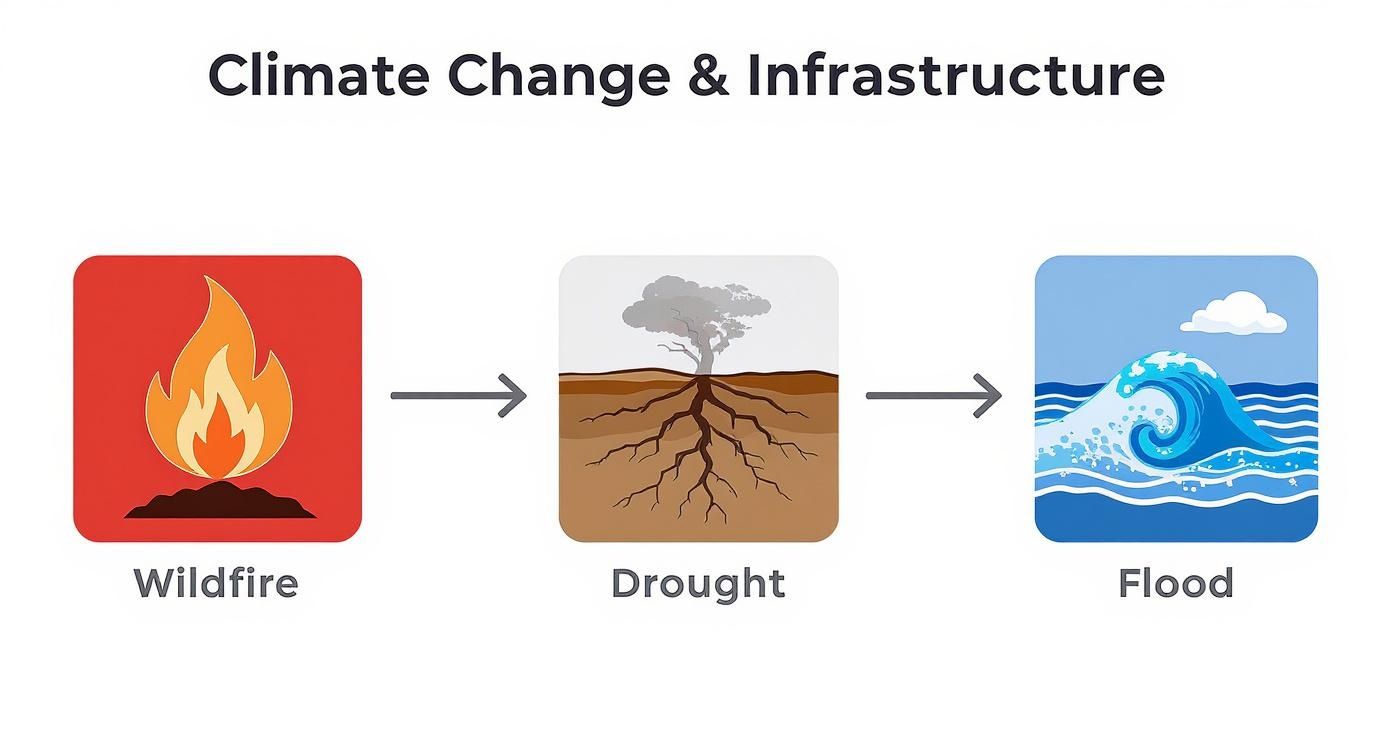
The infographic below shows how climate events like wildfires, droughts, and floods are connected, requiring a new way of thinking about our infrastructure.
 utility contractors and property owners” />
As you can see, one disaster often starts a chain reaction, putting a lot of stress on the utility lines buried right under our feet.
Low-Impact Excavation and Soil Management
Old-school digging often meant tearing up large areas of land, but today's sustainable methods are much more precise. Think of it like the difference between major surgery and a less invasive procedure. Low-impact excavation is all about disturbing the surrounding area as little as possible.
This approach is key to preventing soil erosion and protecting local nature. When you handle soil correctly, it keeps its structure and can support plants—our first line of defense against stormwater runoff and flooding.
Here’s what that looks like in practice:
- Minimizing the Trench Footprint: Crews dig trenches that are only as wide as they need to be. This simple step greatly reduces soil displacement and surface damage.
- Proper Soil Segregation: During digging, the rich topsoil is carefully separated from the subsoil. This ensures the good soil goes back on top, helping plants grow back quickly.
- Effective Erosion Control: Using tools like silt fences and erosion blankets is standard practice. It keeps soil on the job site and out of nearby storm drains and rivers, preventing pollution.
Trenchless Technologies: A Smarter Way to Replace Pipes
One of the biggest advances in sustainable utility work is the use of trenchless technologies. Instead of digging a long, messy trench to lay a new pipe, these methods allow contractors to repair or replace pipes from the inside. All it takes is a couple of small access points.
This technology is a game-changer, especially in developed areas. It means we can avoid tearing up roads, sidewalks, and landscapes. The result is a much smaller carbon footprint, less waste, and fewer problems for the community.
A great example of this is a method called pipe bursting. A new pipe is pulled through the old, failing one. As the new pipe moves forward, it breaks the old pipe outward and takes its place without a trench. It's faster, cleaner, and often cheaper than traditional digging, especially when you add up the costs of restoring roads and landscaping. You can see how the latest methods for utility systems construction are putting these technologies to work in our community.
Smart Material Choices and Certified Inspections
Coastal Pipeline is ahead of the curve, using practices like low-impact excavation, proper soil handling, and recycled materials. Their storm drain systems are engineered for hydrology compliance. Their NASSCO-certified inspections and trenchless technologies also minimize surface disruption and waste.
True sustainability also comes down to the materials we choose and the quality control we require. Modern contractors have access to great materials that are both tough and eco-friendly, like pipes made from recycled content or strong options like HDPE that can make a system last for decades.
Of course, great materials only work if they’re installed and checked correctly. This is where rigorous inspections come in. Using certified inspections with robotic cameras can spot tiny problems inside pipes before they become major failures. This ensures the entire utility network stays healthy for years to come.
The Financial Payoff of Building Green Infrastructure
Let's be honest: when you look at a project budget, the upfront cost is a big deal. But thinking only about the initial price for underground utilities is a common mistake. While old construction methods might look cheaper at first, they have hidden costs that show up later—frequent repairs, rising maintenance bills, and the risk of breaking environmental rules.
Choosing sustainable infrastructure is like buying a high-quality tool instead of a cheap one. The better tool costs more at first, but it pays for itself over time through reliability and a much longer life. Green utility systems work the same way. It's a long-term strategy that always wins.
Lowering Lifetime Costs with Durable Materials
One of the biggest financial game-changers is simply choosing better materials from the start. For years, concrete and cast iron were common for underground pipes. We now know they are prone to cracking, rust, and leaky joints, which means you're signing up for future expensive repairs and wasted water.
Today's sustainable materials offer a much smarter return on investment.
- High-Density Polyethylene (HDPE) Piping: This is a perfect example of a long-term win. HDPE is flexible, it won't rust, and its joints are heat-fused. This creates a single, solid pipeline with no weak spots for roots to get in or water to leak out.
- Recycled Materials: Using recycled materials for backfill or pipe bedding does more than just keep waste out of landfills. It can lower your material costs and often provide better compaction and drainage than regular soil.
The initial investment in higher-grade, sustainable materials is quickly offset by a huge drop in future maintenance and emergency repair costs. A system designed to last 75-100 years instead of just 30-50 completely changes the financial picture for a property owner.
It's important to see the whole financial picture, including what you'll save on future fixes. Looking at a detailed breakdown of sewer line replacement costs shows how much those upfront material choices affect your budget for years.
To put it into perspective, here’s a quick comparison of the materials.
Comparing Traditional vs Sustainable Utility Materials
This table shows the benefits and drawbacks of common materials versus modern, sustainable options used in underground utilities.
| Feature | Traditional Materials (e.g., Concrete, Cast Iron) | Sustainable Materials (e.g., HDPE) |
|---|---|---|
| Lifespan | 30-50 years, can fail early from rust or cracking. | 75-100+ years, very resistant to environmental stress. |
| Maintenance | High. Needs regular checks and is prone to root intrusion and leaks. | Low. Fused joints stop leaks and block roots. |
| Installation | Heavy, rigid, and requires more labor and heavy machinery. | Lightweight, flexible, and faster to install with fewer joints. |
| Environmental Impact | High carbon footprint to make; leaks can contaminate soil. | Lower carbon footprint; fully recyclable and prevents water loss. |
| Long-Term Cost | Lower initial cost but high lifetime cost due to repairs and replacement. | Higher initial cost but much lower lifetime cost. |
As you can see, the choice is clear when you focus on long-term value and reliability.
Avoiding Fines and Meeting Strict Standards
California's environmental rules are some of the toughest in the country, and they aren't getting any weaker. For property owners, ignoring them isn't a strategy—it's a sure way to get hit with big fines, project delays, and legal trouble. In this situation, sustainable design is your best protection.
A well-designed system does more than just move water; it protects the owner's investment. For example, a modern storm drain with catch basins is designed to trap oil, dirt, and trash before they reach our waterways. That one feature helps property owners follow clean water laws and avoid thousands of dollars in fines.
Of course, for contractors to lead the way, they need to upgrade equipment and stock better materials. This requires money. Understanding the different options for construction business loans is often the key to funding these important, long-term investments.
When you build green from the start, you're doing more than just installing utilities. You're building financial strength and making sure your project remains a valuable, rule-abiding asset for years.
Why Sustainable Contractors Win More Projects
In today's construction market, a contractor's skills in sustainability matter just as much as their equipment. A strong history of sustainable practices isn't just a bonus—it’s a real advantage that helps win more projects. This is not a passing trend; it’s a big shift in how clients choose their partners.
Property owners, city planners, and developers are now looking beyond the lowest price. They are actively looking for contractors who can build infrastructure that is both strong and good for the environment. A contractor who has mastered sustainable methods is seen as more reliable, forward-thinking, and trustworthy. That kind of reputation opens doors to the biggest and best jobs.
The New Standard for Bidding and Selection
The days when the lowest bid always won are quickly ending. Today, the selection process is more complex, with sustainability and resilience becoming major factors in the final decision. This is especially true for public projects, where government money is often tied to meeting specific environmental and climate-resilience goals.
Contractors who can prove their expertise in "green" construction methods are automatically moved to the front of the line.
- Competitive Bidding Advantage: When a bid requires a detailed plan to prevent storm water pollution or the use of recycled materials, a sustainable contractor already has the skills and systems to meet those needs easily.
- Access to Funding: Many grants and public funds are now set aside for projects that use sustainable design. Contractors who know this can help their clients get that important funding.
- Stronger Client Trust: Cities and developers are responsible for the long-term performance of their infrastructure. They trust contractors who build systems designed to last and meet future rules, which lowers their long-term risk.
The market has spoken: sustainability isn’t just a tie-breaker anymore. For many important contracts, it’s now a requirement to even be considered.
Industry Data Confirms the Market Shift
This isn't just talk; the numbers tell the same story. According to the Q4 2025 Insight Report, infrastructure clients are actively seeking “green” construction methods. The report also notes that federal and state investments are tied to resilience goals. This means contractors that embrace sustainability are more competitive in bidding and more trusted by cities and developers.
This data confirms that building green is now just a smart business strategy. Contractors who already use practices like low-impact excavation, trenchless technologies, and durable, recyclable materials like HDPE aren't just getting ready for the future—they're meeting the demands of today.
They are seen as problem-solvers who can help clients navigate California’s strict environmental standards while delivering a better final product. This expertise is what separates the leading underground construction companies from the rest. In the end, a contractor's commitment to sustainability shows their commitment to quality, long life, and true partnership, making them the top choice for today's most important infrastructure projects.
How to Future-Proof Your Local Infrastructure
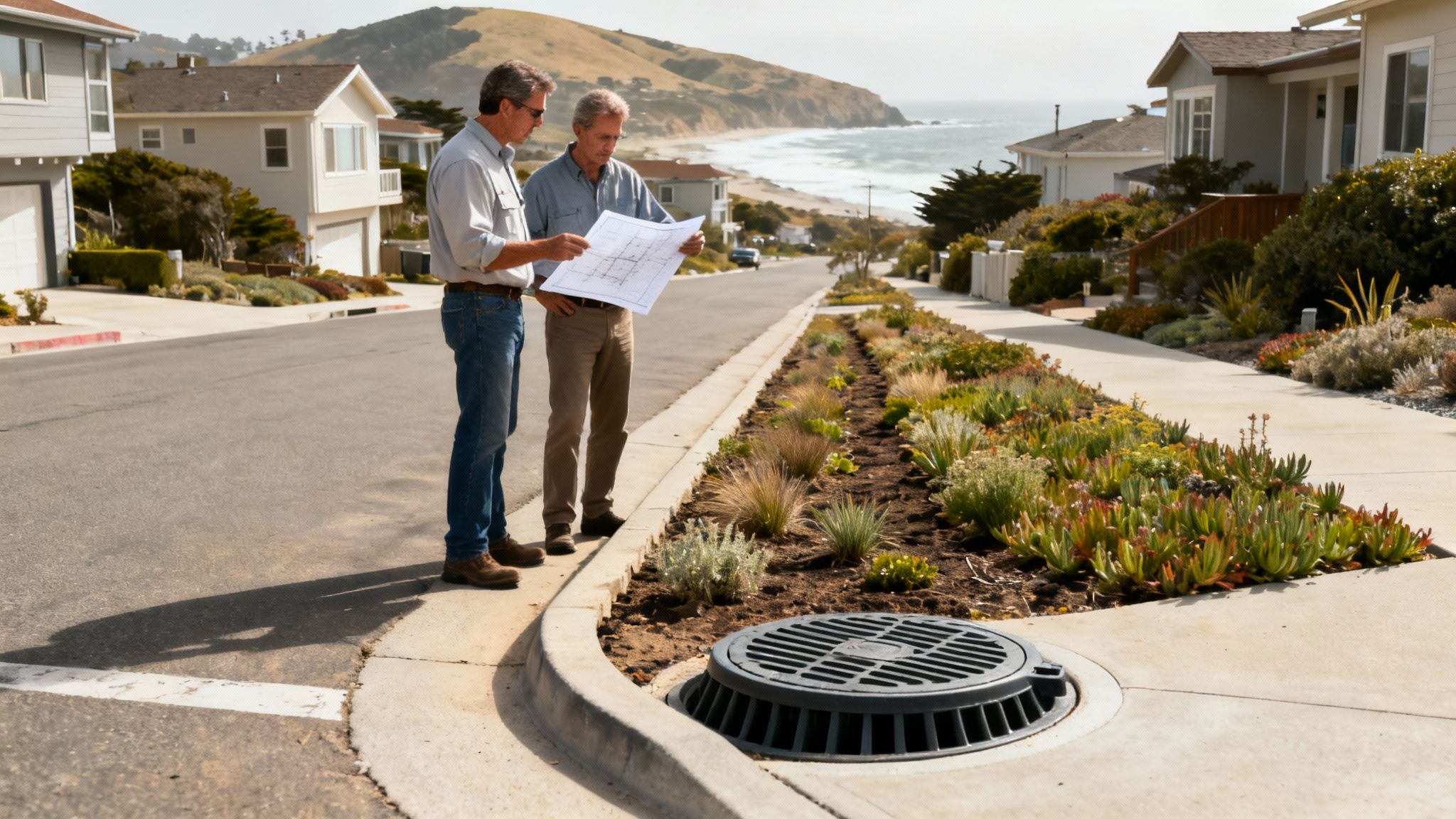
For property owners and developers on the Central Coast, the message is clear: the future is sustainable. The world of underground utilities is changing fast. Today, the systems we put in the ground must be tough enough to handle extreme weather and protect the environment. This isn't just a trend; it's a major shift that is changing how projects are designed and built across California.
Whether you're planning a sewer upgrade, a new storm drain system, or utility trenching for a new development, putting sustainability first is how you protect your investment. It's about more than just following rules—it’s a smart approach that creates real, lasting value for your property and the community.
Embracing the New Standard in Utility Work
California's unique environmental challenges, from droughts and wildfires to floods and earthquakes, are forcing everyone to invest in smarter, stronger infrastructure. This means that features once considered "upgrades" are now standard. We're talking about leak-resistant piping, strong erosion control, and advanced stormwater management as basic requirements, not optional extras.
At Coastal Pipeline, we’ve built our business on these ideas. We use low-impact excavation, handle soil with care, and use recycled materials when it makes sense. Our storm drain systems aren’t just pipes in the ground; they’re designed for full hydrology compliance to manage water well and keep pollution out of our waterways.
By using NASSCO-certified inspections and modern trenchless technologies, we reduce disruption and waste. This delivers a higher standard of work that respects both your property and the local environment.
Building for Longevity and Compliance
This focus on sustainable practices isn't just about being green—it's about building smarter infrastructure that lasts longer. It all comes down to making smart choices from the start that pay off for decades.
- Durable Materials: We often recommend materials like HDPE pipe not just because it's recyclable, but because its strength means fewer maintenance problems down the road.
- Smarter Design: Designing catch basins that prevent runoff pollution isn't just good practice; it helps you meet California’s tough environmental standards and avoid big fines.
- Extended Lifespans: When you combine better materials with smarter design, you get utility systems with a much longer functional life, ensuring they can serve the community for generations.
The industry data backs this up. The Q4 2025 Insight Report shows that clients are now actively looking for contractors who specialize in “green” construction methods. At the same time, more government funding is being tied to resilience goals. The bottom line is that contractors who have already embraced sustainability are simply more competitive and more trusted.
Your Local Partner in Resilient Infrastructure
Whether you're planning a sewer upgrade, new storm drain layout, or utility trenching for a development project in Monterey, Santa Cruz, or San Benito County, Coastal Pipeline is your local partner in building resilient, sustainable systems. We understand the local challenges and know how to build for the future.
We’re here to help you protect our communities while delivering utility solutions that are truly built to last. Contact us to learn more about how we help protect communities while delivering long-term utility solutions.
A Few Common Questions
As contractors and property owners start to use more sustainable practices, a lot of good questions come up. Let's answer some of the most common ones.
What's the Toughest Part for Contractors Trying to Go Green?
Honestly, the biggest challenge is usually the initial investment. Getting into things like trenchless technology means buying special equipment and training your team to use it. That costs money.
But the smart contractors are thinking long-term. They know those upfront costs are quickly paid back by savings on labor, faster project times, and avoiding big environmental fines. It's less of an expense and more of an investment in staying competitive and giving clients what they want.
How Does This Actually Help Me as a Property Owner?
For property owners, it really comes down to two things: lower long-term costs and higher property value. When your utility systems are built with durable, rust-proof materials like HDPE, they last longer and need fewer repairs. That means fewer surprise bills later on.
On top of that, a well-designed stormwater system can save you a lot of money by preventing flooding and erosion. Following the rules also keeps you safe from fines and builds your property’s reputation as a smart, responsible investment.
Think of it this way: sustainability isn’t an extra feature; it's a key part of making a good financial decision. A resilient utility system protects your property and makes it more attractive to a market that cares more and more about environmental impact.
Aren't Sustainable Options Just More Expensive?
It’s easy to think so if you only look at the initial price, but that’s not the whole story. You have to think about the total cost of ownership over the project's entire life.
For example, trenchless installation might seem more expensive at first. But when you add up the huge costs of fixing landscaping, pavement, and managing traffic that come with traditional digging, it’s often the cheaper choice. Plus, building it right the first time greatly cuts down on the risk of expensive repairs and environmental fines later. In the long run, it's almost always the smarter financial move.
Whether you're planning a sewer upgrade, new storm drain layout, or utility trenching for a development project in Monterey, Santa Cruz, or San Benito County, Coastal Pipeline Inc. is your local partner in building resilient, sustainable systems. Contact us to learn more about how we help protect communities while delivering long-term utility solutions.
Learn more by visiting our website: Coastal Pipeline Inc..