
When you think of a water leak, you might picture a dripping faucet. But the most destructive water line problems are the ones you can't see, hidden beneath your property. A failing underground water line can lead to high water bills, landscape damage, and even structural issues for your home or business. Most plumbing advice focuses on simple symptoms like low pressure, but it often misses the bigger picture: aging infrastructure.
Many properties in Monterey and Santa Cruz Counties rely on water lines installed decades ago. These pipes, made from materials like galvanized steel (lifespan of ~40 years) or ductile iron (50-70+ years), are now reaching the end of their service life. According to the 2025 Infrastructure Condition Report, over 52% of underground water lines in Monterey and Santa Cruz Counties were installed before 1985. The same report shows that corrosion-related failure risks have increased by 17% in just the last five years.
This guide goes beyond generic tips to provide a clearer, engineering-level view. We will explain the specific signs of a failing underground water line, the real causes behind them, and what steps you should take to protect your property and prevent major damage.
1. Unexplained Water Bill Increases
Often, the first sign of a failing underground water line isn’t a puddle in your yard, but a sharp, unexpected rise in your water bill. A sudden spike in usage, without a change in your household or business activity, is a key financial red flag for a leak. Even a small pinhole leak in a buried pipe can waste thousands of gallons of water, causing your bill to jump by 25%, 50%, or even more.
This warning sign is important because the water loss is often invisible on the surface for weeks or months. The leaking water quietly soaks the deep soil around the pipe, costing you money long before you see any visible evidence. For property managers and HOA boards, checking utility bills regularly is a simple way to catch these problems early.
Actionable Steps for Diagnosis
If your water bill makes you suspect a leak, follow these steps to confirm the problem:
- Review and Compare: Check your water bills each month. Compare your current usage to the same time last year to spot unusual spikes. If you see high usage for two months in a row, it’s a clear pattern.
- Perform a Meter Test: A simple way to check for a leak is to turn off all water-using appliances and fixtures. Then, look at your water meter. If the dial or digital display is still moving, you have an active leak somewhere.
- Request a Utility Audit: Your local water company can often provide a history of your water usage. This data helps you see what's normal and pinpoint when the high usage started.
Key Insight: A steady, unexplained rise in water use is one of the most reliable signs of a failing underground water line. Unlike a change in water pressure, a rising bill points directly to water you are paying for but not using.
For a final diagnosis without digging, you need a professional inspection. Coastal Pipeline Inc. uses methods like leak detection and pressure testing to find the exact source of water loss in main lines and service laterals (the pipe connecting your property to the public main). Finding the exact failure point allows for targeted repairs, saving time and money.
2. Soggy or Unusually Wet Patches in Yard
One of the most direct signs of a failing underground water line is the appearance of soggy, constantly wet patches in your yard. This happens when a leak soaks the soil, causing water to eventually rise to the surface. Unlike puddles from rain, these wet spots stay damp or swampy even when it’s dry, which means a steady supply of water is coming from a broken pipe below.
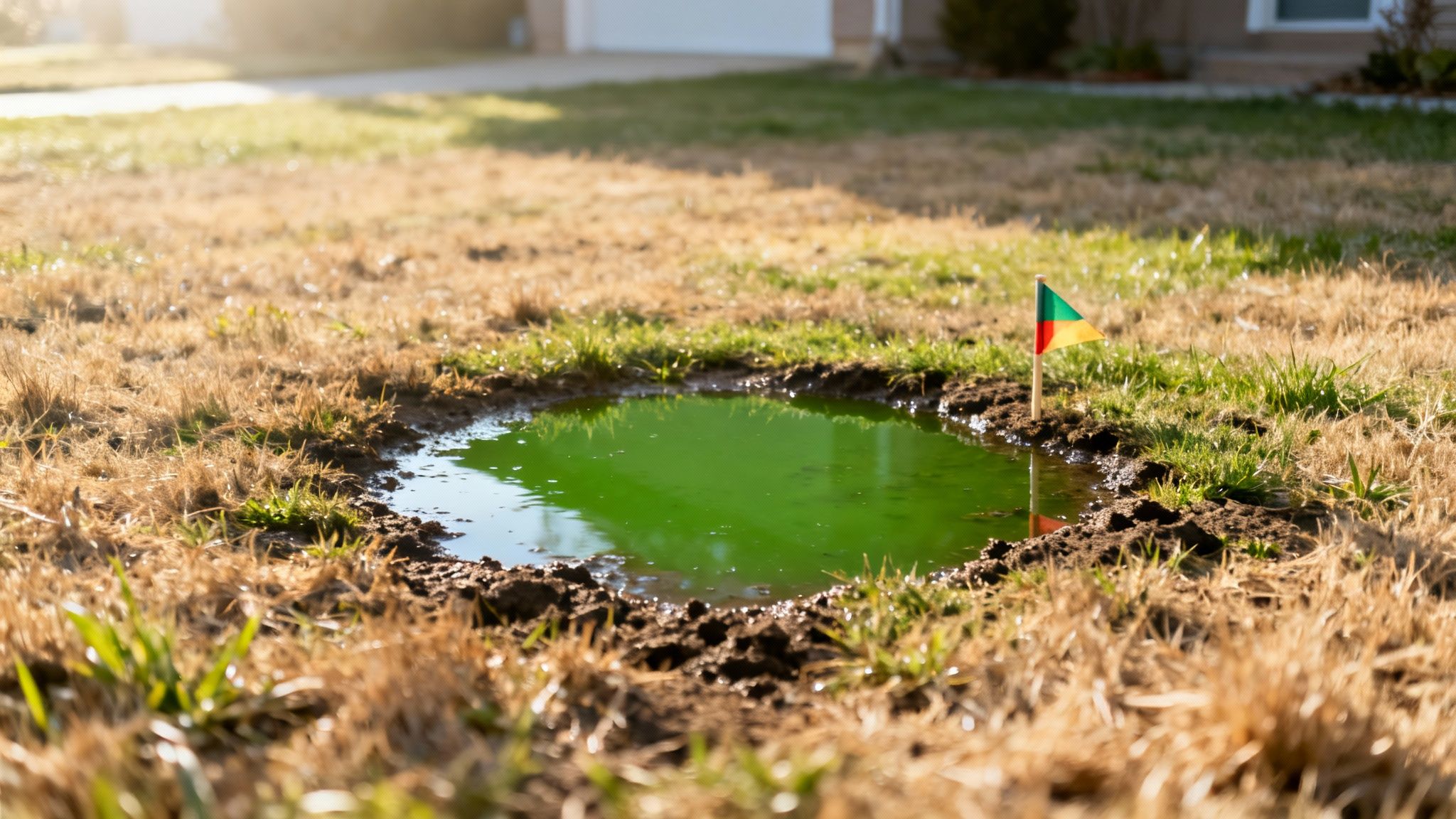
This physical evidence is a serious warning that a service lateral or main water line has a major break. The constant moisture can lead to soil erosion, damage your property's foundation, and create sinkholes under driveways or walkways. In older developments, this is often caused by corrosion in ductile iron systems or failures in old service lateral connections.
Actionable Steps for Diagnosis
If you find an unexplained wet area on your property, use these steps to investigate before the problem gets worse:
- Monitor and Document: Walk your property regularly, especially a few days after it has rained. Mark any damp areas with flags or take dated photos to track their size over a week or more. This information is helpful for a professional.
- Check for Contributing Factors: Make sure the wetness is not from poor drainage, a broken sprinkler, or runoff from a neighbor's property. A leak is likely if the moisture has no other clear source.
- Observe Vegetation Changes: A broken water line can sometimes make a patch of grass extra lush and green compared to the rest of the lawn. On the other hand, too much water can drown plant roots, causing yellow or dead spots.
Key Insight: A soggy patch in your yard that never dries out is a clear physical sign of an active underground water line leak. While water pressure changes can be subtle, standing water points directly to a broken pipe that is losing water into the soil.
Ignoring a wet spot can lead to more serious property damage and water loss. Coastal Pipeline Inc. offers diagnostic inspections to find the exact point of failure. Accurate diagnosis allows for targeted, efficient repairs, which avoids widespread and expensive damage to your landscaping. If you're noticing wet spots near your service lateral, a professional evaluation is the next step.
3. Low Water Pressure at Fixtures
A sudden or slow drop in water pressure at faucets, showers, and sprinklers is a classic sign of a failing underground water line. When a pipe cracks or breaks, water escapes into the soil before it reaches your property's fixtures. This loss of water leads to a noticeable drop in pressure, signaling that your water delivery system is damaged.
Unlike a clog that affects a single faucet, a leak in the main service lateral usually causes a pressure drop everywhere on the property. This is a critical indicator of water loss and potential pipe failure, often caused by aging materials like undersized C900 PVC lines that can’t handle today’s static pressure demands.
Actionable Steps for Diagnosis
If you notice a steady drop in water pressure, use these steps to see if it's one of the signs of a failing underground water line:
- Test Multiple Fixtures: To confirm a system-wide issue, turn on several faucets and showers throughout the property at the same time. If they all have low pressure, the problem is likely in the main line, not a single fixture.
- Install a Pressure Gauge: Attach a simple pressure gauge to an outdoor hose spigot. Write down the pressure readings at different times of the day for a few days. This data provides a clear record of pressure drops for a technician.
- Rule Out Municipal Issues: Before assuming the problem is on your property, call your local water utility. They can tell you if there are any widespread pressure reductions or maintenance work in your area that could be affecting your service.
Key Insight: A widespread, simultaneous drop in water pressure across multiple fixtures is a strong indicator of a main line break. While a clogged faucet affects one spot, a main line leak impacts the entire property's water system.
Figuring out if the problem is your service lateral or the city’s water supply requires professional expertise. Coastal Pipeline Inc. performs pressure testing and inspections to confirm main line health and find the exact location of a leak. This targeted approach ensures repairs fix the root cause, restoring full pressure and preventing more water loss.
4. Visible Sinkholes, Collapsed Pavement, or Ground Settlement
One of the most dramatic and dangerous signs of a failing underground water line is the appearance of sinkholes, collapsing pavement, or major ground settlement. When a pressurized water line breaks, the escaping water washes away the surrounding soil. This process, called subsurface erosion, creates a hidden empty space under the ground. Eventually, this space can no longer support the weight above it, leading to a sudden collapse.
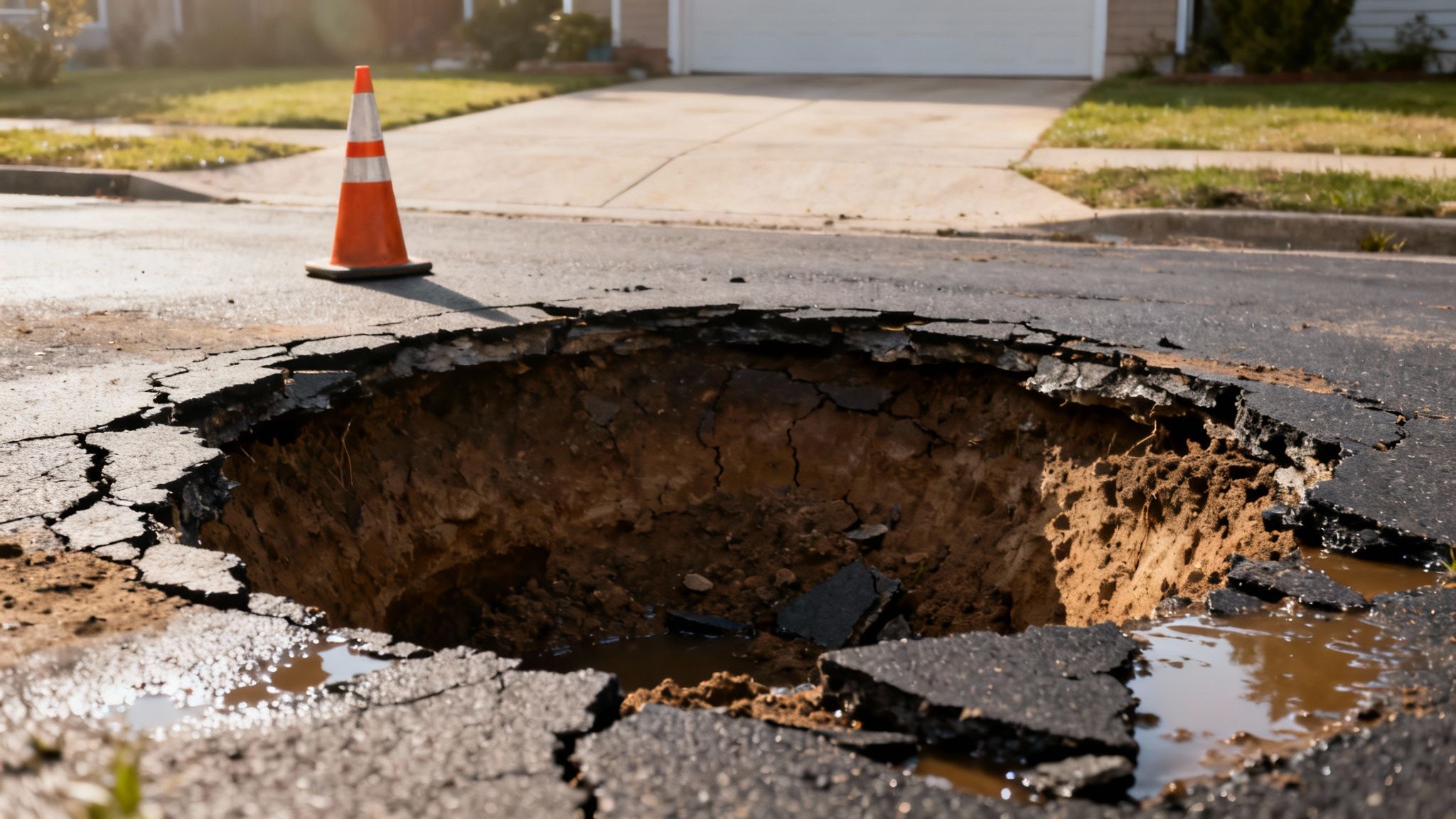
This is a late stage of pipe failure, meaning there is a major break, not a small leak. The stability of driveways, parking lots, and even roads is at risk, creating a serious public safety hazard. This is a big concern in areas with clay-heavy soils, like those on California's Central Coast, where extra water can quickly weaken the ground. You can learn more about how subsurface conditions impact pavement performance on coastalpipelineinc.com.
Actionable Steps for Diagnosis
If you see a sinkhole or sinking ground on your property, you must act immediately to prevent injury and more damage.
- Secure the Area Immediately: Block off the area with cones, caution tape, or barricades to keep people and vehicles away. This is a critical first step to prevent accidents.
- Document Everything: Take clear photos and videos of the collapse and any surrounding damage from different angles. This documentation is essential for insurance claims and reports to city authorities.
- Notify Relevant Parties: For commercial properties, tell your insurance company right away. For a collapsed street, contact the city's public works department. This starts the proper process for traffic management and emergency response.
- Do Not Attempt DIY Repairs: A sinkhole points to a serious problem underground. Do not fill the hole or try to patch the surface without a professional assessment of the pipe and soil.
Key Insight: A sinkhole is not just a surface problem; it is a direct sign of a major underground failure. The water line has likely been leaking long enough to wash away a large amount of soil, requiring both a utility repair and ground stabilization.
Fixing a collapse of this size requires immediate, expert help. Coastal Pipeline Inc. provides emergency excavation, pipe replacement, and full site restoration. We coordinate with engineers and public agencies to manage traffic, repair the failed utility line, and restore the ground to a safe, stable condition.
5. Discolored or Sediment-Cloudy Water at Fixtures
When water from your faucets runs rusty, brown, or has floating particles, it's a clear sign that your underground water line is breaking down from the inside. This problem often points to rust in older galvanized steel or cast iron pipes. It can also mean that cracks in the line are letting soil and dirt into your water supply. This is one of the most concerning signs because it directly affects your water quality and safety.
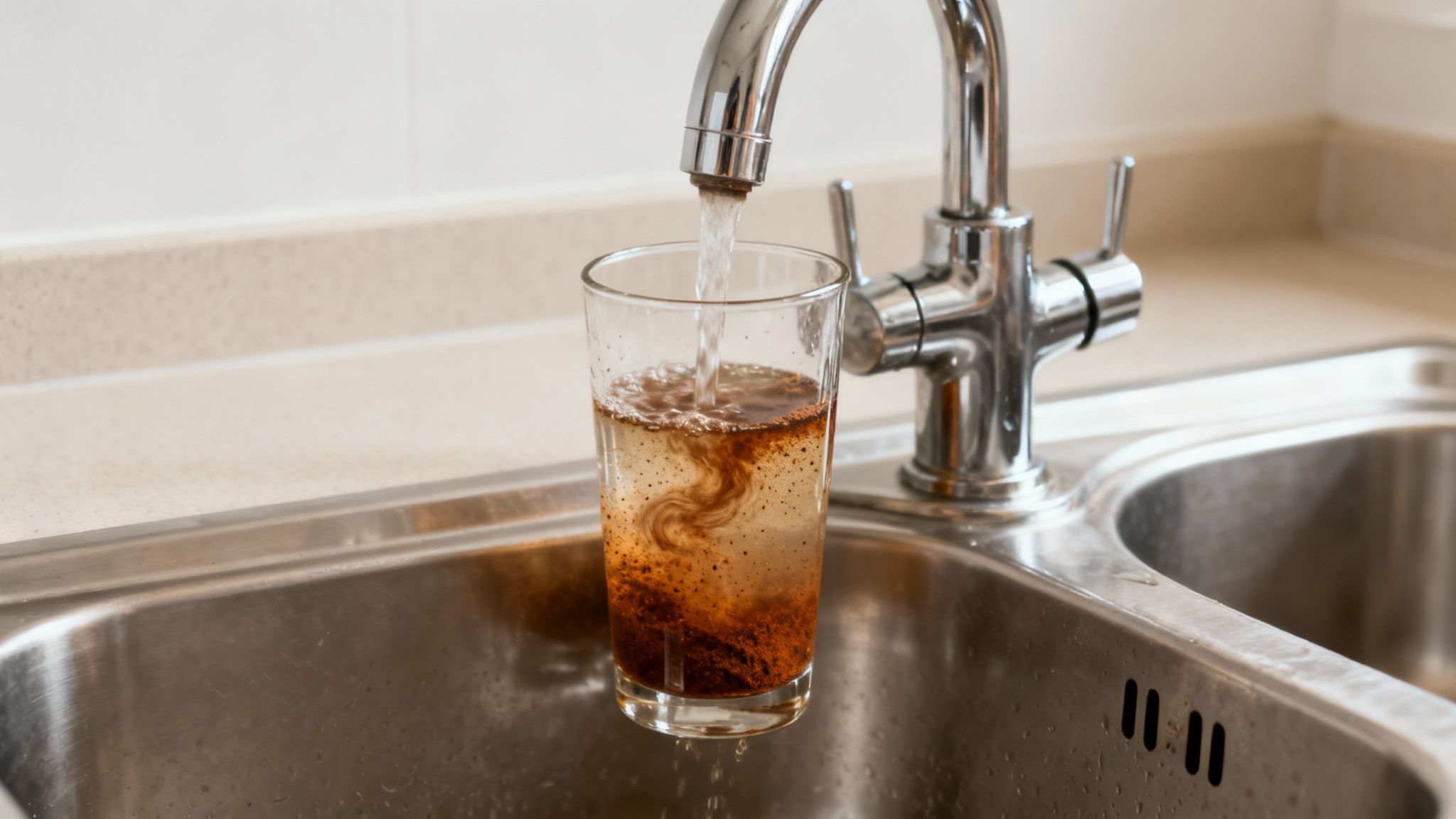
This problem is common in properties with old infrastructure, like the many homes in Santa Cruz and Monterey Counties built before 1985. For example, a 50-year-old galvanized steel service line will shed rust, causing reddish-brown water, especially in the morning. For businesses or apartment buildings, this sediment can clog faucets, damage water heaters, and lead to widespread complaints from tenants.
Actionable Steps for Diagnosis
If you see discolored water, take these immediate steps to find the source and protect your water quality:
- Collect and Document Samples: Use clear glasses to collect water samples from different faucets (kitchen, bathroom) at different times. Take photos and videos of the discolored water to show your utility company or a contractor.
- Isolate the Source: Check if both your hot and cold water are discolored. If only the hot water is affected, the problem is likely your water heater. If both are discolored, the issue is further up the line, likely in the main service lateral.
- Rule Out Municipal Issues: Call your local water department to see if they are flushing fire hydrants or if there are reports of water quality issues in the area. This helps determine if the problem is on your property or is a larger city issue.
Key Insight: Unlike pressure changes, which can have multiple causes, discolored water almost always points to a problem with the pipe itself. It is a sign that the pipe material is breaking down or has been broken, putting the safety of your water at risk.
To know for sure what's happening inside your water line, a professional inspection is needed. Coastal Pipeline Inc. uses video camera inspections to check pipe walls for rust, cracks, and other problems. This lets us confirm the cause of the contamination and recommend a targeted replacement with modern, rust-resistant materials like HDPE or C900 PVC. Learn more about the importance of upgrading aging water lines on coastalpipelineinc.com.
6. Frequent Water Service Interruptions or Air in Water Lines
When faucets start to spurt and sputter, or your water service cuts out for periods of time, it's a serious red flag. These are not minor plumbing issues; they are often signs of a failing underground water line. A large leak or break in the pipe can cause the water pressure inside to drop so low that air gets sucked into the system through the crack. This air creates the sputtering noise at your taps and can cause your water to shut off completely, signaling a critical failure is near.
For a property owner, this means a break is large enough to disrupt the entire water supply. For city water systems, this points to a major leak that wastes a lot of water and affects pressure for a whole neighborhood. In older areas with aging ductile iron or galvanized steel lines, these symptoms are especially urgent, as they often happen right before a complete pipe collapse.
Actionable Steps for Diagnosis
If you're experiencing sputtering faucets or service interruptions, take these immediate steps:
- Document the Occurrences: Keep a detailed log of when the interruptions happen and how long they last. Note which fixtures are affected. This information is very helpful for a technician.
- Check with Your Utility: Contact your local water company immediately. They can confirm if there is a known service outage in your area or if the issue is just on your property. This helps determine if the problem is in the city main or your private service lateral.
- Isolate the Problem: A simple test is to ask your neighbors if they are having the same issue. If multiple properties are affected, it strongly suggests a problem with the city's main line. If it's only your property, the leak is likely on your side of the water meter.
- Purge the System After Restoration: Once service returns, run all cold water taps for 5-10 minutes. This helps flush out any air, dirt, or debris that entered the line through the break.
Key Insight: Air in your water lines or repeated service interruptions are not just annoying; they are direct proof that your underground water line is damaged. The leak is large enough to let air into the pressurized system, a clear sign that a bigger failure is likely.
A final diagnosis requires professional help to find the break without unnecessary digging. Coastal Pipeline Inc. uses pressure testing and advanced leak detection to pinpoint the source of the failure. This allows us to figure out the scope of the repair and whether it is a private or public responsibility. For fast action and expert assessment, a professional evaluation is necessary.
7. Cracks in Foundation or Interior Walls Coinciding with Water Damage
Perhaps the most alarming sign of a failing underground water line is the appearance of new cracks in your property's foundation, especially when you also see moisture. When a pressurized water line breaks near a building, it releases a large amount of water that soaks the soil directly under and around the foundation. This constant moisture can wash away supportive soil, causing the foundation to settle unevenly and crack.
This is an advanced stage of water line failure, where the problem has grown from a simple leak to a direct threat to your building's structure. On California's Central Coast, where expansive clay soils are common, the extra water can cause soil to swell, putting immense pressure on foundation walls. The issue is no longer just about wasted water; it's about preventing long-term, expensive structural damage.
Actionable Steps for Diagnosis
If you find new foundation cracks along with signs of moisture, you must take coordinated action right away:
- Document and Photograph: Carefully photograph all new cracks in foundation slabs, crawl space walls, and interior drywall. Note any signs of moisture, mold, or white, chalky mineral deposits near the cracks. This documentation is vital for both the utility repair and any structural assessments.
- Engage a Structural Engineer: Before any repairs begin, a structural engineer should check the foundation. They can determine how bad the damage is and recommend a plan to stabilize the structure, which must be coordinated with the water line repair.
- Coordinate Professional Services: The key is to manage the utility repair alongside other experts. Coastal Pipeline often coordinates its excavation and repair work with structural and environmental teams to ensure a complete solution.
Key Insight: Foundation cracks linked to moisture are a double threat. They point to a severe underground water line failure and active structural damage. Unlike a simple wet spot in the yard, this sign requires a coordinated response from both a utility contractor and a structural engineer to protect your property.
Fixing the source of the water is the first step in solving the structural threat. Coastal Pipeline Inc. offers expert solutions to replace the failed water line with minimal further disturbance to the foundation. After the line is fixed, proper site grading and drainage can be done to reduce future risks from soil problems. Find out more about how water management is key to preventing soil erosion and protecting foundations on domain.com.
8. Unusual Sounds (Hissing, Whistling, or Water Rushing Noise)
One of the more subtle but telling signs of a failing underground water line is the sound it makes. Water escaping under pressure from a crack or loose joint creates distinct sounds. A steady hissing or whistling often points to a small, high-pressure leak. A continuous rushing or gurgling sound can mean a larger break in the main service line.
These sounds are helpful because they can travel through the pipe or the soil, and you can often hear them indoors before you see any water. A faint hissing in a crawl space, basement, or near where the water line enters a building should never be ignored. In the Central Coast's different soil types, from dense clay to sandy loam, how these sounds travel can vary, but if they don't stop, it's a clear sign of a hidden leak.
Actionable Steps for Diagnosis
If you hear unusual water-related sounds, use these steps to investigate before calling a professional:
- Isolate and Listen: Turn off all water-using appliances, faucets, and irrigation systems. Listen carefully near your water meter, in basements, and in crawl spaces during quiet times, like early morning or late at night.
- Document and Pinpoint: Use your smartphone to record the sound. Make a note of the time of day and the exact location where the sound is loudest. This information is very useful for a technician.
- Correlate with Pressure Changes: Notice if sounds like whistling get louder in the early morning. This often happens when city water pressure is highest due to low overall demand, which forces more water through the break.
Key Insight: Unlike visible water damage that confirms a leak has been active for some time, sounds are often the earliest warning of a failing underground water line. They indicate an active, pressurized leak that is losing water in real-time and needs immediate attention.
Finding the exact source of an underground leak by sound alone is difficult. Coastal Pipeline Inc. offers professional acoustic leak detection services in Monterey and Santa Cruz County to find the failure point without digging. This advanced technology saves you from unnecessary and costly digging.
8-Point Comparison: Signs of Underground Water Line Failure
| Warning Sign | Implementation Complexity 🔄 | Resource Requirements ⚡ | Expected Outcomes 📊 | Ideal Use Cases 💡 | Key Advantages ⭐ |
|---|---|---|---|---|---|
| Unexplained Water Bill Increases | Low 🔄 — billing review and trend analysis | Low ⚡ — meter data, accounting, optional video inspection | 📊 Early detection of abnormal loss; quantifiable usage spikes | Municipal audits, property managers, routine monitoring | ⭐ Early warning; supports cost-benefit of repairs |
| Soggy or Unusually Wet Patches in Yard | Low–Moderate 🔄 — visual inspection, mark & monitor | Moderate ⚡ — site walk, flags, possible excavation/video | 📊 Localizes approximate leak area; prevents soil/foundation damage | Landscaped residential/commercial sites, dry-season checks | ⭐ Highly visible; guides targeted excavation |
| Low Water Pressure at Fixtures | Moderate 🔄 — multi-point pressure testing and diagnostics | Moderate ⚡ — pressure gauges, technician, possible video | 📊 Confirms systemic loss; indicates main-line compromise | Multi-fixture complaints, multi-unit buildings, facilities | ⭐ Prompts urgent response; distinguishes fixture vs main issues |
| Visible Sinkholes / Collapsed Pavement / Ground Settlement | High 🔄 — emergency response, safety & engineering coordination | High ⚡ — excavation crews, structural engineers, traffic control | 📊 Immediate hazard mitigation; likely full replacement & restoration | Municipal emergencies, public safety incidents, major failures | ⭐ Unmistakable evidence; accelerates emergency repair |
| Discolored or Sediment-Cloudy Water at Fixtures | Moderate 🔄 — sampling, lab analysis, internal inspection | Moderate ⚡ — water testing, video inspection, remediation planning | 📊 Identifies corrosion/contamination; validates replacement need | Aging infrastructure, health/quality complaints, dwellings | ⭐ Visible quality issue; justifies infrastructure upgrades |
| Frequent Service Interruptions or Air in Lines | High 🔄 — pressure diagnostics, utility coordination, emergency planning | High ⚡ — temporary supply, emergency crews, diagnostic equipment | 📊 Indicates imminent or intermittent major failure; requires urgent repair | Service outages, peak-usage interruptions, municipal systems | ⭐ Clear urgency; forces immediate corrective action |
| Cracks in Foundation or Interior Walls with Water Damage | High 🔄 — coordinated structural and utility remediation | High ⚡ — structural engineers, trenchless/pipeline crews, restoration | 📊 Comprehensive remediation; prevents long-term structural loss | Properties with foundation moisture, mold, structural cracks | ⭐ Demonstrates severe intrusion; justifies integrated repairs |
| Unusual Sounds (Hissing, Whistling, Rushing) | Low–Moderate 🔄 — listening surveys, acoustic detection | Moderate ⚡ — acoustic equipment or recorded evidence, follow-up inspection | 📊 Real-time localization cue leading to targeted detection | Quiet-hour inspections, crawlspaces, early leak detection | ⭐ Audible, low-cost indicator; helps narrow search area |
From Diagnosis to Replacement: Your Next Steps with Coastal Pipeline Inc.
Recognizing the signs of a failing underground water line is the first step in protecting your property. From a sudden spike in your water bill to soggy patches in your yard, each symptom points to a serious issue underground. This article has given you the knowledge to identify these warnings, so you can move from worry to informed action.
Understanding these signs is about more than just spotting a problem; it’s about understanding the real causes. As we’ve discussed, issues often come from the material lifespan of aging pipes, like 40-year-old galvanized steel or corroding ductile iron. These are common in older developments throughout our region. The 2025 Infrastructure Condition Report highlights this urgency, noting that over half of the underground water lines in Monterey and Santa Cruz Counties were installed before 1985, with failure risks climbing.
Taking Decisive, Informed Action
Once you suspect a failing water line, the next step is a long-term solution, not just a quick fix. While a standard plumber can patch a small leak, an infrastructure-grade problem requires an engineering contractor’s expertise. Here is how the approach is different:
- Comprehensive Diagnostics: Instead of just finding a single leak, an engineering approach involves pressure testing the entire system and using advanced leak detection to check the line's overall condition.
- Material-Specific Solutions: We figure out if your line is failing due to rust (common in ductile iron) or becoming brittle (an issue with older C900 PVC), then recommend modern, durable materials like HDPE for a full replacement.
- Municipal Coordination: A full replacement is more than just digging. It requires the right permits, proper tie-ins to public water mains, and certified testing to meet city standards—all managed by a qualified contractor.
Partnering with an Infrastructure Specialist
Navigating this process, from initial diagnosis to final restoration, requires careful planning. For companies like Coastal Pipeline Inc., managing operations efficiently is crucial. To support their work in diagnosis and replacement, they often rely on specialized tools. You can learn more about how to find the best software for your plumbing business to streamline project management and client communication. By choosing a partner who understands the complexities of underground utilities, you are not just fixing a leak; you are investing in the long-term reliability and safety of your property’s most essential resource. Don't wait for a small issue to become an expensive emergency.
If you’re noticing low water pressure, wet spots near your service lateral, or are planning a site upgrade, Coastal Pipeline offers diagnostic inspections and infrastructure-grade replacements throughout Monterey, Santa Cruz, and San Benito Counties. Protect your investment by partnering with the infrastructure experts at Coastal Pipeline Inc. Contact Coastal Pipeline Inc. today for a professional inspection and a complete replacement plan tailored to your needs.