Let's get right to the point: Is trenchless sewer replacement just a quick fix that won't last? The answer is a clear no.
Modern methods like Cured-In-Place Pipe (CIPP) lining and pipe bursting are designed to be permanent, long-term solutions. They are expected to last for 50 years or more. Instead of a simple patch, think of it as building a brand-new, seamless pipe right inside the old one.
The Truth About Trenchless Sewer Repair
It's easy to see why homeowners might be skeptical. When you have a major plumbing problem, fixing it without digging up your yard, driveway, or patio can sound too good to be true. Many homeowners are worried trenchless is a shortcut that won’t last—especially if they’ve read horror stories online.
This doubt often comes from a misunderstanding of what trenchless technology is today. It’s not just about patching a hole; it’s about completely rebuilding or replacing the pipe’s structure. For additional insights on trenchless solutions from experts, you can see what the industry is discussing.
A Permanent Solution Backed by Data
Trenchless methods are becoming the standard practice because they are durable and save time. The data shows why:
- Built to Last: CIPP liners create a new, strong pipe inside the old one. They are proven to last 50+ years, which is as good as, or even better than, some new pipes installed by digging.
- Less Mess, More Speed: A trenchless job can be finished up to 5x faster than traditional open-trench digging, which saves a lot of hassle.
- A Better Design: The seamless, joint-free pipe created by a trenchless liner removes the weak points found in older pipes. Those joints are where leaks and tree roots usually cause problems.
Studies and years of use have confirmed that a properly installed trenchless liner offers a service life of at least 50 years. It’s not a temporary fix; it’s a smart investment in a modern, long-lasting sewer system.
Avoiding the "One-Size-Fits-All" Mistake
So, where do the horror stories come from? They almost always happen when a contractor pushes trenchless as a “one-size-fits-all” solution without first inspecting the pipe. It’s a great technology, but it’s not right for every single situation.
For example, trying to line a pipe that has completely collapsed, is severely offset, or has lost its downward slope will not work. The new liner will just follow the shape of the broken pipe, and the original problem will come right back.
The key is to start with a professional sewer camera inspection, like one that is NASSCO-certified, to determine the condition of the existing pipe. This ensures the right method is selected—whether it’s trenchless or traditional. A proper diagnostic approach helps avoid repeat problems.
At Coastal Pipeline, we always perform NASSCO PACP-certified video inspections to confirm trenchless suitability. We offer both trenchless and open-cut solutions and explain when each is appropriate—so you're never sold the wrong fix. If you're in Monterey, Santa Cruz, or San Benito County, we’ll inspect your line first and walk you through the best long-term option—not just the fastest one.
To help you see the differences, here’s a quick comparison of the two main approaches.
Trenchless vs Traditional Repair At a Glance
| Feature | Trenchless Replacement (Pipe Bursting/CIPP) | Traditional Open-Cut Replacement |
|---|---|---|
| Project Lifespan | 50+ years | 50-100 years (depending on material) |
| Property Disruption | Minimal. Usually requires only one or two small access points. | Extensive. Requires a long, deep trench along the entire pipe path. |
| Typical Project Time | 1-2 days | 3-7 days (or longer, depending on complexity) |
| Landscaping Impact | Preserves lawns, driveways, patios, and mature trees. | Destroys all landscaping, hardscaping, and structures in the trench path. |
| Structural Integrity | Creates a seamless, joint-free pipe resistant to roots and leaks. | New pipe has joints that can be potential weak points over time. |
As you can see, both methods provide a long-lasting result, but trenchless technology does it with far less disruption and in much less time.
How Trenchless Technology Creates a New Pipe
To understand why trenchless sewer replacement is a permanent solution—and not just a patch—it helps to know what’s happening underground. Instead of digging a huge trench, these methods build a brand-new pipe right in the path of the old one. This is done using two main techniques: Cured-In-Place Pipe (CIPP) lining and pipe bursting.
While each method is a little different, they both aim to restore the pipe’s structure and create a modern, seamless sewer line that will last for decades.
CIPP Lining: A Pipe Within a Pipe
Think of Cured-In-Place Pipe (CIPP) lining as creating a new pipe from the inside out, without having to dig up the old one.
The process starts with cleaning the old pipe to remove any roots or debris. Then, a flexible liner made of felt or fiberglass is soaked in a special epoxy resin. This liner is carefully inserted into the old pipe through a small access point.
Once it's in place, the liner is inflated, pressing it against the walls of the original pipe. The resin is then cured, usually with hot water, steam, or UV light. It hardens into a solid, jointless, and very durable pipe inside the old one. You’re left with a smooth new pipe that's often stronger than the one it replaced.
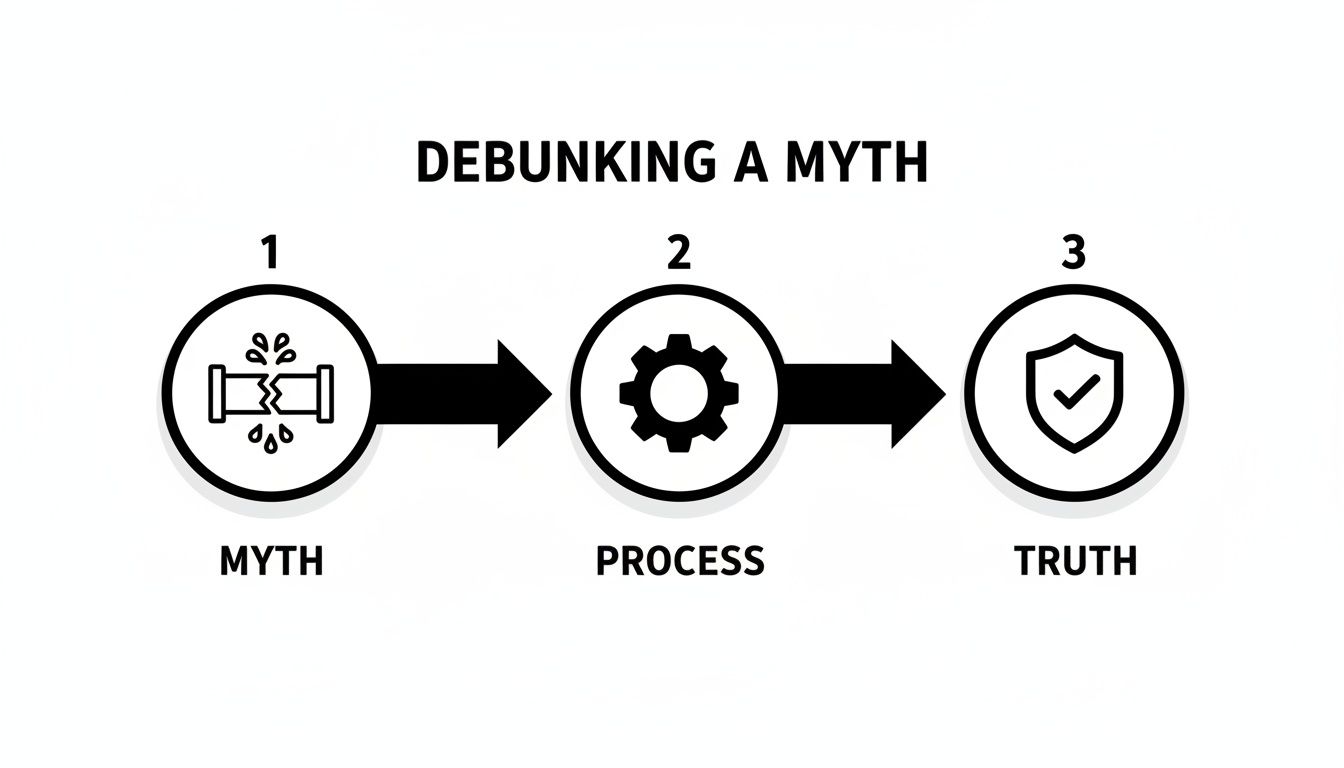
This process turns the myth of a temporary patch into the reality of a reliable, long-term solution.
Pipe Bursting: A Full Replacement Without the Trench
But what if the old pipe is too broken to be lined? For pipes with major cracks or severe damage, pipe bursting is the answer. This isn’t just a repair; it’s a full replacement.
A powerful machine pulls a new, high-density polyethylene (HDPE) pipe through the path of the old one. A heavy-duty, cone-shaped "bursting head" leads the way. As it’s pulled through, it shatters the old pipe and pushes the pieces into the surrounding soil.
Right behind it, the new HDPE pipe slides into place. You get a seamless, corrosion-proof, and root-resistant sewer line. It’s a complete upgrade, all without the mess of digging. To get a better sense of how different pipe installations work, you can explore our guide on how to install sewer lines.
Key Takeaway: Both CIPP lining and pipe bursting are much more than a simple patch. They are advanced methods that create a new, strong pipe designed to last for 50 years or more, proving that trenchless is not just a temporary fix.
What Makes a Trenchless Repair Actually Last?
So, how does a trenchless repair last for 50 years? A successful, long-lasting repair depends on a few key things. Getting these right is the difference between a permanent fix and a costly repeat problem.
Think of it like a three-legged stool: you need a solid host pipe, high-quality materials, and a skilled installation team. If any of those is weak, the repair won't last.
The Host Pipe is Your Foundation
The most important factor is the condition of the existing pipe, which we call the "host" pipe. Trenchless methods are powerful, but they work with what’s already there.
- For CIPP Lining: We are building a new pipe inside the old one. If the original pipe is crushed or has a big dip (a "belly"), the new liner will just follow that bad shape. The underlying drainage problem won't be fixed.
- For Pipe Bursting: This method replaces the old line but follows the same path. If the original pipe was laid with an improper slope, the new pipe will have the same grading issue.
Most failed trenchless jobs you hear about aren't because the technology is flawed. It’s because a contractor tried to use it on a host pipe that was already too damaged.
This is why a full video inspection is so important. It shows us the true condition of the pipe and tells us if a trenchless approach is the right long-term solution.
Not All Materials Are Created Equal
Once we confirm the host pipe is a good candidate, the next factor is the material. Using cheap materials can turn a 50-year solution into a five-year headache. A professional job uses industrial-grade materials built to last.
For CIPP lining, this means using a strong liner soaked in a high-quality epoxy resin. Cheaper resins can shrink or crack, which leads to leaks.
For pipe bursting, the best material is HDPE (High-Density Polyethylene) pipe. It is engineered to be very tough and can resist corrosion and cracks for over 50 years. You can't cut corners here if you want a permanent fix. To see why modern materials are so important, read our article about what property owners should know about aging utility lines.
Skill and Experience Make All the Difference
Finally, you can have a perfect host pipe and the best materials, but if the crew doesn’t know what they’re doing, it won't matter. Trenchless replacement is a technical skill that requires precision and experience.
An inexperienced crew might not clean the host pipe correctly, causing the liner to fail. They might mix the resin wrong, creating weak spots. During a pipe bursting job, they could fail to connect the new pipe sections perfectly, leaving a weak joint.
A skilled team knows how to handle all the details, from how temperature affects the resin to navigating bends in the pipe. That expertise is what ensures your new sewer line will last for its full 50-year design life. When done right, it is a permanent solution.
Why Some Trenchless Repairs Fail
If trenchless technology is built to last, why do some repairs fail? The biggest reason is not a flaw in the technology itself—it's using it on the wrong problem.
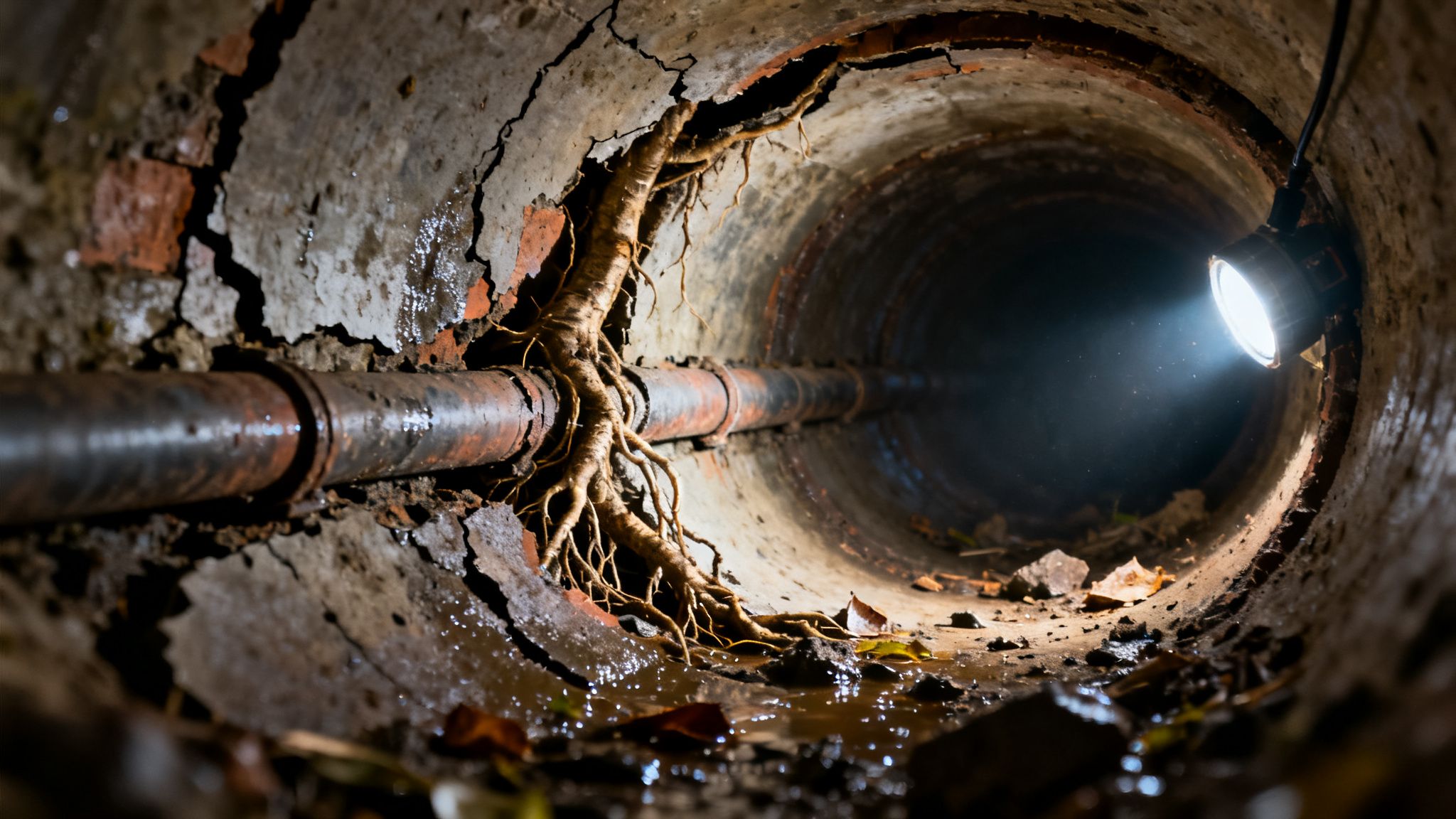
Some contractors push trenchless as a one-size-fits-all solution without a proper inspection. This is a common misstep. They may try to line a pipe that is collapsed, severely offset, or misaligned—conditions where trenchless repair will fail or is simply not an option. When you use the wrong method, failure is likely.
Red Flags: When Trenchless is the Wrong Call
Trenchless methods are effective, but they have limits. An experienced contractor knows when to recommend it and, just as importantly, when not to. The problem isn't the method; it's using it in the wrong situation.
Here are a few cases where a trenchless repair is almost certain to fail:
- Completely Collapsed Lines: If the host pipe is crushed flat, there's no path for a new liner or bursting head to follow. Trenchless methods need an existing pipe to work with.
- "Back-Pitched" Pipes: Sewer lines need a steady downward slope to drain with gravity. If the original pipe has a bad slope or a "belly," a new liner will just follow that same flawed grade. Your drainage problems will continue.
- Severe Offsets or Gaps: When sections of an old pipe shift so much they don't line up, it creates a major offset. A liner can bridge small gaps, but it can't fix a big structural problem.
The main issue is simple: You can't fix a structural problem with a surface-level solution. A trenchless liner creates a new pipe inside the old one. If the old pipe's basic shape or slope is wrong, the new pipe will have those same problems.
Diagnosis First, Repair Second
This is why starting with a NASSCO-certified sewer inspection is the right thing to do. It helps determine the condition of the existing pipe and ensures the right method is chosen—whether trenchless or traditional. A proper diagnostic approach helps avoid repeat problems.
At Coastal Pipeline, we start every project with a NASSCO PACP-certified video inspection. This is the best way to assess pipe conditions. We find the exact cause of the problem so we can recommend the right solution.
We will tell you honestly if trenchless is the perfect long-term fix or if traditional digging is needed to correct a deeper structural issue. Our goal is to solve your sewer problem for good. If you're in Monterey, Santa Cruz, or San Benito County, you'll get a clear, honest assessment. For a deeper look into local infrastructure, read our article on how aging utility lines are driving a construction boom.
The Right Way to Approach Sewer Replacement
The key to a permanent sewer fix isn't about choosing between trenchless or traditional methods right away. It starts with a proper diagnosis. Many homeowners worry that trenchless is a temporary patch, but they often skip the one step that ensures a permanent solution: a professional sewer camera inspection. This isn’t just a quick look—it’s the foundation of a successful repair that can last for decades.
Trying to fix a sewer line without a camera inspection is like a doctor operating without an X-ray. You might fix a symptom but miss the root cause, leading to more problems and wasted money. A smart approach ensures the right method is chosen for your pipe, turning a gamble into a sound, long-term investment.
The Gold Standard: NASSCO PACP Inspection
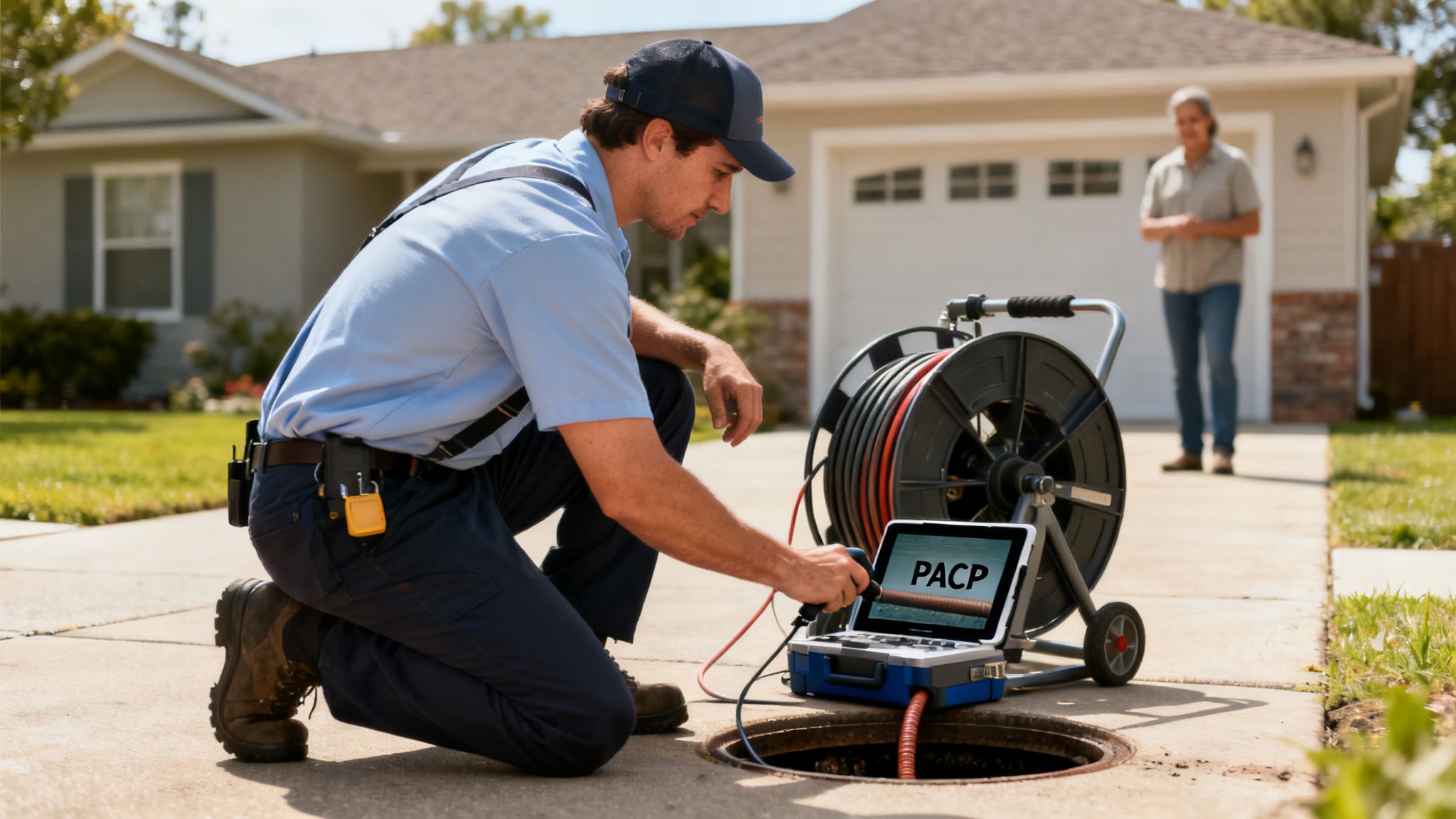
Not all camera inspections are the same. The industry standard is the NASSCO PACP (Pipeline Assessment Certification Program) inspection. This is a system for gathering clear data about the condition of your sewer pipe.
A PACP-certified technician uses a special camera to record every detail. This report shows the exact location and severity of any issues, including:
- Cracks, fractures, and holes
- Points of root intrusion
- Pipe offsets and misaligned joints
- Corrosion and pipe decay
- "Bellies" or low spots that trap waste
This provides the hard data needed to make a good decision and shows whether a trenchless solution will be a permanent success or a temporary failure.
An inspection is your best defense against a failed repair. It removes guesswork and makes sure you aren't sold a "one-size-fits-all" solution that doesn't actually fit your problem. A proper diagnostic approach is what makes a repair last.
Using Data to Choose the Right Method
Once an inspection is done, a qualified contractor can recommend the right solution. The data from the PACP assessment makes the decision clear and removes any doubt about whether a trenchless sewer replacement is a permanent fix for you.
The decision is straightforward once the inspection shows the true state of the pipe.
When to Choose Trenchless vs Open-Cut
| Pipe Condition | Best Trenchless Method | When Traditional Open-Cut is Required |
|---|---|---|
| Cracks, leaks, minor root intrusion | CIPP Lining | If the pipe is completely collapsed. |
| Offsets, major root damage, severe corrosion | Pipe Bursting | If the pipe has significant "bellies" or back-pitch. |
| Structurally sound but deteriorating | CIPP Lining | When the original pipe's diameter is too small for bursting. |
| Most of the pipe is in good shape | Pipe Bursting or CIPP Lining | When the required grade or slope cannot be achieved. |
This table shows how an inspection helps us match the problem to the right tool, ensuring a lasting result. Some contractors might push trenchless as the only option because it's all they offer. But a full-service company will use the inspection data to find the best path forward.
You can learn more by exploring our detailed guide to sewer line replacement costs, which often depend on the method chosen based on the inspection.
How We Ensure the Right Fix
At Coastal Pipeline, we start every potential sewer project with a NASSCO PACP-certified video inspection. This is how we confirm if a property is a good candidate for trenchless repair. We will walk you through the video and explain exactly what we see.
Because we are experts in both trenchless and traditional open-cut solutions, our recommendations are always fair. Our only focus is on providing the best long-term outcome for your property. This ensures you are never sold the wrong fix.
If you're a homeowner in Monterey, Santa Cruz, or San Benito County and are considering your sewer repair options, let us start with a proper diagnosis. We'll inspect your line first, show you the results, and explain the ideal long-term solution—guaranteeing your investment is a permanent one.
Your Local Sewer Solution on the Central Coast
If you live in Monterey, Santa Cruz, or San Benito County and are considering sewer repair, you might be worried. It’s natural to be skeptical about trenchless sewer repair, especially if you have heard horror stories online.
But modern trenchless methods like CIPP (cured-in-place pipe) or pipe bursting are becoming standard practice because they save time and avoid tearing up your property. CIPP liners are proven to last 50+ years, and installation can be 5x faster than open trench methods. However, not all properties or pipe conditions qualify.
The Right Diagnosis for a Lasting Repair
A common misstep is when contractors push trenchless as a “one-size-fits-all” solution without inspecting whether the host pipe is collapsed, severely offset, or misaligned. In these conditions, a trenchless repair may fail or simply not be viable.
This is where those online horror stories come from, and it gives a great technology a bad name.
What you should do instead is start with a NASSCO-certified sewer inspection to determine the condition of the existing pipe. This ensures the right method is selected—whether trenchless or traditional. A proper diagnostic approach helps avoid repeat problems.
Your Trusted Central Coast Partner
At Coastal Pipeline, we perform NASSCO PACP-certified video inspections to confirm trenchless suitability. We offer both trenchless and open-cut solutions and explain when each is appropriate—so you're never sold the wrong fix. Our recommendation is always based on what will permanently solve your problem.
We know the unique soil conditions and building codes across Monterey, Santa Cruz, and San Benito Counties, so your repair will be effective and built to last. For other businesses in this field, reaching homeowners in need is crucial. A good guide on local SEO for plumbers offers solid strategies for connecting with local customers who need these specialized services.
If you're in Monterey, Santa Cruz, or San Benito County, we’ll inspect your line first and walk you through the best long-term option—not just the fastest one. With an honest assessment, you can move forward with confidence.
Frequently Asked Questions About Trenchless Sewer Replacement
It’s normal to wonder if "no-dig" methods are just a clever patch or a truly permanent solution. Let's answer some of the most common questions so you can feel confident about the right choice for your home.
How Much Does Trenchless Sewer Replacement Cost?
The materials for trenchless jobs can sometimes have a higher upfront cost than traditional pipe. However, the total price is almost always lower.
Think about what you're not paying for: no huge digging crew, no jackhammering your driveway, and no rebuilding a patio or garden. When you skip the expense of restoring your landscape, trenchless is often the cheaper option. For a more detailed look, check out our guide on trenchless sewer line repair costs.
Will a Trenchless Liner Reduce My Pipe's Diameter?
This is a great question. While a CIPP liner does add a new wall inside the old pipe, it actually improves the flow.
The new liner's surface is very smooth and has no joints. This lets waste and water move much more efficiently than it did in the old, rough pipe. Any small reduction in diameter is more than made up for by this improved performance, which helps prevent future blocks.
Key Takeaway: The very smooth surface of a new trenchless liner often improves your pipe's flow rate, even with a slightly smaller diameter. It's a case of efficiency being more important than size.
Can Trenchless Methods Fix Pipes Under My Home?
Yes, absolutely. This is where trenchless technology is most helpful. In the past, fixing a sewer line under a concrete slab meant tearing up your floors—a messy and expensive process.
With trenchless methods, we can often repair the entire line from a small access point outside. We build a new, strong pipe inside the old one without ever touching your home's foundation or interior. It saves a lot of time, money, and stress.
Are the Materials Used in Trenchless Repair Safe?
The materials are safe, stable, and built to last for decades.
- CIPP Lining: The epoxy resins we use are NSF-certified, which means they meet strict standards for contact with drinking water. The process happens inside the old pipe, so there's no risk of chemicals getting into the ground.
- Pipe Bursting: This method uses HDPE (High-Density Polyethylene) pipe. It's the same tough material used for modern water mains and gas lines across the country.
These materials are designed for a long, trouble-free service life, giving you peace of mind that your repair is both safe and permanent.
At Coastal Pipeline Inc., we believe a permanent fix starts with an honest diagnosis. If you're in Monterey, Santa Cruz, or San Benito County, we'll provide a certified inspection to determine the best long-term solution for your property. Contact us today for a clear path forward. Learn more about our services at https://coastalpipelineinc.com.