
When you see cracks spreading across your driveway, you start to wonder: is this a simple fix or the start of a big, expensive problem? It’s a question we hear all the time from homeowners in Monterey.
People ask this when their driveway starts cracking, fading, or sinking. They aren’t sure if they need a brand-new driveway or if a simple surface treatment will work. Homeowners want to make the right choice—not overspend, but also not waste money on a temporary fix that won’t last.
The simple answer is that an asphalt driveway can last 20 to 30 years with proper installation and maintenance. But in Monterey, our coastal climate adds extra stress. Things like moisture, salt air, and temperature shifts can shorten that lifespan.
What's Really Going on With Your Driveway?
Most people only think about their driveway’s age when problems show up. You might see some fading, a few cracks, or a low spot where water gathers after it rains. You're trying to make a smart decision. You don't want to pay for a full replacement if a repair will do, but you also don't want to waste money on a patch job that will fail in a year.
The key is to understand what’s happening on the surface and, more importantly, underneath it. Ignoring deep cracks can lead to the entire driveway failing.
The good news? Monterey's mild climate is a huge plus for asphalt. Our driveways can easily last 20-30% longer than those in areas with harsh winters. We don't have the constant freezing and thawing that destroys asphalt elsewhere. That’s a big advantage.
Key Factors Affecting Your Driveway's Lifespan in Monterey
Several local factors can help or hurt your driveway. Think of it as a checklist for a long-lasting driveway. Here’s what matters most in our area.
| Factor | Potential Impact on Lifespan | Best Case Scenario |
|---|---|---|
| Foundation Quality | A weak base can cause sinking and cracks within 5-10 years. | A solid, well-drained gravel base provides decades of stable support. |
| Drainage | Water pooling on the surface or seeping into the base wears away the foundation. | Proper grading makes sure water flows off the driveway and away from the edges. |
| Traffic Load | Heavy vehicles like RVs or delivery trucks can cause early cracking. | Driveway is used mainly for regular passenger cars. |
| Sealcoating Routine | Unsealed asphalt gets brittle and cracks in as little as 3-5 years. | Sealcoating every 2-4 years keeps the surface flexible and waterproof. |
| Coastal Exposure | Being close to the ocean can speed up wear due to salt air and constant fog. | Driveway is located further inland, away from direct salt and moisture. |
Getting these things right is the secret to making your driveway last 30 years. A bad foundation or no maintenance can cut a driveway's life in half, even with our good climate.
When to Repair vs. When to Replace
It can be tempting to just patch a crack or put on a new layer of sealcoat. But that’s often like putting a band-aid on a broken bone. It might hide the problem, but it won’t fix what’s wrong underneath—which is usually a failing foundation.
You need to look for signs of deep, structural problems. These are the red flags that mean you're past the point of simple repairs:
- "Alligator" Cracking: A network of connected cracks that looks like an alligator's skin. This is a classic sign of base failure.
- Sinking or "Bird Baths": Low spots where water collects are a clear sign that the ground underneath is weak.
- Deep, Wide Cracks: Any crack you can fit a quarter into is serious. It means the whole pavement structure is shifting.
Ignoring these warnings will only lead to bigger, more expensive problems. While maintenance like sealcoating is important—it can double the life of healthy asphalt—it can't save a driveway with a broken foundation. Understanding this helps explain the cost of a new asphalt driveway.
The Foundation Is Everything
Here in the Monterey area, our soil can be very different from one place to another. You might have sandy soil near the coast or heavy clay inland. That’s why the sub-base—the layer of gravel under the asphalt—is so important. A strong, well-drained foundation is what gives your driveway strength and helps it last for decades.
This is why a professional assessment is your best first step. At Coastal Pipeline Inc., we handle the whole process, from digging out the old driveway to preparing the site for the new one. We don't just pave over problems; we fix the root cause. We can tell if your driveway just needs resurfacing or a full rebuild, so you get a solution that lasts.
How Monterey's Coastal Climate Affects Your Driveway
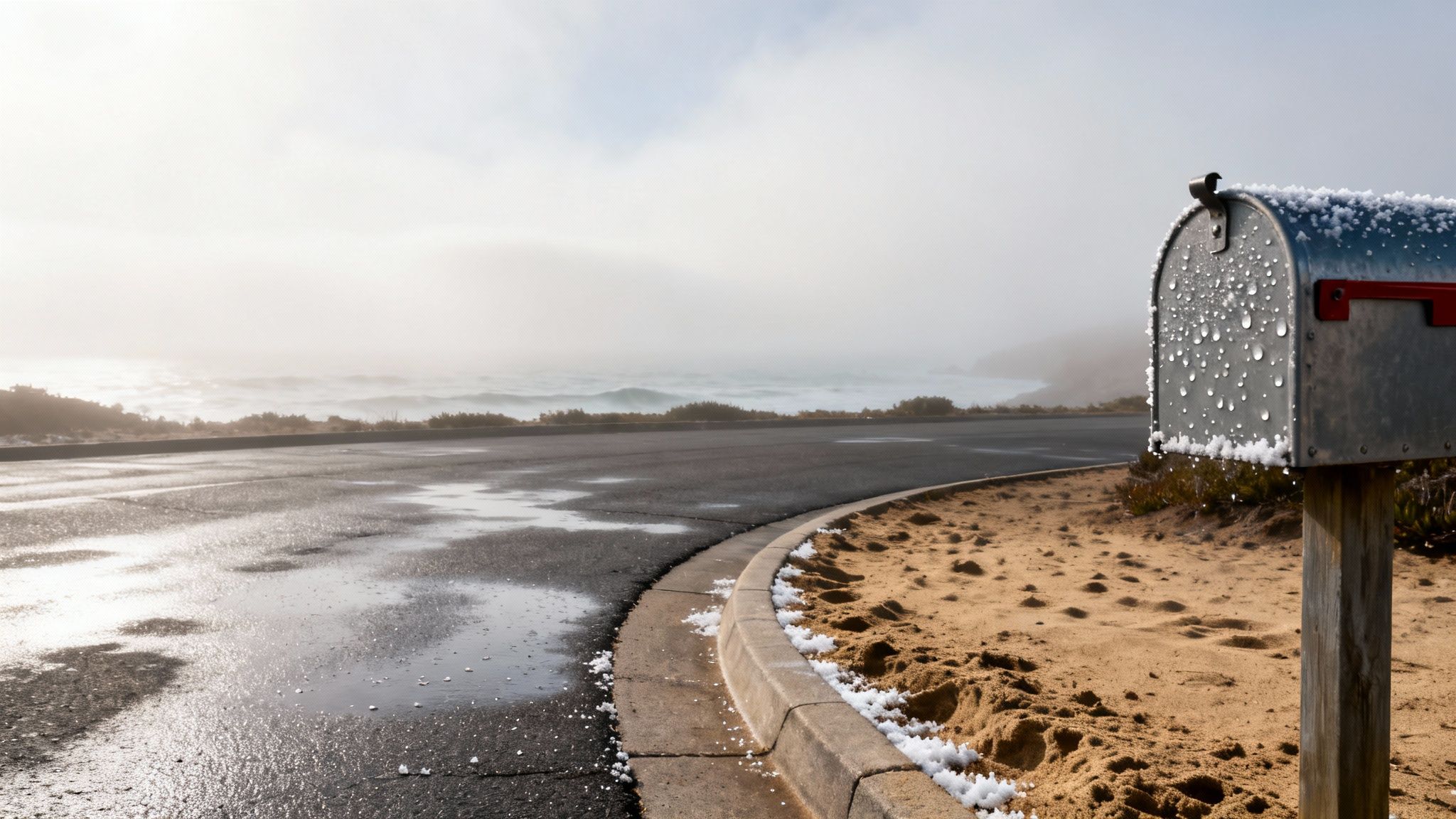
Living in Monterey means we don't have to deal with the harsh winters that destroy pavement in other parts of the country. Not having extreme temperature swings gives our driveways a big advantage from the start.
But our beautiful coastal location has its own challenges. The constant fog, damp air, and salty spray from the ocean create an environment that slowly breaks down your asphalt.
Think about how salt air rusts metal. It does something similar to the binder that holds the gravel and sand in your asphalt together. Over time, this exposure makes the surface brittle, faded, and more likely to crack. The very things we love about living on the coast are working against your driveway every day.
The Hidden Challenge Beneath the Surface
It’s not just what’s in the air that matters; it’s also what’s in the ground. Monterey County has many different types of soil. You might have sandy, fast-draining soil in Seaside or heavy clay just a few miles inland.
Different soils react to moisture in different ways. Some hold water and swell up, while others drain right away. This movement in the ground underneath your driveway is what can damage its foundation, or subbase. If that foundation isn't stable, the surface above it is going to fail, no matter how well the asphalt was laid.
A common mistake is focusing only on the blacktop you can see. But in our local soils, the foundation is everything. Without a solid, well-drained base, any patches are just temporary cosmetic fixes.
Why Proper Drainage is Non-Negotiable
When you combine our damp coastal air with our different soils, good drainage becomes the most important factor for a long-lasting driveway. If rainwater doesn't have a way to escape, it will soak down into the subbase. That’s where the real trouble begins.
Trapped water makes the foundation soft and spongy. This leads directly to the worst kinds of damage: sinking, potholes, and deep "alligator" cracks.
This is why expert site preparation is so important here. At Coastal Pipeline Inc., we know that building a driveway that lasts in this area means planning for these unique conditions from the very beginning. To see just how important water management is, you can learn more about preparing for heavy rain and upgrading storm drains on the Central Coast. We make sure every project starts on a foundation built to handle our specific climate.
The Driveway Repair Mistake Most Homeowners Make
When you see cracks or sunken spots on your driveway, your first thought is to find a quick, easy fix. Most people think a fresh sealcoat or some crack filler will solve the problem. Unfortunately, this is the biggest mistake you can make. It’s like putting a fresh coat of paint on a rotting deck. It looks good for a short time, but it does nothing to stop the real problem underneath.
Many people assume sealcoating or patching will fix deep cracks or sinking areas. But that’s like painting over rust. Without repairing the base, surface fixes won’t last—and might even hide bigger issues.
A new layer of sealer makes the surface look black and new again. However, sealcoating is a maintenance tool, not a structural repair. It doesn't fix deep damage. When you apply it over a failing foundation, it can actually trap moisture, making things worse. Your driveway might look better for a season, but those deep cracks and low spots will come back, and they'll usually be worse than before.
"Painting Over Rust" Is Only a Temporary Fix
This common mistake happens because it's easy to focus on what you see: the asphalt surface. The real hero of a long-lasting driveway is the compacted base of rock underneath. That's where most problems start. Treating the surface won't fix a deep structural issue.
It's a costly mistake. You end up spending money on a temporary patch that ignores the root cause, which is almost always a weak or water-logged foundation.
"Regular sealcoating can double the life of asphalt." This is 100% true—but only for a healthy driveway. A sealcoat is meant to protect, not rebuild.
What to Do Instead of a Quick Fix
Before you spend any money on repairs, start with a professional assessment. Here in Monterey, we deal with all sorts of soil, from sandy coastal areas to heavy clay inland. The strength of that subbase matters most. An expert can tell if cracks are just on the surface or if they are a sign of a much bigger problem.
Ask your contractor questions about the foundation, not just the surface appearance:
- Base Preparation: How was the rock base installed? Was it compacted properly?
- Slope and Drainage: Does water run off your driveway, or does it pool and soak in?
- Soil Conditions: How is the local soil affecting your driveway's stability?
Getting answers to these questions will tell you if you need a simple fix or a bigger solution. Choosing between driveway paving or crack repair depends entirely on the health of that hidden foundation.
At Coastal Pipeline Inc., we handle both the excavation and the paving. That means we don’t just lay new asphalt; we dig down and fix the real problem first. We understand the soil, drainage, and permitting conditions across Monterey, Seaside, and the Central Coast. If you’re not sure what your driveway truly needs, reach out for a site evaluation. We’ll give you clear answers with no pressure.
Repair, Resurface, or Rebuild? Your Guide to the Right Choice
When your asphalt driveway starts to show cracks, fading, or sinking spots, you have a decision to make. The big question is always the same: can I get away with a simple repair, or is it time for a full replacement?
The answer isn’t about what you see on the surface; it’s all about what’s happening underneath. The real key is the health of your driveway’s foundation—the compacted layer of rock that supports the blacktop. Making the right call saves you from overspending on a rebuild you don’t need, but it also keeps you from wasting money on a patch job that will fail within a year.
When to Repair, Resurface, or Rebuild
So, how do you choose the right path? It all comes down to finding the real problem. A professional assessment is always best, but here’s a breakdown of the options based on the type of damage you see.
To help you figure out what your driveway is telling you, we've put together a simple comparison table.
Choosing the Right Driveway Solution
| Symptom | Best Solution | Why It Works |
|---|---|---|
| Hairline cracks, minor fading | Targeted Repairs & Sealcoating | These are surface-level issues. Filling small cracks and applying a fresh sealcoat protects against water and sun, adding years to your driveway's life. |
| Widespread "alligator" cracks, 1-2" deep | Resurfacing (Asphalt Overlay) | If the foundation is still strong, this is a great option. We can remove the old surface and lay a brand-new layer of asphalt on top, giving you a fresh look for less than a total replacement. |
| Deep cracks, potholes, major sinking | Full Rebuild (Repaving) | This is a clear sign the foundation has failed. The old asphalt and base have to be removed so we can rebuild the foundation correctly before paving a new driveway. |
Putting a temporary fix on a deep problem just doesn't work. The flowchart below shows a common mistake: trying to solve foundation failure with a surface-level repair.
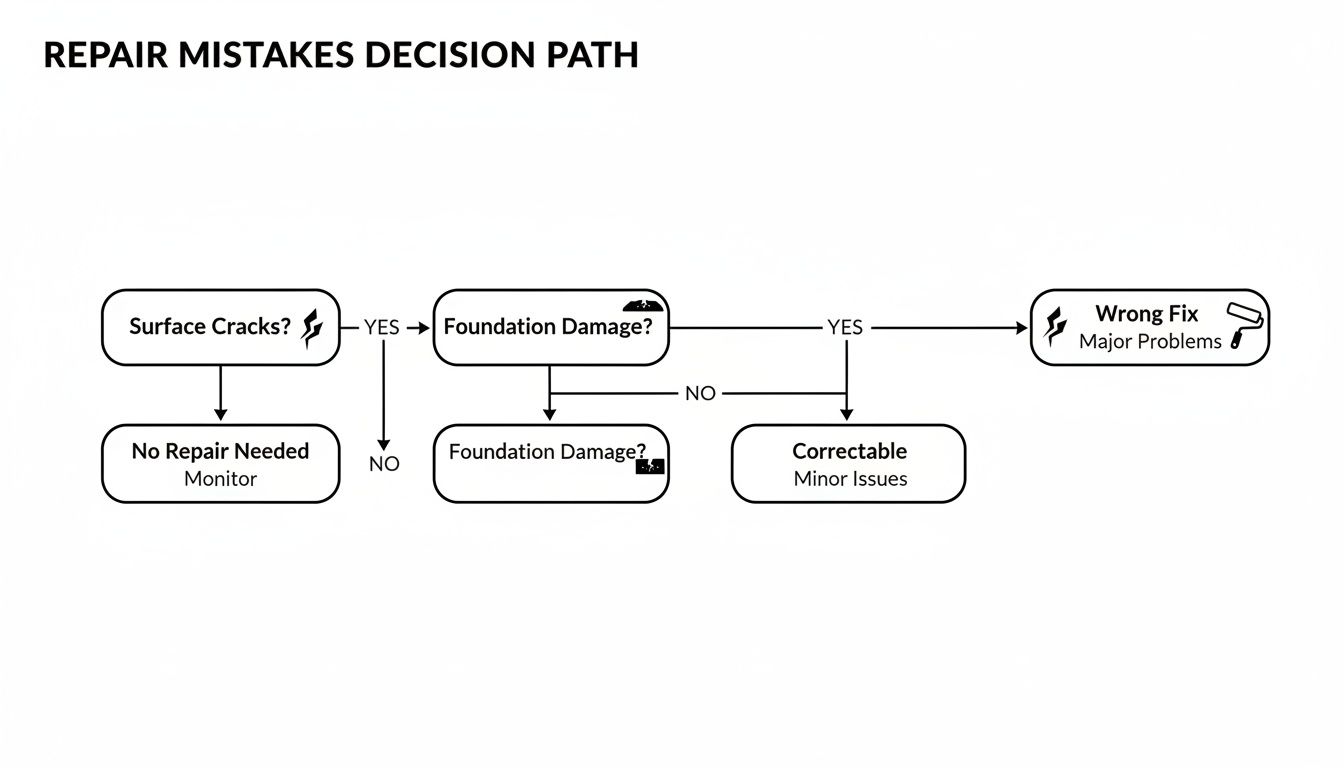
As you can see, just sealing a deep crack is like putting a bandage on a broken bone. It might look better for a short time, but the real problem is still there and will quickly show up again.
Asking the Right Questions
A common mistake is assuming that a simple patch or a fresh sealcoat will fix everything. But that’s just hiding the issue. To avoid this trap, ask a paving contractor questions that go deeper than just the blacktop.
Focus on the foundation:
- Base Preparation: How will you check the existing base? What will you do to prepare it for new asphalt?
- Slope and Drainage: How will you make sure water drains properly off the new surface?
- Materials: What kind of asphalt mix will you use, and why is it right for this area?
Here in Monterey, where soils can be sandy near the coast or heavy clay inland, a solid base is everything. If the foundation is bad, an overlay is just throwing good money after bad. You can learn more in our guide to asphalt resurfacing in Monterey.
At Coastal Pipeline Inc., we handle both excavation and paving, which means we don’t just lay asphalt—we fix the foundation. This is critical in determining whether your driveway needs resurfacing or a full rebuild. Plus, we use recycled and sustainable asphalt mixes where appropriate, aligning with Caltrans specs for quality and durability. Caltrans allows 25–40% recycled asphalt in mixes, reflecting modern standards.
Finding a Paving Partner Who Fixes the Foundation First
When you're looking for a paving contractor, you need more than just someone who can lay down new asphalt. You need a team that can figure out the real problem underneath. Covering up cracks and potholes is easy. Fixing the root cause is what matters.
Coastal Pipeline Inc. handles both excavation and paving, meaning we don’t just lay asphalt—we fix the foundation. That’s critical in determining whether your driveway needs resurfacing or a full rebuild. A beautiful new surface won't last long if the foundation it's built on is failing.
Our goal is to give you a complete, long-term solution. We'll check your driveway's base to see if it needs a full rebuild or if it’s solid enough for resurfacing. This honest evaluation saves you from spending money on a quick fix that will just fall apart in a year or two.
A Commitment to Quality and Durability
We are committed to building quality, durable driveways that stand up to our coastal climate. That means using modern materials that meet strict Caltrans specifications. We use recycled and sustainable asphalt mixes where appropriate, aligning with Caltrans specs for quality and durability.
Choosing the right professionals for any major home project is important. While we focus on what's under your feet, this practical guide on hiring building installers offers good general advice for vetting contractors for other work.
Serving Monterey, Seaside, and the greater Central Coast, Coastal Pipeline Inc. understands the regional soil, drainage, and permitting conditions. If you’re unsure whether your driveway needs repaving or resurfacing, reach out for a site evaluation—we’ll give you clear answers with no pressure.
Your Top Questions About Driveway Longevity, Answered
When your driveway starts to look worn out, you probably have a lot of questions. Here are answers to some of the most common ones we hear from homeowners in Monterey.
How Often Should I Sealcoat My Driveway Here on the Coast?
Here in our coastal climate, you should plan on sealcoating your driveway every 2 to 3 years. Think of it as sunscreen for your asphalt. It's a protective layer that shields the surface from the sun, moisture, and salty air that can make it brittle.
Just be sure to wait about a year after a new driveway is installed before applying the first coat. This gives the fresh asphalt time to fully cure and harden.
Can I Just Fill the Big Cracks Myself?
For tiny hairline cracks (less than a quarter-inch wide), a DIY filler from the hardware store is a good way to keep water out. It's a smart preventive step.
But when you're dealing with deep, wide cracks or "alligator" cracking, you're usually seeing a sign of a failing foundation. Simply filling these is like putting a small bandage on a major injury. It might cover the problem for a little while, but it does nothing to fix the real issue underneath.
A common misstep is assuming sealcoating or patching will fix deep cracks or sinking areas. But that’s like painting over rust. Without repairing the base, surface fixes won’t last.
What’s the Difference Between Resurfacing and Repaving?
This is an important one. Resurfacing (or an overlay) is like putting new icing on a solid cake. We grind down the old surface, fix any minor issues, and then add a fresh 1.5 to 2-inch layer of new asphalt on top. It’s a great, cost-effective choice when the driveway's foundation is still in good shape.
Repaving is a complete do-over. We dig out and haul away all the old asphalt and the bad base material. Then, we rebuild the foundation for proper drainage before paving a brand-new driveway. It's the only real long-term solution when the base has failed.
Not sure if your driveway needs a simple repair, a resurfacing, or a full replacement? The crew at Coastal Pipeline Inc. can give you a straight answer. We provide professional on-site evaluations throughout Monterey, Seaside, and the Central Coast. Get in touch with us today to figure out the best path forward.