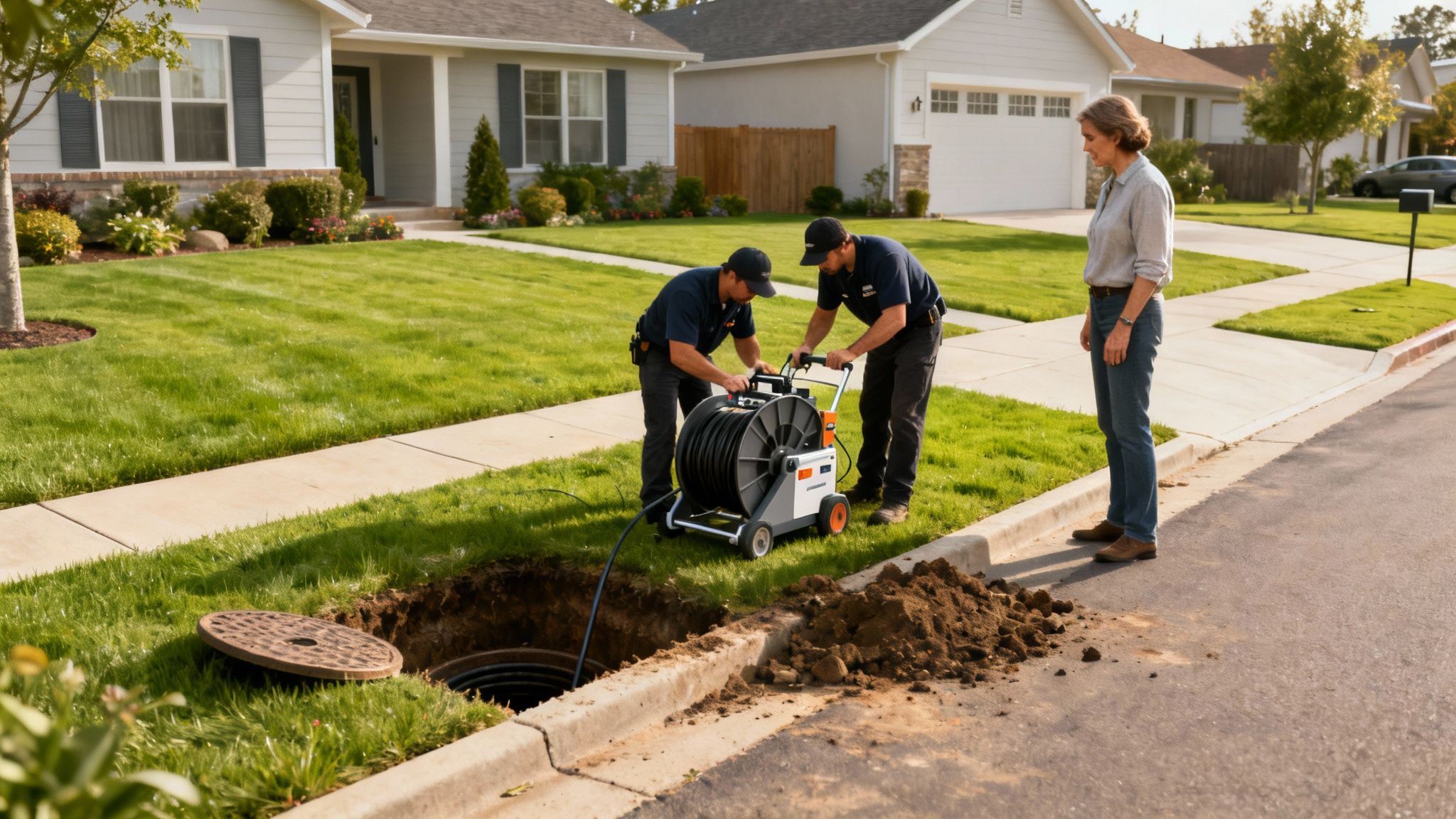
Imagine you need to fix a broken underground pipe, but you don't have to dig up your whole yard or shut down a street. That's the idea behind trenchless sewer work. It's a modern way to repair pipes that is simply smarter, faster, and cleaner than old-fashioned digging.
Think of it like the difference between major surgery and a less invasive procedure. Both fix the problem, but one does it with precision and causes much less disruption.
Why Trenchless Sewer Work Is the New Standard
The days of digging long, messy trenches are ending. We are seeing a big change in how pipe repairs are done. This change is driven by the need for solutions that cause less trouble in our crowded communities. As our cities grow and pipes get older, the old way of digging just doesn't work well anymore.
Trenchless methods have become the best choice for homeowners, cities, and project managers for a few key reasons:
- Growing Urban Density: A recent market analysis shows that the use of trenchless technology is set to grow by 13.4% each year through 2029. In busy areas, digging huge trenches is too disruptive and costs too much.
- Aging Infrastructure: Our pipes are old, and they need to be replaced soon. In California, a surprising 45% of sewer systems are over 40 years old. Trenchless methods like pipe bursting let us replace them quickly with very little damage to the surface.
- Labor Efficiency: California's coastal counties have a 28% shortage of certified crews for digging trenches. Trenchless work requires smaller crews, which helps solve this workforce problem.
- Environmental Compliance: New state rules for 2025 prefer methods that move less soil. Trenchless work is a perfect fit, making it a great choice for city projects that must follow strict environmental rules.
Minimizing Disruption and Costs
The main goal of trenchless technology is to fix underground problems without creating new ones on the surface. As a certified contractor, Coastal Pipeline uses advanced pipe bursting and video inspection tools. This lets us limit site damage and finish projects much faster.
This is a huge benefit in downtown areas, landscaped yards, or any developed property in Monterey, Santa Cruz, and San Benito Counties. By avoiding massive digging, we protect your property and save you from the high costs of fixing everything back up.
If your upcoming utility project needs speed, precision, and minimal disruption, trenchless methods may be the answer. Coastal Pipeline serves Monterey, Santa Cruz, and San Benito Counties with certified trenchless solutions tailored to today’s infrastructure demands.
Why Trenchless Technology Is Gaining Momentum
Not long ago, trenchless sewer work was a rare service. Today, it's becoming the standard way to handle utility projects. This shift isn't just a trend. It's a smart response to the problems we face today. As our towns and cities get more crowded and the pipes below them get older, the old way of digging messy trenches is becoming a major headache.
The reason is simple. Traditional digging tears up roads, causes traffic jams, and hurts local businesses. Plus, it costs a lot to put everything back the way it was. In contrast, modern trenchless sewer work offers a smarter, faster, and much cleaner option that avoids these problems.
The Urgent Need for Modern Solutions
California’s underground pipes are at a critical point. A state report found that over 45% of our sewer systems are more than 40 years old. This means many of our pipes are past their expected lifespan. It's like a ticking clock, and we need repair methods that can keep up.
This is where methods like pipe bursting and cured-in-place pipe (CIPP) lining are so valuable. They allow crews to replace old lines quickly with very little surface damage. This makes them perfect for projects in busy city areas or on tight schedules. You can read more about how our aging infrastructure is driving this change in our article, Beneath the Surface: How Aging Sewer & Water Lines Are Driving a Construction Boom.
A 2025 market analysis confirms what we're seeing in the field: the trenchless technology sector is expected to grow by 13.4% annually across the U.S. utility market through 2029. This isn't speculation—it's a direct result of the need to fix infrastructure in developed areas where digging a massive trench is no longer feasible.
Solving the Labor and Efficiency Puzzle
On top of aging pipes, the construction industry is also facing a worker shortage. Here in California's coastal counties, there is a 28% gap in certified trench crews. This makes it very hard to find enough workers for large digging projects.
Trenchless systems offer a great solution. These methods don't need large crews or a lot of digging by hand. Instead, they use smaller, highly skilled teams. This built-in efficiency makes trenchless sewer work a smart choice for cities and contractors who need to do more with fewer workers. It's a big reason why the industry is adopting these technologies so quickly.
The table below shows the key differences between the old and new ways of fixing sewers.
Traditional Trenching vs. Trenchless Methods at a Glance
| Factor | Traditional Open-Trench Digging | Modern Trenchless Work |
|---|---|---|
| Surface Disruption | High: Involves a lot of digging, road closures, and damage to landscaping. | Minimal: Only needs small entry and exit points. |
| Project Timeline | Long: Days or weeks, depending on the project size and repair work. | Fast: Often finished in a single day, which means less downtime. |
| Crew Size | Large: Needs many laborers and heavy equipment operators. | Small: Needs a smaller, specialized crew to run the equipment. |
| Environmental Impact | High: Moves a lot of soil, creates erosion risk, and has a large carbon footprint. | Low: Protects existing landscapes, moves less soil, and has a lower carbon footprint. |
As you can see, the benefits of going trenchless are hard to miss, especially with the challenges of modern projects.
Meeting Stricter Environmental Standards
Protecting the environment is no longer just a nice idea—it's a requirement for modern construction. New state rules, like the 2025 updates to Title 22, are putting more controls on things like soil erosion and runoff.
Trenchless methods are a perfect match for this new reality. Because they disturb the ground as little as possible, they make it much easier to follow the rules. This is a huge plus for city and public works projects, where environmental laws are watched closely. It's no surprise that the global market for trenchless pipe rehabilitation is growing as more agencies invest in their sewer systems.
As a certified contractor, Coastal Pipeline has invested in the advanced trenchless pipe bursting and video inspection technology needed to minimize site damage and get projects done faster. This is especially critical in the busy downtown corridors, manicured landscapes, and developed properties throughout Monterey, Santa Cruz, and San Benito Counties.
If your next utility project demands speed, precision, and the least disruption possible, trenchless is likely the answer. Coastal Pipeline serves Monterey, Santa Cruz, and San Benito Counties with certified trenchless solutions built for today’s infrastructure challenges.
Getting to Know the Core Trenchless Methods
The term "trenchless technology" might sound complicated, but the ideas behind it are simple and effective. Instead of digging up your property to reach a damaged pipe, these methods work from the inside out. They use just a couple of small access points. This simple idea is what makes trenchless sewer work: smarter, faster, cleaner.
To understand it better, let's look at the two most common methods: Pipe Bursting and Cured-In-Place Pipe (CIPP) lining. Each one is a tool for a specific job. Knowing which one to use is the first step to a good repair.
Why are these modern solutions so popular now? It's due to a combination of factors.
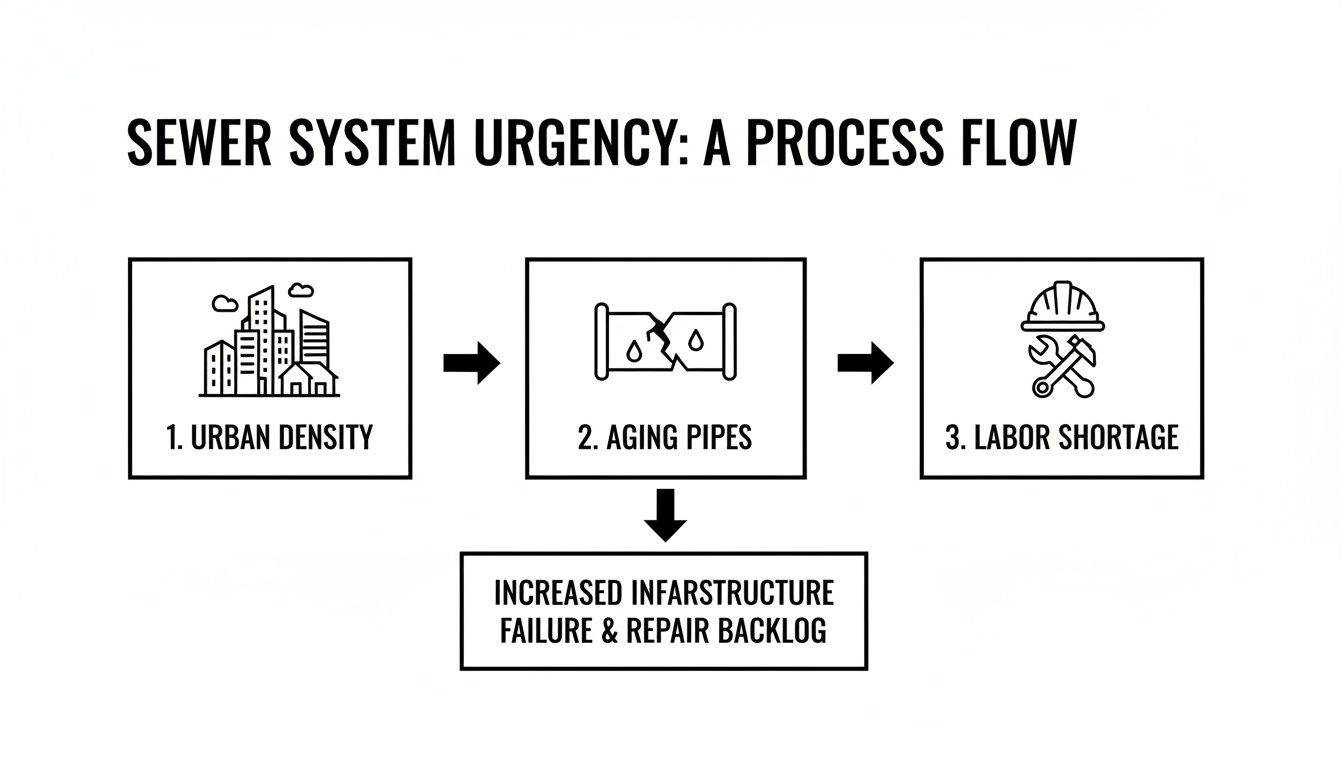
As you can see, our growing communities, aging pipes, and a shortage of skilled workers all show that the old way of digging is no longer sustainable.
Pipe Bursting: A Powerful Replacement
Think of a mole digging underground. It doesn't leave an open trench on the surface. It just moves through the dirt, pushing old material aside as it makes a new path. Pipe bursting works in a similar way.
We use this method when a sewer line is too damaged to repair and needs to be completely replaced. A powerful machine pulls a new, strong plastic pipe through the path of the old one. A cone-shaped "bursting head" leads the way. It breaks the old, failing pipe apart and pushes it into the soil around it.
As the old pipe breaks, the new, seamless pipe is pulled right into its place.
This isn't just a patch—it’s a brand-new pipe. You get a modern, rust-proof pipe that will last for 50 years or more. All of this is done without tearing up your yard, driveway, or patio.
Pipe bursting is the best choice in a few situations:
- The original pipe has collapsed or is so broken that it can't be lined.
- You need to make the pipe wider to handle more water—lining can't do that.
- The old line is made of brittle materials like clay or cast iron that are at the end of their life.
Cured-In-Place Pipe (CIPP): A Pipe Within a Pipe
Now, let's think about a different problem. What if your pipe is still strong but has cracks, small leaks, or tree roots growing inside it? For these issues, Cured-in-Place Pipe (CIPP) lining is an excellent, precise solution.
The best way to imagine CIPP is to think of sliding a flexible sleeve, soaked in a special resin, into the damaged pipe. Once it's in place, we inflate it like a balloon. This pushes it tightly against the walls of the original pipe. The liner covers every crack, leak, and bad joint perfectly.
After the liner is in position, we use hot water, steam, or UV light to harden the resin. This creates a solid, joint-free, and very tough new pipe right inside the old one. The result is a smooth interior that improves water flow and, most importantly, keeps roots out for good.
CIPP lining is the best choice when you are dealing with:
- Pipes with many small cracks or leaks.
- Constant root problems at joints that need to be sealed permanently.
- Pipes that run under buildings or have several bends, which makes digging impossible.
The First Step Is Always a Video Inspection
So, how do we choose between bursting and lining? We don't guess. The only way to know for sure is to see what’s happening inside the pipe. That's why every trenchless project starts with a professional video camera inspection. It's a must.
We send a special, high-quality camera down the sewer line to get a live look at its condition. This inspection shows us the exact problem, whether it's a small crack, a total collapse, or a mess of roots.
This first step is what makes a professional job different from just guessing. It ensures we choose the right method from the start, saving you time, money, and future problems. To see how this fits into the bigger picture, check out our guide on how to install sewer lines, which walks through every phase. A successful, long-lasting repair is always built on the foundation of a thorough inspection.
The Real-World Benefits: Smarter, Faster, and Cleaner
"Smarter, faster, cleaner" is more than just a slogan for us; it’s a promise. It stands for the real benefits that make trenchless sewer work the best choice for modern pipe repair. These benefits are not just about convenience—they lead to real savings in time, money, and environmental impact. Let's look at what this really means for your project.
Smarter: Precision That Removes Guesswork
Old dig-and-replace methods were often like using a sledgehammer when you needed a small tool. It worked, but it was messy. Trenchless technology is the opposite. It's like surgery. We start by sending a high-definition video camera down the line. This gives our team a clear view of the problem.
This inspection is the "smarter" part. Instead of guessing where a crack or root problem might be, we see its exact location, size, and how bad it is. This level of detail means no extra digging, no risk of hitting other utility lines, and choosing the right repair method from the start.
Faster: Timelines That Minimize Disruption
The speed of trenchless repair is its most amazing benefit. A traditional sewer replacement can take days or even weeks of disruptive digging. It turns your property into a construction zone and can mess up daily life and local traffic.
Trenchless projects are much different. They are very fast.
- Pipe Bursting: We can often replace an entire sewer line in just one day.
- CIPP Lining: This process is even quicker and is often finished in only a few hours.
A faster project means less noise, less heavy equipment on your property, and a quicker return to normal for you, your family, or your community. The benefits of trenchless sewer work in being smarter, faster, and cleaner are also seen in other modern solutions, like maintenance augmented reality, which reduces downtime, improves safety, and cuts costs.
Cleaner: Protecting Your Property and the Planet
The "cleaner" part of trenchless work affects two important areas: your property and the environment. By avoiding large-scale digging, we protect your landscaping, driveway, patio, and other valuable parts of your property. This isn't just about looks—it's a huge financial and practical benefit.
Industry reports show that trenchless methods can shorten project timelines from weeks to just days. More importantly, they reduce the need to repair surfaces—like repaving and landscaping—which can make up 30–60% of total project costs in city areas. You can explore a full market analysis to learn more about these trenchless repair savings.
From an environmental view, the benefits are just as important. Less digging means less soil is moved, which prevents erosion and protects local water sources. Using smaller crews and less heavy machinery also greatly lowers the project's carbon footprint. This approach fits perfectly with California's strict environmental rules, including the 2025 updates to Title 22, making trenchless the responsible choice for any project.
When you add it all up, the value is clear. By being smarter, faster, and cleaner, trenchless technology provides a better, longer-lasting result while saving you money and protecting the planet. To see how this translates into actual numbers, take a look at our detailed guide on sewer line replacement costs.
How to Choose the Right Trenchless Partner
Choosing the right trenchless technology is only part of the solution. The success of any trenchless sewer work depends on the skill, experience, and equipment of the team you hire. A great partner makes sure the job is done right the first time. They deliver on the promise of a smarter, faster, and cleaner repair.
Let’s be clear: not all contractors are the same. A truly qualified team will not offer a one-size-fits-all solution. Instead, they'll start with a detailed inspection, usually with a video camera, to get a clear picture of what's happening inside your pipes. Only then can they recommend the best method—whether that's pipe bursting, CIPP lining, or something else—that fits your specific needs.
Key Things to Look For
When you are looking at different contractors, there are a few things that are very important. These things separate the true professionals from the rest and protect your investment.
- Local Knowledge: Look for a team with experience working with the local soil and city rules here in Monterey, Santa Cruz, and San Benito Counties. Someone who knows the area can plan for challenges and handle permits without problems.
- Industry Certifications: You should check their qualifications. For example, a contractor with technicians certified in NASSCO's Pipeline Assessment Certification Program (PACP) shows a real commitment to industry standards. It means they know how to correctly identify pipe problems and make recommendations you can trust.
Modern Equipment and Proven Experience
The right partner invests in modern, well-kept equipment. Trenchless work uses special tools, and a contractor with up-to-date gear is more likely to get the job done well and without issues. Don't be afraid to ask about their technology for both video inspection and pipe replacement to see what they can do.
Of course, equipment is not enough without experience. A good contractor should be able to show you examples of similar projects they’ve finished. This history gives you confidence that they can handle your job, from working in tight city spaces to protecting nice landscaping. For more advice on this, our article on how to hire subcontractors offers some great tips that are also useful here.
A professional trenchless partner will always be open and honest. They should be able to clearly explain their process, give you a price upfront, and answer all your questions without delay. This type of communication is a sign of a reliable and trustworthy company.
A Partner for the Long Term
At the end of the day, you're not just hiring a crew for a quick job. You're making a long-term investment in your property’s pipes. The right partner understands that and stands behind their work. They’ll make sure your new pipe is installed perfectly, giving you a strong solution that will last for 50 years or more.
Here at Coastal Pipeline, we combine certified expertise with the latest technology to provide trenchless solutions designed for the unique needs of the Central Coast. We believe in doing the job right, causing as little disruption as possible, and building lasting trust with every client we serve.
Broader Impacts on Communities and the Environment
Choosing trenchless sewer work is about more than just fixing one pipe. It’s a decision that helps build stronger, better communities. This smarter, faster, and cleaner method has a positive effect that goes far beyond the job site. It benefits entire neighborhoods and the local environment. When we move away from disruptive digging, we're making a responsible choice for a better future.
A Quieter, More Livable Community
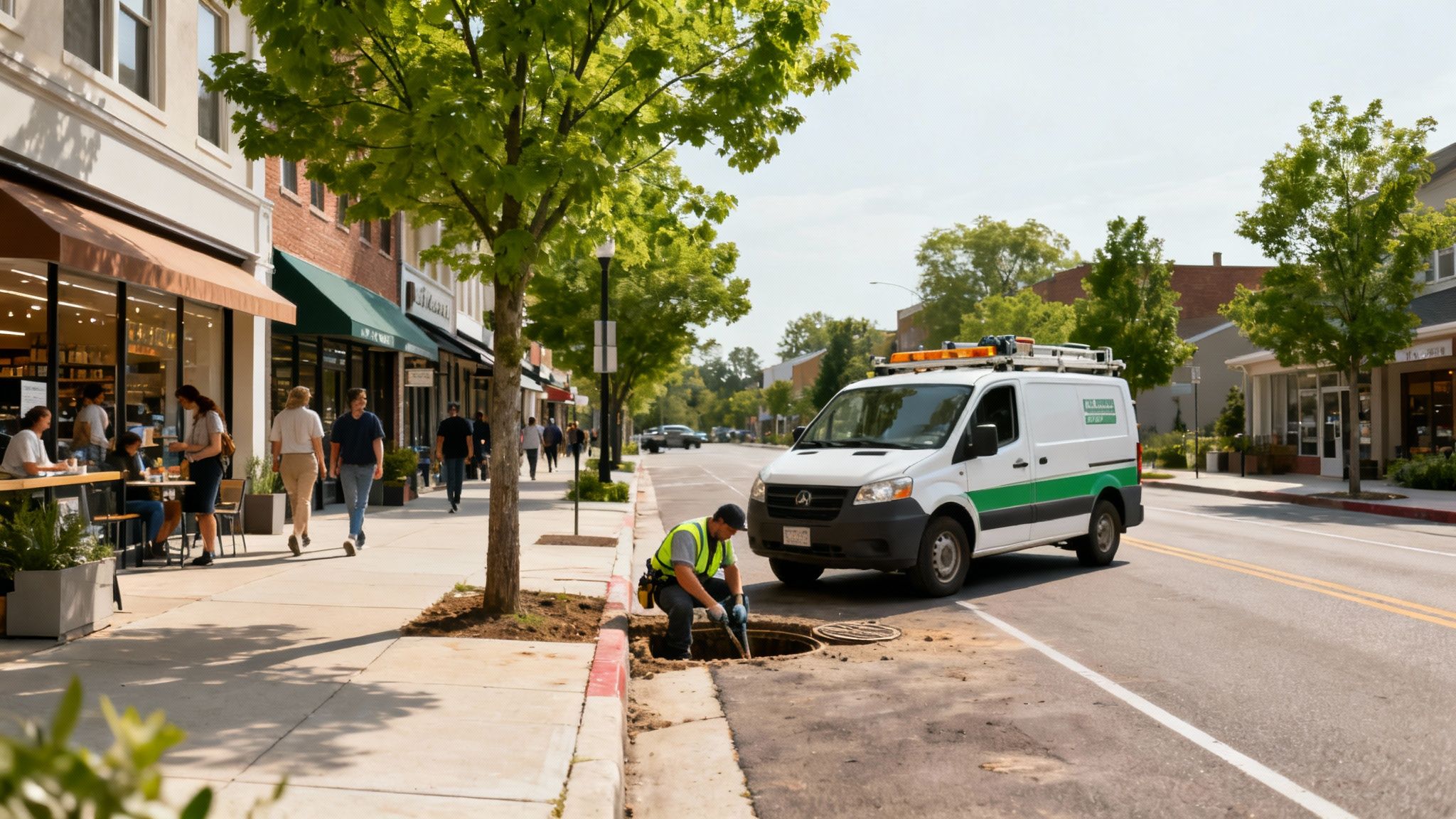
Everyone knows what traditional sewer work looks like: weeks of noisy machines, streets blocked with detours, and unhappy residents and business owners. That constant noise and traffic really affects the quality of life for everyone nearby.
Trenchless methods change that completely. Because the work happens underground with small crews and very little digging, projects are finished without turning the neighborhood upside down.
This means:
- Less traffic on our busy downtown streets and neighborhood roads.
- Minimal disruption for local businesses that need easy access and customers to survive.
- Quieter neighborhoods that don't have to listen to the constant sound of heavy equipment.
Preserving Our Natural and Built Landscapes
One of the biggest benefits is for the environment. Tearing up the ground moves a lot of soil, which can lead to erosion and runoff into our local waterways. This is a big concern under California's strict environmental rules, especially with the 2025 updates to Title 22.
Trenchless technology fits perfectly with our state’s goals for sustainability by protecting our local ecosystems. By leaving landscapes, tree roots, and soil in place, these methods prevent erosion, save mature trees, and greatly cut the carbon emissions from running a large fleet of construction vehicles. Our guide on building resilient underground utilities explores these sustainable practices in much greater detail.
The environmental and social benefits are so clear that they are now a major factor in how large utility projects are chosen. The data shows it: less digging and truck traffic lead to lower CO2 emissions and far fewer complaints from the community. You can discover more insights on the trenchless rehab market and see why it’s becoming the new standard.
If your next utility project demands speed, precision, and a light touch, trenchless methods are almost certainly the right call. Coastal Pipeline serves Monterey, Santa Cruz, and San Benito Counties with certified trenchless solutions designed for the real-world demands of modern infrastructure.
Your Top Trenchless Sewer Repair Questions, Answered
Even with all the clear benefits, it's smart to have questions before you start a major project. Understanding the practical side of trenchless sewer work helps show why it's often the best choice for property owners and city planners. Let's answer some of the most common questions we hear.
Isn't Trenchless Repair More Expensive Than Digging?
That's a common thought. While the equipment is more specialized, trenchless repair is almost always more affordable when you look at the whole picture. Traditional digging comes with many "soft costs"—the money you have to spend on repaving roads, fixing driveways, and replanting landscapes.
Trenchless methods leave the surface almost untouched. This means those huge repair bills simply go away. When you add up the total project cost from beginning to end, trenchless is very often the more budget-friendly option.
How Long Will a Trenchless Pipe Repair Last?
This isn't just a quick fix; it's a long-term solution. The materials we use today are much better than old pipe materials. They are designed to be very durable.
- High-Density Polyethylene (HDPE), the material used in pipe bursting, creates a single, seamless pipe that is very strong and resists rust and roots.
- Cured-In-Place Pipe (CIPP) lining uses special resins to form a new, rock-hard pipe right inside the old one. This seals every crack and weak spot for good.
Both of these methods give you a completely new pipe with a lifespan of 50 years or more. It’s a solution that provides real peace of mind and protects your property for decades.
Can Trenchless Methods Fix Any Kind of Pipe Damage?
Trenchless technology is very flexible and can handle most common sewer problems—from small leaks and cracks to stubborn root blockages. However, it's not a magic fix for every single situation.
For example, a pipe that has completely collapsed or has a large dip (called a "belly") might not be a good candidate for lining. This is exactly why a professional video camera inspection is always our first step. It gives us a clear, live view of what's happening underground so we can confidently recommend the right approach for your specific problem.
If your next utility project demands speed, precision, and minimal disruption, trenchless technology is likely the solution you’re looking for. Coastal Pipeline Inc. is the certified local expert serving Monterey, Santa Cruz, and San Benito Counties with modern trenchless solutions.
Find out how we can help by visiting us at https://coastalpipelineinc.com.