
Choosing a great parking lot paving contractor is the most important step for a successful project. You're not just hiring someone to lay down blacktop. You're picking a partner whose skills will protect your investment and save you from big repair bills down the road.
Finding and Checking Out Paving Contractors
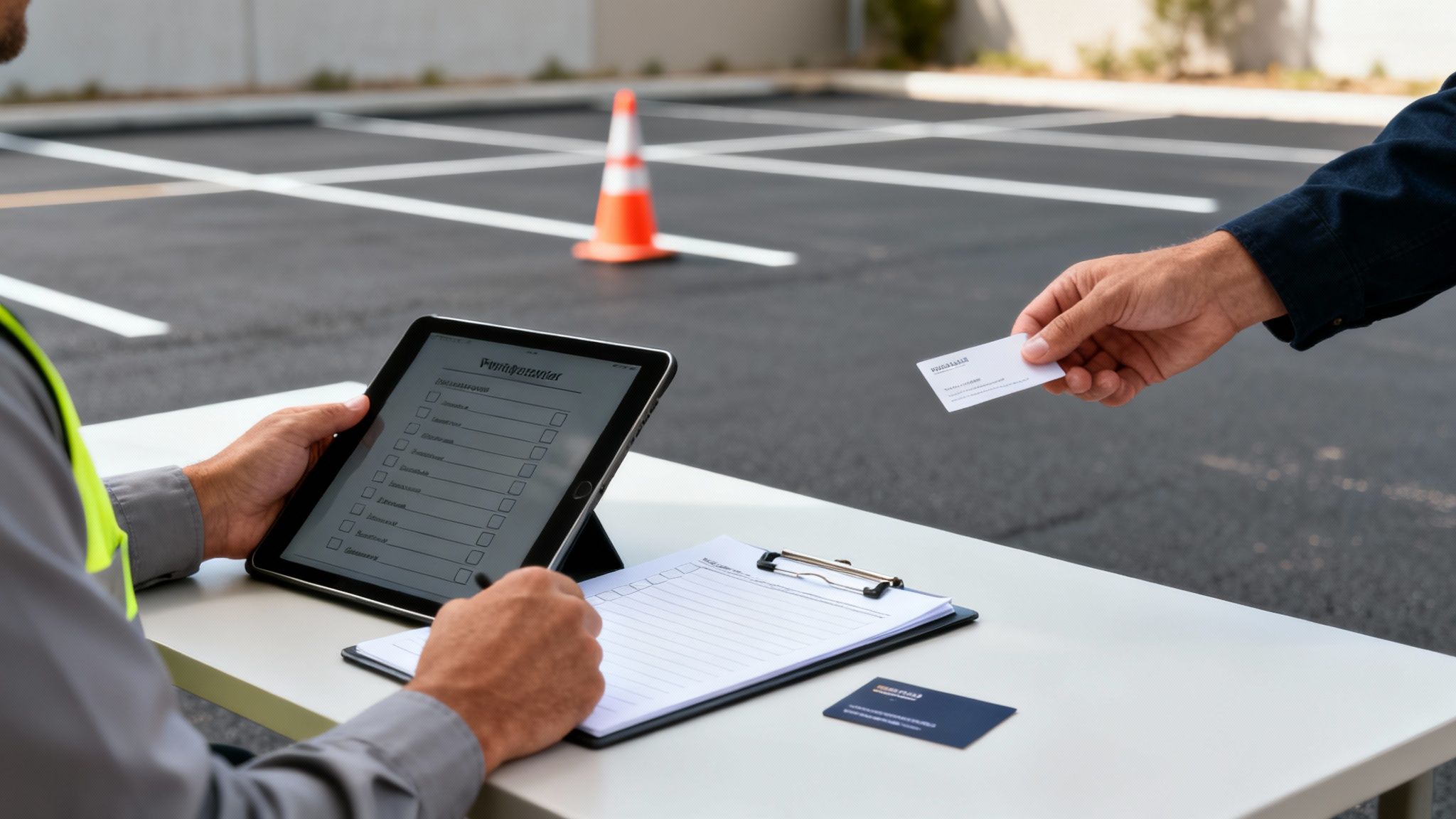
Finding the right paving partner is where the real work begins. A quick Google search gives you names, but it won't tell you who can handle a big commercial job. Paving a home driveway is very different from building a parking lot that needs to handle heavy trucks, constant traffic, and special rules for access.
The paving industry is large, with about 138,000 companies in the U.S. That means you have choices, but you need a good plan to find the true experts.
Where to Look for Good Contractors
Don't just trust a search engine. You'll avoid problems by starting your search in places that focus on quality.
- Industry Groups: Groups like the National Asphalt Pavement Association (NAPA) have lists of members. Contractors in these groups usually care about quality and learning the latest methods.
- Word-of-Mouth: Your best sources are often other property managers or business owners. Ask who they used, how it went, and if they would hire them again. A good referral from someone you trust is very valuable.
- Local Business Groups: Check with your local Chamber of Commerce. They can often suggest well-known local contractors with good reputations.
Expert Tip: When you look at a contractor's past work, look for projects that are like yours. If they've only done small driveways, they probably don't have the right equipment or experience for a commercial lot.
The First Phone Call
Once you have a short list, a quick phone call can help you screen out contractors who aren't a good fit. The goal isn't to talk price yet. It's to make sure they can handle your project. This is a key step, as we explain in our guide on how to hire subcontractors.
Here are a few direct questions to ask:
- What type of projects do you do most, commercial or home driveways?
- Can you tell me about a few local parking lots you've paved in the last couple of years?
- Do you have insurance for commercial jobs? Can you show me proof?
A real professional will be happy to answer these questions. If they hesitate or give unclear answers, it's a red flag. This first step helps make sure that only serious, qualified contractors are invited to give you a price.
Explaining Your Project to Get Good Bids
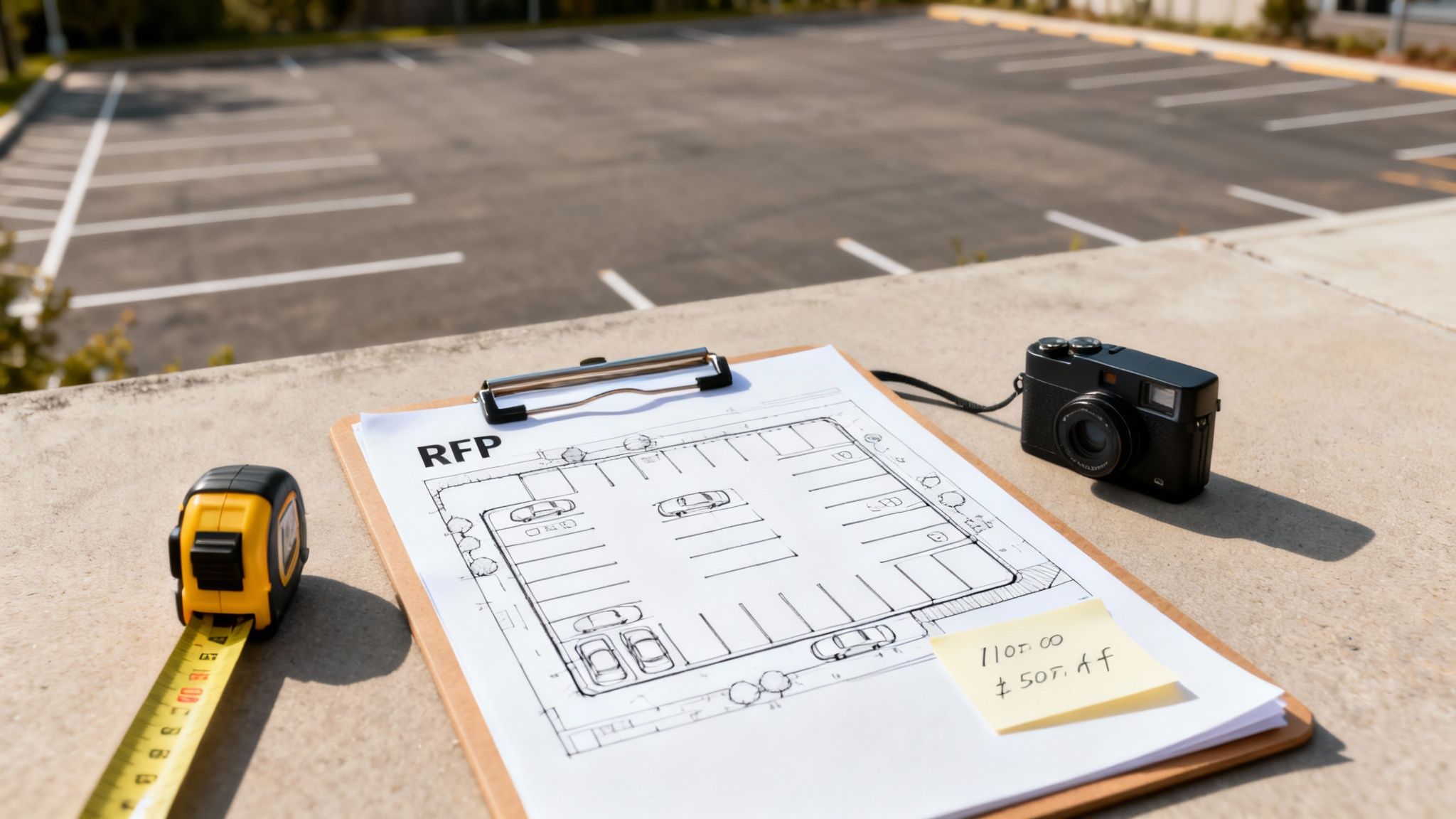
If you ask for a paving bid without giving details, you'll get a bunch of confusing offers that are hard to compare. To get clear quotes from a good parking lot paving contractor, you need to give them a plan of what you want. This step helps you just as much as it helps them. It makes you think through every detail before you get any price quotes.
A detailed plan is your best protection against surprise costs and delays. It's the difference between saying "my parking lot needs work" and giving a specific list of tasks. This makes you the one in control of the process.
Writing Down the Current Conditions
Before you can plan for the future, you need to know where you are now. A professional contractor will visit the site, but giving them your own notes shows you are a serious client.
Start with the basics: measure the total size of your lot. Knowing the square footage is the most important number for any paving project. Then, walk around the property and make a list of every problem you see.
Look for specific issues like:
- Alligator Cracking: This looks like a reptile's skin and means the base underneath is failing.
- Potholes: These are actual holes that go through the top layer of asphalt.
- Poor Drainage: Look for spots where water sits for hours or days after it rains.
- Faded Markings: Check if the line stripes and handicap symbols are worn out and hard to see.
Taking pictures of these problem areas is a big help. A photo of a large puddle or deep cracks tells a contractor more than words can.
Listing Your Project Needs
Now that you've checked the lot, you can make a clear list of what the project needs to do. This is the main part of your request for a bid. You don't need to use fancy paving terms. Just describe the results you want in simple English.
Your plan should say if you need a full replacement, a simple new layer of asphalt, or just some repairs. For example, if you saw a lot of alligator cracking, the foundation is probably bad. A simple new layer is just a temporary fix. In that case, a full tear-out and replacement is the only real long-term solution. You can learn more about these options in our guide to professional grading and paving services.
A good plan includes more than just the asphalt. Think about all the related tasks. Be specific about things like installing new concrete curbs, adding ramps for accessibility, or fixing drainage problems with new drains.
Reading and Comparing Bids
When you get the price quotes, it's easy to just look at the final price. That's a common mistake. A very cheap bid is often a sign that the contractor is cutting corners on materials or prep work.
To understand the quotes you get, it's helpful to know how contractors bid on jobs and win contracts. This knowledge helps you see the difference between a good proposal and one that's too good to be true.
Here’s how to compare bids beyond the price:
- Materials: Does the bid name the type of asphalt they plan to use?
- Asphalt Thickness: How many inches of packed-down asphalt are they offering? For most commercial lots, two inches is the minimum, but areas with more traffic need more.
- Base Preparation: This is the most important step. The bid should describe the work planned for the foundation, like grading and packing it down.
- Timeline: A realistic schedule shows the contractor has thought through the project, including possible rain delays.
- What's Included: What does the price cover? The proposal should say if line striping, signs, and cleanup are included.
By taking the time to create a detailed project plan, you're setting the project up for success. You’ll attract serious contractors, get quotes you can actually compare, and end up with a high-quality parking lot that lasts.
Checking a Contractor's Insurance and License
Let's be clear: hiring a contractor without the right insurance is a big financial risk. If a worker gets hurt on your property or their equipment causes damage, you could be the one paying for it. Making sure a parking lot paving contractor has the right coverage is a key step to protect your business.
Before you sign a contract, ask for proof of insurance and their licenses. Any good professional will have these ready. If a contractor avoids the question, that’s a sign to look for someone else.
Key Insurance Policies to Check
They all say, "We're insured," but that simple phrase can mean different things. A roofer's insurance is not the same as a paving contractor's. You need to look for specific policies made for this type of heavy work.
Here’s what you need to see on their insurance certificate:
- General Liability Insurance: This is the most basic coverage. It pays for damage to other people's property or injuries. For example, if their paver hits a customer's car, this policy pays for it. Look for coverage of at least $1 million per event—that's standard for commercial jobs.
- Workers' Compensation: This is a must-have. It covers medical bills and lost pay for their employees if they get hurt on your job. If they don't have it and someone gets hurt, that worker's lawyer might sue you.
- Commercial Auto Liability: Paving involves heavy trucks and equipment moving around your property. This policy covers any accidents with their company vehicles.
Expert Tip: Don't just look at the insurance certificate. Call the insurance agent listed on it to confirm the policy is active and the coverage amounts are correct. This five-minute call can protect you from a fake or expired document.
Why a License Is Important
A contractor's license is more than just a piece of paper. It's proof that they meet the state's standards for skill and knowledge. It means they understand local building codes, safety rules, and the right way to do a project.
Hiring an unlicensed contractor can lead to disaster. They often don't have insurance, and their work might not pass inspection. This is especially true for important details like drainage or accessibility rules. If something goes wrong, your own property insurance might not cover the claim because the work wasn't done by a licensed pro.
For big jobs that connect to city water or sewer lines, a licensed contractor knows how to work with underground utility services and get the right permits. This knowledge prevents delays and ensures your project is built correctly and safely.
Understanding Paving Materials and Quality
How long your new parking lot lasts depends on two things: a strong base and good paving materials. I've seen nice-looking lots fail in just a few years because the wrong asphalt mix was used. A little knowledge on your part can make a big difference and help you have a smart talk with your parking lot paving contractor.
You don't need to become a paving expert. The goal is to understand the basics so you can see a quality proposal and ask good questions. After all, the quality of the lot is decided long before any equipment shows up.
Understanding Different Asphalt Mixes
Not all blacktop is the same. I think of it like baking. You wouldn't use a cake recipe to make heavy bread. The "recipe" for asphalt is a special mix of stone, gravel, sand, and a tar-like binder that holds it together. The size and type of the stone and binder decide how strong the pavement will be.
A good contractor will suggest a mix based on two main things:
- Your Climate: In places with big temperature changes, we need a more flexible mix to stop cracks from forming when the ground freezes and thaws. In hot areas, you need a stiffer mix that won't get soft in the sun.
- Your Traffic: A parking lot for a small shop is different from a loading dock for semi-trucks. Heavier trucks need a much stronger asphalt that can take a beating.
To help you understand the options your contractor might offer, here's a quick look at common asphalt mixes.
Comparing Common Asphalt Paving Options
This table explains some of the most common types of asphalt. Knowing the difference will help you understand why a contractor suggests one over another for your parking lot.
| Paving Option | Best For | Durability | Relative Cost | Key Benefit |
|---|---|---|---|---|
| Hot-Mix Asphalt (HMA) | Most commercial lots, driveways, and roads | High | $$ | The industry standard for a strong, long-lasting surface. |
| Warm-Mix Asphalt (WMA) | Similar to HMA; good for cooler weather paving | High | $$ | Uses less energy and has lower emissions when made. |
| Porous Asphalt | Areas that need to manage storm water | Medium | $$$ | Lets water drain through it, which reduces runoff. |
| Perpetual Pavement | High-traffic areas like highways & industrial lots | Very High | $$$$ | A multi-layer system built to last for decades. |
Each of these has its use, but for most commercial parking lots, Hot-Mix Asphalt (HMA) is the best choice because it works well and offers a good balance of cost and strength.
What to Look for on Paving Day
Good materials are only part of the story. How they are installed is everything. The temperature of the asphalt when it's being laid is very important. If the mix gets too cold, it won't pack down correctly. This leaves you with a weak surface that will fail early. For more details, read our guide on asphalt paving temperature requirements.
Here are three things I tell property owners to watch for on paving day:
- Consistent Asphalt Thickness: Your contract should state the final packed thickness—usually two to three inches for a normal lot. A professional crew uses a machine that lays an even mat of asphalt, not a surface with thick and thin spots.
- Smooth, Hot Seams: Where two paving lanes meet, they form a seam. These joints are the weakest part of the pavement if not done right. They have to be joined together while the asphalt is still hot to create one smooth surface. If you see jagged, cold-looking seams, it's a big red flag.
- Proper Compaction: Right behind the paver, you should see heavy rollers packing the asphalt down. The operator should be making smooth, overlapping passes. A finished lot should have no roller lines or dips left behind.
You can tell a lot about a crew by watching how they work. A professional team moves smoothly. Trucks, the paver, and the rollers all work in a steady flow. This rhythm is key to keeping the asphalt at the right temperature for a strong finish.
Green and Modern Paving Options
The paving industry is always improving, with new technology making asphalt stronger and better for the environment. The worldwide asphalt market is growing because of new ideas that make paving more efficient and green. These ideas can help lower project costs and reduce the impact on the environment. You can read more about the growing asphalt market on towardschemandmaterials.com.
One of the most common green choices is Recycled Asphalt Pavement (RAP). This process uses old asphalt from a previous job and mixes some of it into the new batch. When done right, using RAP makes a high-quality surface while cutting material costs and keeping old pavement out of landfills. It's a good idea to ask your contractor if RAP is a good choice for your project.
Managing Your Paving Project from Start to Finish
Once the contract is signed, your job isn't over. You're no longer choosing a parking lot paving contractor; you're now managing the project. Staying involved is the best way to make sure the job runs smoothly and you get the result you paid for. This doesn't mean you have to watch over the crew's shoulders. It means being an active, informed partner from the start.
A successful project begins before the first truck arrives. I always have a pre-construction meeting with the project manager. This is your chance to finalize details and set a professional tone for the job.
The Pre-Construction Meeting
Think of this meeting as the link between the contract and the actual work plan. Getting everyone on the same page now prevents big problems later.
Here’s what you should discuss:
- Confirm the Schedule: Agree on a start date, key steps, and a realistic finish date. It's also important to have a "what if" plan for rain delays.
- Plan for Traffic: How will you keep cars and people moving safely during construction? A clear traffic control plan is needed for the safety of your customers, employees, and the paving crew.
- Set Up Communication: Choose one main contact person on your side and one on theirs. Decide how you'll handle daily updates and questions. Will you text or email? Figure it out now.
A pro tip: This meeting is also the perfect time to sort out the small stuff. Where can the crew get water or use restrooms? Where can they store their equipment? Planning for these things ahead of time makes everything run more smoothly.
What to Expect During Each Paving Phase
The paving process happens in a series of planned steps. Understanding what’s happening and when will help you watch the progress without getting in the way.
Site Prep and Grading
This is the foundation of your new parking lot, and it's the most important part. The crew will start by tearing out and removing the old, broken asphalt. Next, they’ll grade the ground underneath, making sure it has the right slope so water drains away from your building.
Base Installation and Compaction
After grading, they’ll lay down a new base of crushed rock. They then pack this layer with heavy rollers until it’s solid. A poorly packed base is the #1 reason pavement fails early.
Paving and Final Compaction
Finally, the new asphalt is laid down by a paving machine and immediately packed by rollers to get a smooth surface. A skilled crew works hard to make clean, tight seams between paving lanes to prevent weak spots.
This diagram shows the key quality checks your parking lot paving contractor should be making during the job.
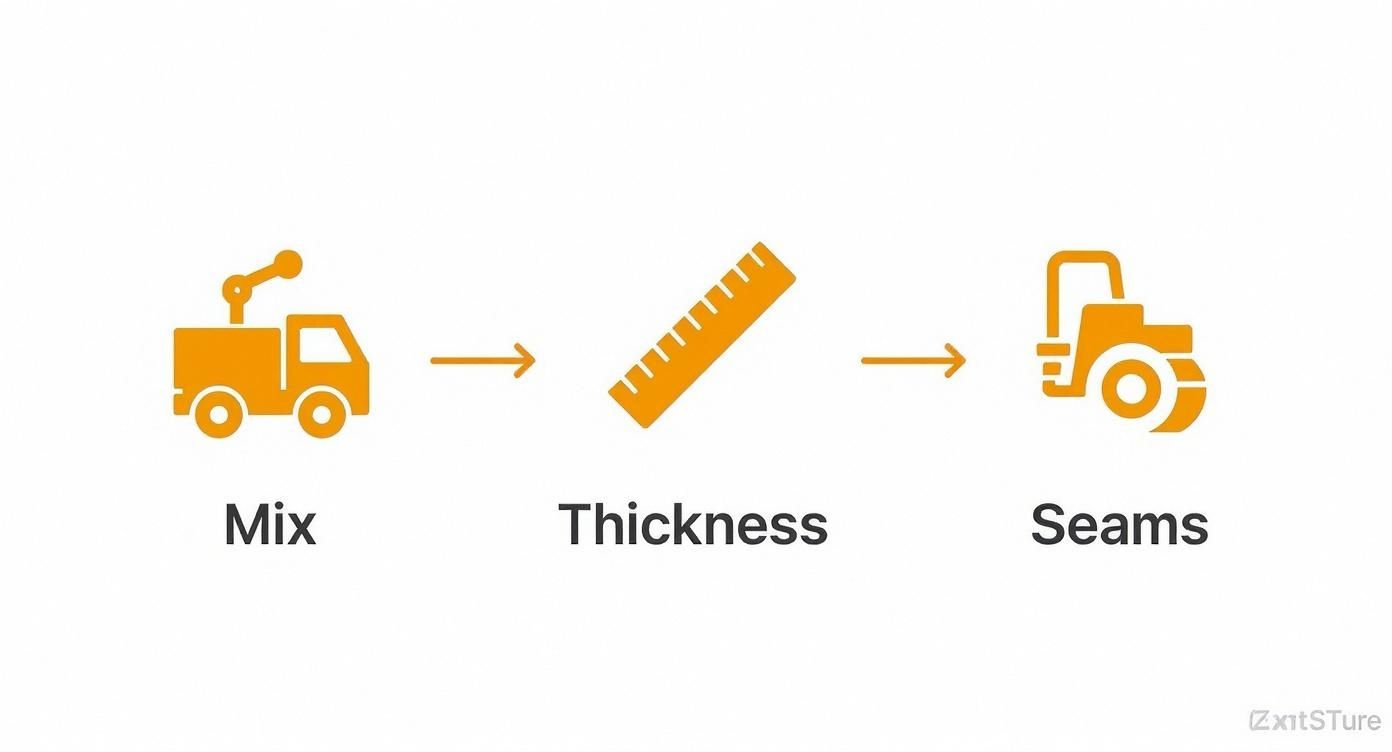
From the quality of the asphalt mix to the strength of the final seams, every step builds on the last to create a parking lot that will last for years.
Watching Progress and Handling Problems
Good project management means tracking job progress and costs to keep everything on schedule and on budget. A quick, five-minute chat with your contact person each day is all it takes to stay updated and fix small problems before they get big.
The global asphalt pavers market, which makes your contractor’s work possible, was worth about $2.42 billion in 2024. This is a huge industry built on getting things done well, so any good contractor will have a solid system for managing their work.
If you see something that doesn't look right—like water pooling where it shouldn't be—speak up right away. It's much easier to fix a small issue on the spot than to correct it after the job is finished.
The Final Walkthrough and Sign-Off
Don't write that final check until you've done a full final walkthrough with the contractor. This is your last chance to find any problems and get them fixed as part of your agreement.
Bring a checklist so you don’t miss anything.
- Check Drainage: The best time to do this is right after it rains. Look for any standing water, which points to grading problems.
- Inspect the Surface: The new asphalt should look smooth. Look for roller marks, low spots, or any loose gravel.
- Verify Striping: Are the lines sharp? Are the handicap spaces and arrows painted in the right places?
- Confirm Cleanup: The crew should leave your property clean, with all trash and extra material removed.
Once you’re happy with the work, you can make the final payment and get your warranty paperwork. A good warranty will explain what’s covered (like early cracking) and for how long. This final step officially ends the project and begins the long life of your new parking lot.
Got Questions? Let's Talk About Paving
Even after you've done your research, you might still have a few questions about hiring a parking lot paving contractor. That's normal. A big paving project has many parts, and getting clear answers is the only way to feel good about moving forward.
Let's go over some of the most common things property owners ask. My goal is to clear up any confusion so you can pick the right team and start your project with confidence.
How Long Should a New Parking Lot Last?
This is the big question, right? A professionally installed asphalt parking lot should last a solid 15 to 20 years, sometimes even longer. But that lifespan isn't guaranteed. It depends on a few key things that you and your contractor can control.
The life of your pavement really comes down to three things:
- A Solid Foundation: The most important part of your parking lot is the base that you can't see. If it isn't graded and packed down correctly, the surface on top won't last long.
- The Right Materials: Using an asphalt mix made for your local climate and traffic is necessary for a strong lot.
- Regular Maintenance: This one is very important. A little bit of care, like sealing cracks and applying a sealcoat, can easily double the life of your asphalt. Without it, even the best installation will start to break down too soon.
Think of your parking lot like the roof of your building. You wouldn't put on a new roof and then just ignore it for 20 years. The same is true for asphalt. A small investment in care pays off with years of extra life.
What Is the Best Time of Year for Paving?
When it comes to paving, timing is everything. Any experienced paving contractor will tell you that the best time to pave is during the warmer, drier months. This means late spring, all summer, and early fall.
There's a simple reason for this. Asphalt needs to stay hot to be packed down correctly. Trying to pave in cold, damp weather will likely lead to a failed project. The mix cools off too quickly, so the rollers can't make it dense enough. This leaves you with a weaker surface that is more likely to crack.
As a general rule, most pros won't start a job if the ground temperature is below 50°F (10°C) and getting colder. A warm, sunny day is best because it gives the crew time to work properly and gives your new asphalt the best possible start.
Why Do Some Bids Seem So Much Cheaper?
It's tempting to take a bid that is much lower than the others, but be careful. This is almost always a red flag. When you see a huge price difference, it’s not because one parking lot paving contractor has a secret way to save money. It's because they're cutting corners on something important.
A very low bid often means the contractor is:
- Using a Thinner Layer of Asphalt: They might offer a full two inches but only put down an inch and a half. This saves them money on materials but leaves you with a weaker lot that won't last.
- Not Preparing the Base Correctly: The hard work is in the preparation. Digging, grading, and packing the base costs time and money. A cheap bid often means this vital step is being rushed or skipped.
- Hiring Uninsured or Unskilled Workers: Lower labor costs can be a sign that they don't have the right insurance or are using a crew that doesn't have the skills for a commercial job.
A good, clear proposal will always break down the costs for materials, labor, and prep work. An honest contractor will be happy to explain their pricing. Remember, you're not just buying asphalt; you're investing in the skill and quality that makes it last. To learn more about all the rules, you can also read about creating an ADA-compliant parking lot.
Ready to start your project with a team you can trust? At Coastal Pipeline Inc., we deliver professional paving solutions built on a foundation of quality and expertise. Reach out today to discuss your parking lot needs. Find out more at https://coastalpipelineinc.com.