Winter rain and temperature shifts create cracks that grow into costly potholes. Many guides only cover surface fixes but skip the core steps in preventing winter potholes: what property owners miss. This listicle shows how to fix hidden flaws before freeze-thaw cycles start to save time and money.
Across the Central Coast, construction is booming. Yet most competitors only give basic tips on patching. They ignore how soil types, buried utility corridors, proper subgrade prep, drainage design, asphalt thickness, and compaction keep pavement solid. Coastal Pipeline does both paving and underground utility work. We build lasting pavement with the right grading, compaction, water diversion, and asphalt depth.
Over seven clear steps, you will learn how to:
- Conduct fall and spring asphalt inspections
- Seal cracks and perform timely repairs
- Improve drainage systems and grading
- Apply seal coating at the right time
- Monitor subgrade condition and compaction
- Manage de-icing materials strategically
- Establish a preventive maintenance budget and schedule
Each item offers practical tips on timing, real Central Coast examples, and guidance on short- and long-term fixes. By spotting weaknesses early, you can avoid repeated reactive repairs and extend pavement life. If you manage roads or driveways in Monterey, Santa Cruz, or San Benito County, now is the time to book a seasonal paving checkup. Coastal Pipeline combines underground utility expertise with asphalt skills to deliver durable solutions.
1. Fall and Spring Asphalt Inspections
What are Fall and Spring Asphalt Inspections?
These are scheduled checks before and after winter. They spot cracks, surface wear, soil settlement, and thin asphalt areas. This proactive step is key in preventing winter potholes: what property owners miss.
How it works
- Walk the site and mark any damage.
- Take high-resolution photos to catch even small cracks.
- Log findings with GPS points for year-to-year tracking.
"Catching flaws before freeze-thaw starts can save thousands in repair costs."
Real World Examples
- A corporate lot cut emergency patches by 45% with quarterly checks.
- Cities in Minnesota and Wisconsin audit roads before winter.
- Commercial sites run checklists to keep safety high.
Actionable Tips for Your Property
- Schedule checks in late August and early April.
- Use clear photos for before/after comparisons.
- Track crack growth each year to plan budgets.
- Note shallow asphalt areas where wear is faster.
When and Why to Use This Approach
Fall and spring inspections give time to plan sealcoating, trench restoration, and asphalt overlays in one project. Sites that do this see fewer potholes and safer surfaces.
Learn more about Fall and Spring Asphalt Inspections on Coastal Pipeline Inc
Coastal Pipeline’s Edge
Coastal Pipeline blends underground utility know-how with paving. If you manage a property in Monterey, Santa Cruz, or San Benito County, schedule a checkup now. Our teams use proper grading, compaction, and the right asphalt thickness for lasting results.
2. Regular Crack Sealing and Repair
What is Regular Crack Sealing and Repair?
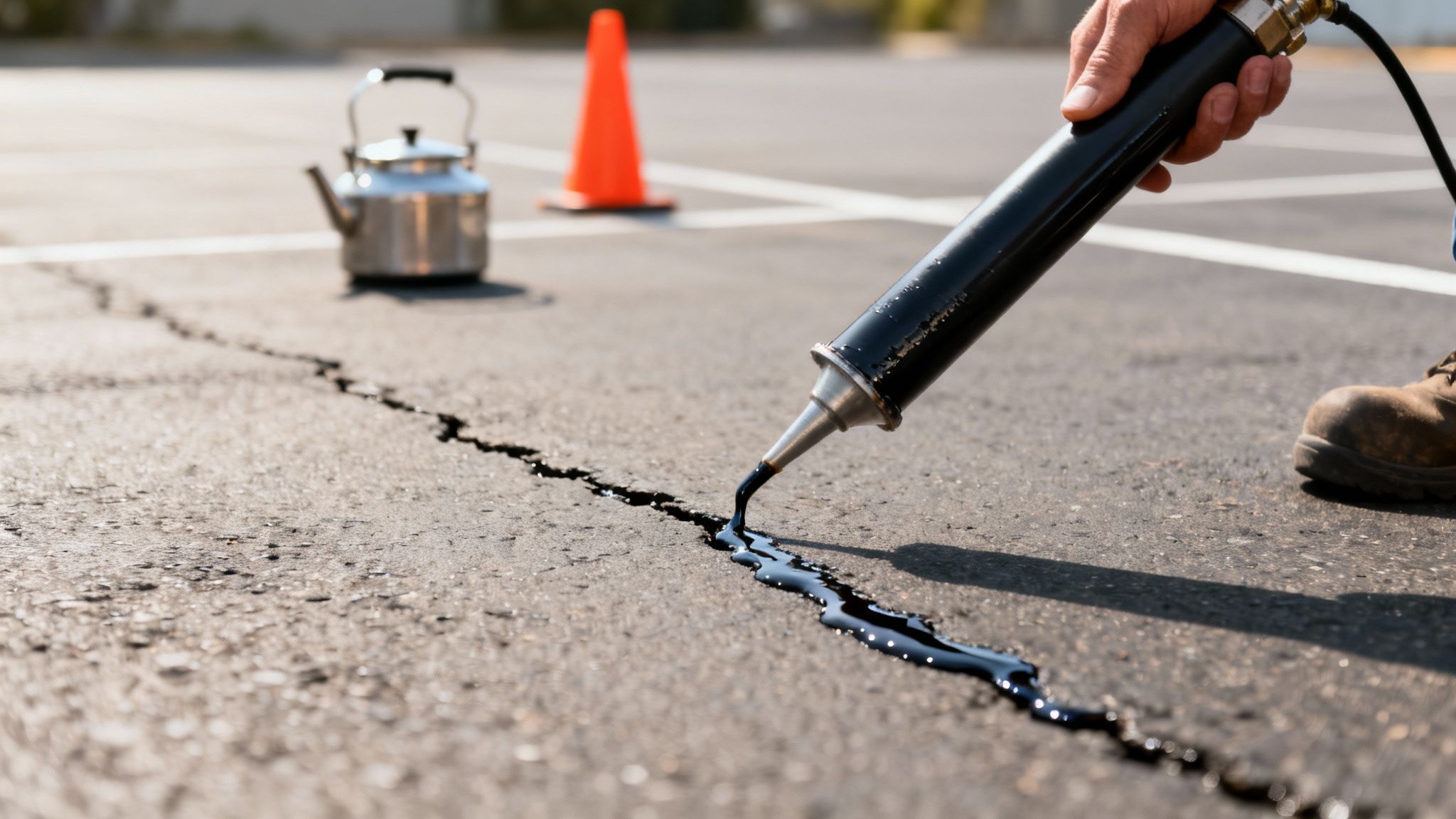
This means filling small cracks and micro-fissures in asphalt before winter. Early seal repair stops water from getting under the pavement, freezing, and making potholes. It is one of the most cost-effective steps in preventing winter potholes: what property owners miss.
How it works
- Clean cracks with high-pressure air or brushes.
- Route cracks where needed for sealant depth.
- Fill with hot rubberized sealant and let it cure.
“Early sealing stops crack growth and cuts repair costs.”
Real World Examples
- Denver’s crack-seal program cut pothole complaints by 35%.
- Boston adds spring crack sealing on busy streets, reducing winter patches.
- Chicago property managers saw a 40% drop in fixes with quarterly sealing.
Actionable Tips for Your Property
- Clean cracks well before sealing.
- Seal in September and October before first freeze.
- Use hot rubber sealants in colder spots for strong bonds.
- Plan resealing every 3–4 years as part of your maintenance.
When and Why to Use This Approach
Seal cracks before freeze-thaw cycles to block water and extend asphalt life. This stops emergency patches and keeps surfaces safe.
Learn more about Regular Crack Sealing and Repair on Coastal Pipeline Inc
Coastal Pipeline’s Edge
Coastal Pipeline pairs trenching and paving skills to seal cracks and stabilize buried utility lines. Our NASSCO-certified crews ensure repairs meet specs and hold up under traffic and soil shifts.
3. Improve Drainage Systems and Grading
What is Improve Drainage Systems and Grading?
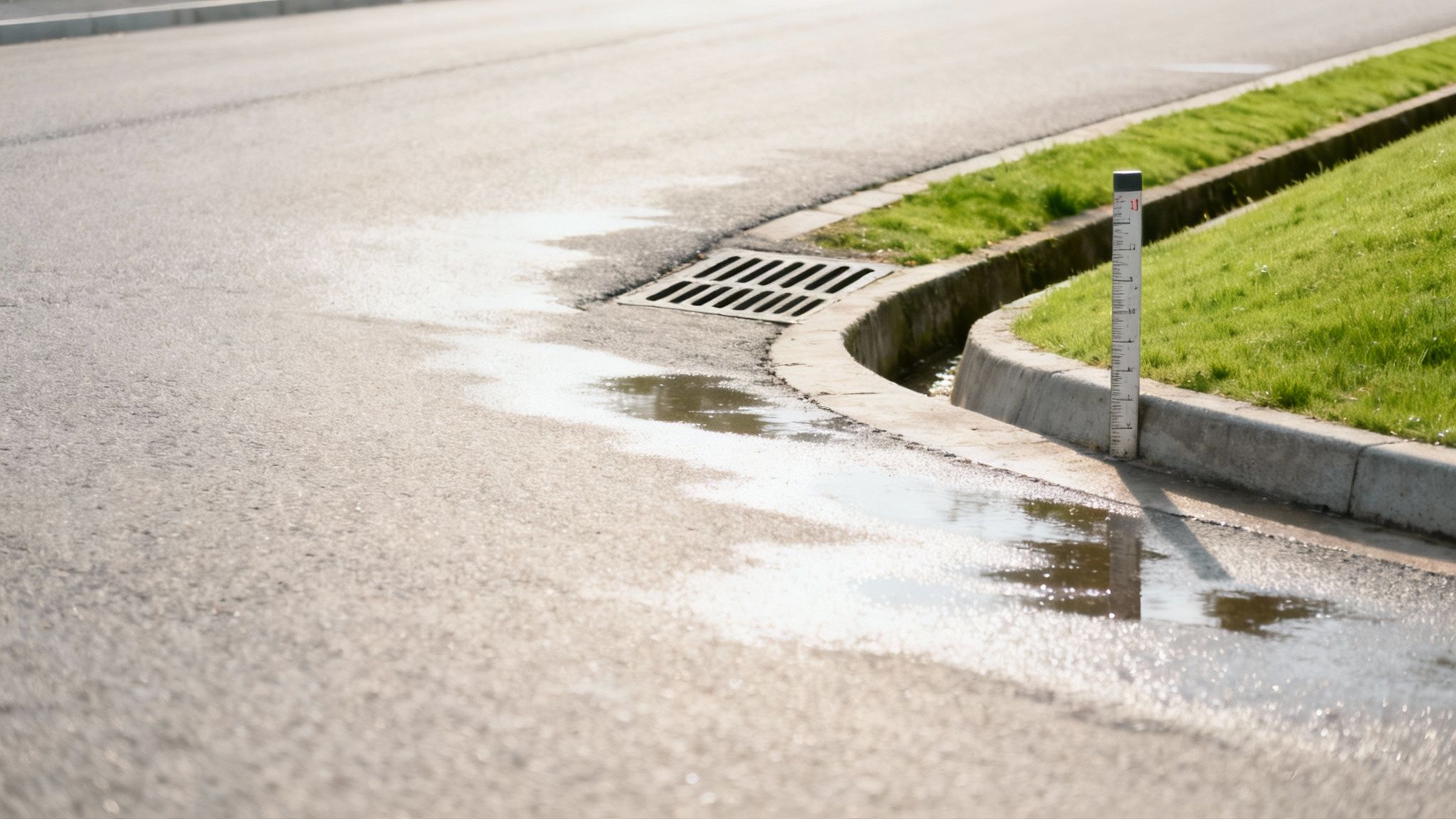
This step routes water away from asphalt by fixing slopes and clearing drains. It prevents pooling that leads to freeze and thaw damage and potholes. Proper drainage is key to preventing winter potholes: what property owners miss.
How it works
- Survey grading to spot low areas.
- Clean catch basins, swales, and storm drains by September.
- Set at least a 2% slope away from buildings.
"Standing water on pavement drives potholes after freeze and thaw."
Real World Examples
- Seattle regraded slopes and saw 60% less pooling.
- Atlanta’s Buckhead fixed drains and cut pothole repairs 40%.
- Ontario municipalities report 35% fewer cracks after grading audits.
Actionable Tips for Your Property
- Get a civil engineer for a pre-winter audit.
- Clear all drains early.
- Fill low spots with compacted aggregate.
- Use thermal cameras in rain to find hidden dips.
When and Why to Use This Approach
Fix drainage before heavy rains and freezes. This step protects the subgrade and avoids emergency fixes in winter.
Learn more about Improve Drainage Systems and Grading on coastalpipelineinc.com
Coastal Pipeline’s Edge
Coastal Pipeline brings utility and paving know-how to every job. In Monterey, Santa Cruz, and San Benito County, our teams handle grading, trench restoration, and water diversion to keep pavement strong.
4. Seal Coating Application
What is Seal Coating Application?
Seal coating adds a protective layer over asphalt every 2–3 years. It locks out water, UV rays, and oxidation that weaken pavement. This is key in preventing winter potholes: what property owners miss.
How it works
- Clean debris, dirt, and loose stone.
- Apply water-based or acrylic seal coat with a squeegee or sprayer.
- Let it dry 24–48 hours before traffic returns.
"A fresh seal coat keeps water out and maintains asphalt thickness under freeze-thaw."
Real World Examples
- Dallas office parks saw 50% fewer potholes on a biennial seal schedule.
- Arizona retail centers add quarterly checks after seal coating.
- UK councils use seal coating as their main winter-pothole fix.
Actionable Tips for Your Property
- Apply in late August or early September, before frost.
- Choose eco-friendly acrylic sealers when possible.
- Avoid temps below 50°F or above 85°F.
- Lock in a 2–3 year cycle based on traffic and soil type.
- Check weather to ensure 48 dry hours after work.
When and Why to Use This Approach
Use seal coating when cracks or oxidation appear. It restores flexibility, protects subgrade, and keeps asphalt thick. This cuts winter potholes and delays big repairs.
Learn more about Seal Coating Application on Coastal Pipeline Inc
Coastal Pipeline’s Edge
Coastal Pipeline blends trench restoration with seal coating. In Monterey, Santa Cruz, and San Benito Counties, our NASSCO-certified crews protect your pavement and any buried utilities in one pass.
5. Monitor Subgrade Condition and Compaction
What is Monitor Subgrade Condition and Compaction?
This checks the soil base under asphalt. You measure soil density, moisture, and settlement to ensure a solid foundation. It is critical for preventing winter potholes: what property owners miss. Central Coast clay and silt trap water, so strong subgrade saves repairs.
How it works
- Do geotech surveys to map soil strength.
- Use GPR or core borings for moisture and compaction tests.
- Install piezometers to track water table levels.
- Compare data each year to find weak spots.
"A well-compacted subgrade is the foundation that stops potholes before they start."
Real World Examples
- Pennsylvania DOT spots subsidence early with subgrade checks.
- NYC tests major corridors to head off freeze damage.
- A SoCal park cut paving costs 30% by fixing only low-compaction zones.
Actionable Tips for Your Property
- Add subgrade checks to fall and spring inspections.
- Watch water tables after rain to spot pooling.
- Fix drainage fast—install French drains or regrade slopes.
- Stabilize with lime or cement before putting down asphalt.
- Record compaction readings with GPS for trends.
When and Why to Use This Approach
Test subgrade before heavy rains and freeze-thaw cycles. Early soil work with good drainage can save thousands in emergency patching.
Learn more about Monitor Subgrade Condition and Compaction on Coastal Pipeline Inc
Coastal Pipeline’s Edge
Coastal Pipeline’s teams in Monterey, Santa Cruz, and San Benito County do targeted subgrade tests, soil stabilization, and deep compaction. We build strong roads from the ground up.
6. De-icing Material Management and Application Strategy
What is De-icing Material Management and Application Strategy?
This is choosing and placing salt, sand, or chlorides at the right rate. Too much salt strips binders and worsens freeze-thaw damage. Many owners miss how de-icing affects subgrade water table and asphalt thickness. Coastal Pipeline pairs de-icing plans with underground utility know-how to prevent winter potholes: what property owners miss.
How it works
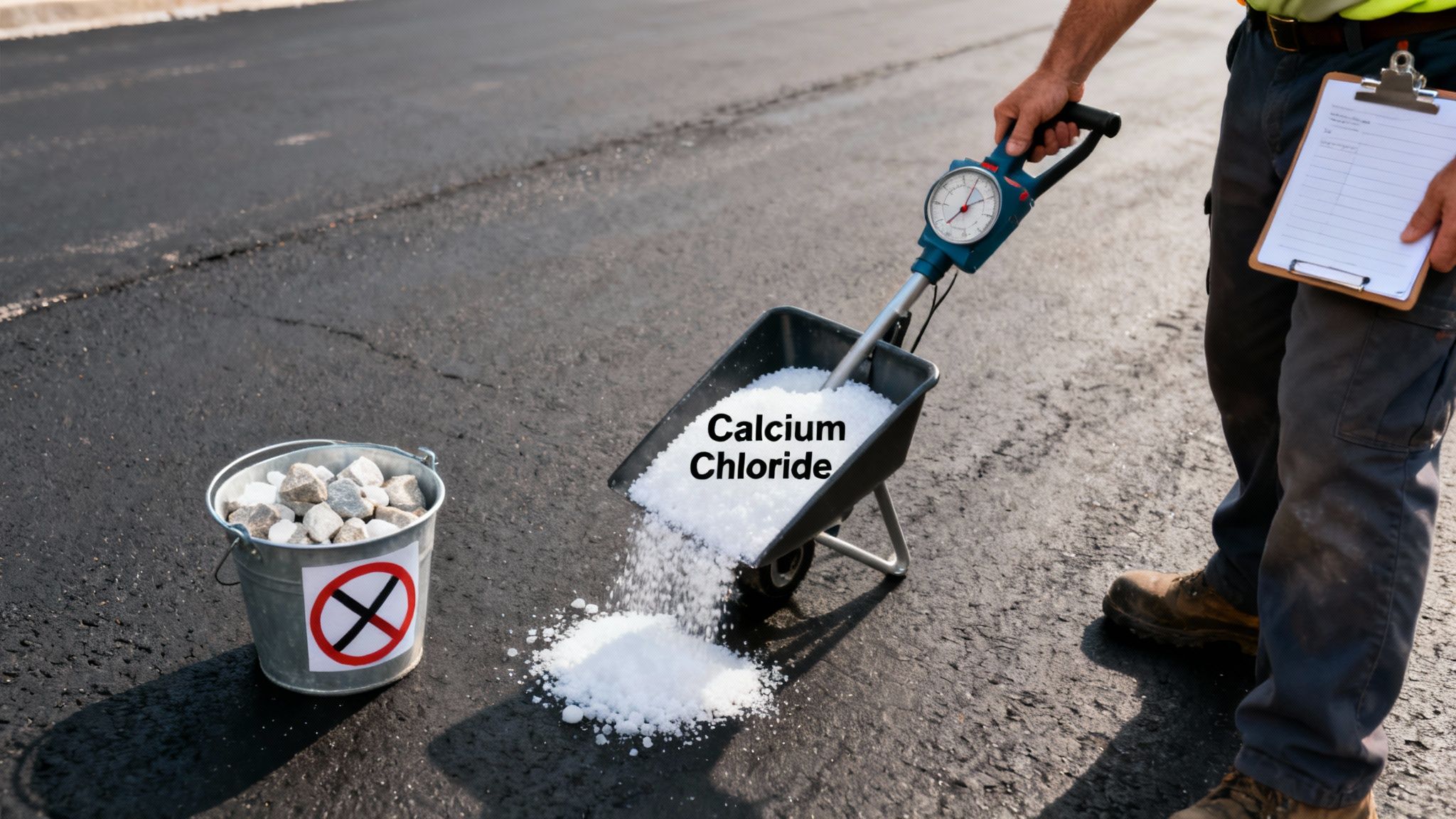
- Pick the right de-icer: magnesium chloride for low temps, calcium chloride for milder cold.
- Calibrate spreaders to 150–300 lbs/acre.
- Pre-treat before storms to break ice bond.
- Post-treat lightly to keep traction without over-saturating seal coats.
"Smart salt programs match product to weather and save pavement."
Real World Examples
- Minnesota DOT’s salt-sand mix cut potholes by 35%.
- Denver’s pre-treatment with calcium chloride lowered repairs by 30%.
- Vermont towns use GPS-tracked spread rates to avoid waste.
Actionable Tips for Your Property
- Switch to magnesium or calcium chloride for better cold performance.
- Calibrate spreaders every month to keep rates steady.
- Pre-treat before snowfall, not just after.
- Limit sand to high-traffic areas to protect seal coats.
- Use plastic plows or rubber blades to clear snow.
- Store salt under cover to avoid clumps.
When and Why to Use This Approach
A good de-icing plan prevents salt damage, keeps binding layers solid, and guards subgrade health. This method works for parking lots, campuses, HOAs, and municipal roads.
Learn more about De-icing Material Management and Application Strategy on Coastal Pipeline Inc
Coastal Pipeline’s Edge
Coastal Pipeline combines trenching and paving to balance traction and pavement health. In Monterey, Santa Cruz, and San Benito County, schedule your winter de-icing audit today.
7. Establish Preventive Maintenance Budget and Schedule
What is Establish Preventive Maintenance Budget and Schedule?
This is setting a yearly plan and funds for pavement care. A clear schedule stops scramble repairs after winter rain and freeze cycles. Property owners often miss winter potholes when they lack a set budget and calendar.
How it works
- Allocate 3–5% of your property value for pavement each year.
- Build a seasonal calendar for inspections, sealcoating, crack sealing, and subgrade checks.
- Track work orders, dates, costs, and photos in one system.
- Review data quarterly to tweak spending and timing.
- Share the plan with staff and stakeholders for clear accountability.
“A funded plan shifts you from pricey emergency fixes to cost-effective preventive work.”
Real World Examples
- Microsoft in Redmond manages 2M sq ft of pavement with a preventive plan.
- Costco sets uniform standards across hundreds of sites.
- UK councils fund multi-year local highway maintenance plans.
- Australian mines predict needs on large paved areas.
Actionable Tips for Your Property
- Set aside 3–5% of property value for pavement.
- Use calendar reminders for key tasks (Sept inspections, Oct sealcoating, Nov crack sealing).
- Snap date-stamped photos at every work event.
- Hold annual reviews to compare budget vs actual.
- Share the schedule with your team and contractors.
- Track ROI by comparing preventive spending vs emergency patch costs.
When and Why to Use This Approach
A preventive budget and schedule ensure you have funds and a plan when freeze-thaw cycles start. This keeps repair costs down and reduces disruptions.
Learn more about Establish Preventive Maintenance Budget and Schedule on Coastal Pipeline Inc
Coastal Pipeline’s Edge
Coastal Pipeline mixes utility and paving expertise to set up your preventive plan. If you manage roads or lots in Monterey, Santa Cruz, or San Benito County, our NASSCO-certified teams can help you stay winter ready.
7 Missed Winter Pothole Prevention Measures Compared
| Strategy | Implementation Complexity 🔄 | Resource Requirements ⚡ | Expected Outcomes ⭐ / 📊 | Ideal Use Cases 💡 | Key Advantages ⭐ |
|---|---|---|---|---|---|
| Fall and Spring Asphalt Inspections | Moderate 🔄 — professional checks, seasonal timing | Low–Medium ⚡ — crew, cameras, GPS | ⭐ Early detection; 📊 Fewer major repairs | 💡 Pre-winter/post-winter audits | ⭐ Proactive planning, legal records |
| Regular Crack Sealing and Repair | Low–Moderate 🔄 — routine work, weather-dependent | Medium ⚡ — sealants, crews, curing time | ⭐ +7–10 yrs life; 📊 Cuts repair costs | 💡 High-traffic lots, preventive programs | ⭐ High ROI; stops water entry |
| Improve Drainage Systems and Grading | High 🔄 — engineering and construction | High ⚡ — engineers, equipment, materials | ⭐ Root cause fix; 📊 Long-term fewer failures | 💡 Sites with pooling, large lots | ⭐ Controls sub-base water; lowers liability |
| Seal Coating Application | Low–Moderate 🔄 — surface prep, closure 24–48 hrs | Low–Medium ⚡ — sealer, crews | ⭐ +2–3 yrs life; 📊 Better waterproofing | 💡 Aesthetic sites, set cycles | ⭐ Affordable protection; slows UV wear |
| Monitor Subgrade Condition and Compaction | High 🔄 — testing, possible excavation | High ⚡ — GPR/tests, stabilization materials | ⭐ Stops base failure; 📊 Targeted repairs | 💡 High-load zones, repeat patches | ⭐ Fixes foundation causes; boosts performance |
| De-icing Material Management and Application Strategy | Moderate 🔄 — protocols, training | Medium ⚡ — de-icers, spreaders, staff | ⭐ Less chemical damage; 📊 Balanced safety | 💡 Cold climates, frequent storms | ⭐ Cuts pavement and env. harm |
| Establish Preventive Maintenance Budget and Schedule | Moderate 🔄 — planning, governance | Low–Medium ⚡ — software, staff time | ⭐ Predictable spending; 📊 Better KPIs | 💡 Large portfolios, campuses | ⭐ Ensures accountability and cost control |
Secure Your Pavement With Coastal Pipeline’s Pre-Winter Checkup
As winter nears, small signs of wear can lead to big pothole problems. In this article on preventing winter potholes: what property owners miss, we covered seven critical steps for durable pavement.
Key Takeaways
- Inspect asphalt in fall and spring for early cracks
- Seal cracks to stop water entry
- Divert runoff with proper drainage and grading
- Apply seal coating before freeze-thaw
- Monitor subgrade and fix weak spots fast
- Use smart de-icing to protect asphalt thickness
- Budget and schedule preventive work before winter
Actionable Next Steps
- Schedule a pre-winter site assessment in Monterey, Santa Cruz, or San Benito counties
- Map and clear drainage paths
- Apply seal coating and crack seal in early October
- Track your budget and set reminders for follow-up checks
Why Mastering These Concepts Matters
Focusing on subgrade prep, proper asphalt depth, and trench restoration cuts recurring repairs. Coastal Pipeline’s dual role in utilities and paving ensures that hidden pipes and pavement layers work as one system. In one Santa Cruz park, a drainage upgrade and better compaction stopped potholes for two winters in a row.
Broader Impact
When property managers and public works teams use this checklist, roads stay safer, budgets stay lean, and emergency repairs drop by up to 60%. Preventing winter potholes: what property owners miss should be part of every annual plan. Developers and engineers gain peace of mind knowing pipes and paving layers fit tightly. Municipal teams can share NASSCO-certified trench reports before sealing surfaces.
Encouraging Final Thought
Invest in pre-winter maintenance now to avoid the patch crew scramble when cold weather hits. Take charge of your pavement health and enjoy smoother lanes all year long.
Ready to keep your roads and driveways pothole-free? Contact Coastal Pipeline Inc. for a seasonal paving checkup and site assessment. Schedule your appointment today!