If you build public works projects, you know that finding money has been a challenge for a long time. But that is changing. The most important thing to know is that $11.5 billion in new EPA funding is now available. This money is for fixing our country's old water systems and replacing lead pipes.
This isn't a small budget increase. It's a whole new way that water projects will be chosen, funded, and built.
The Floodgates Are Open: Understanding the New Funding
Imagine a dam that has held back water for years, and now the gates are open. That’s what is happening with public water funding. After years of less federal help, this new wave of EPA money creates huge opportunities for contractors who are ready.
But this money isn't just for anyone. It's meant to fix specific problems, like replacing old cast iron pipes and removing dangerous lead lines from our water systems. This means there are new rules and stricter standards. Contractors who aren't prepared could get tripped up.
A Big Change in Who Pays for Water Projects
To understand why this is a big deal, we have to look back. Over the last 50 years, who pays for water systems has completely flipped. This timeline shows how much federal support dropped off—and why this new money is so important.
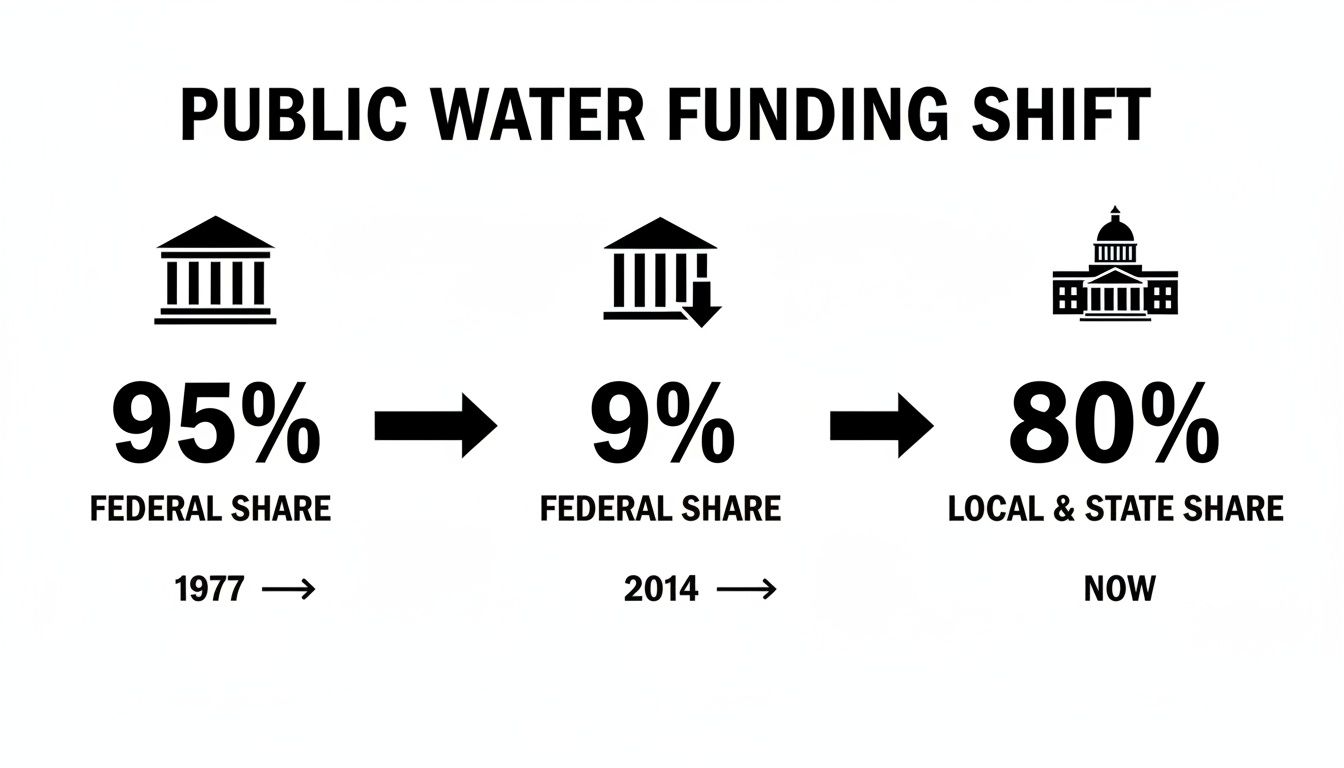
As you can see, states and local towns have had to pay for more and more. This new federal money is a game-changer. For a long time, towns were on their own, trying to patch up aging sewer, water, and gas lines.
Let's look at the numbers. In 1977, the federal government paid for 63% of all spending on water systems. By 2014, that dropped to only 9%. States and cities had to pay for the rest.
But this isn't just a return to the past. This new funding comes with modern rules. It requires higher standards for paperwork, materials, and records that many contractors aren't ready to handle.
Understanding this change is the first step to winning more jobs. Contractors who learn these new rules will do well. Those who don't will be left behind.
More Bids and Faster Timelines: The New Reality for City Projects
When the EPA put $11.5 billion into water systems, it started a rush for ready contractors. Cities, developers, and facility managers are now moving forward with water line upgrades that were planned long ago. They are all trying to get a share of the grant money, which means more bid opportunities for our industry.
But there's a catch. The pressure is on. Timelines are now much faster, expectations are higher, and there is more competition. The slow, steady pace of public works projects is a thing of the past.
It’s like a land rush. Everyone is trying to claim a spot, but only those with a good plan and the right tools will succeed. The main takeaway is that speed and accuracy are now key to winning jobs.
The Impact on Bidding and Building Projects
From bidding to starting work, the whole process for a city project has sped up. Timelines that once took years are now being squeezed into months. This changes everything, from how bids are prepared to how quickly crews and equipment must be ready.
To compete, your business must run smoothly. With so many new city projects available, having reliable equipment is a must. Implementing a robust heavy equipment maintenance checklist is a smart way to avoid delays and be ready when a good job comes up.
For anyone who's been in this business for a while, the difference is clear. This table shows how things have changed.
How the Bidding Environment Has Changed for Contractors
| Factor | Traditional Environment | Current Environment |
|---|---|---|
| Bid Frequency | Predictable, cyclical bid releases | High volume of bids with short deadlines |
| Project Timelines | Longer, more flexible schedules | Compressed, accelerated timelines |
| Competition | Standard number of local bidders | Increased competition from regional firms |
| Compliance Focus | Primarily local and state codes | Strict federal and grant-specific standards |
This new environment is better for contractors who can move fast, stay organized, and handle complex utility systems construction without a lot of prep time.
The Challenge of More Oversight
Here’s the other side of the coin: all that federal money comes with more federal oversight. More money always means more people watching. It’s no longer enough to just follow local building codes. These projects now have a long list of strict federal rules.
This isn't just about building the project right—it's about keeping perfect records. Federal funding requires a lot of paperwork that many companies are not set up to handle. This creates a big risk of being disqualified.
This creates a "compliance gap." Your building skills might be great, but that alone won't win the contract anymore. Everything from where you get your materials to how you report your payroll is now being checked closely. Understanding this new level of oversight is a must for any contractor who wants to succeed with this new funding. We’ll talk more about that next.
Why Good Contractors Get Disqualified by the Compliance Gap
Not long ago, a good reputation and a skilled crew were enough to win a public works job. That's changing. Today, even the best contractors are being passed over before they can even bid. This is because of what I call the compliance gap.
This gap isn't about your ability to lay pipe. It's about following the complex rules that come with federal money. Contractors who don't know about federal rules, material needs (like ductile iron vs. C900 PVC), or grant paperwork risk being disqualified or ignored for funded jobs.
The Three Biggest Problems for Contractors
Most disqualifications happen for three main reasons. Each one requires a different kind of knowledge that has little to do with work in the field. Getting these right is now just as important as the work itself.
1. Federal Paperwork and Rules
The amount of paperwork for these projects is huge. It’s not just about filling out forms; every detail must be perfect according to a thick rulebook.
- The Davis-Bacon Act: This is a major one. It requires you to pay workers a certain wage and track it with certified payrolls. A single mistake can lead to an audit and get you kicked off the project.
- Buy American Rules: These rules are strict. You have to prove that your materials, especially iron and steel, come from the U.S. This requires careful sourcing and a paper trail to prove it.
- Grant Protocols: The town or water district has its own complex rules to follow for the grant. If your bid doesn't match their grant application exactly, it's considered "non-responsive" and gets thrown out.
For contractors, the bottom line is clear: knowing how to handle paperwork is no longer optional. A single mistake in the paperwork can ruin a whole bid, no matter how good your price is.
Changing Material Specifications
The second trap is a mismatch on materials. These grant-funded projects often have very specific rules to make sure the new pipes and systems last for a long time. These rules often override normal local standards.
For example, you might bid a job using standard C900 PVC pipe, a good, affordable choice. But if the federal grant is for replacing lead pipes or requires a 100-year service life, the plans will likely call for ductile iron or HDPE pipe instead. Submitting a bid with the wrong material means an automatic "no." It's a simple mistake that costs contractors great opportunities. You can see how these details matter when looking at local water meter installation requirements.
Understanding New Compliance Rules
Let's put this in perspective. The U.S. has a $3.4 trillion investment gap for its water systems. With states and local governments facing a nearly $2 trillion shortfall, this federal funding is the only way forward—and it has rules.
To stay competitive and avoid being disqualified, you have to learn these new compliance rules. This includes understanding the growing importance of implementing robust ESG strategies, as environmental and social factors are becoming a bigger part of how jobs are awarded. These are not small changes; they are a major shift in how public water main projects are given out. Learning them is the key to success.
How Strategic Partnerships Bridge the Funding Gap
Trying to handle this new world of public water funding by yourself is a big risk. The solution is to partner with a contractor who already knows the public works system inside and out. It's no longer just a good idea—it’s necessary for success.
Think of it like hiring a guide to climb a mountain. You could try it alone with a map, but you'd likely get lost or make a mistake. An experienced guide already knows the path and the dangers, and gets you to the top safely and quickly.
That's the role a partner like Coastal Pipeline Inc. plays. When you work with a company that already understands federal rules and city codes, you avoid the common problems that stop other projects. Coastal Pipeline is already experienced in public works procurement and works with cities on code-compliant water main installation, including utility tie-ins, trenching, and AWWA-certified backflow prevention.
Mastering Public Works Procurement
The first big win from a good partnership is getting instant expertise in public works procurement. This is more than just paperwork. It's about understanding the whole grant process from the city's point of view. An experienced partner knows how to design a project to match the goals of available grants, making it a perfect fit for funding.
This deep knowledge means every bid and proposal is built to be compliant from the start. Here’s where that expertise really helps:
- Grant Alignment: They know how to write project plans to meet the exact rules of EPA funding, whether it's for lead pipe replacement or improving water systems.
- Documentation: They make sure every piece of paper, from payroll reports to material sources, is perfect and ready for an audit.
- Bid Strategy: They help create bids that are not just well-priced, but also fully compliant—so you don't get thrown out for a technical reason.
Ensuring Code-Compliant and Certified Installations
It's not just about paperwork; the actual work must meet a much higher standard. Federal money means more people watching the job site, which means you have to follow both local and national codes strictly. A good partner has a history of doing code-compliant work, which is a huge advantage.
For example, Coastal Pipeline Inc. has special crews for important tasks like utility tie-ins, precision trenching, and AWWA-certified backflow prevention. This certified expertise is valuable because it gives grant officials and city inspectors confidence that the job will be done right. This is a key part of handling the challenges of utility readiness for public works projects, which is a core strength of a reliable partner.
The message is simple: you don't need to become a federal funding expert overnight. Rely on a knowledgeable partner, and you can make sure your projects are planned correctly, bid successfully, and built perfectly.
This funding shift is creating a clear trend: fixing what we already have. We're seeing a major move from new construction to repair projects. In fact, repair projects are expected to grow at a 15.1% rate, much faster than new construction. This shows how important it is to work with contractors who are experts at complex upgrades. You can read more about this pipe infrastructure growth on Trenchless Technology.
Ultimately, a smart partnership turns a risky project into a good investment. It closes the knowledge gap and helps your agency or development get a real share of this historic funding.
What This Partnership Actually Gets You: Faster Approvals and Bigger Grants
So, what are the real benefits of hiring a funding-savvy contractor for your next water main project? It's not just talk—it leads to real results. By aligning with a contractor who understands infrastructure funding and permitting, clients get faster approvals, better project timelines, and can qualify for more grant money.
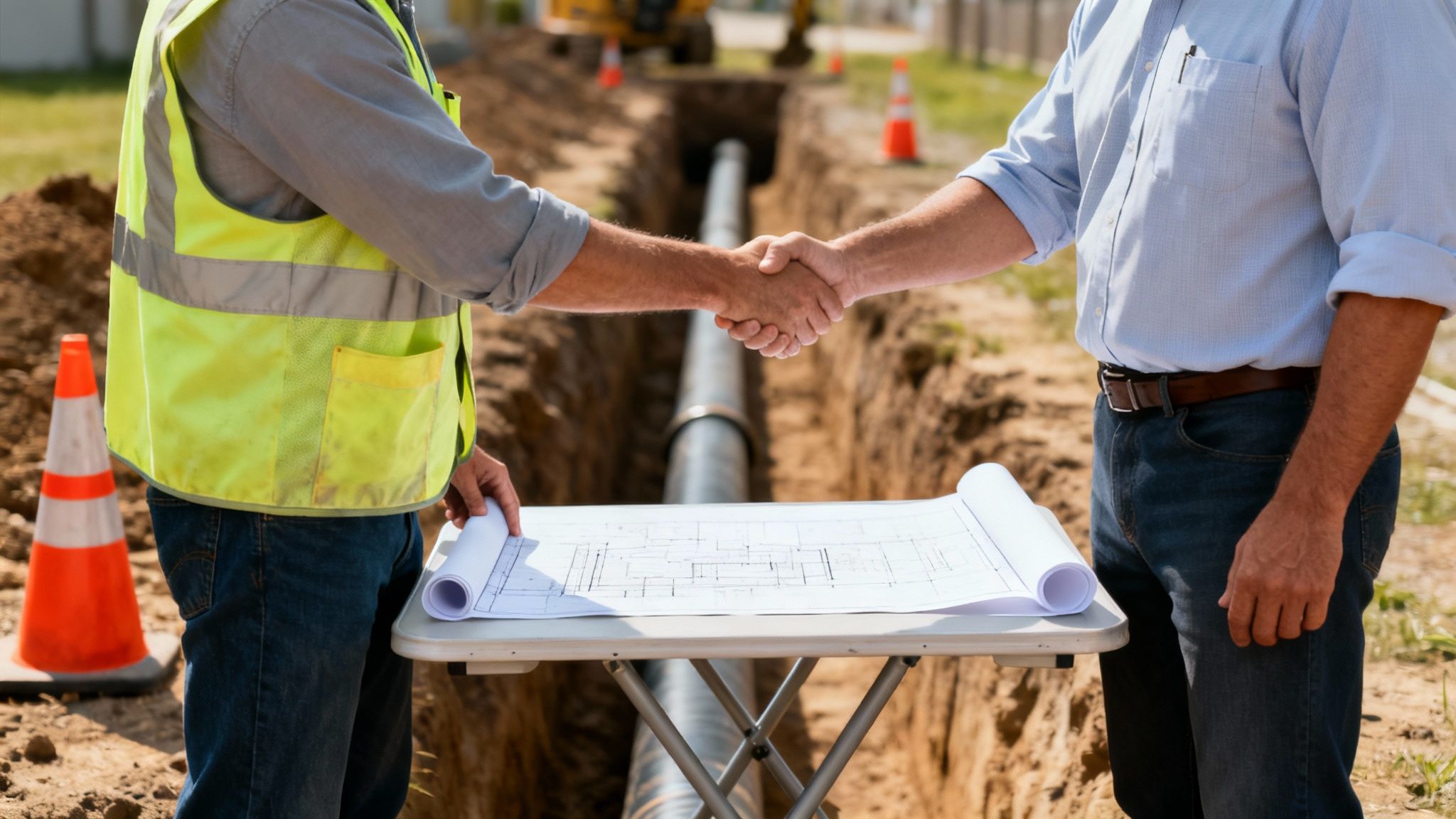
This kind of knowledge gets projects approved faster because all the grant paperwork is done right the first time. You avoid the frustrating delays caused by simple mistakes. It’s the difference between moving quickly from planning to building versus getting stuck waiting for approvals.
More Efficient Installations and Fewer Headaches
A contractor who knows the rules handles compliance problems before they even happen. They don't wait for an inspector to find an issue with materials or payroll. Instead, they make sure every detail is correct and documented from the start. This proactive approach makes the entire project run smoothly.
Here’s what that looks like on the ground:
- Fewer Work Stoppages: The project keeps moving because compliance checks are passed easily.
- Timelines You Can Trust: Cities and developers can rely on the project schedule, which helps avoid costly delays.
- Painless Permitting: A complete, compliant project package sails through the permitting process with fewer questions and less red tape.
This kind of efficiency is vital for keeping projects on schedule, especially with the tight deadlines of grant-funded work. For a deeper look, check out our guide on what Central Coast property owners should know about everything from funding to flooding this winter.
Unlocking Project Scopes You Thought Were Impossible
This might be the biggest benefit of all: getting access to grant-funded projects that seemed out of reach. A contractor who understands funding can help match a critical project with the specific goals of a federal grant, making your budget go further than you thought possible.
Example in Action: A local town needed to replace 1,000 feet of an old water main, and their budget only covered that. By bringing us in, we helped them reframe the project to match a federal lead pipe replacement grant. This change didn't just get the original work done. It allowed them to upgrade an additional 500 feet of pipeline and install modern, AWWA-certified backflow preventers—all without costing the town any more money.
That’s the true power of a strategic partnership. It’s not just about finishing a job. It’s about doing more than you thought you could by smartly connecting your needs with available funding. When you work with a contractor who sees the big picture, you get faster approvals, better timelines, and the ability to do more without spending more.
Central Coast Water Agencies Are Acting Now
This national funding trend is happening right here on the Central Coast. For anyone involved in public works in Monterey, Santa Cruz, and San Benito Counties, it's time to get moving. A lot of money is available, but the opportunity won't last forever.
Local water agencies are already updating their project lists to match these new federal funding opportunities. They are identifying the exact type of work these grants are for: aging water mains, old lead service lines, and other weak spots in our water systems. This means having a project that is ready to go is more important than ever.
Preparing for the 2026 Priority Lists
The decisions made today will determine which projects get built in 2026 and beyond. Water agencies across Monterey, Santa Cruz, and San Benito Counties are currently updating their priority lists. If your planned water main upgrade isn't on that list—or isn't planned in a way that meets federal rules—you could miss out.
This is where having a team with local knowledge makes a big difference. At Coastal Pipeline Inc., we know the specific challenges in our local counties. We can help you plan and stage water main projects that maximize funding and minimize red tape.
When your contractor understands both local needs and federal funding, you have a huge advantage. It’s about knowing how to turn red tape into a clear path forward.
Get Funded, Not Delayed
Contractors who are not prepared for this shift will get stuck in paperwork, submit bids that don't qualify, and watch their competition get the work. The only way to win is to get ahead of the game.
By partnering with Coastal Pipeline, you can:
- Scope Projects for Grant Eligibility: We’ll help you define the project to perfectly match EPA and state grant rules, making it a great candidate for funding.
- Stage Work for Faster Approvals: We can get the initial plans and paperwork ready, so you’re prepared for a smooth approval when the money is released.
- Navigate Local Permitting: Our experience with agencies in Monterey, Santa Cruz, and San Benito Counties means we can cut through permitting delays.
This funding shift is a huge opportunity, but the time to get ready is now. By preparing your projects with an experienced local partner, you can be at the front of the line when it's time to build.
Common Questions About the New Water Main Funding
Understanding the new rules for public water main funding can seem confusing at first. But once you know the main challenges, you can start taking advantage of the opportunities. Let's answer some of the most common questions we hear from contractors and local water agencies.
What's the Single Biggest Mistake Contractors Make on These Bids?
The most common mistake is not realizing how much paperwork is involved. We see it all the time: skilled contractors get their bids thrown out because the paperwork doesn't meet federal standards.
They focus on the technical details and pricing, but get tripped up by a rule in the Buy American Act or a mistake in Davis-Bacon wage tracking. A simple paperwork error can ruin a perfect bid. This is where partnering with someone who knows public works rules can make all the difference.
How Does This New Funding Impact Our Material Choices?
The days of using your usual materials are over for these federally funded jobs. This new funding often tells you exactly what kind of pipe you can use.
You might be used to bidding with C900 PVC, but a grant focused on long-lasting systems might require ductile iron or a specific type of HDPE. If you don't know these material requirements, your bid could be disqualified before anyone even looks at your price. It's a big mistake that's easy to avoid with a little research.
If there's one thing to remember, it's this: federal dollars demand federal standards. Overlooking a specific material, wage, or sourcing rule isn't a small error anymore—it's an automatic disqualification.
How Can We Tell if Our Project Will Even Qualify for This Funding?
To qualify, your project's goals must line up with the purpose of the funding. The money is there to solve specific problems, like replacing old pipes, removing lead lines, and fixing water quality issues. The key is to present your project in a way that clearly meets those goals.
For local agencies, the shift in public water main funding every contractor should know about means you have to be more strategic. Here on California’s Central Coast, we often work with cities to review their project plans, find how they align with grant rules, and help prepare the work to give them the best chance at getting the funds they need.
Don't let compliance gaps put your next big project at risk. Coastal Pipeline Inc. has the public works experience to help you navigate this new funding landscape, from initial planning to final installation. Contact us today to position your water main project for success.